«The painter no longer approached his easel with an image in his mind… The image would be the result of this encounter» Harold Rosenberg [1]
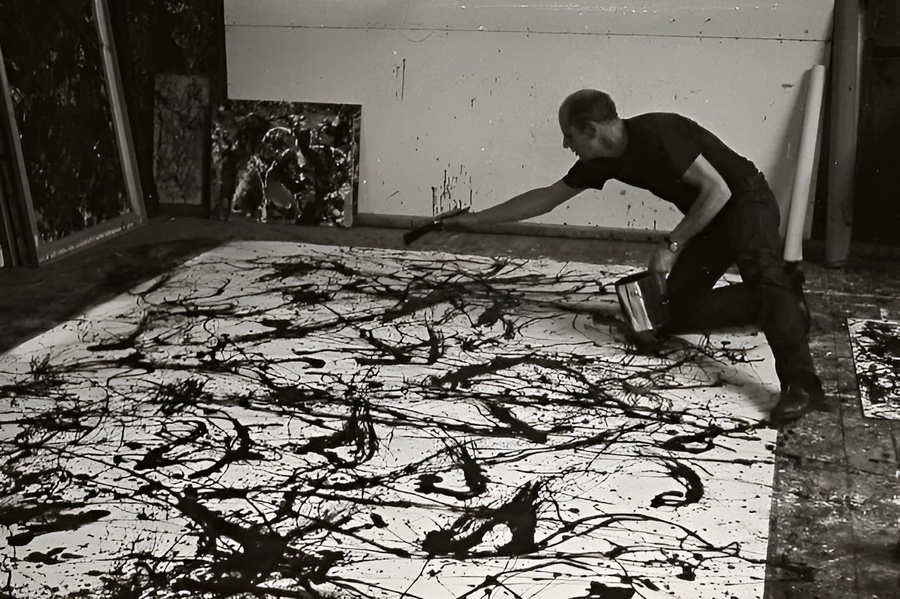
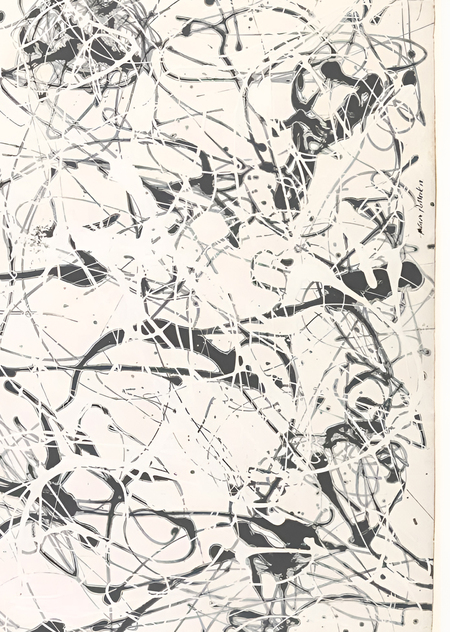
Jackson Pollock’s Painting Process. Drip technique. Photograph
Action Painting
Action painting, also called gestural abstraction, is a style of abstract painting that emerged in New York City in the late 1940s and flourished throughout the 1950s. The term was coined by the American critic Harold Rosenberg in his essay The American Action Painters (1952) [1]. In action painting, the canvas is understood not as a space for representing objects but as an «arena» in which the artist performs an act. The physical act of painting itself becomes the primary content of the work, and the finished artwork is viewed as a trace of that gesture. The artist works spontaneously, often without preparatory sketches, in a state of heightened physical and psychological immersion described similar to the state of flow.
Historical context and antecedents
Action painting developed within the broader movement of Abstract Expressionism. Its' emergence was conditioned by several factors:
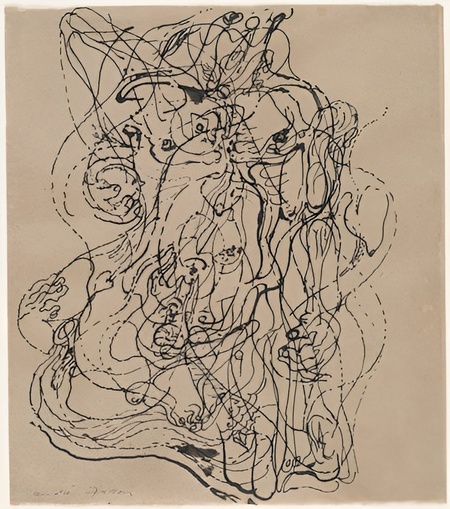
Surrealist automatism. In the First Manifesto of Surrealism (1924), André Breton defined psychic automatism as the creation of art without the control of reason, guided instead by the unconscious. This concept directly influenced the spontaneous methods of action painters.
European emigration. The Second World War drove many leading European modernists — including Piet Mondrian, André Breton, Marcel Duchamp, and Max Ernst — to relocate to New York. Their presence exposed American artists to the most advanced ideas of European modernism.
Existentialism. The post-war climate of anxiety, shaped by the Holocaust, the atomic bombings of Hiroshima and Nagasaki (1945), and the Cold War, fostered an ethos of individual responsibility and action in an absurd universe. The writings of Jean-Paul Sartre (Being and Nothingness, 1943; Existentialism is a Humanism, 1946) and Albert Camus (The Myth of Sisyphus, 1942; The Rebel, 1951) resonated with the heroic, solitary figure of the action painter.
Key practitioners
Jackson Pollock, Number 1, 1950 (Lavender Mist), 221×299.7 cm. oil and enamel on canvas.
Jackson Pollock (1912–1956) is the most iconic figure of action painting. From 1947 onward, he developed the drip technique: he laid canvases on the floor and poured, dripped, and splattered liquid enamel paint with various materials. This method allowed him to work from all four sides, moving around the canvas freely. Major works include Autumn Rhythm (Number 30) (1950) and Lavender Mist (1950).
«When I am in my painting, I’m not aware of what I’m doing. It is only after a sort of 'get acquainted' period that I see what I have been about» — Jackson Pollock, Interview with William Wright (1950)
Willem de Kooning (1904–1997) retained a vestigial figuration, particularly in his series of Woman paintings (Woman I, 1950–52) and Excavation (1950). His gestural style was aggressive and incessantly reworked: he applied paint with rapid, sweeping strokes, then scraped it away and repainted. The resulting surfaces record a prolonged struggle between the artist and the image.
Willem DeKooning. Excavation. 1950. 81×100 ¼ inches, Oil on Canvas, The Art Institute of Chicago.
Franz Kline (1910–1962) reduced the gestural vocabulary to its simplest terms: powerful black strokes on a white ground. He began with small, spontaneous drawings, then projected them onto large canvases, preserving the scale and immediacy of the original gesture. Major works include Chief (1950) and Mahoning (1956).
Franz Kline, Mahoning, 1956. 203,2×254 cm. collage, oil, and canvas
Other notable practitioners include Robert Motherwell (1915–1991), Clyfford Still (1904–1980), and Philip Guston (1913–1980).
Theoretical frameworks
Harold Rosenberg (1906–1978) formulated the most influential account of action painting in The American Action Painters (1952). He argued that the canvas was «an arena in which to act», not a space for representation. The painting was an «event» rather than a picture, and its meaning resided in the artist’s gesture.
Clement Greenberg (1909–1994) offered a formalist account. In Towards a Newer Laocoon (1940) and subsequent essays, he argued that modernist painting progressively purified itself by emphasizing the intrinsic properties of its medium: flatness, the picture plane, and the limits of the support. He valued Pollock’s work not for its' existential drama but for its formal resolution.
André Breton (1896–1966) provided the crucial theoretical precedent. The concept of psychic automatism from the First Manifesto of Surrealism (1924) directly informed the spontaneous techniques of Pollock and his contemporaries.
Legacy and influence
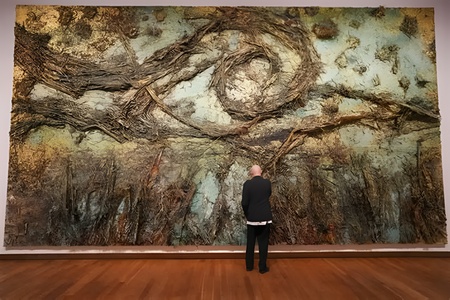
Neo-Expressionism (1970s–1980s). Artists such as Georg Baselitz (b. 1938), Anselm Kiefer (b. 1945), and Julian Schnabel (b. 1951) revived gestural, expressive brushwork while reintroducing figurative and historical subject matter.
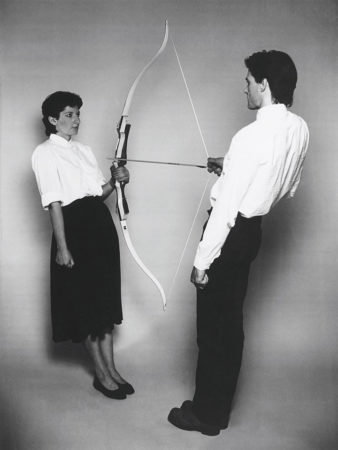
Performance art. The emphasis on the artist’s act laid the foundation for performance art. Artists of the 1970s, including Chris Burden (1946–2015) and Marina Abramović (b. 1946), extended action painting’s concern with risk, endurance, and the documentation of gesture.
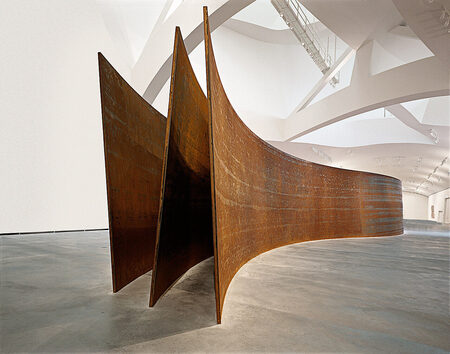
Process art (late 1960s). Artists such as Robert Morris (1931–2018) and Richard Serra (b. 1939) shifted the focus from painting to the manipulation of industrial materials, making the process of cutting or scattering the content of the work.
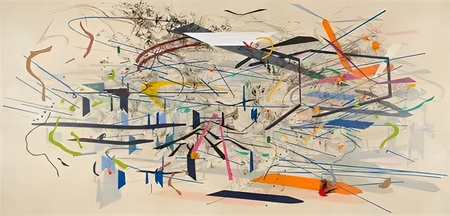
Contemporary abstract painting. Later artists, including Cecily Brown (b. 1969), Amy Sillman (b. 1955), and Julie Mehretu (b. 1970), continue to explore gesture, materiality, and the relationship between the body and the canvas.
«What was to go on the canvas was not a picture but an event» — Harold Rosenberg, The American Action Painters (1952)
Harrison C., Wood P. (eds.). Art in Theory 1900-1990: An Anthology of Changing Ideas. Oxford: Blackwell Publishers, 1992. 1189 p. (https://disk.yandex.ru/i/P9znrE7fBF6fEw)
Rosenberg, H. (1952). The American Action Painters. Art News.
Greenberg, C. (1940). Towards a Newer Laocoon. Partisan Review.
Breton, A. (1924). Manifeste du surréalisme. Paris.