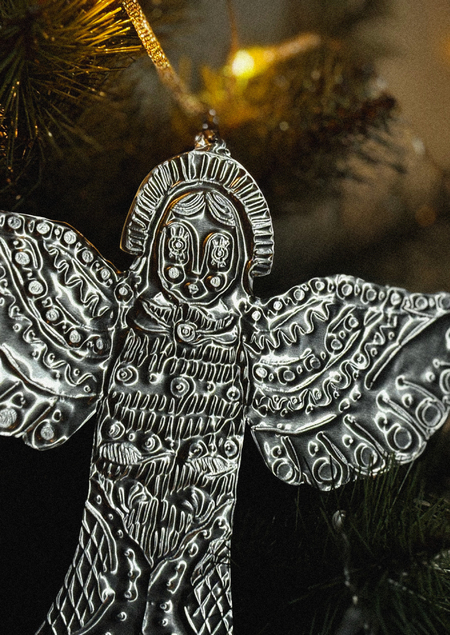
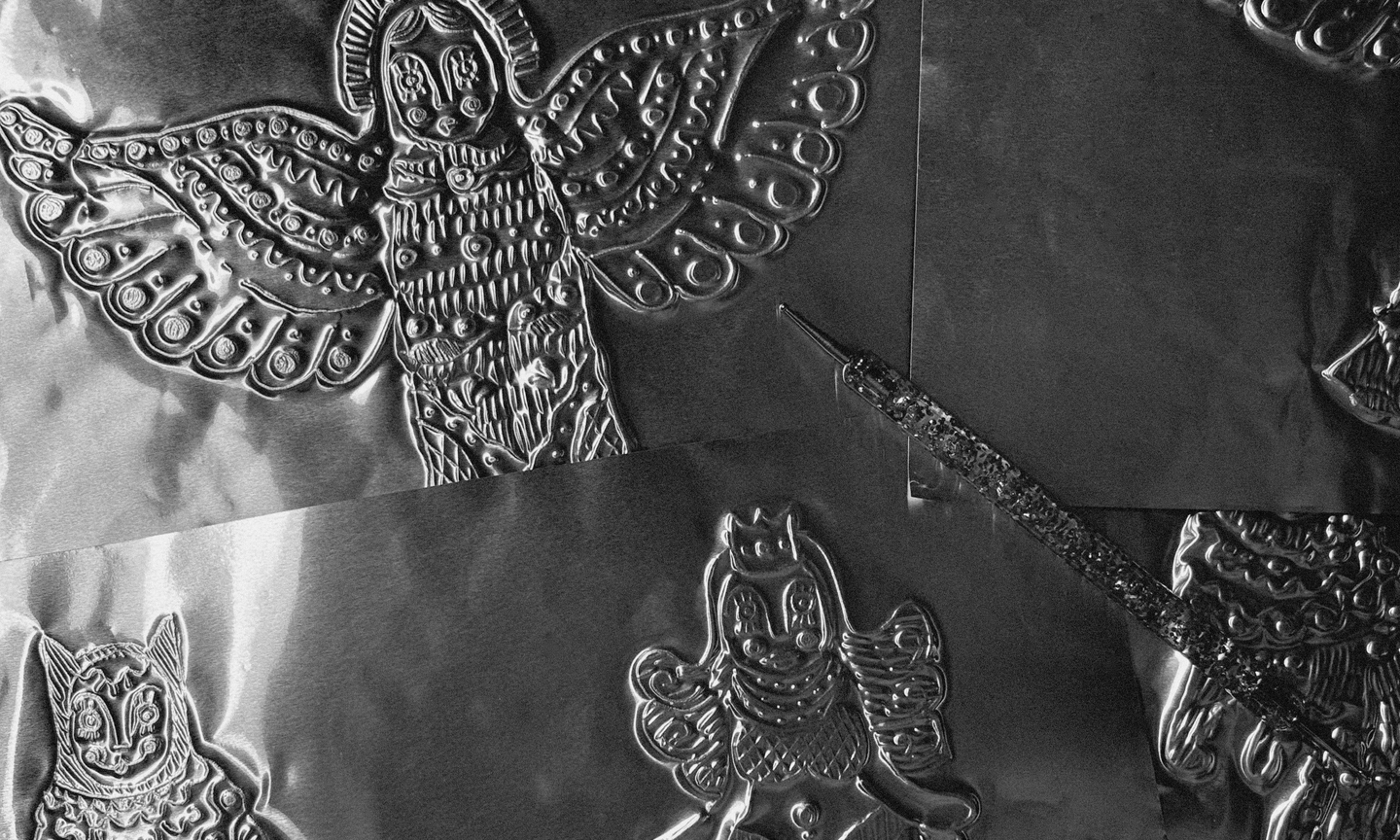
Проект представляет три ручные ёлочные игрушки, выполненные в технике чеканки по фольге. Для создания образов выбраны мифологические существа древней Руси — антропоморфные персонажи, сочетающие человеческое и волшебное. Простые формы и повторяющиеся узоры превращаются в рельефные, объёмные фигуры, которые играют светом и создают атмосферу сказки.
С древних времен зимние праздники на Руси были временем чудес и мистерий. В долгие ночи, когда граница между миром живых и потусторонним будто истончалась, люди устраивали святки, гадали, рассказывали сказания и верили, что именно в Новый год оживают силы природы и древние духи. Мне хочется вернуть это ощущение волшебства — оживить старинную традицию и вспомнить мифических существ Руси. Но не привычных животных или духов, а антропоморфных — тех, в ком человеческое соединяется с магическим.

Гамаюн — вещая птица с женским лицом. Она символ знания и пророчества, посланница богов. В иконописи и старинных гравюрах Гамаюн изображается как хранительница тайн, голос, соединяющий небо и землю.
Русалка — одно из самых загадочных существ славянской мифологии. Это дух воды, одновременно красивый и опасный. В легендах она символизирует женскую силу, природу, способную дарить жизнь и отнимать её. В искусстве образ русалки часто появляется как воплощение соблазна и тоски по иному миру.
Волколак — человек, способный обращаться в волка. Этот образ связан с идеей превращения, внутренней двойственности, борьбы между человеческим и звериным началом. Он часто встречается в народных сказаниях и позднее вдохновлял художников и писателей.
Во времена СССР, фабрики стеклянных игрушек не справлялись с массовым спросом. У людей не было лишних средств, а праздник был нужен. Именно тогда в ход пошли подручные материалы. Одним из самых популярных способов стало изготовление игрушек с помощью чеканки — когда тонкий металлический лист придавливают, выбивая на нём рельефный рисунок.
Чеканка быстро превратилась в домашнюю традицию. Семьи садились вместе за стол в канун Нового года, вырезали фольгу, прижимали её ложкой или простыми инструментами и создавали свои маленькие чудеса. Сам процесс был не менее важен, чем результат — это было настоящее коллективное творчество, где оживали истории и сказки.