Dantovsky’s «Hell»
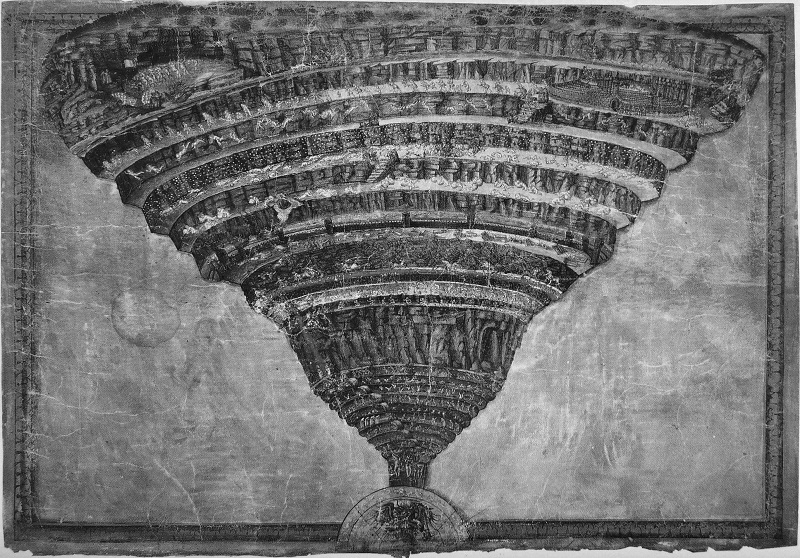
«The Divine Comedy» by Dante Alighieri was written in the first two decades of the 14th century and consists of three parts: «Inferno, ” „Purgatorio, ” and „Paradiso.“ The poet describes his journey through the afterlife, guided through hell and purgatory by Virgil. Inferno, for Dante, is a funnel descending to the Earth’s core and is divided into nine circles. At the center, at the very bottom, is Lucifer, frozen in ice.
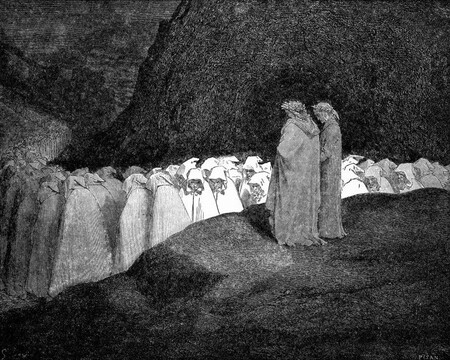
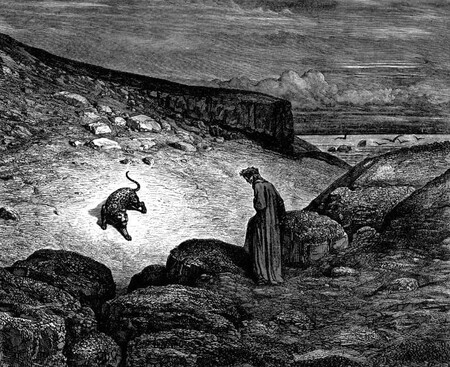
The placement of sinners in hell follows a strict order: the deeper the circle, the graver the sin. In Canto XI, Virgil explains this system, referencing Aristotle’s «Ethics.» Sins are divided into three groups: incontinence, violence, and fraud. Dante considers fraud more severe than violence because it is unique to humankind. The lowest, ninth circle is reserved for traitors. This is not a fiery abyss, but the frozen lake of Cocytus, where sinners are encased in ice.
[2] Concept
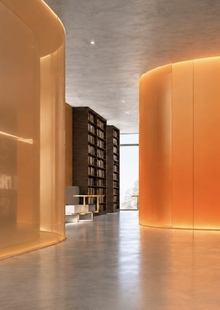
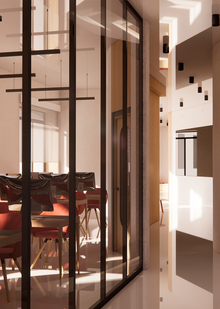
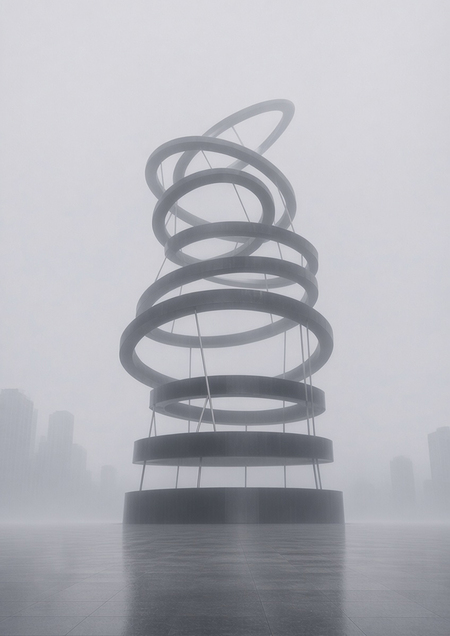
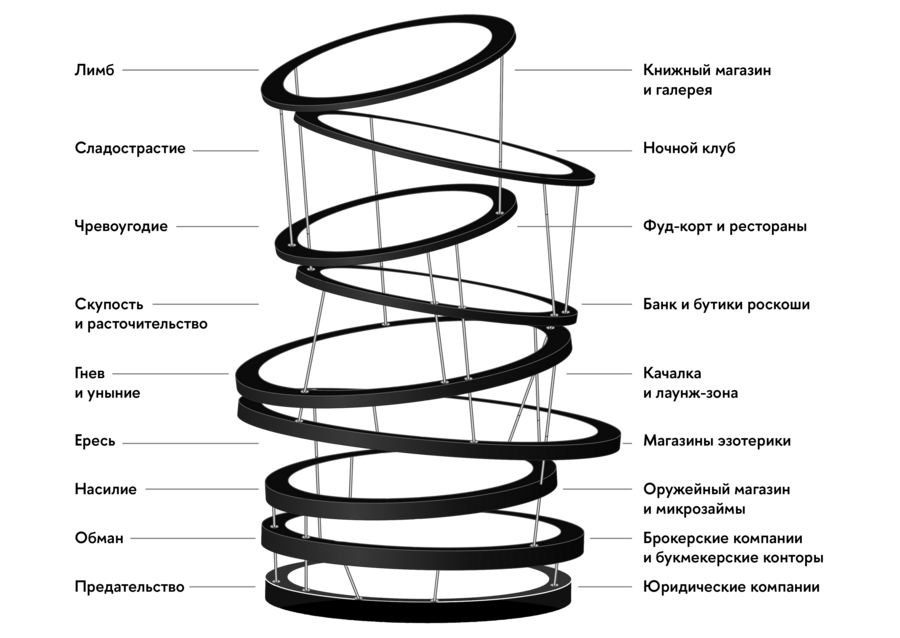
In my work, I chose to reflect Dante’s concept through the image of a tower—not by illustrating Hell literally, but by translating its logic into the language of form. The most crucial elements I took from the poem are the increasing weight from top to bottom and the idea that the most terrifying state for Dante is not chaos, but absolute stillness.This system is transferred into the architecture, presenting it as a shopping center where each floor corresponds to one of the circles of Dante’s Hell, commodifying human errors through the mundane.
[3] Mockup
[3.1] The Working Process
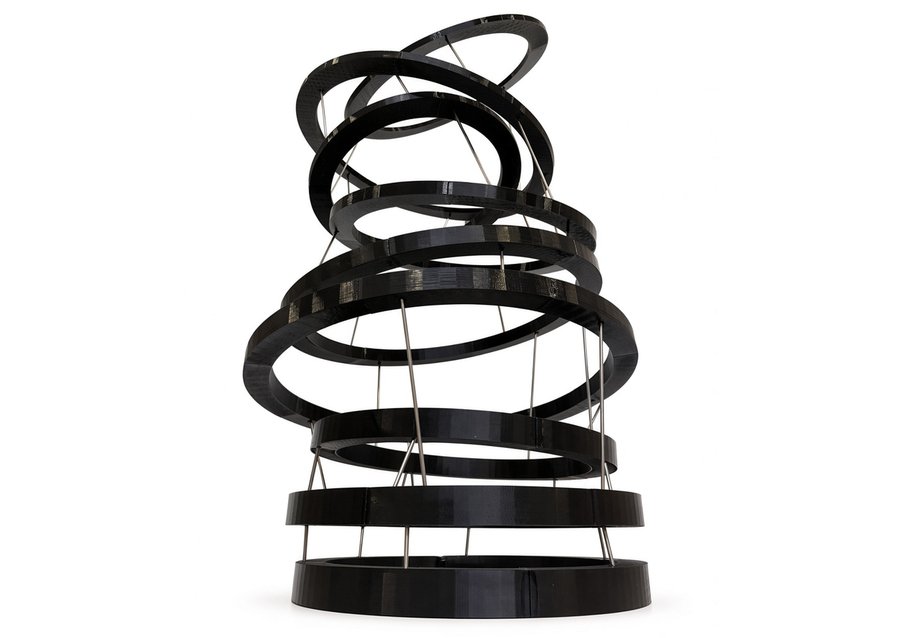
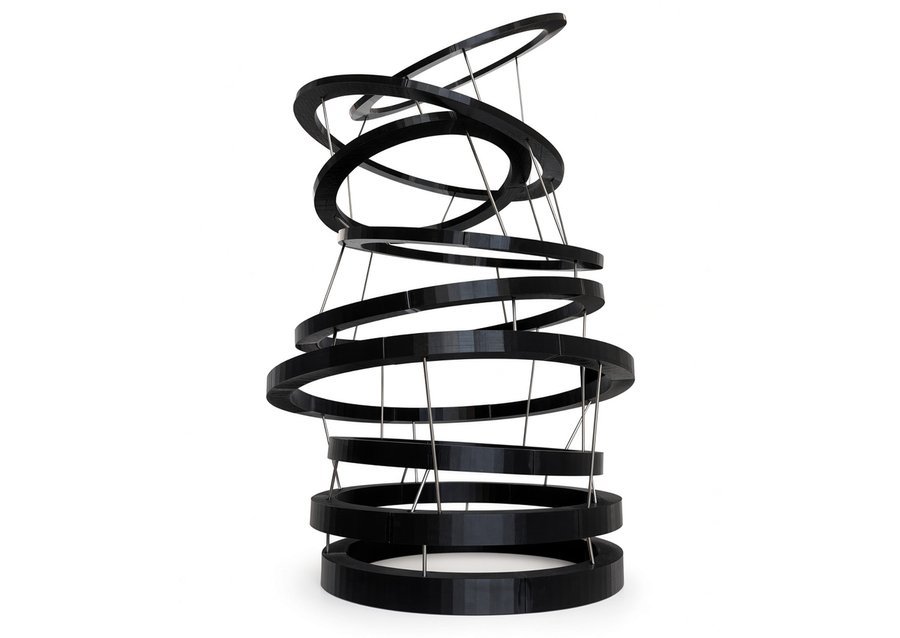
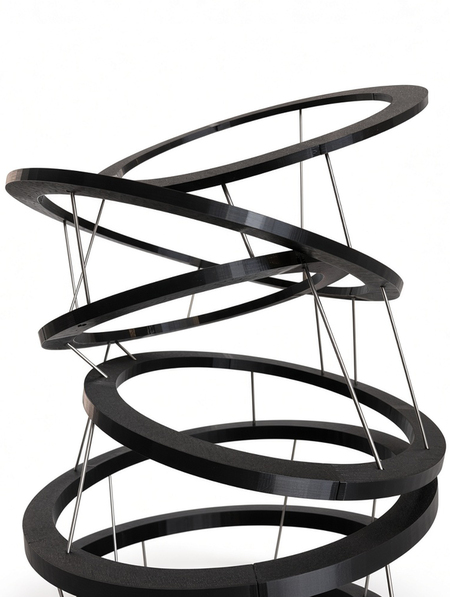
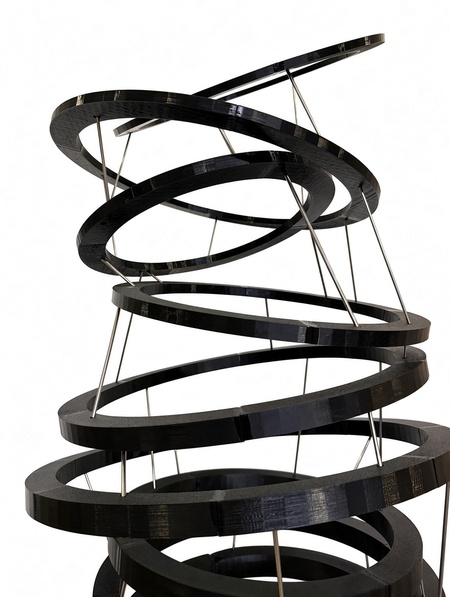
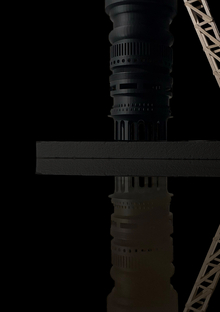
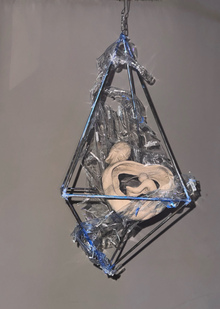
To better convey the idea, a model was created, consisting of nine rings stacked one atop the other on metal spindles. The upper rings were light, angled, and shifted, while the lower rings were heavy and almost immobile.
[3.2] Conclusion