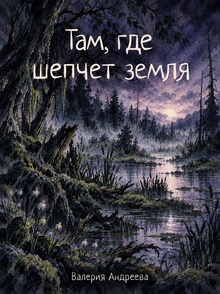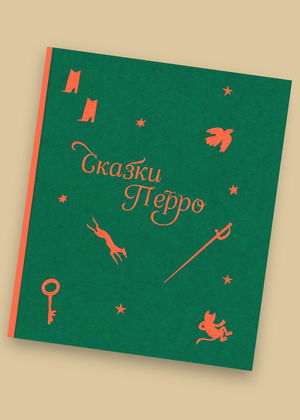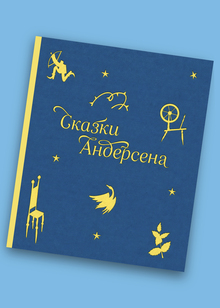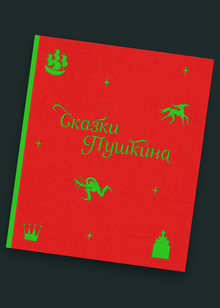
The Children’s Book is an authorial publication where the text, illustration, layout, cover, and rhythm of the spreads function as a single entity. In this medium, the student reinterprets a fairy tale, invents a short story, a picture book, or a visual narrative for children, and prepares the layout for printing.
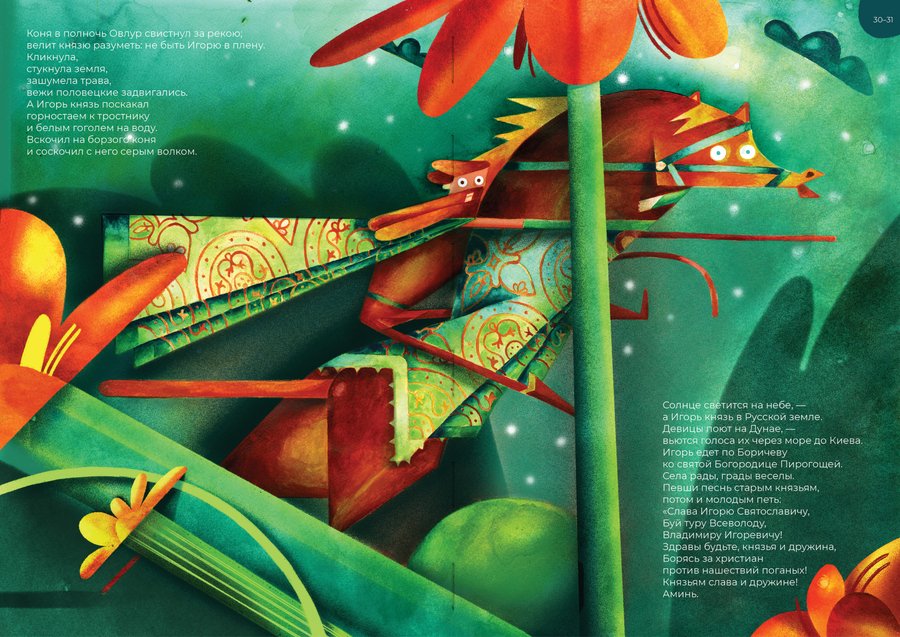
Задача студента
A book mockup and a brief project description are required.
You may work with original narrative, a modern interpretation of a folk tale, or a purely visual book. If using others' texts, characters, images, or recognizable styles, you must verify the usage rights.
Book Structure
The book must have a coherent internal logic: a beginning, development, conclusion, and neatly formatted supporting elements.
For a hardcover, the project scope includes the cover, endpaper, title page or frontispiece, title verso, main body, final spread containing publication details, and the back cover.
For a paperback, the project scope includes the four-panel cover, title page or first page of the story, the main body, and the final page (the panel with publication details).
Supporting pages can be integrated into the book’s overall visual language, but they must remain legible and functional.
Execution options
Hardcover is suitable for a more durable and gift-worthy book. The internal block must have at least 40 leaves. The number of leaves must be a multiple of 8, for example: 40, 48, 56, 64, and so on. The cover is prepared with a separate layout. A front endpaper and back endpaper are mandatory.
The front endpaper and back endpaper are part of the book’s design, not just technical pages. They can be solid-colored, patterned, feature a world map, decorative graphics, or fragments of illustrations.
Soft Cover is suitable for a short, light book. The interior block must be at least 16 leaves and divided into 4 sections. Possible volumes include: 16, 20, 24, 28, 32 leaves, and so on. The cover consists of 4 leaves: the front cover, the interior of the front cover, the interior of the back cover, and the back cover.
Cover
The front cover must feature the book title, author or illustrator name, a central visual motif, and a legible headline.
The back cover should preferably include a brief book description, target age group, a small visual element, and space for a barcode if the project is being prepared for actual production.
For hardcover binding, the cover is assembled as a single layout: back panel, spine, front panel, and flaps. The exact size of the spine and bleed depends on the paper, the number of sheets, and the production technology, so the final layout is confirmed using the printer’s template.
Softcover covers are prepared as four separate strips or as one continuous printed layout—depending on production requirements.
Illustrations and text
Illustrations can be created using any medium: digital graphics, hand drawing, collage, photography, 3D, or mixed media.
They must maintain a consistent style, be legible within the chosen format, retain their meaning even when cropped, and be understandable to a young audience. Important elements—such as faces, text, and fine details—should not be placed in the spine area or near the trim line.
The text must be brief, polished, and easy to read aloud. It is advisable to use a large, legible typeface, sufficient leading, and strong contrast against the background.
Technical Specifications
Форматы
Two formats are available for the carrier.
225 × 300 mm — a large format suitable for a gift book, expressive illustrations, and large spreads.
165 × 220 mm — a compact format ideal for a short story, a small children’s book, a series, or a first reader.
These are the final trim sizes for the book. The print layout must always be larger: it must include bleeds for trimming, and for the cover—it must account for the spine, folds, flaps, margins, and potential die-cuts.
Font and Text Placement Requirements
When designing a book, you must determine the target reader’s age. The required font size, line spacing, and text styling depend on this factor.
If the book is intended for multiple age groups, you should adhere to the requirements for the youngest group.
For children aged 3–6: The main text should be 14pt or larger. The line spacing should be 18pt or larger. If the text volume is 200 characters or fewer per page, a 12pt font with 14pt line spacing is acceptable. When placing text on a colored background or over illustrations, the font size must be no less than 18pt for text volumes exceeding 200 characters, and no less than 14pt for smaller volumes.
For Kids aged 7–10: The main text size should be at least 12 pt. The line spacing should be at least 14 pt. If the text volume does not exceed 600 characters per page, a font size of 10 pt with a line spacing of at least 12 pt is acceptable. When placing text on a colored background or over illustrations, the font size must be no less than 14 pt for volumes of 200 characters or more, and no less than 12 pt for smaller volumes.
For Kids aged 11–14: The main text size should be at least 10 pt with a line spacing of at least 12 pt. If the text volume does not exceed 1,500 characters per page, a font size of 9 pt with a line spacing of at least 11 pt is acceptable. When placing text on a colored background or over illustrations with a volume of 1,500 characters or more, the font size must be no less than 12 pt. For smaller volumes of text, specific requirements must be confirmed according to the guidelines.
For children aged 3–10, you must use block fonts. Narrow weights are not permitted.
On the spread, the total width of the margins must be at least 26 mm.
Additional requirements regarding line length, font weight, and non-standard design options must be verified against TR TS 007/2011, Article 8, and Appendices 16–21.
Layout Preparation
The final book layout is assembled in Adobe InDesign.
The interior block must be set up page by page: each page remains a separate page in the document, even if the composition work is done in spreads.
Images are prepared in RGB. Conversion to the printing profile is done during pre-press.
The resolution for raster images is 300 dpi.
Bleed required is 5 mm on all sides.
Text and other significant elements must be placed no closer than 10 mm from the trim line. It is also advised not to place important image details too close to the spine, cut lines, or folds.
If the image prints across the fold, it must extend into the bleed area.
For the cover, endpapers, title page, and other individual book elements, the layout is prepared separately. The size of the spine and cover flat is finalized after determining the book’s final volume and production specifications.
Project Material Requirements
The project may only utilize freely licensed fonts that permit free use and printing.
If using third-party text, photographs, illustrations, characters, or any other materials, you must possess the rights to use them.
All text submitted for the final defense must be completely prepared and proofread.
What to Submit
To complete the final submission, please prepare:
· project description;
· target audience identification;
· visualization of the finished book;
· 3–5 characteristic spreads for presentation;
· complete mockup of the interior block;
· cover mockup;
· for the hardback option—endpaper and dust jacket;
· original Adobe InDesign file;
· all associated images;
· used fonts.
After the final submission, the materials are transferred to the curator. The curator verifies the complete set and places it in the corresponding project folder within the private section of the School’s network drive. Access to this section is restricted to staff members working on the projects.
Production mockups and source files are not made publicly available nor attached to the public long-read.
Don’t try to create the «perfect, large picture book» right away. Start with a simple, clear story: who is the hero, what happens to them, why is it interesting to follow, and what feeling is left at the end.
A good children’s book can be very concise. In it, the importance lies not only in beautiful illustrations but also in the pauses, page turns, mood, details, and the desire to revisit the story again. The main thing is to create a cohesive, honest, and thoughtfully assembled project that you want to hold in your hands and read aloud.