Navigation
Formation of Artistic Style 1.1. Early Years and Education 1.2. The Influence of European Modernism
Color as a Primary Element in Painting 2.1. The Significance of Color 2.2. Light and Space 2.3. Decorative Quality of Forms
The Image of Armenia in Saryan’s Work 3.1. The Image of the Mountains 3.2. The Image of Nature and Gardens 3.3. The Image of the Armenian Village
Eastern Motifs 4.1. The Influence of Travel 4.2. The East in Saryan’s Painting
Portraits and the Human Image 5.1. Characteristics of Portraits 5.2. Representatives of Armenian Culture
The Relevance of Saryan’s Work Today
Conclusion
Bibliography
Introduction
Martiros Saryan is one of the most renowned Armenian artists of the 20th century. His work is instantly recognizable and easily distinguished from that of other artists due to his highly distinctive style. When viewing his paintings, one is immediately struck by the vibrant colors, the warm light, and the palpable sense of living nature. His painting is profoundly emotional and bursting with life.
Saryan played a significant role in the development of modern Armenian painting. He masterfully synthesized European modernism, Eastern motifs, and Armenian national culture. Yet, his works never appear complex or cold; instead, they convey deep sincerity and a profound love for nature.
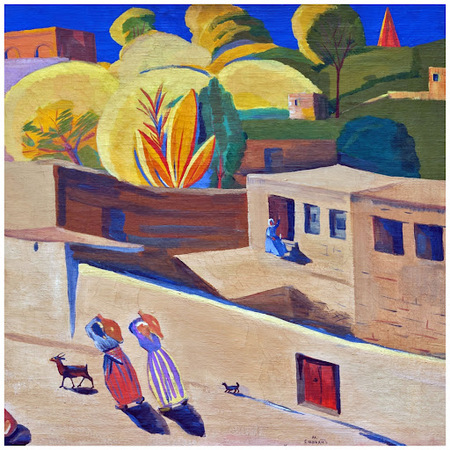
Armenia became the central theme of the artist’s work.
Through its mountains, gardens, trees, and sunlight, he crafted the image of a country as he saw it—warm, vibrant, and brimming with life.
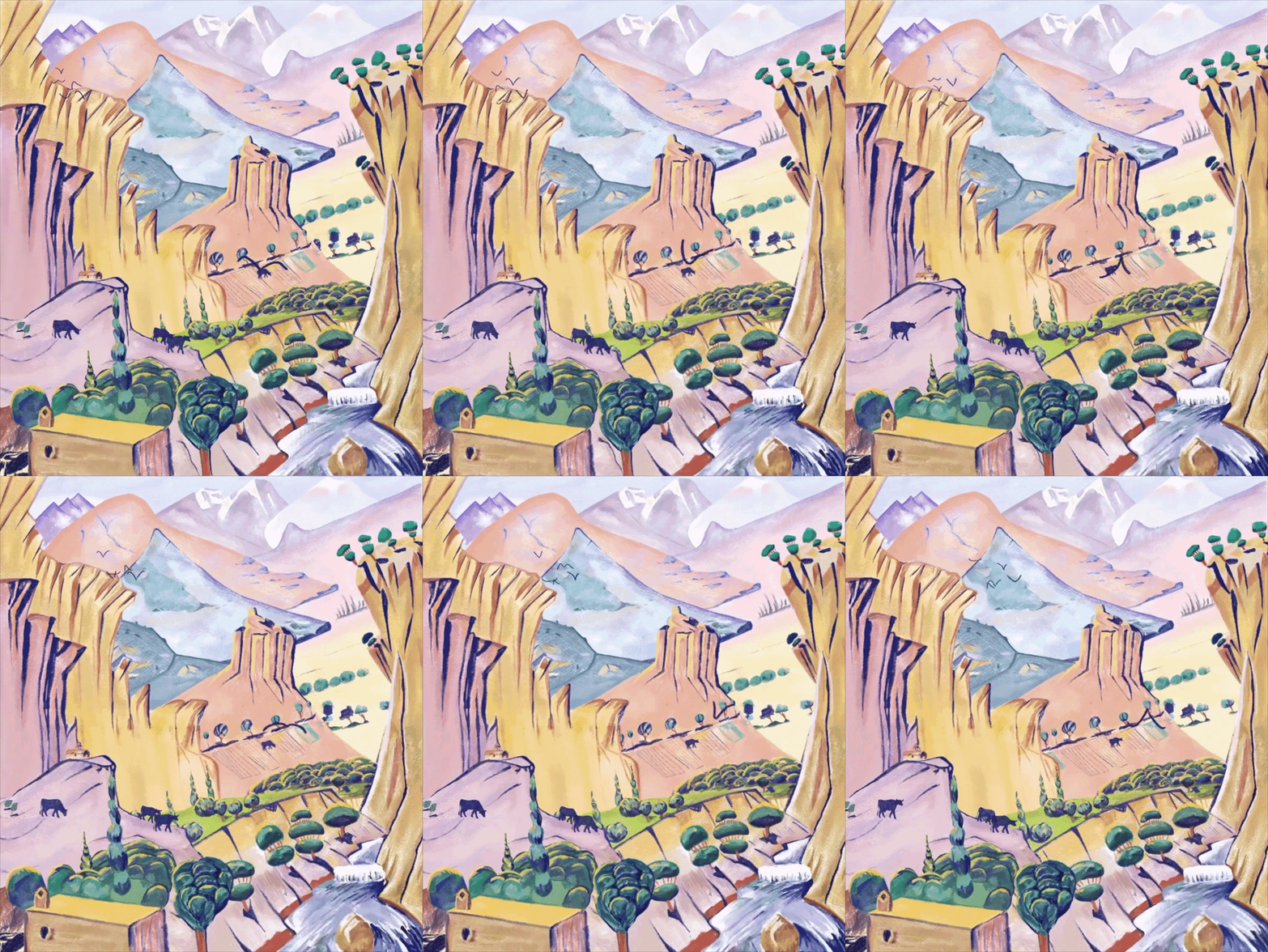
Martiros Saryan, «Armenia,» 1923
For Saryan, nature was not merely a beautiful landscape. It became an integral part of culture, memory, and national identity.
The artist did not aim to depict reality with maximum accuracy. It was more important for him to convey mood, atmosphere, and his emotional perception of the world.
In this visual study, I wanted to examine how Saryan used color, light, and nature to create an image of Armenia, and why his work became so significant to Armenian art.
Developing an Artistic Style
1.1. Early Years and Education
Martiros Saryan was born in 1880 in Nakhichevan-on-Don into an Armenian family. From childhood, he was surrounded by the nature of the south: bright sun, steppes, trees, and rich colors. I believe this profoundly influenced his perception of color and light later on. Even in his early works, one can see the vital role nature played for him.
Later, Saryan enrolled at the Moscow School of Painting, Sculpture, and Architecture. There, he studied under renowned artists—Valentin Serov and Konstantin Korovin. During his studies, he began actively searching for his own style and experimenting with color.
Korovin, in particular, had a strong influence on him, as he too paid great attention to color and light.
Thanks to this, Saryan began to perceive painting not merely as a precise depiction of reality, but as a way to convey mood and emotion.
Martiros Saryan, «Fairy Lake, ” 1908 Early work by the artist, connected to symbolism and decorative style
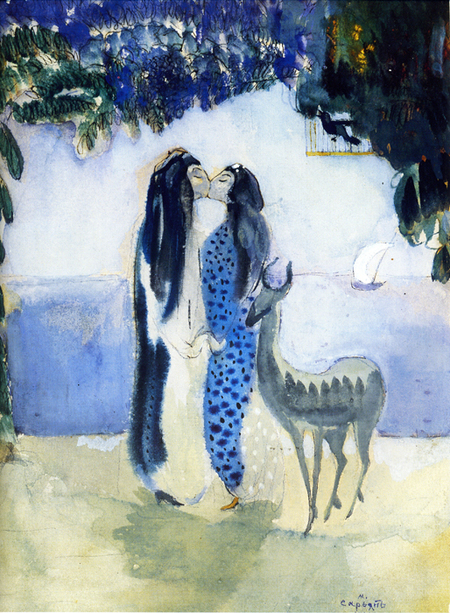
In the early 20th century, the artist participated in exhibitions of the «Blue Rose» and «Mir Iskusstva» groups. These artistic movements were tied to Symbolism and Modernism, which is why Saryan’s early works appear more decorative and even somewhat fairy-tale-like.
For instance, the paintings «Fairy Lake» and «Eastern Tale» already reveal his interest in vibrant colors, Eastern ambiance, and stylized forms. Even in these early pieces, it is evident that the artist was more concerned with emotional impact than with realism.
1.2. The Influence of European Modernism
European artists from the early 20th century, particularly Henri Matisse and Paul Gauguin, had a significant influence on Saryan’s artistic development. From them, he adopted a love for pure color, simplified forms, and decorative qualities.
The influence of Fauvism—an art movement where color played the primary role—is particularly noticeable. Like the Fauves, Saryan used vivid hues not to accurately depict reality, but to convey emotion and atmosphere.
However, his painting remained deeply personal and intrinsically connected to Armenian culture. He did not merely copy European art; rather, he adapted certain ideas to suit his own worldview and national subject matter.
He managed to unify modernism with Armenian culture in a way that felt organic. Because of this, his works are perceived as both contemporary and profoundly national.
Color as the primary element of painting
2.1. The Significance of Color
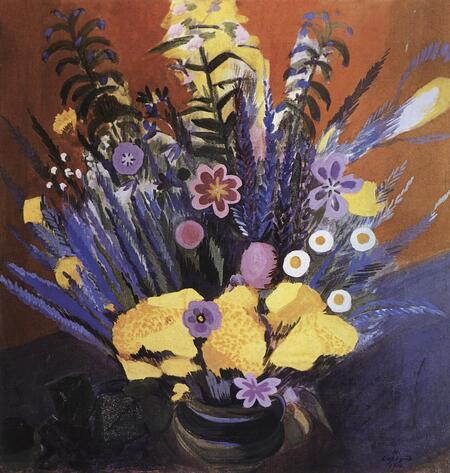
Perhaps the most essential element in Martiros Saryan’s work is color. When viewing his paintings, you immediately notice bright and rich hues: orange, red, blue, green, and yellow. This is what gives his painting such a vibrant and emotional quality.
Interestingly, Saryan did not strive for complete realism. For him, it was more important to convey the feeling of nature, light, and space. Therefore, color in his work becomes the primary means of expression.
Warmth is especially palpable in many of the artist’s pieces. Thanks to the vivid shades, the paintings appear filled with sun and air. Consequently, his painting evokes a sense of serenity and inner harmony.
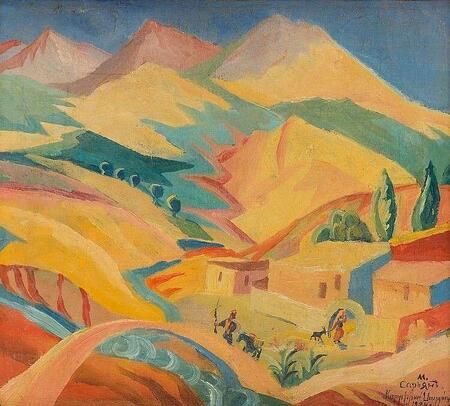
For example, in his landscapes, the mountains might be almost orange, and the trees bright green. Yet, this does not look strange or artificial. On the contrary, through these colors, the artist conveys his emotional perception of nature.
This is particularly noticeable in Saryan’s painting, «Mountains. Armenia, ” from the 1920s.
2.2. Light and Space
Light plays in Saryan’s artwork a role nearly as significant as color. In many of his paintings, it seems as though the sun is situated directly within the composition. The light doesn’t merely illuminate the subjects; it establishes the entire atmosphere of the piece.
This is particularly noticeable in his Armenian landscapes. The artist portrays hot air, bright sunlight, and expansive open space. Because of this, the paintings appear remarkably vibrant.
It seems to me that through light, Saryan conveys his connection to nature. There is almost no gloom or heavy mood in his works. On the contrary, they radiate a love for the world and a palpable sense of life.
It is also interesting how the artist constructs space. He frequently employs large planes of color and simplified forms. This lends the compositions a sense of freedom and lightness.
Even when the painting contains minimal detail, the space still feels profoundly deep. This creates a feeling of airiness and openness.
2.3. Form Decorative Qualities
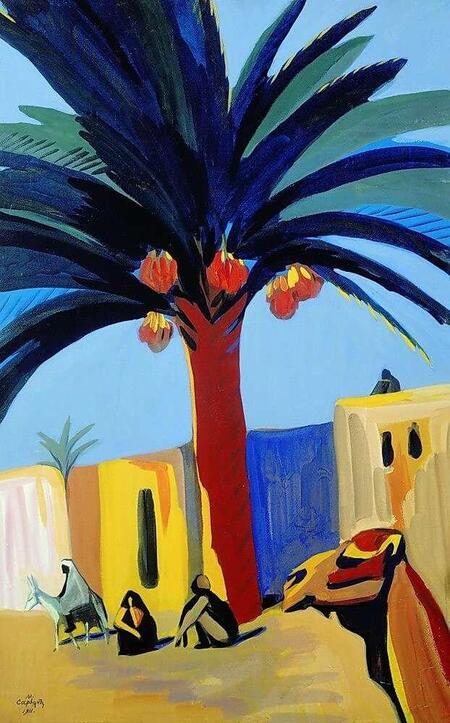
One of the defining features of Saryan’s painting is the simplification of forms. His trees, mountains, and houses often appear almost decorative. This is especially noticeable in the work «Date Palm, ” where the forms are maximally simplified.
The artist did not aim to render every detail. For him, the overall mood of the painting was more important.
In this, the influence of modernism and Fauvism is evident. However, Saryan’s decorative style does not make his work cold or overly abstract. On the contrary, his paintings remain very emotional.
«Date Palm»
I hypothesize that it is precisely because of the simple forms that the viewer’s attention is focused on color and atmosphere. The artist strips away everything superfluous, leaving only the essential feeling of space and light.
Because of this, his works appear highly cohesive. All elements of the composition connect with one another through color and mood. It is this combination of vibrant color, light, and simplified forms that made Saryan’s style so recognizable and significant to 20th-century Armenian art.
The Image of Armenia in Saryan’s Work
3.1. Image of the Mountains
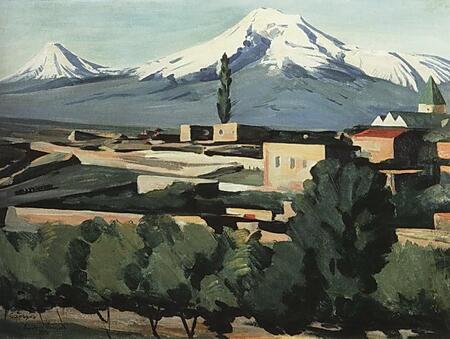
Armenia was the central theme of Martiros Saryan’s creative work. After moving to Armenia in 1921, the artist began painting Armenian landscapes with particular vigor. For him, nature was not merely a beautiful scene, but an integral part of the national culture and memory.
The mountains become one of the most important motifs in his paintings. Mount Ararat appears especially frequently—it is a symbol of Armenia and one of the most recognizable icons of Armenian culture.
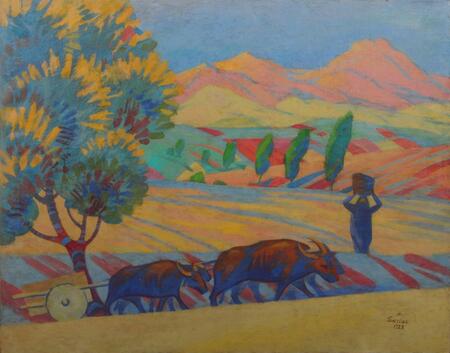
It is interesting that Saryan depicts the mountains not as ordinary natural objects. Through color, light, and composition, they become an emotional representation of the homeland. His mountains appear simultaneously majestic and deeply warm. For example, in the work «Aragats Mountain, ” the artist portrays not just the landscape itself, but also the sensation of space, air, and light. I believe that through such paintings, Saryan conveys his connection to Armenia and nature. It is also important that his mountains almost always appear calm and steadfast. They evoke a feeling of strength and a connection to the native land.