Task:
A low-cost, easily reproducible anthropomorphic sculpture, under 30 cm in all dimensions, designed to be scalable and mass-producible.
1. Where is the boundary of anthropomorphism? At what point can an object begin to be considered anthropomorphic?
2. Besides attaching eyes or legs, what other methods can be used to achieve anthropomorphism in an object?
3. Can this be approached from another perspective—not by adding elements, but by creating with minimal means?
4. We will solve this problem using the «proof plus example» method. This is a problem-solving technique used when finding the greatest or least values. Suppose we are looking for the minimum value of some quantity A. We proceed in two steps: I. Demonstrate that the inequality A ≥ n holds true. II. Provide an example where the equality A = n is achieved. Thus, we prove that the minimum value of quantity A is equal to n.
5. What is the minimum number of ****** required to create an anthropomorphic figure?
parallelograms (grade 2)

parallelograms (3 examples)
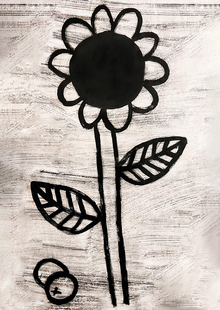
curves (Grade 2)
arcs (3 examples)
segments (Grade 2)
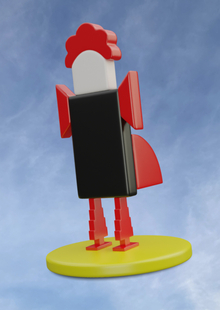
segments (examples for 3)
Developing the three-segment example