Intro
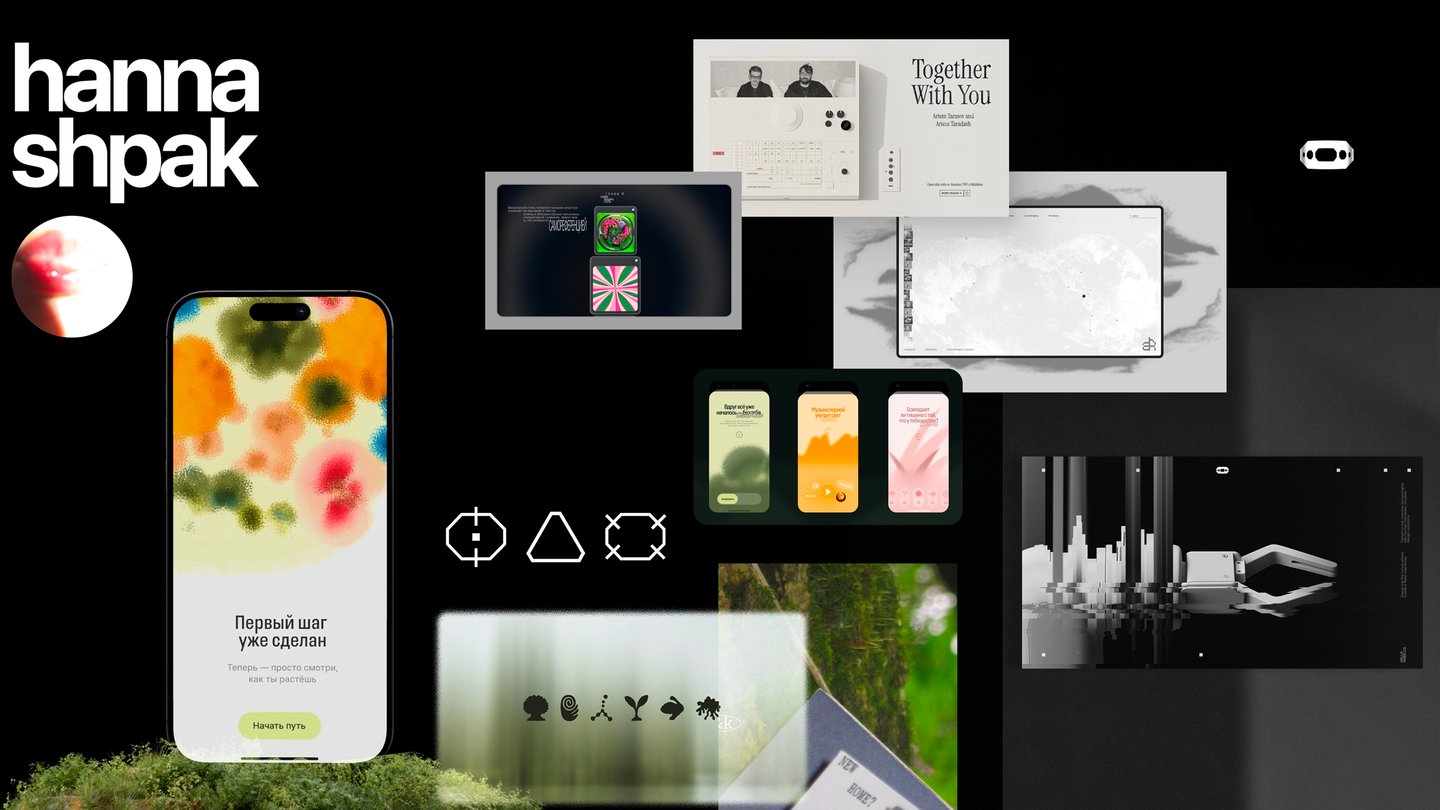
Hi, I’m Hanna, a designer with three years of studio experience in product design (UX/UI), branding, 3D and vibe coding. I’m not afraid of tasks I’ve never done before: I figure things out along the way and feel at home in chaos. I’m open to non-commercial collaborations that teach me something new. If you have a bold idea and aren’t sure where to start, let’s figure it out together.
Weekly Robotics
The project
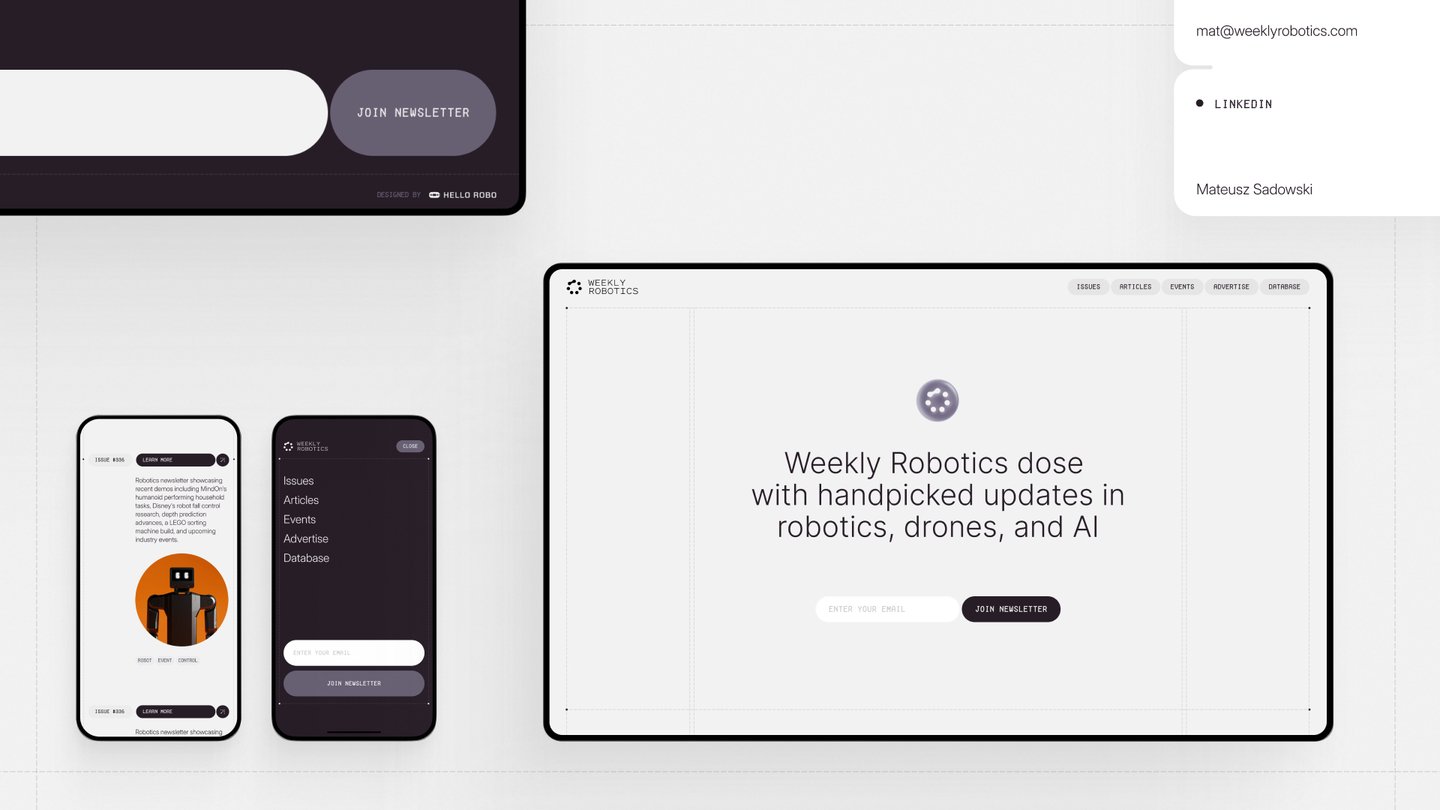
Weekly Robotics is an independent media project covering the latest developments in robotics. Every week, its creator handpicks the most interesting open-source projects, research, prototypes, and concepts, turning an overwhelming stream of information into a curated digest for the robotics community.
The concept
Weekly Robotics never misses a Monday. I started thinking about this consistency not just as a publishing schedule, but as an opportunity to create a small weekly ritual. Monday morning, the first cup of coffee, and a few minutes to explore what happened in robotics over the past seven days — a moment to discover new projects, collect ideas, and set the tone for the week ahead.This became the idea of a weekly vitamin — a small dose of knowledge, curiosity, and inspiration to kick-start the week. The visual identity translates this metaphor into a system that balances a familiar, recurring structure with the constant movement of new ideas.
The outcome
Weekly Robotics is a non-profit collaboration, but the redesign has had a tangible impact: some time after its launch, the creator shared that the project had started generating revenue.
Kik — Robot Head Concept
The project
Kik is a concept for the head of a domestic robot, developed for ЭФКО as a continuation of my previous research into human-robot interaction. I wanted to take the research further and explore how my own vision of a domestic robot could translate into a physical design.
The concept
While exploring the market, I noticed a contradiction: developers often try to make robots look as human as possible, assuming that familiarity makes them easier to interact with. Yet this approach can create discomfort and distrust. Research into human-robot interaction led me to a different direction: what if a robot felt less like a human and more like a distinct character?Kik is neither a person nor a machine, but a companion with its own personality and behaviour. Its simple, expressive form creates room for customization, allowing the robot to adapt its appearance and behaviour to different people and situations.
The outcome
I developed the concept from initial visual research and form exploration to 3D modelling, material selection, and final renders. The result is a character-driven design that explores an alternative approach to domestic robots — one based on personality, clear communication, and realistic expectations rather than human likeness.