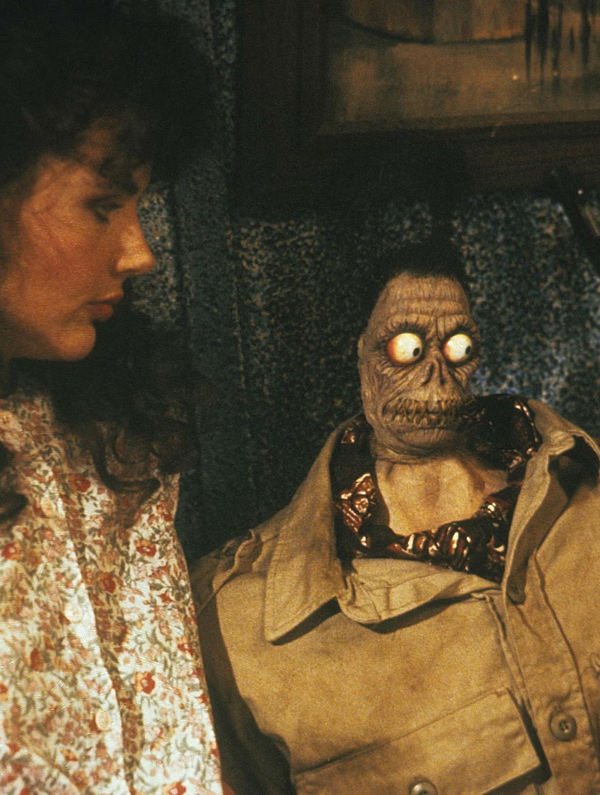
What we aim to achieve is not realism, but conviction.
Concept
The history of the interaction between drawn animation and video games begins almost simultaneously with the formation of cinema itself.
As early as James Stuart Blackton’s film The Enchanted Drawing (1900), drawn images began interacting with people and objects in real space. Later, Winsor McCay featured a drawn character as an active participant in the on-screen action in Gertie the Dinosaur (1914), and brothers Max and Dave Fleischer developed the practice of combining live-action filming and animation in the Out of the Inkwell series (1918–1929), including the use of rotoscoping. In the early 1920s, Walt Disney Studios continued similar experiments in the Alice Comedies series, where an actress interacted with drawn characters and the environment.
These works became important early examples of combining various methods of screen imagery. Gradually, the boundary between live-action filming and animation ceased to be an exclusively technical obstacle and transformed into a means of artistic expression. Further development in composite filming, optical, and digital technologies expanded the possibilities for such interaction, allowing not only drawn characters but also artificially modified images of real actors to be integrated into feature films. One direction of this process involved using animation principles to create visual effects that altered the form and proportions of the human body.
The principles of animation developed by Disney artists and systematized by Ollie Johnston and Frank Thomas in the book The Illusion of Life: Disney Animation (1981) played a crucial role in forming such techniques. Specifically, the principle of squash and stretch allows for the conveyance of flexibility, weight, and the dynamic nature of a form by altering its proportions in response to movement. Although these principles were initially formulated for drawn animation, their significance is not limited to one production technique. They can serve as a guide when creating visual effects in live-action film, where a similar outcome is achieved through physical constructions, frame-by-frame replacement of individual elements, digital image processing, and three-dimensional computer graphics.
Such effects allow for the alteration of conventional human body proportions: extending limbs, enlarging specific facial features, and changing the shape of the head and other anatomical elements. Crucially, the goal is not only to achieve the desired shape modification but also to maintain the integrity of the image, the character’s recognizability, and the believability of the action within the frame. Even intentionally exaggerated deformations must integrate organically with the actor’s movement and the other elements of the visual composition.
Based on this, we can hypothesize that the evolution of visual effects technologies has expanded the ways human body deformations can be created; however, each technique possesses its own set of capabilities and limitations. Both practical and digital methods allow for different types of transformation, enabling varied approaches to character form and movement. Furthermore, a more contemporary technology does not inherently guarantee a more convincing result—much depends on the specific visual objective and the intricacies of its implementation.
The goal of this research is to study and compare technologies for creating human body deformations in video games, using films from various periods as case studies, in order to identify the unique features, possibilities, and limitations of different technical solutions.
The study proposes examining films from various periods that utilize different technologies to create similar changes to human anatomy. The main principle for selecting material is to pair films based on the nature of their visual challenges. For example, one could compare methods for altering facial structure or elongating limbs, tracking how the same challenge is solved using different technical means. This approach will allow for a comparison not only of production methods but also of their capabilities, limitations, and the characteristics of the final image.
The foundation of the research will be professional publications on visual effects creation, interviews with animators and VFX specialists, technical analyses of films, and production materials. The information gathered will be cross-referenced with frames from the films themselves to examine how the chosen technologies manifest in the final image and how convincingly the intended transformations are realized.
Navigation
— C o n c e p t u a l i z a t i o n
— I. D e f o r m a t i o n o f F a c e a n d H e a d
— II. S t r e t c h i n g a n d E l o n g a t i o n o f E x t r e m i t i e s
— III. A l t e r a t i o n o f P r o p o r t i o n s a n d S h a p e i n T h e E n t i r e B o d y
— IV. C o m p a r a t i v e A n a l y s i s
— C o n c l u s i o n
in
in