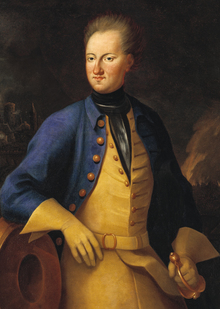
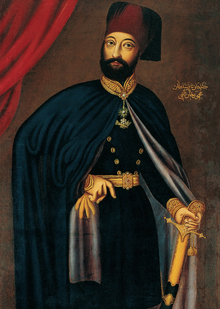
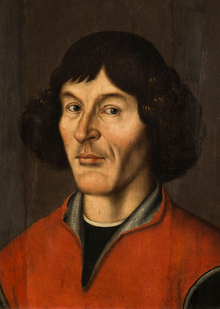
The history of France is not merely a chronicle of conquests and revolutions; it is the evolution of styles that gave birth to masterpieces. From Gallo-Roman mosaics to blazing Gothic architecture, from elegant Renaissance to bold Modernism—French art became a mirror of the era, reflecting its anxieties, hopes, and spirit. In this timeline, we will showcase the intersection between the battlefield and the quiet studio, where the unique character of France was born on canvas and in stone.
III–I век до н. э.
Massilia and Gaul

Ancient Greek silver coin minted in the Hellenistic city-state of Massalia. Image of a lion on the reverse and Artemis on the obverse.
Founded around 600 BCE by Greek colonists from Phocaea, Massalia (modern Marseille) became a vital Greek polis on the Mediterranean coast of Western Europe. The city-state established its own colonies (Nikea, Antibes) and forged close trade ties with Gaulish tribes, spreading Hellenistic influence deep into the continent. During the 3rd–2nd centuries BCE, while retaining formal independence, Massalia fell within the sphere of Roman influence, serving as an ally during the Punic Wars. It ultimately lost its independence after being besieged and taken by Caesar’s forces in 49 BCE during the civil war, becoming a Roman city within the province of Gallia Narbonensis.
The culture of Massalia represented a unique synthesis of Hellenic traditions and local Gallic influences. Archaeological finds, such as ceramics and coins bearing Greek inscriptions, attest to a high level of development in crafts and trade. The architecture combined classical Greek elements (agora, temples) with later Roman constructions. Preserved artifacts, including the famous «Cothian inscription» (the charter of the seafaring brotherhood), demonstrate the developed legal and social culture of the Massaliotes. Of particular significance was the spread of the Greek alphabet and Mediterranean cultural traditions through Massalia, which paved the way for the region’s subsequent Romanization.
I век до н. э. — V век н. э.
Roman Empire
Simone Martini. Fresco depicting scenes from the life of St. Martin of Tours. Cappella of the Lower Church of San Francesco in Assisi. 1322–1326. Fragment
In the 1st through 5th centuries CE, the territory of modern-day France was part of the Roman Empire. Gaul, conquered by Julius Caesar between 58 and 50 BCE, was divided into several provinces (Narbonensis, Lugdunensis, Aquitania, and Belgica). During this period, the «Pax Romana» was established here, accompanied by active Romanization: the construction of roads and aqueducts (such as the Pont du Gard), the founding of cities (Lugdunum—Lyon, Lutetia—Paris), and the spread of Latin. The crisis of the 3rd century involved raids by Germanic tribes, but the empire held firm at the time. However, by the mid-5th century, under pressure from the Franks and other barbarian peoples, Roman rule in Gaul finally ceased.
The culture of Roman Gaul represented a synthesis of Roman and local traditions. Amphitheaters (like the Arena of Lugdunum), thermae, and temples were built, and mosaics and frescoes were used to adorn the villas of the aristocracy. However, with the spread of Christianity in the 3rd–4th centuries (especially after the Edict of Milan in 313 AD), new artistic forms began to emerge. The first Christian basilicas and sarcophagi featuring relief scenes depicting biblical narratives appeared. Writers and theologians, such as Sidonius Apollinaris, who described the life of the 5th-century aristocracy, and Saint Martin of Tours, one of the most revered Gallic saints, played a vital role in the culture of Late Roman Gaul. This Roman-Christian foundation became the basis for the subsequent medieval development of France.
Frankish Kingdom
Albrecht Dürer. Emperor Charles V. 1511–1513. Fragment
The period from the 6th to the 10th century marked the formation of the Frankish state in Gaul. Following the collapse of the Western Roman Empire, King Clovis of the Merovingian dynasty (481–511) united the Frankish tribes, converted to Christianity, and established an extensive state with its capital in Paris. In the 8th century, power shifted to the majordomos of the Carolingian dynasty. The peak of Frankish power is associated with the reign of Charlemagne (768–814), who was crowned emperor in 800 and created a vast European empire. After his death, the empire was divided among his heirs by the Treaty of Verdun in 843, which initiated the separate existence of the West Frankish kingdom—the future core of France.
In the culture of the early Middle Ages, religious art predominated. Among the Merovingians, animal style developed in jewelry, characterized by intricate ornamentation (such as the Saint Eulalia cross). Architecture consisted of basilicas (like the Abbey of Saint-Denis) featuring massive walls and small windows. The true cultural flourishing occurred during the Carolingian Renaissance at the court of Charlemagne. Schools were founded at monasteries (St. Gall, Fulda), book illumination developed (the Utrecht Psalter), and ancient manuscripts were copied. Architectural elements anticipating the Romanesque style emerged—such as Charlemagne’s Chapel in Aachen, which combined early Christian and Byzantine features. This period laid the foundation for medieval Western European culture.
XI–XIII века
The Kingdom of Capetians
Rogier van der Weyden. Charles the Bold as a child stands next to his father, Philip the Good. 1447–1448
The period from the 11th to the 13th century marked an era of consolidation for the French royal dynasty of the Capetians. Lacking significant initial power and controlling only the Île-de-France domain, the Capetians steadily expanded their territories and authority. A key figure in this era was Philip II Augustus (1180–1223), who, during his struggle with the Plantagenets, annexed Normandy, Anjou, and other territories. In the 13th century, under Louis IX the Saint, royal power was strengthened through administrative reforms and the growing moral authority of the monarchy. This period was also characterized by an active foreign policy, which included participation in the Crusades and the fight against the Albigensian heresy in the south of France.
In the arts and architecture of the Capetian era, the Gothic style flourished, replacing Romanesque architecture. Innovative technical solutions—pointed arches, flying buttresses, and ribbed vaults—allowed for the creation of tall, light-filled cathedrals with massive stained-glass windows. Masterpieces of French Gothic include Notre Dame Cathedral in Paris, the Chartres Cathedral, and the Reims Cathedral. In visual arts, illuminated manuscript painting and sculpture developed, becoming more realistic and expressive. Courtly literature flourished—the chivalric romances of Chrétien de Troyes, and the poetry of troubadours who created works in vernacular languages—which contributed to the formation of French national culture.
XIV век
The Hundred Years' War
Jean Froissart. Chronicles of France and England. Late 15th Century
The 14th century became a time of profound crisis for France, coinciding with the beginning of the Hundred Years' War (1337–1453). The conflict with England, sparked by Edward III’s dynastic claims to the French throne, began disastrously for France: defeats at the Battles of Crécy (1346) and Poitiers (1357) called the very existence of the kingdom into question. King John II the Good was captured at the Battle of Poitiers. These military setbacks were compounded by a demographic catastrophe—the plague epidemic («Black Death»), which claimed millions of lives between 1348 and 1349—and social upheaval, such as the Jacquerie (the peasant revolt of 1358) and the Parisian uprising led by Étienne Marcel.
In the culture and art of the 14th century, against the backdrop of wars and the plague, the development of the Late Gothic style continued. In architecture, «Rayonnant» Gothic became widespread, characterized by intricate tracery in rose windows and an abundance of stained glass. However, the general decline and instability led to a reduction in large-scale construction. In visual arts, book illumination replaced monumental forms, reaching its zenith in the works of masters such as Jean Pucelle. Altarpieces, reflecting the search for solace in religion, gained popularity. Literature expressed the era’s tragic worldview, which was vividly evident in the poetry of Guillaume de Machaut and Estache Deschamps, filled with contemplation on death and the transience of the world. This century laid the foundation for the subsequent cultural resurgence that would occur in France in the 15th century.
XV век
Joan of Arc. Gothic
Joan of Arc’s entry into Chinon in 1428. German panel XV. Orleans Museum
The 15th century in France was marked by the conclusion of the Hundred Years' War (1337–1453) against England. Joan of Arc played a key role in this pivotal moment. Her arrival with the Dauphin Charles VII, the Siege of Orléans (1429), and Charles' subsequent coronation at Reims became decisive events that lifted the national spirit and predetermined the outcome of the conflict. Despite Joan of Arc’s betrayal, capture, and execution in 1431, the war ended with the expulsion of the English from most of French territory, laying the foundation for the strengthening of royal power and the creation of a centralized state under Louis XI.
In the art of this period, «flaming» Gothic predominated—a late phase of the Gothic style recognizable by intricate patterns resembling flames found on windows and stained glass. Prominent examples include the Palace of Justice in Rouen and the Saint-Maclou Church in the same city. Sculpture and painting were developing tendencies toward greater realism and emotional expressiveness, which is evident in the works of the Burgundian sculptor Claus Sluter. Concurrently, the art of the Northern Renaissance developed at the Burgundian court, exemplified by the work of Jean Fouquet, who merged Gothic tradition with innovative techniques. The conclusion of the Hundred Years' War and the gradual influx of Renaissance ideas from Italy marked the decline of the medieval Gothic era in France.
XVI век
French Renaissance. St. Bartholomew’s Day Massacre
The Ball at the Court of Henry III of France
The French Renaissance was marred by brutal Religious Wars between Catholics and Huguenots (Protestants). The flourishing of culture during the reigns of Francis I and Henry II, who invited Italian artists (like Leonardo da Vinci) to court, gave way to a period of instability following Henry II’s death in 1559. The confrontation between the two religious factions reached its peak in 1572, when a mass slaughter of Huguenots—known as the St. Bartholomew’s Day Massacre (August 24, 1572)—was initiated by the royal court in Paris and other cities. This act of violence led to the resumption of the civil war, which continued intermittently until the end of the century and concluded only with the accession of the Huguenot Henry IV of Navarre, who issued the Edict of Nantes (1598), granting religious tolerance.
The era of the French Renaissance was characterized by a synthesis of the medieval Gothic tradition and new ideas arriving from Italy. In architecture, this fusion gave rise to a unique style evident in the construction of the famous Loire Valley châteaux (Chambord, Chenonceau), which combined Renaissance symmetry and elegance with the French aspiration toward verticality. The Fontainebleau school introduced Mannerism into painting and influenced French artists such as François Clouet, a master of exquisite court portraits. In literature, humanist ideas flourished, represented by François Rabelais, whose novel «Gargantua and Pantagruel» became a monument to free-spiritedness, and the «Pleiades» poets led by Pierre de Ronsard, who championed the greatness of the French language. The work of Michel de Montaigne, the creator of the essay genre, reflected the skepticism and tolerance that arose as a response to the horrors of religious conflicts.
XVII век
The Great Age. The Bourbons