Table of Contents
Film List
- «Safety First!» (Safety Last! , 1923)
- «The Crowd» (The Crowd, 1928)
- «Speedy» (Speedy, 1928)
- «The Cameraman» (The Cameraman, 1928)
- «Skyscraper Symphony» (Skyscraper Symphony, 1929)
- «Manhatta» (Manhatta, 1921)
Concept
In the 1920s, American cities were rapidly changing. Industry, transportation, and new construction technologies were developing. Skyscrapers became commonplace, streets filled with automobiles, and vast office buildings gathered thousands of people. The city grew, transforming into a complex system where buildings, machinery, and people constantly interacted.
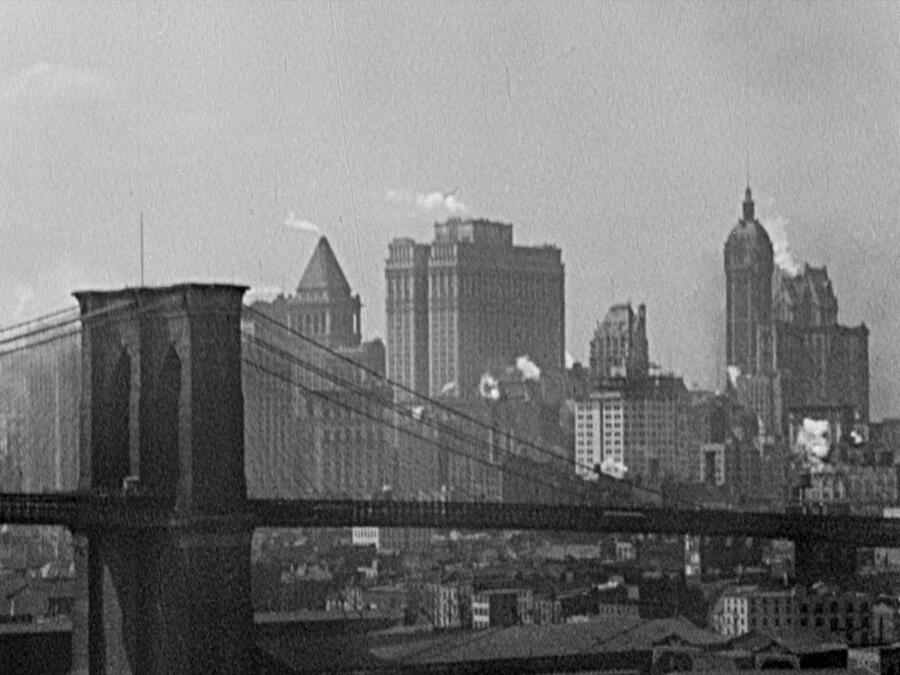
New York Panorama of the 1920s: skyscrapers, dense urban fabric, smokestacks. Frame from «Manhattan» (1921)
These changes were also reflected in American cinema. The city ceased to be merely a backdrop for the story; it became an essential element itself. The camera began to capture architecture, the geometry of the streets, the movement of traffic, and crowds of people. Skyscrapers, bridges, and factories became vital visual devices conveying the sensation of modern life.
The central thesis of this study is that 1920s American cinema depicted the city from two perspectives. On one hand, the city was a symbol of progress, opportunity, and freedom. On the other, it was a place where individuals were lost in the scale of modern civilization, becoming anonymous and dependent on the urban system. This contradiction was manifested through framing, angles, camera movement, and editing.
A frame from «The Crowd» (1928): a vast office, countless identical workstations, and a small human figure among them.
An important aspect was architectural imagery. The vertical lines of skyscrapers, the expansive facades, and the geometry of the streets created a distinct perception of the city. The individual often appeared small against the backdrop of massive buildings, which emphasized the scale of modern architecture. This is particularly evident in Paul Strand and Charles Sheeler’s film Manhattan (1921), where the city is depicted through architectural vistas, industrial structures, and crowds of people.
Another crucial aspect was movement. Traffic, pedestrians, and crowds created a constant rhythm in urban life. The montage connected different parts of the city into a unified system, much like a functioning machine. Movement could symbolize development and new opportunities, but it could also illustrate how individuals conform to the overarching urban order.
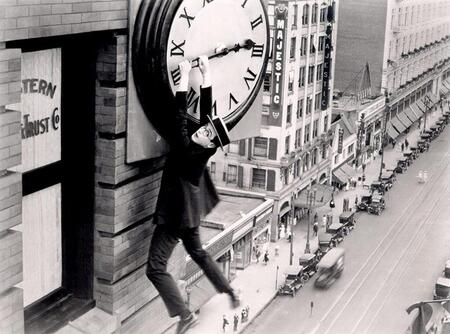
Particular attention is paid to the relationship between the individual and the mass. In King Vidor’s film «The Crowd» (1928), large office spaces and rows of workstations emphasize the impersonality of the individual. Conversely, in Harold Lloyd’s film «The Speedy» (1928), New York is portrayed as a place of activity and new opportunities.The study encompasses both narrative and experimental films: «Manhattan» (1921), «Safety First!» (1923), «The Crowd» (1928), «The Speedy» (1928), and «Symphony of Skyscrapers» (1929). By comparing them, one can observe diverse ways of depicting architecture, urban movement, and people.
Thus, this work examines the American city of the 1920s not merely as a backdrop, but as an independent cinematic image that reflects the complex relationship between humanity and contemporary urban life.
Part I. The City Becomes the Main Character
Paul Strand, Charles Sheeler. «Manhatta,» 1921. A view of high-rise urban development.
In the 1920s, American cities underwent rapid transformation. Industrial and technological advancements led to the rise of skyscrapers, new transportation systems, and large-scale public spaces. New York became one of the primary symbols of modern urban life.Cinema began to view the city not merely as a setting, but as an independent subject of visual representation. The camera turned toward the architecture, the street panoramas, and the movement of crowds, allowing the metropolis to be perceived as a single organism.
«New York created Modernism, and Modernism created New York.»
Paul Strand, Charles Sheeler. «Manhatta, ” 1921.
People in the film appear primarily as part of a collective movement: ferry passengers, pedestrians, and workers. Their figures merge into flows reminiscent of a large machine at work. Researcher Juan A. Suarez, in the article «City Space, Technology, Popular Culture: The Modernism of Paul Strand and Charles Sheeler’s Manhatta» (2002), examines the relationship between architecture, transportation, and movement in the film. The city here assumes a machine-like character.
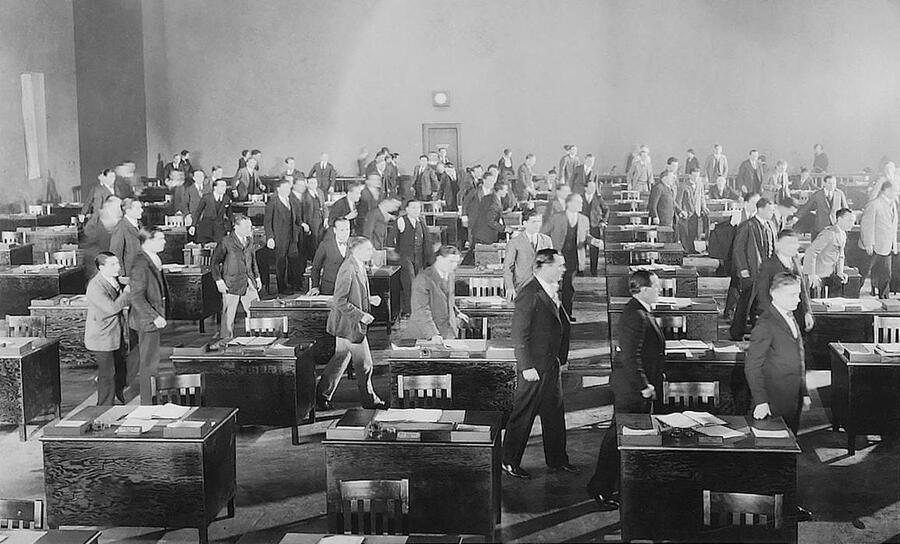
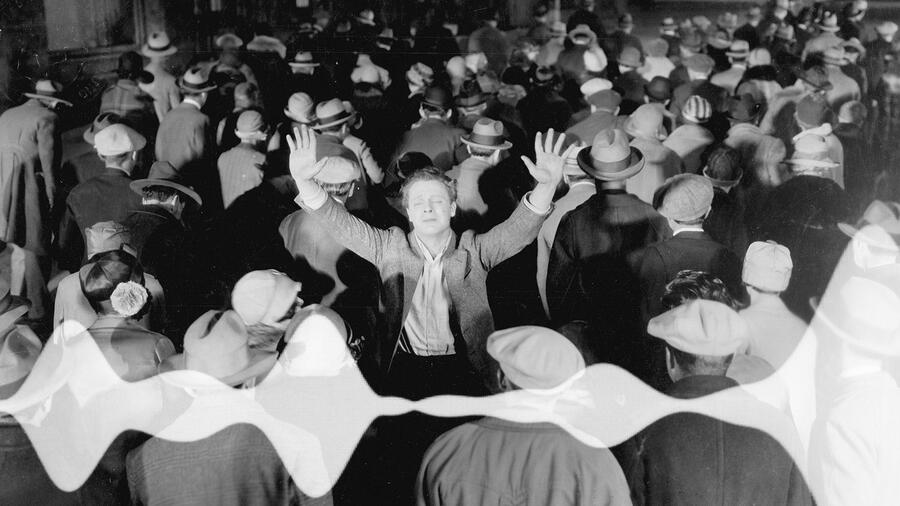
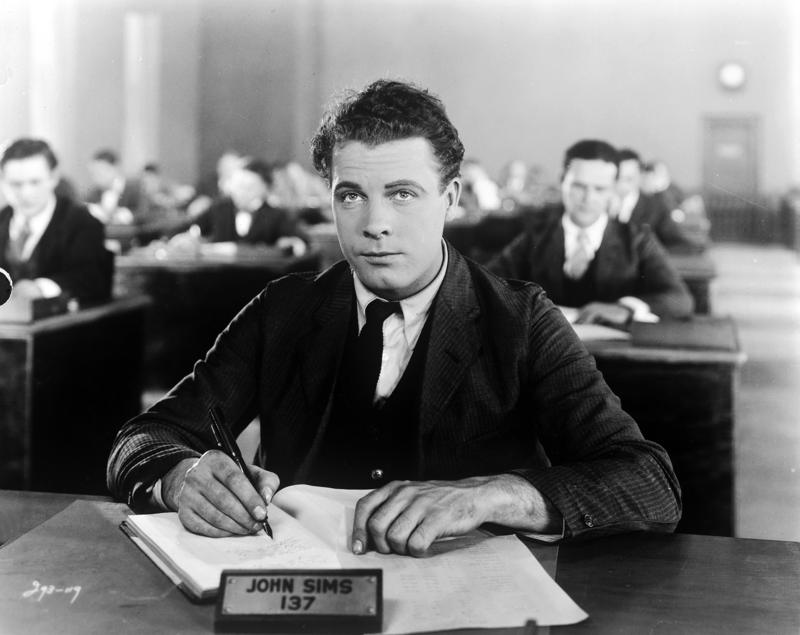
King Vidor. «Crowd,» 1928.
pvpvpvpvpvp