Categories
Concept
I) Grotesque weight of the silhouette: absurd anatomy and proportion imbalance
II) Pressure of space on the body
III) Fragmentation of character images
Conclusion
Bibliography
Image Sources
Concept

Pärn is a prominent figure in Estonian auteur animation from the second half of the 20th century, possessing a distinctive artistic voice within Estonian animation. In his films, he employs grotesque elements to create a vibrant visual statement: characters may stretch, compress, or alter individual body parts, and their silhouettes can even adopt the shape of an object. Pärn’s characters are recognizable because his signature style is characterized by the grotesqueness and absurdity of events, as body proportions defy the laws of anatomy.
This theme is also interesting because Price uses body deformation animation to convey the inner state of the characters. The same technique can carry a different meaning depending on when and how the character’s figure changes.
The core principle in the figures' plasticity is the imbalance of proportions, which distinctly conveys the character of the events surrounding the characters. As a result, the character becomes a bearer of a flexible visual language, capable of reflecting the situation or state in various ways. Intentional deformation and hyperbole of individual body parts function here as a dramatic tool, allowing the hidden emotions, social rigidity, or absurdity of the situation to be seen without a single word. The relevance of this research is primarily tied to the autonomy of the corporeal grotesque system in the animation of an Estonian artist. Deformation in the animated works is used as a principle for constructing the character’s image. By altering their form, the characters convey not only their external condition but also their internal state—be it experience, fear, confusion, joy, or the exploration of a different persona.
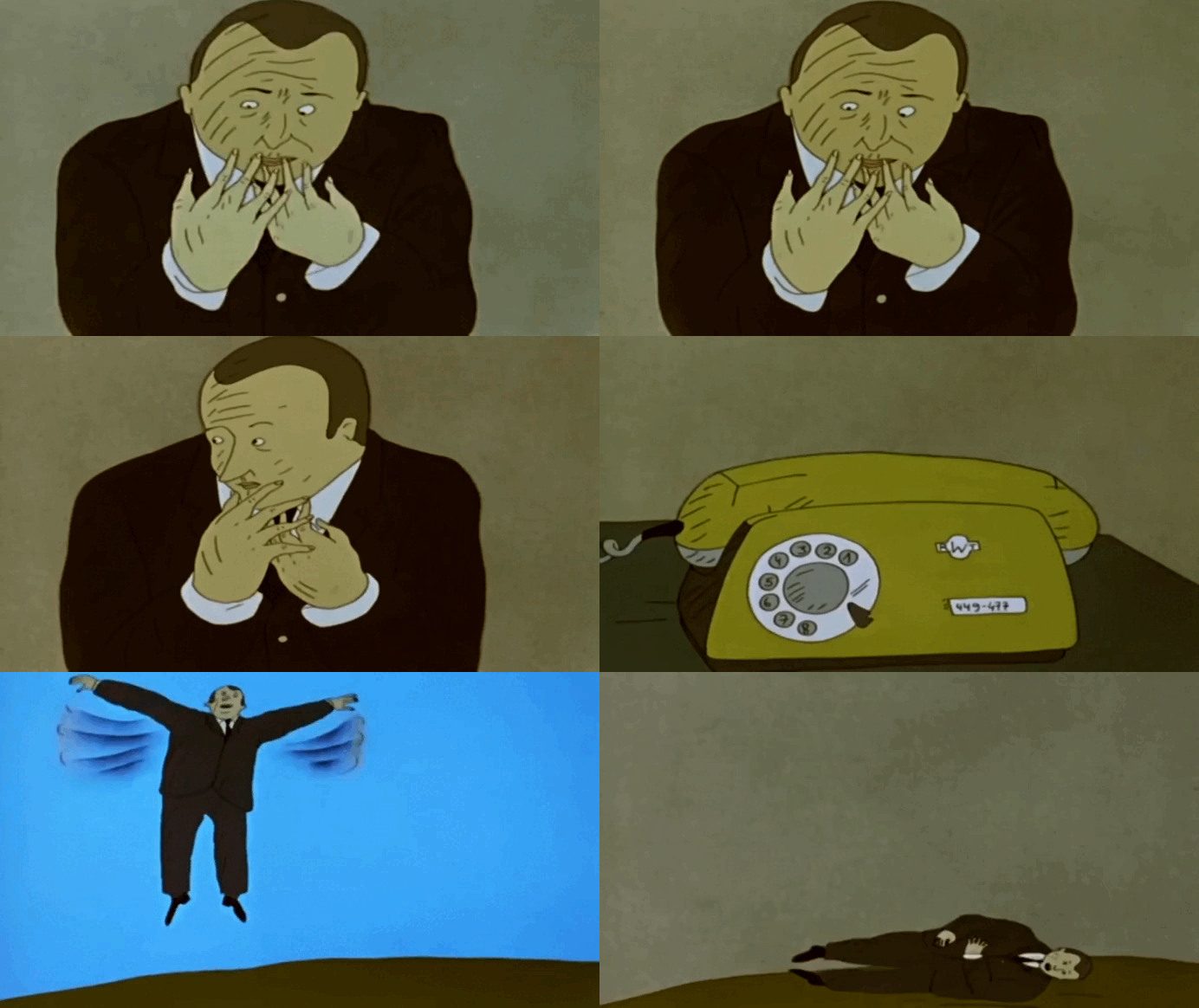
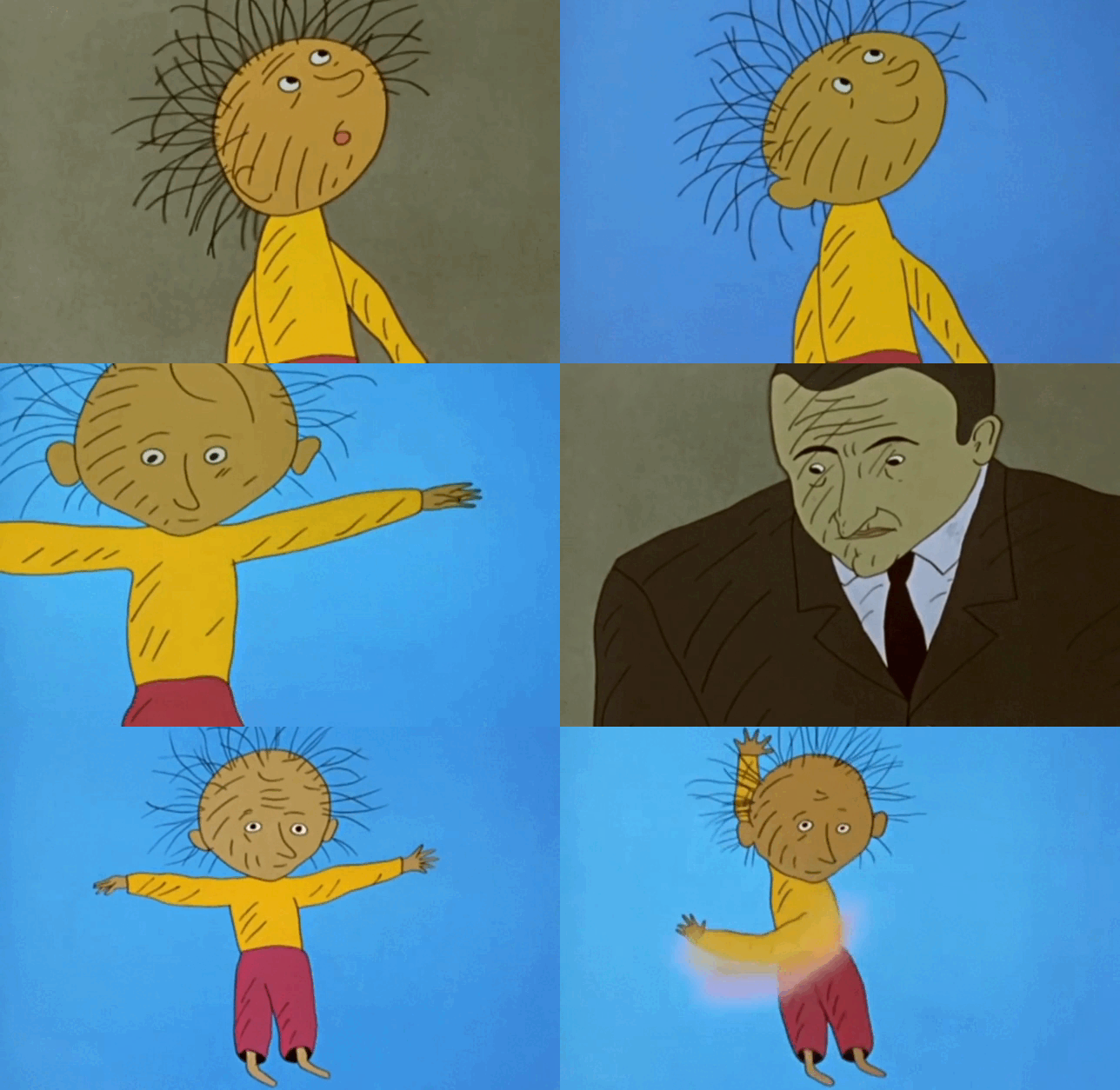
Some Exercises from Daily Life (1980), directed by Prijit Parn
The visual material will be selected based on the principle that the visual research structure will be built around how the grotesqueness of characters is manifested in the films of the Estonian artist. Initially, we will examine how Pärn uses grotesqueness to create absurd images by constructing the anti-anatomy of the heroes' bodies. In the next section, we will study how the figure is capable of changing its form within or under the influence of its surrounding space. Finally, we will consider how the author violates the integrity of the figure, assigning a unique role to individual body parts at the moment the characters are in action.
The central question of the visual research: How does Pirte Pärn alter the perception of her characters by employing grotesque imagery—by disrupting their anatomy, modifying their environment, and influencing how the setting affects the characters?The research hypothesis is that the grotesque in the Estonian artist stems from the disruption of the connection between the body parts and the surrounding space. By breaking proportions, a sense of instability is created in an image where the character does not belong to the human or material world.
Object of Study:
Animated films by Jiří Trnka
1977–1995
Subject of Study:
The transformation of physicality and the visual principles of grotesque structure in the work of Jiří Trnka
Grotesque Silhouette Weight: Absurd Anatomy and Proportional Imbalance
Pratt Payne’s animation style is built on the free deformation of the human figure. Payne utilizes the magnification of body parts to create a sense of caricature in the image, which allows him to emphasize the inner essence of the characters as well as to mock societal flaws.
Pratt’s grotesque style was based on using his artistic technique to push the characters' states toward a comical distortion of the body. So much so that the absurdity in his graphics became literally part of the visual language.
Chris Robinson, in his publication «Estonian Animation: Between Genius and Utter Illiteracy, ” notes that Pärn deliberately ignores the anatomical perfection of a Disney character.
In the films «1895, ” „The Grass is Blue, ” and „Hotel E, ” the characters’ heads barely emerge, as if they are drawn into their shoulders. This creates a distinct sense of awkwardness.
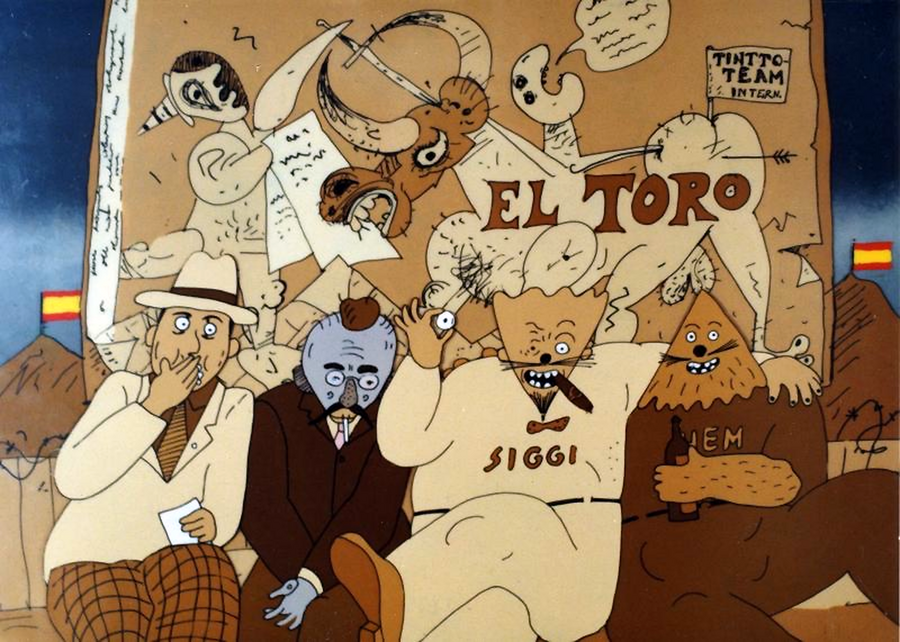
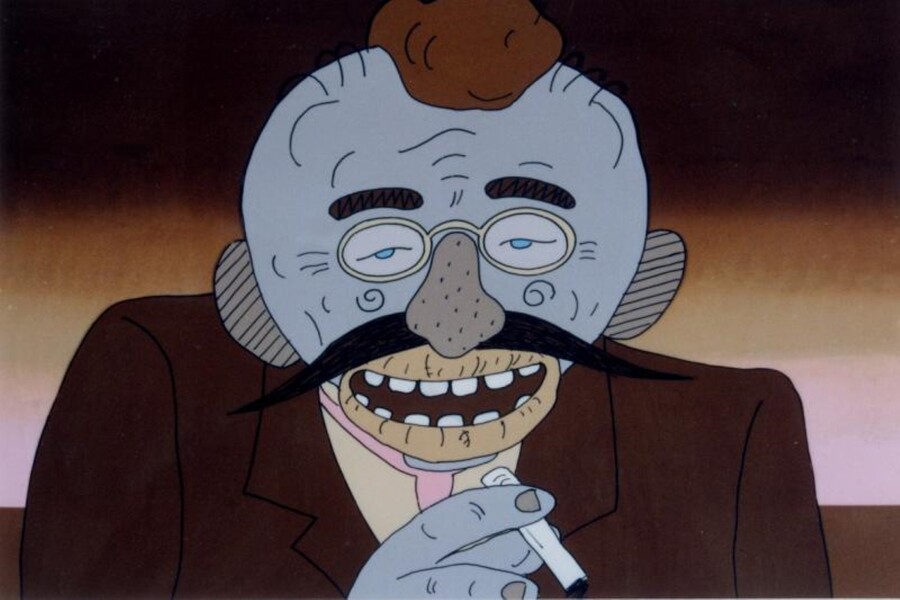
1895 (1995), directed by Prait Parn
Long arms and raised shoulders make the character appear very cumbersome, creating a feeling of internal constraint and tightness.
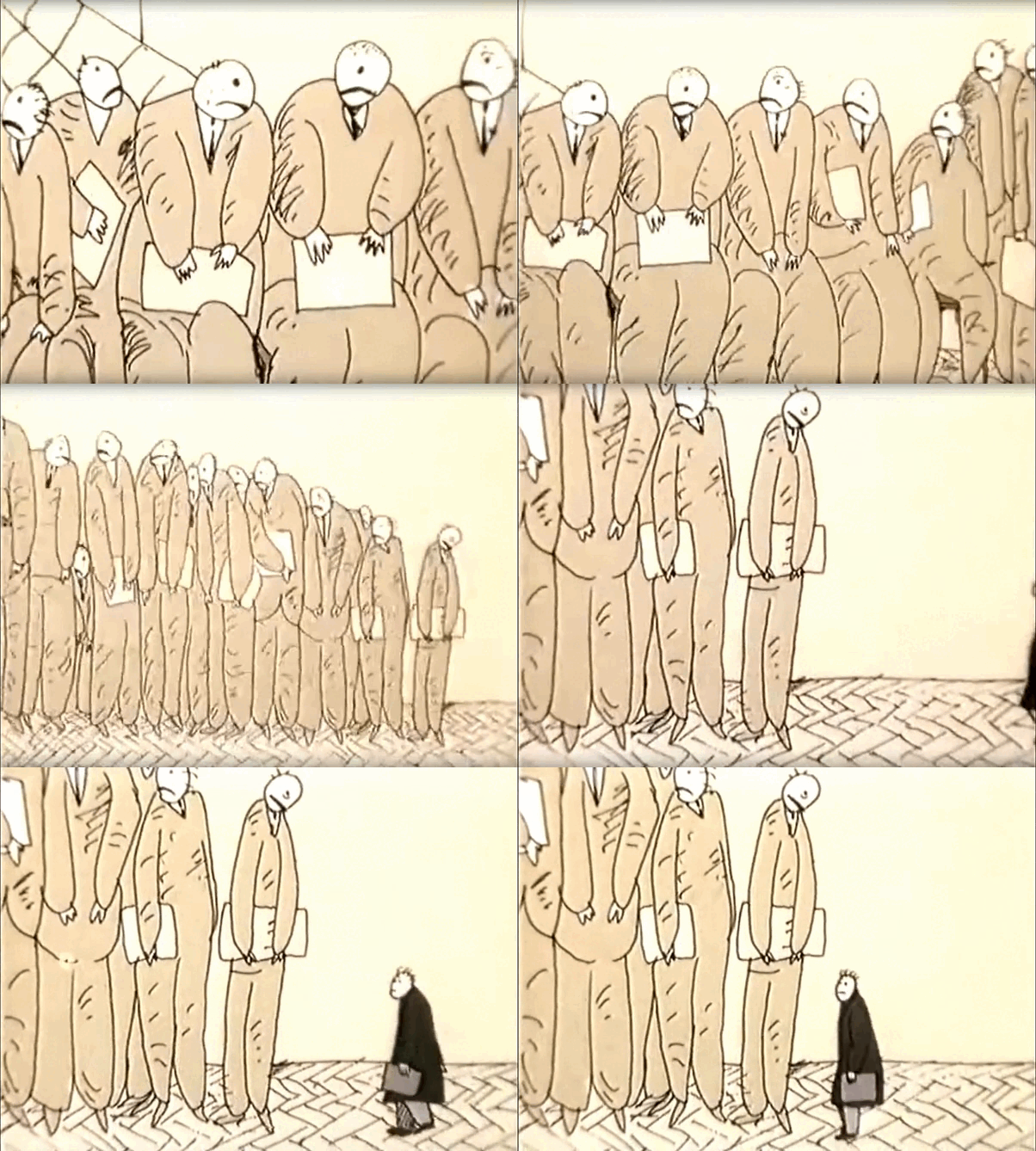
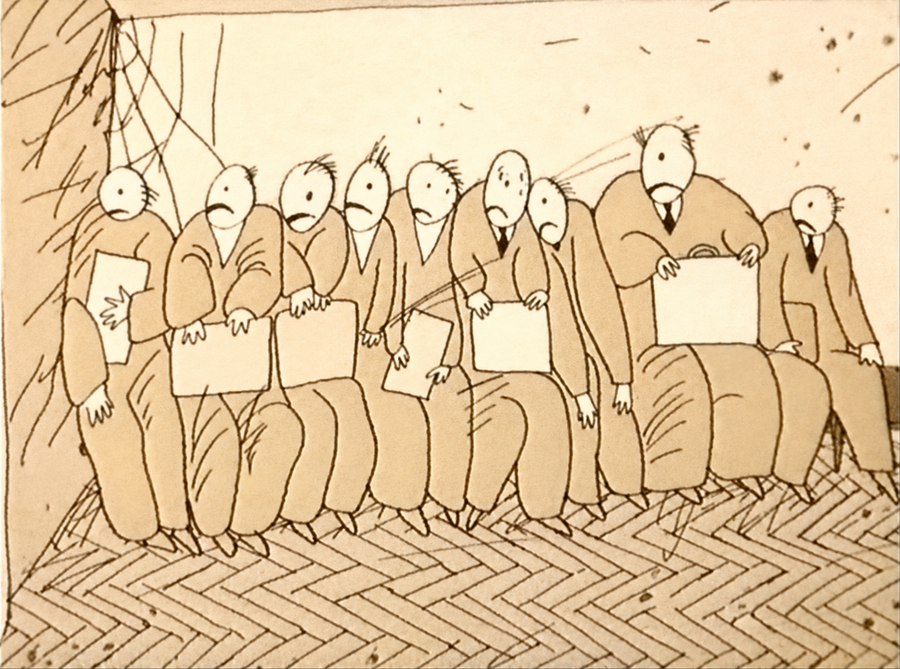
In his other works, the Estonian artist employs the technique of enlarging the body’s volume. In his own visual system, the Estonian artist pushes this excess into shapeless masses.
Exaggeration, hyperbole, excess, and superfluity are widely recognized as one of the most fundamental characteristics of the grotesque style.
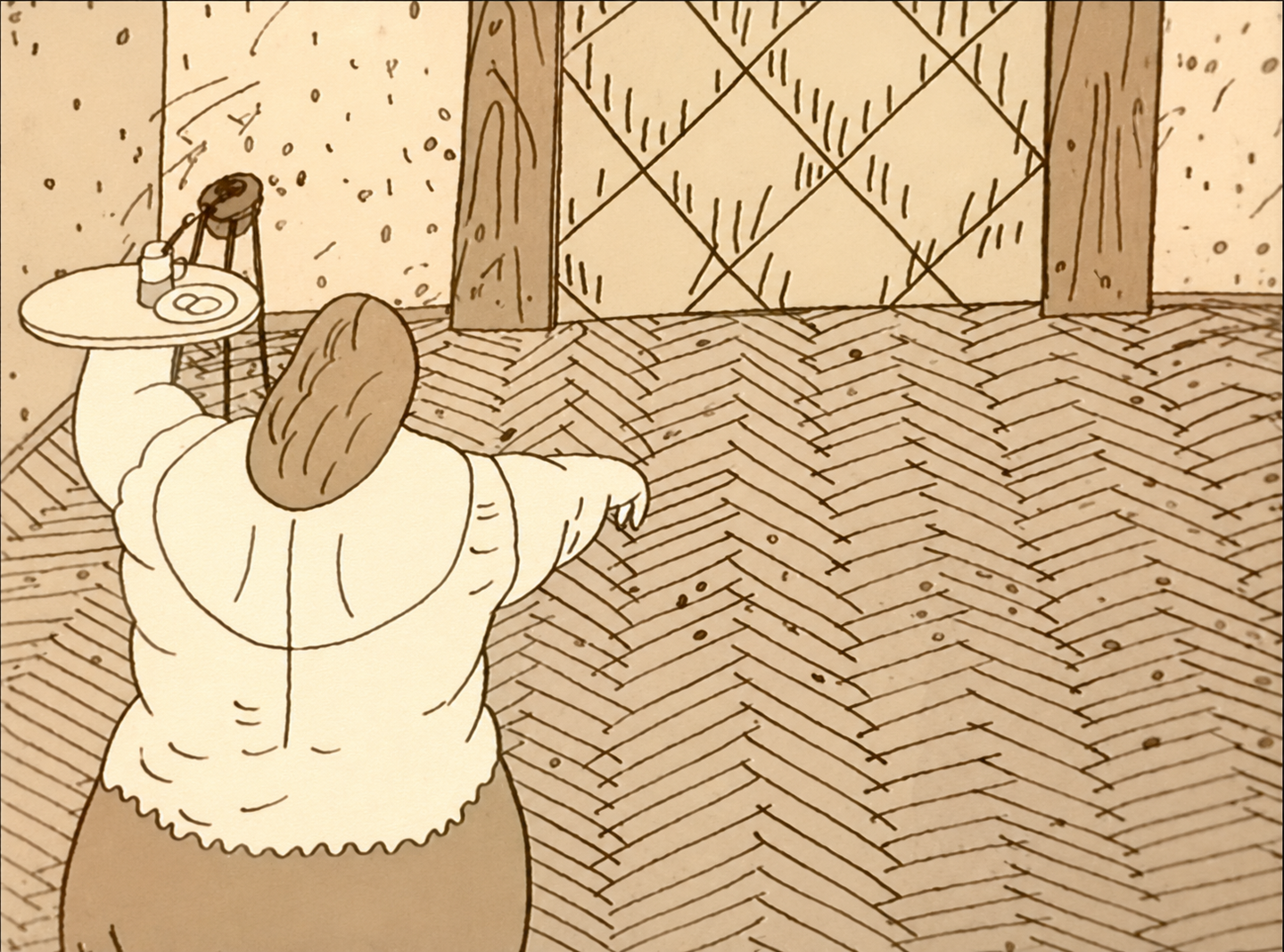
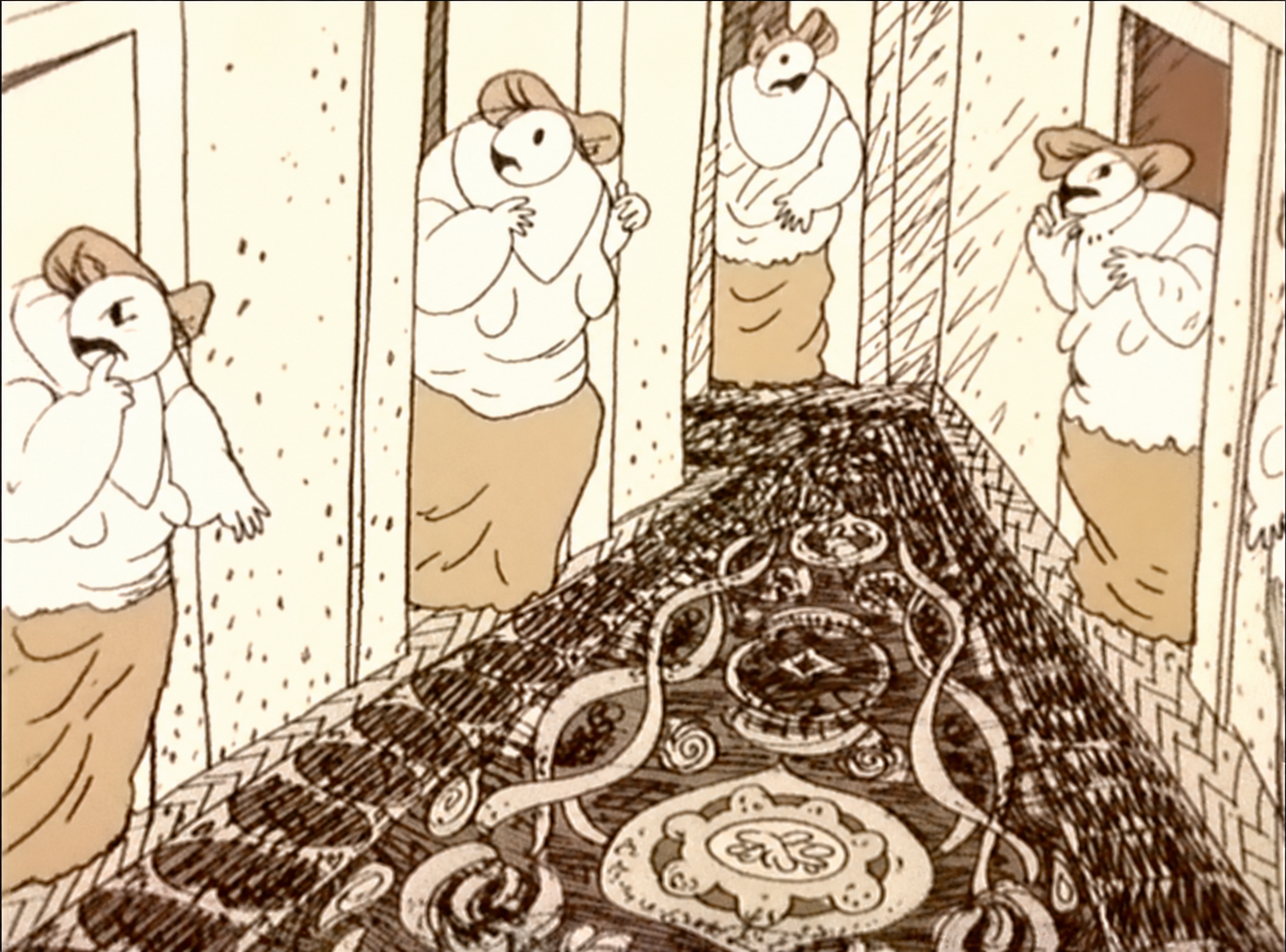
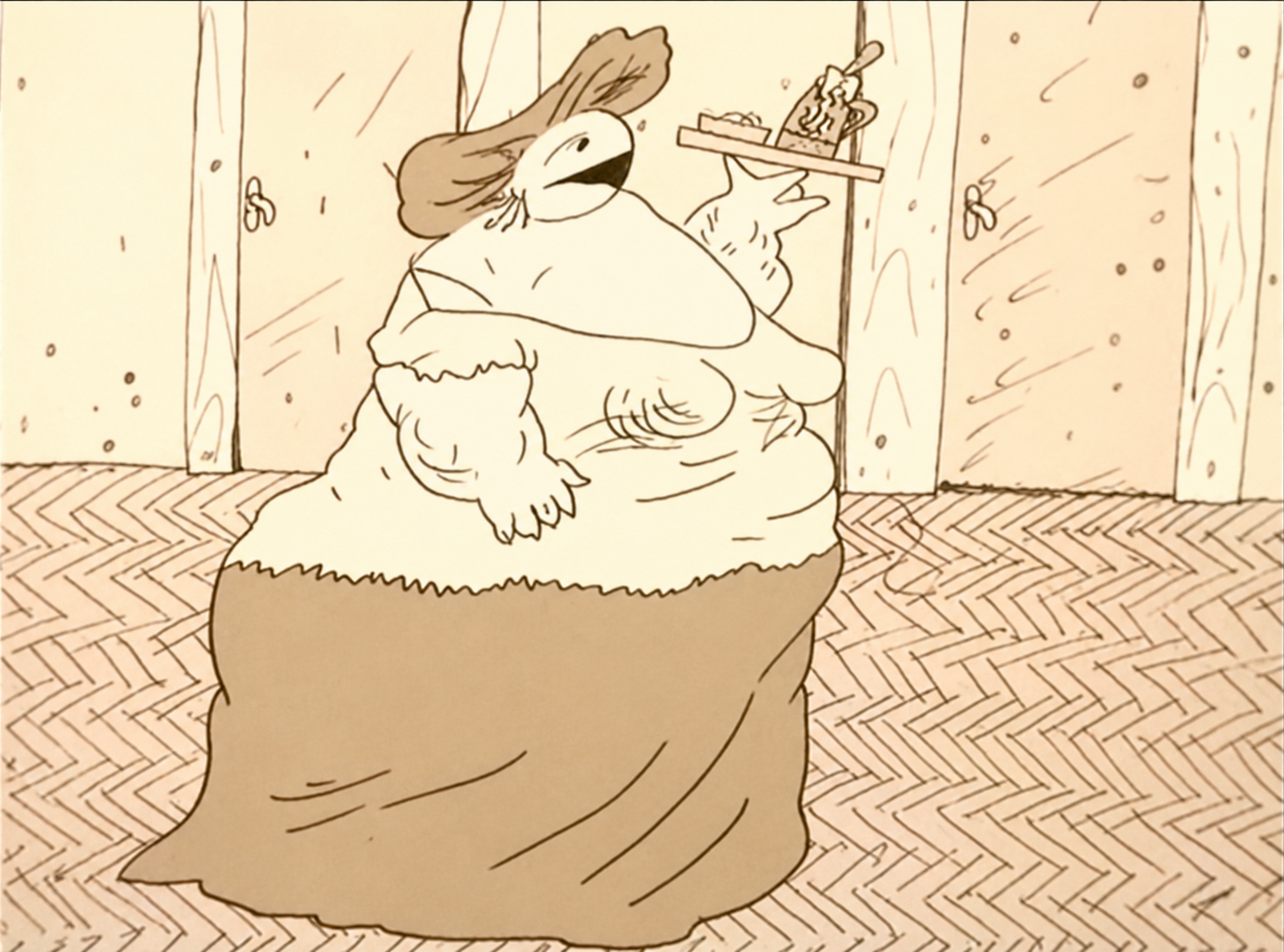
Breakfast on the Grass (1987), directed by Prit Parn
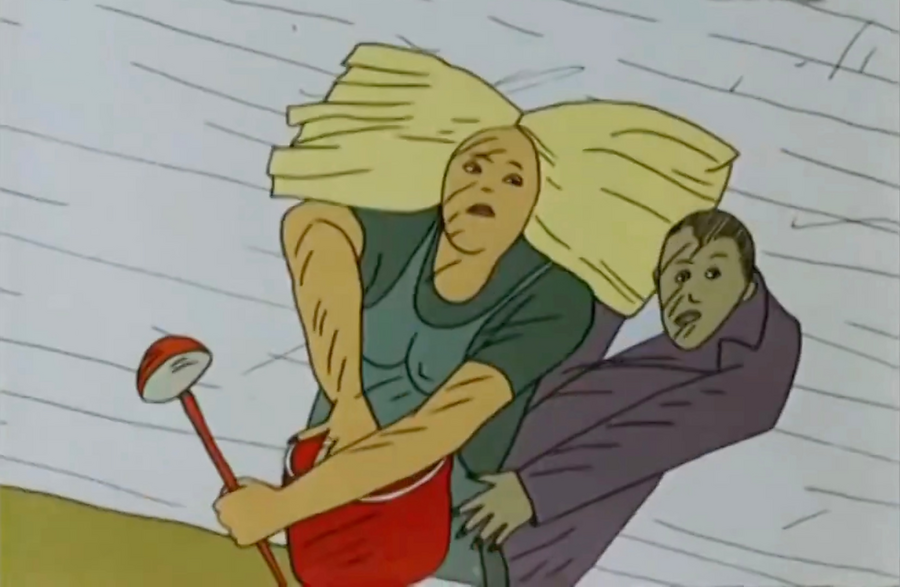
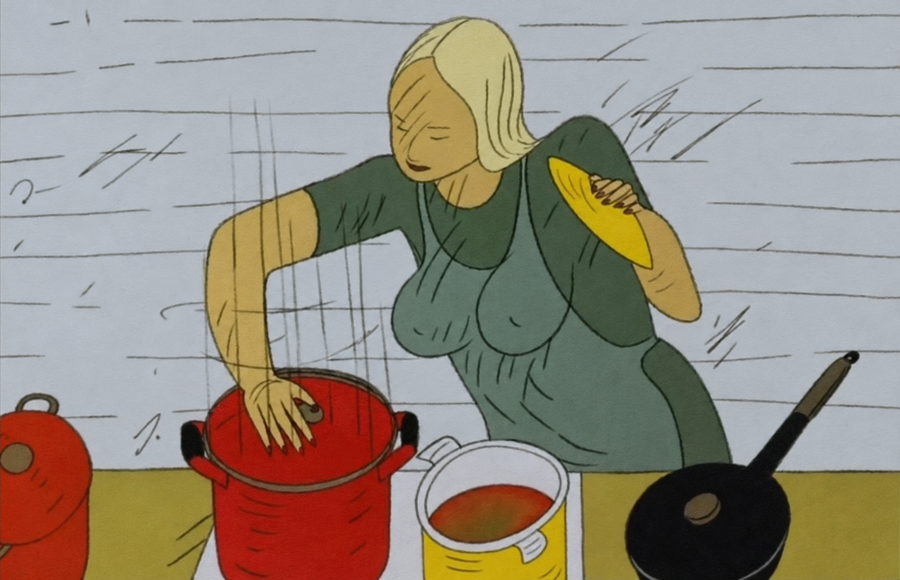
Triangle (1982), directed by Prit Pyarn
Bakhtin M. M. The Creativity of François Rabelais and Folk Culture of the Middle Ages and Renaissance. — Moscow: Artistic Literature, 1990. — p. 366.
Robinson, Chris. Estonian Animation: Between Genius and Utter Illiteracy. — Eastleigh: John Libbey Publishing, 2006.
Hotel E (1992), directed by Pytir Parn