〇(Zero) Concept
выбор темы исследования | принцип отбора материала | принцип выбора и анализа текстовых источников
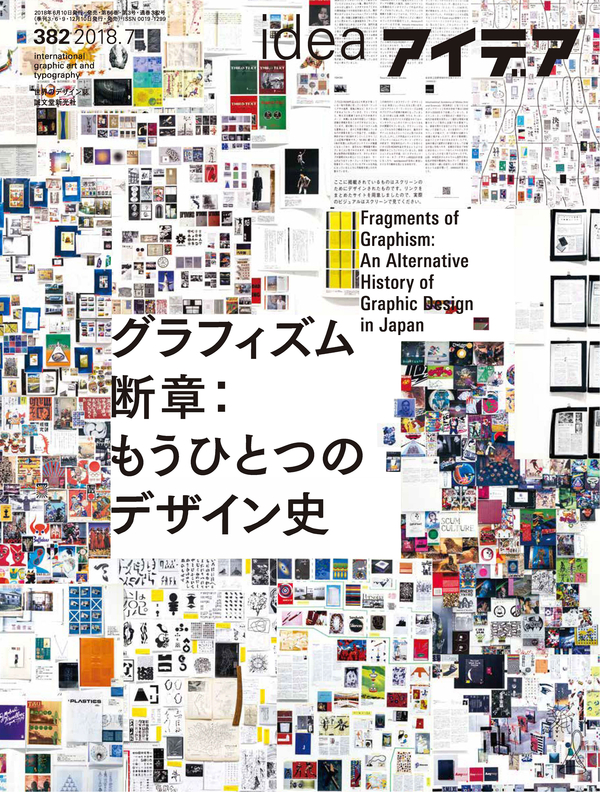
The topic of the visual study is the design of the Japanese magazine Idea Magazine, serving as an example of a publication where the history of graphic design is conveyed through the physical form of the printed magazine itself. Idea was chosen for this study because it is a professional publication where the cover, typography, grid, spreads, and material presentation structure hold independent significance. The journal publishes content on graphic design, typography, poster art, book design, visual systems, individual artists, and design schools, allowing it to be regarded as a visual archive.
The primary reason for selecting this topic is that Idea Magazine allows for the study of graphic design history through a specific visual medium. Within the magazine, one can observe how the approach to the cover evolves, how spreads are constructed, how large volumes of information are organized, how Japanese script and Latin characters interact, and how text and imagery function within a singular system.
The research material was selected based on visual and historical significance. The collection includes covers from various periods, spreads with notable typographic structure, pages featuring archival materials, and contemporary issues. The selection was not based on the criterion of «the prettiest covers.» It was more important to choose examples that demonstrated how the magazine engages with form—where the cover resembles a poster, where a spread is structured like an archive, where typography becomes the primary visual element, or where the image dictates the page structure.
Textual sources were used to clarify facts—such as the magazine’s history, dates, designer names, issue themes, and the overall context of Japanese graphic design. Visual analysis remains the foundation of this work. Textual sources are necessary to substantiate observations, connect the selected examples to the history of graphic design, and explain why certain visual solutions hold significance.
0. Key Question and Hypothesis
How does the journal Idea use its cover, typography, and spread structure to document and interpret the history of graphic design?
The hypothesis posits that Idea functions as an independent graphic system. Its design history is conveyed not only through accompanying texts and published imagery but also through the magazine’s compositional choices: the grid, rhythm, typographic hierarchy, principles of archival presentation, and the interplay between different writing systems. The journal can thus be viewed as an example of how a printed publication evolves into a complete tool for visual analysis.
Zero Rubrication
0 Concept 1 History of Idea Magazine 2 The magazine as a graphic design object 3 Idea Magazine covers 4 Internal structure of the magazine 5 Conclusion
Issue 1: Idea Magazine History
Idea was launched by the publisher Seibundō Shinkōsha in 1953. According to the publisher itself, the first issues of Idea were released in 1953; the magazine’s official website confirms that it is a quarterly publication from Tokyo dedicated to graphic design and typography. A historical overview in The Arts of Japan notes that the magazine succeeded the pre-war Kōkoku-kai—the only specialized publication on advertising in Japan before World War II. In this sense, Idea was not a random newcomer from the start.
Initially, the magazine was more closely tied to advertising graphics. In its first decades, its English subtitle was International Advertising Art, and its Japanese subtitle was «design, advertising, and sales.» In the late 1990s, the concept was updated: the subtitle was changed to International graphic art and typography, which more accurately reflected the magazine’s shift from applied advertising topics to the broader field of graphic design and typography.
Key figures were involved from the very first issue. A historical review in The Arts of Japan reports that Yusaku Kamikura created the magazine’s logo, Kenji Ito designed the first cover, and Hiroshi Oti served as the art director. The official page for the first issue confirms this: Issue No. 1 was published in July 1953, the page lists «cover by K. Ito,» and the table of contents simultaneously features articles on Swiss posters, texts about Raymond Savignac and Paul Rand, an overview of Japanese advertising art, and editorial pieces on the profession of art direction. The very first issue demonstrates that the magazine was constructed as a bridge between the Japanese scene and international modernist design.
IDEA No.001, 1953/7
This is particularly noticeable if you view the early archive in series rather than issue by issue. On the official archive pages from 1953–1958, you find alongside «Outdoor Poster in U.S.A.», «Modern Advertising Arts in Germany, ” and „Graphic Design in Great Britain, ” issues dedicated to designers from Hokkaido, issues focusing on the Hokuriku region’s designers, and publications related to AGI. In short, from the very beginning, the journal established a dual field of vision: international examples on one hand, and regional and national scenes within Japan on the other.
IDEA No.002, 1953/9 | IDEA No.007, 1954/9 | IDEA No.015, 1956/2 | IDEA No.016, 1956/4 | IDEA No.018, 1956/8 | IDEA No.021, 1957/2 | IDEA No.022, 1957 | IDEA No.027, 1958/2 | IDEA No.028, 1957
Historically, this coincides with the formation of the post-war professional graphic design scene in Japan. Britannica names Yusaku Kamikura as a leading figure of the first post-war wave of Japanese graphic designers, while JAGDA indicates that the Japanese Graphic Designers Association itself was not founded until 1978. The Idea, therefore, predates JAGDA by roughly a quarter-century: the magazine emerged before the largest professional organization was formally institutionalized, operating as a platform for professional communication as early as the 1950s.
Excerpt from the JAGDA Exhibition Poster, Tokyo, 2025
JAGDA Books, Graphic Design in Japan, 2003–2025
Posters for the JAGDA Exhibition, Tokyo, 2025
Journal as an Object of Graphic Design
Different issues feature the editor, publisher, cover designer, art director, sometimes a dedicated table of contents designer, translators, photographers, application designers, and special section designers. In issue 166 from 1981, for example, Cover Design: Ikko Tanaka and Table of Contents design: Yukio Kanise are listed separately; in 1987, issue 204 features the cover design, editorial team, and types of regular sections; and the milestone issue № 250 from 1995 even includes a dedicated «About the Cover Design» section. This continues in contemporary issues: direction, design, photography, translation, and chapter structure are listed individually.
IDEA No. 166, 1981/5
The issue is structured as a designed system of transitions between blocks: a special theme, an essay, historical insertions, series, book reviews, informational pages, interviews, a roundtable discussion, and appendices. This is particularly evident in contemporary issues. Issue 369 is built around a «visual chronology» of Japanese design from 1990–2014, complemented by essays, sections on awards, the zine scene, and infographics; Issue 400 focuses on archives while also featuring its own archive of Idea covers from 1953 to 2022.
IDEA No. 369, 2015/04
IDEA No.400, 2022/12/10
The evolution of the format confirms this. In 2014, the editorial team announced a transition from bimonthly to quarterly publication, explaining this shift as part of a reorganization of the publishing workflow with a greater emphasis on books and web services. In 2023, Idea launched digital copies, while specifically noting that the digital version does not alter the print layout—it merely adds reading convenience and text search functionality.
Two Covers
IDEA No.413-358, 2026-2013