CONTENTS
CONCEPT
- HISTORY OF CHILDRENS' BOOKS The 17th century legacy of Comenius and the 1774 Elementarwerk of Basedow and daniel chodowieski.
- THE 19th CENTURY RISE OF PICTURE BOOKS. Illustration, imagination, and the rise of the picture book.
- THE 19th CENTURY AND SOVIET VIEW POINT Modernism, mass education, and visual experimentation
- THE DIGITAL ERA OF THE LATE 20th AND 21st CENTURY. Diversity, digital media, and child-centered learning
- CONCLUSION
- BIBLIOGRAPHY
- IMAGE SOURCES
CONCEPT
In his book Orbis Pictus (1658) a 17th century Czech educator Comenius Introduced the principle of «Learning through intuition» an innovation that changed the world of education for children where he encouraged the children understanding of the world through text and images. The concept of understanding by Images intrigues the reader to understand what may seem to be abstract ideas in the text. He stated that «There is nothing in the intellect that has not first existed in the senses”(Orbis Sensualium Pictus 1658) this draws our mind back to vision as a primary and original source of knowledge and imagination since the power of imagination sticks images into our brains before text, perhaps text alone forces us to imagine what exists in nature but if supported with an image, it creates intuition to quickly understand the the concept and it’s purpose. The main objective of this research is determining the work of illustrators as elementary education practitioners. Besides the work of teachers and authors in the work of educating children there is always an invisible hand that puts up a clear bridge between author and the reader and highlights the key points that catch the eyes of learner and bring the message closer. Images speak a universal language that even the word is created by a set of symbols called letters which create sounds and when combined together form a joint sound which is attached to a meaning either standing alone or joined together to create a sentence. Illustrations always give a clear meaning even when the text seem to be strange, probably in another language, so, elementary learners may know the language but not familiar with reading and meanings but when attached with a universal image it helps them recognise what initially seemed to be anonymous. In this study we will dig deeper into the history of Illustration in elementary learning from the first illustrated children’s books Orbis Pictus by John Amos Comenius through Basedow’s Elemetearwerk illustrated by Daniel Chodowiecki (1774) and other historical examples from the 17th to 18th century.
The 19th Century evolution from decorating text to addressing children visual habits. The illustrators in Europe drew more attention to children educative imagery by creating sequences of images with extremely minimal text so as the children may attain the ability to draw meaning from the narrative ability of the pictures. We observed the golden age of illustration in the 19th to early 20th century. In this period we observed how the illustrators used innovative colour application and sequencing techniques in children’s books to attract children to read, understand, strengthen their imagination and portraying values and moral enhancements through the short stories and engaging the young to give ideas depending on on what they have read since some had even questions. The Innovativeness of the late 20th and 21st centuries that gave a diverse range of ideas the use of digital media and motion books where the books are read online in video form and the digital illustrated soft copy books uploaded on online libraries. The study as well collected multiple illustrators from various periods and their particular roles as not only in literature but as elementary education practitioners and how through their creativity interlock images with text to generate meanings and simplify the learning process besides creating images standing alone as educational materials used by the teachers.
HISTORY OF CHILDRENS' BOOKS
The 17th century legacy of Comenius and the 1774 Elementarwerk of Basedow and daniel chodowieski.
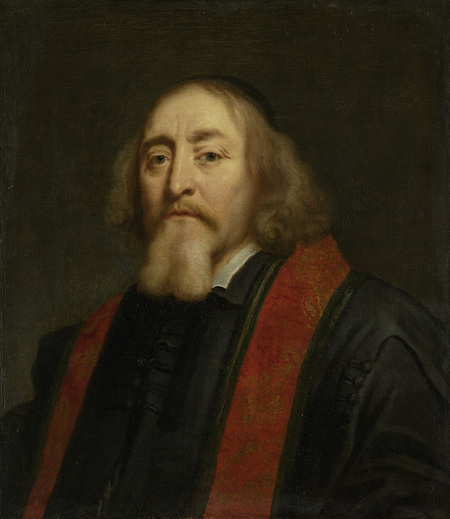
The legacy of Comenius John Amos Comenius, was a Czech educator and evangelist of the 17th century. He highly advocated for «Learning through Intuition» among children education. His belief that children learn better while seeing did not end as a theory but in 1658 he went ahead and Introduced the first illustrated childrens' picture book Orbis Pictus fully known as Orbis Sensualium Pictus (The Visible World in Pictures). He created the book through woodcut illustrations and minimal text which highly described what exactly was in the images. The main contents of the book were aimed at teaching children nature, language, work, religion, and everyday objects. Orbis Pictus became a precursor of children' book and it opened up the influence of picture books where a new movement of education adopted. In 1774 Base after the influence Comenius Johann Bernhard Basedow wrote Ellemetawerk which was Illustrated by Daniel Chodowieski.
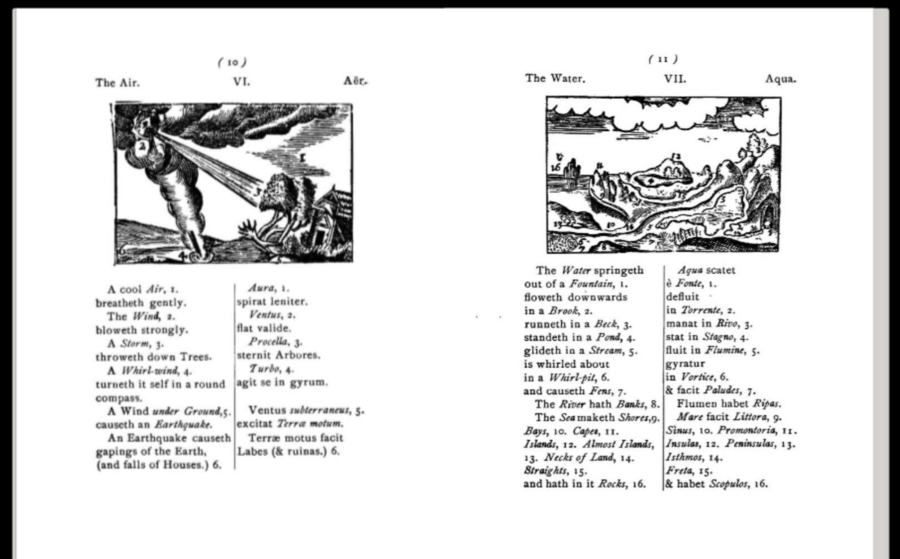
Pages from Orbis pictus of John Amos Comenius by Comenius, Johann Amos,
Orbis Pictus became a precursor of children' book and it opened up the influence of picture books where a new movement of education adopted. In 1774 Base after the influence Comenius Johann Bernhard Basedow wrote Ellemetawerk which was Illustrated by Daniel Chodowieski.
The 1774 «Elementarwerk» of Bernhard Basedow and daniel chodowieski.
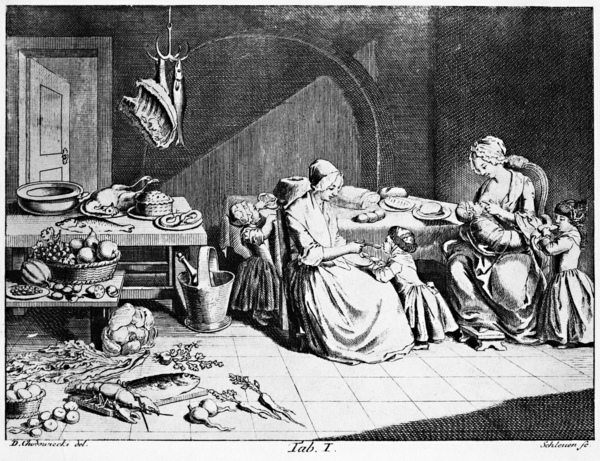

Most types of food. from Elementawerk Illustration by Chodowiesky
Due to the influence Comenius, Elementawerk was authored in 1774. It was written by the German education of the 18th century reformer Johann Bernhard Basedow. He commissioned Daniel Chodowieski to create the illustrations for this book who created them 1726-1801 who produced neary 100 engravings on copper plates for the book. This book was used as a children’s book that helped the children to learn, nature, work, society, language, health and moral behavior. This fully illustrated book was created with copper engravings that were used to mass print them. The book had almost the same theme like that of Comenius. The book was Intended to teach children from simple to complex. It taught simple anatomy, trade, family life, science and religion.
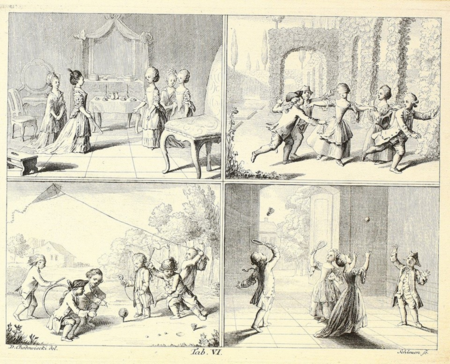
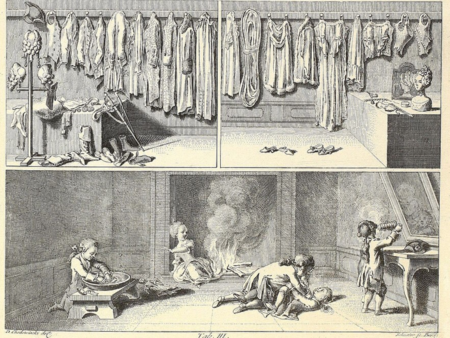
Pages from Elementarwerk 1774
THE 19th CENTURY RISE OF PICTURE BOOKS
Illustration, imagination, and the rise of the picture book.
The 19th century is the period when the picture books transformed from normal books with moral lessons from the 18th century to children «visual entertainment.» More entertaining story books were created where the images and text jointly constructed narratives linked to various themes and ideas since there was even an advancement in style and technology.
Advancement in technology from woodblock printing technology to colour printing
Double spread engraving printed by Evans, illustrated by Caldecott from his The Diverting History of John Gilpin, (1887 edition) showing colour separation and stippling techniques
It is in this period when there was an advancement in technology from woodblock printing technology to colour printing. There emerged new styles of printing that added colour into children’s books for example Lithography invented in German and in 1796 and Chromatography in France in 1837. Evan’s Edmund Britain mastered the technique of wood engraving with colour rendering that were used by many authors in their books. These techniques made it common and cheaper for colour illustrations to be printed.
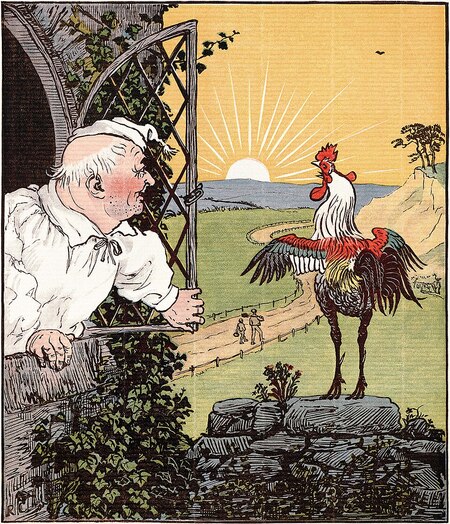
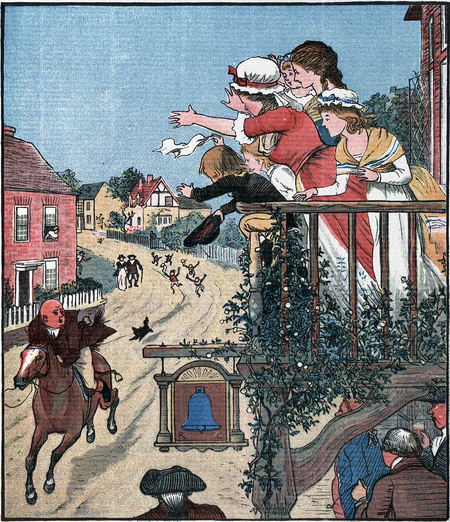
Engraving and printing by Edmund Evans, illustration by Randolph Caldecott (1887)
Another Example of Engravings thet were rendered with color by Edmund Evans shown In these Illustrations by Caldecott 1887. These are great examples of color Illustrations that were done for the Children’s books.
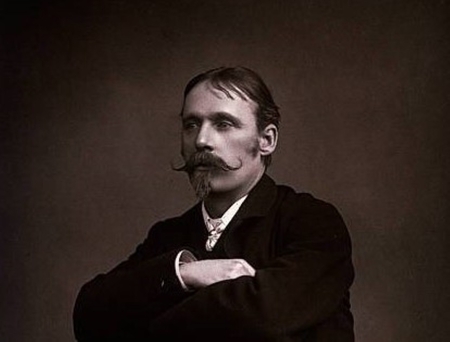
'Walter Crane (15 August 1845 — 14 March 1915) was an English artist, book illustrator, and prominent advocate for anti-authoritarian democratic socialism among British socialists and in the labour movement of the 19th century. An artistic activist—retroactively classifiable as an «artivist"—Crane produced a large body of both apolitical illustrations for primarily children’s literature, though also contemporary (Victorian era) English adult-audience trade-books and general-interest literature, as well as visual works with explicit socio-political messaging' source[wikipedia] Walter crane was considered to be one of the most influential children book illustrator of the 19th century together along side other great Illustrators like Kate Greenaway and Randolph Caldecott. These highly contributed English literature illustrations in Children’s books.
Title page of Baby’s Own Aesop by Walter Crane, London, 1887, cover of a toy book, printed by Edmund Evans.The Baby’s Opera, a book of old rhymes and the music by the earliest masters book cover 1
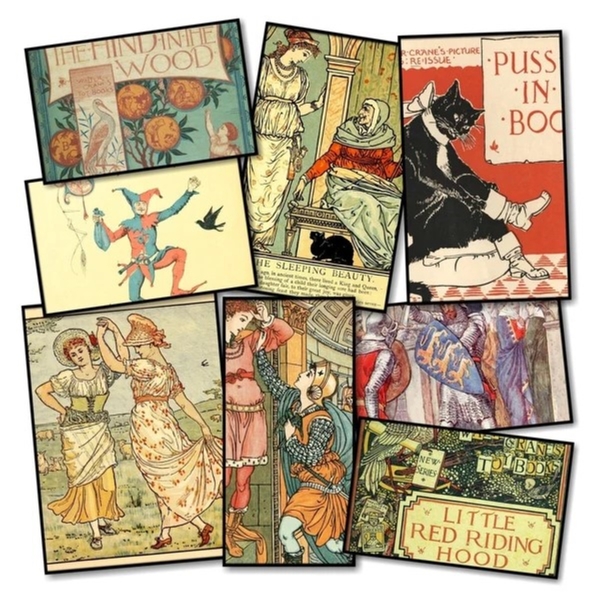
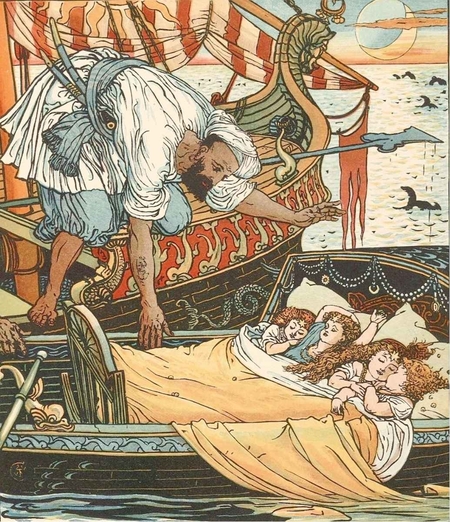
Various books by Walter Crane
Walter crane was able to create a series of children book Illustrations as shown in the Images above cleary describes him as an active practitioner in children book creation. As he Authored and Illustrated a series of them himself with the Help of Edmund to Pring them with wood cut and engravings and color printing for mass printing. In other wards walter Crane was a double practitioner with his books and illustrations. 'In 1864 he began to illustrate a series of sixpenny toy books of nursery rhymes in three colours for Edmund Evans. He was allowed more freedom in a series beginning with The Frog Prince (1874) which showed markedly the influence of Japanese art, and of a long visit to Italy following on his marriage in 1871. His work was characterized by sharp outlines and flat tints.' ource[Wikipedia]
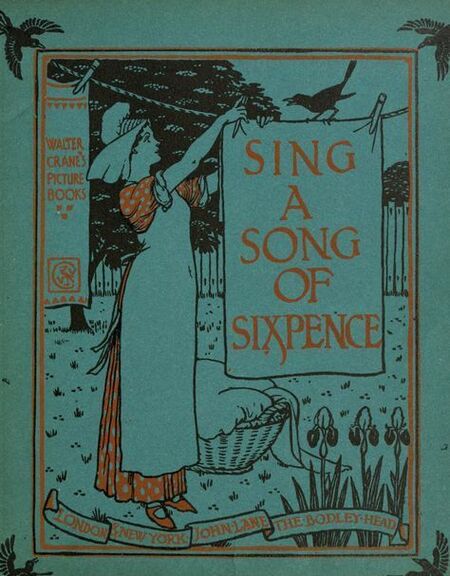
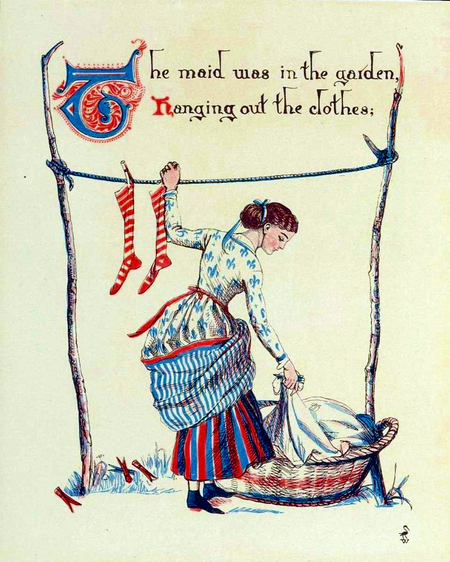
«Sing a song Of sixpence» Authored by in 1868, Illustrated Walter crane where he collaborated with Edmund Evans
Walter crane Created“Sing a song Of sixpence» in 1868, where he collaborated with Edmund Evans who created a series of wood engraving in full colour which made the project look really appealing and these were entirely used as story books to be read in Classrooms.
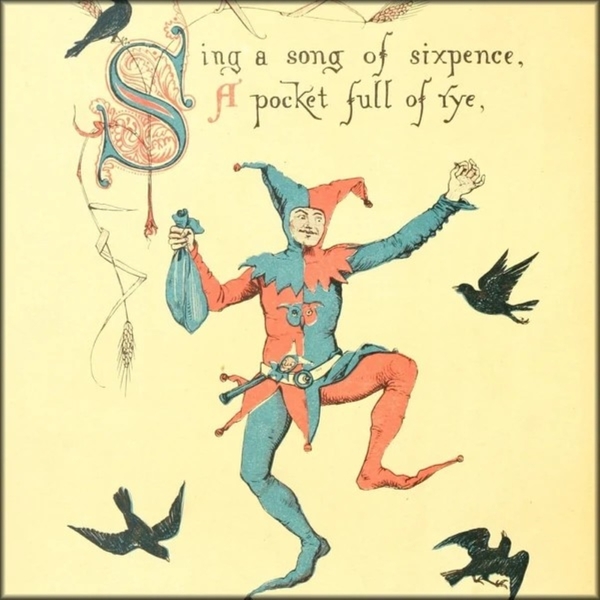
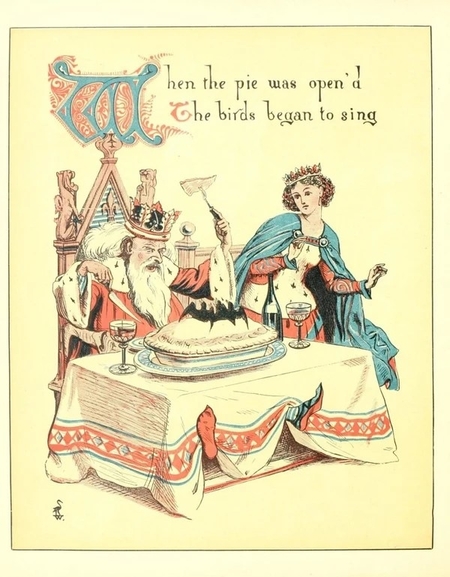
«Sing a song Of sixpence» Authored by in 1868, Illustrated Walter crane where he collaborated with Edmund Evans
Kate Greenaway created An apple pie in 1866 which demonstrated how imagery can extend story telling by the text blending clearly with the illustrations that were made. She also created great harmony in colours, text, images, and typography.