Research Structure
01 Introduction and Context
02 The Concept of Provocative Advertising
03 Analysis of Advertising Imagery
04 Visual Techniques and Perception Scenarios
05 Effectiveness and Criticism
06 Conclusion and Sources
Introduction to Context
Why I Chose This Topic
When advertising stops selling clothes
I am interested in how fashion brand advertising can evoke a strong emotional response rather than a desire to purchase an item. In the 1990s, Benetton almost completely abandoned the conventional display of clothing in its advertising. Instead of fashionable looks, the ads featured photographs touching upon religion, war, racism, and other pressing social issues. In this research, I want to understand why such images garnered attention, how their visual system functioned, and where the boundary lies between social communication and provocation for the sake of fame.
Brand and its advertising philosophy
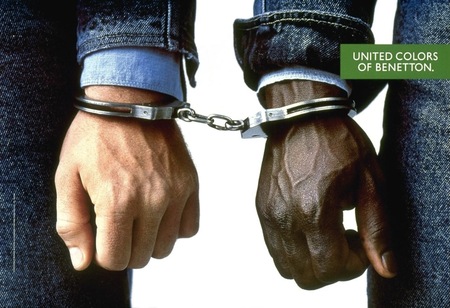
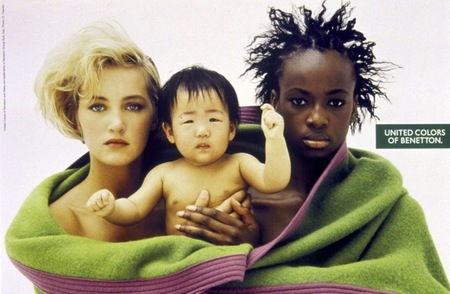
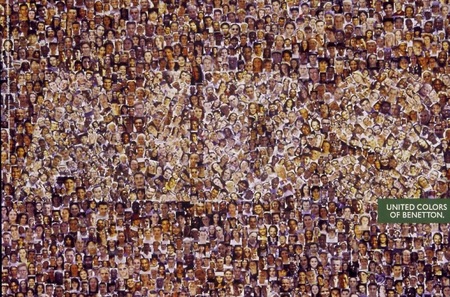
Benetton—an Italian fashion brand known for its colorful knitwear and international advertising.The collaboration with Oliviero Toscani transformed the company’s advertising philosophy. The «United Colors» concept gradually came to signify not just the diversity of clothing, but also the differences between people, cultures, and social groups.By the early 1990s, social issues took center stage in the brand’s communication, often completely overshadowing product imagery.
Provocative Advertising Concept
Shock as a Marketing Tool
Instead of the conventional beauty of fashion advertising, Benetton used images that elicited surprise, discomfort, and controversy.This strategy was built on subverting expectations: the viewer saw a fashion brand’s advertisement, but was instead confronted with a social issue.
«Don’t show the product. Make them think.»

From Product to Social Message
What has changed in Benetton’s advertising?
1980s Advertising Models, colorful clothing, cultural diversity.
1990s Advertising Societal conflicts, documentary imagery, and social taboos.
In the 1980s, expression was conveyed through models and clothing. In the 1990s, Benetton amplified the social component: the product virtually disappeared from advertising imagery.The logo became the primary element linking provocative photography with the fashion brand.
Advertising Image Analysis
Religion and Prohibition
Priest and Nun — 1991
The poster depicts a kiss between a priest and a nun—an act that contradicts traditional perceptions of religious service.The composition is built on the contrast of black and white, and the light background excludes distracting details.Provocative effect: the collision of religious symbolism and an intimate gesture.Visual conclusion: minimalism amplifies the emotional impact, forcing the viewer to focus exclusively on the violation of established norms.
War as a Marketing Image
Cemetery — 1991
The image displays a military cemetery with rows of identical headstones. The repeating white crosses create a strict visual rhythm.The absence of people emphasizes the scale of loss, and the repetition of forms transforms the space into a symbol of mass death.Provocative Effect: The theme of death and war appears in high-fashion advertising.Visual Takeaway: Geometry and repetition create emotional tension without depicting violence itself.
Epidemic and Human Vulnerability
AIDS — David Kirby, 1992