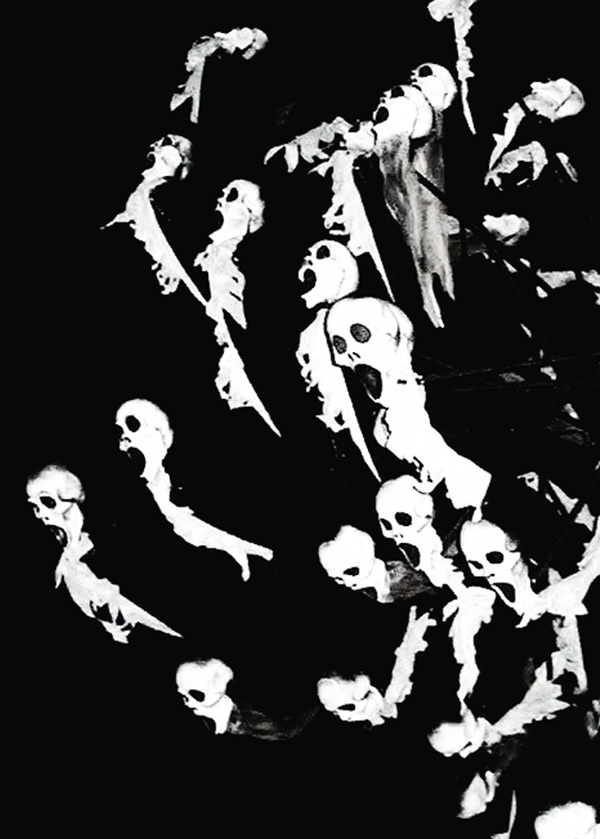
Concept
In today’s industry, live-action quests (performances, escape rooms, horror quests) are reaching a peak in popularity, often positioned as a fundamentally new, purely digital, or post-digital form of leisure. However, this perspective overlooks deep historical roots. This visual exploration turns to the pre-digital era to uncover: the basic mechanics of human immersion in a game space—through fear, mystery, and interaction with actors—that have existed for millennia.
Research Outline
The research is structured according to chronological and typological principles. It is divided into five logical themes, each documenting a key stage in the development of the visual and spatial language of the pre-digital quest:
- Sacred Labyrinths of Ancient Egypt (Origins). This section is dedicated to the genre’s genesis within the Osiris mysteries. It analyzes how priests utilized god masks and the architecture of the temple’s dark crypts in Abydos to create the first spatial performance in history.
- Initiation Theater: Ancient Mysteries and Underground Quests. This investigates the increasing complexity of spatial challenges. The focus is on the architecture of the Eleusinian Caves and the integration of lighting and sound effects into the gameplay to simulate a descent into Hades.
- Medieval Mysteries and «Torture Chambers.» This analyzes the transition of immersive action into city streets. It examines the visual imagery of the «Gates of Hell,» demon costumes, and the emergence of the «Torture Room» aesthetic—which has become a classic setting for modern quests.
- French Theater: «Grand Guignol.» This explores the shift from mysticism to psychological realism. The focus is on anatomical makeup, stage props, and the performer’s specific approach when working intimately with the audience in extremely enclosed spaces.
- American Haunted Houses and the Birth of the Industry. This documents the final point of the pre-digital era (1930s–1980s). It examines blueprints of linear corridor labyrinths and commercial rubber monster masks, which shaped the modern «jumpscare» mechanics.
- The First Appearance of Escape Rooms and Quests. 2007
The key research question:
How has the visual and spatial language of human engagement in interactive fear evolved—from ancient sacred rituals to 20th-century commercial attractions?
Research Hypothesis:
A contemporary immersive quest-performance featuring actors is not a product of the digital age, but rather a logical synthesis of pre-digital visual practices. It combines the goal-setting of Egyptian ritual (psychic transformation through trial), the architecture of ancient labyrinths, Medieval horror aesthetics, the techniques of distance reduction from French anatomical theater, and the business model of American carnival attractions. Throughout history, the visual markers (mask, enclosed space, dim light) have remained constant; only the context has changed—from the salvation of the soul to the purchase of controlled adrenaline.
The Sacred Labyrinth of Ancient Egypt (Origins)
Allegories of Fear: Medieval Mysteries and «Palaces of Torture» (5th–17th Centuries)
Suspense Lab: The French Theater «Grand Guignol» (Late 19th — 20th Century)
The Conveyor of Fear: American Haunted Houses and the Birth of an Industry (1930s–1980s)
First appearance of escape rooms and quests. 2007
Conclusion