Good design is as little design as possible.
Navigation
- Concept
- Expressiveness and Authorship in Early Posters
- Transition to the Modernist Visual System
- The Formation of Swiss Graphic Design and Its Core Principles
- The Influence of Swiss Design Principles on Contemporary Environments
- Conclusion
1. Concept
For a long time, graphic design maintained a close connection to artistic expression. Early posters, advertising graphics, and typography were built upon decorative quality, illustrative content, and the author’s gesture. The image needed to be striking: it had to grab attention, emotionally impact the viewer, and form a visual representation of the era. Even with the advancement of industrialization and mass printing, graphic design continued to be perceived primarily as an artistic statement.
However, in the 20th century, the role of design began to change gradually. The development of urban environments, transportation, international communication, and mass media demanded that visual language possess not only expressiveness but also universality. Design increasingly began to function as a means of organizing information and enabling navigation within complex visual environments.
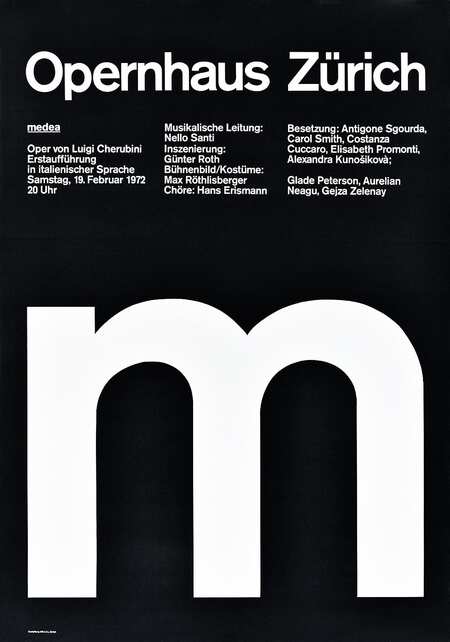
One of the key phenomena in this process was the Swiss School of Graphic Design, which emerged in the mid-20th century. It proposed a new approach to imagery: abandoning decorative excess and authorial expression in favor of modular grids, strict typography, structure, and function. What became important was not visual expressiveness in itself, but rather legibility, universality, and the precise transmission of information. Design started to be viewed not as an independent object of attention, but as a system of organization.
The visual research explores how the principles of the Swiss Style influenced the formation of the contemporary visual environment at the end of the 20th and beginning of the 21st centuries, significantly shaping the evolution of modern design. At the heart of this study is the gradual process by which modernist principles expanded beyond poster and graphic design into urban navigation, corporate identity, interfaces, and the digital realm.
My hypothesis is that the Swiss Style established the aesthetic of modern design and the very concept of what «good» design should be. Many principles that emerged within modernist graphic design have, over time, become perceived as a universal and natural form of visual communication. Neutral typography, the modular grid, minimalism, and visual hierarchy are often associated today with usability, professionalism, and technological sophistication.
Airport Navigation System in Japan, 2015
In the contemporary digital environment, this process reaches a stage of near-complete «invisibility» of design. Interfaces, navigation systems, and digital platforms aim not to draw attention to their own form, but to make interaction with information as intuitive and predictable as possible.
In this context, design is gradually transforming from an artistic entity into an integral part of our surrounding environment.
The structure of this research follows a chronological approach. Each chapter reflects a specific stage in the transformation of graphic design: from decorative Art Nouveau posters and the emergence of the Swiss Style to the realization of modernist principles in the contemporary world. The research demonstrates how concepts of structure and functionality not only resonate in design but also become the bedrock of a quality product.
2. Expressiveness and Authorial Style in Early Posters
The early poster developed from theatrical advertisements and posters in the latter half of the 19th century, alongside the advancement of lithography and mass printing. It retained its illustrative and decorative qualities because it was created with the aim of capturing the viewer’s attention, emotionally engaging them, and forming a vivid image. Such posters reflected a distinct authorial style and stood as autonomous works of art.
The development of color lithography allowed the poster to move beyond being solely a textual announcement, transforming it into a mass image.
Among the works of poster artists, the posters of Jules Chéret and Henri de Toulouse-Lautrec stand out as the most vibrant figures predating the Art Nouveau era and as creators of the poster in its contemporary form. Their work shaped the perception of the poster as an artistic statement intimately connected to the aesthetics of the age.
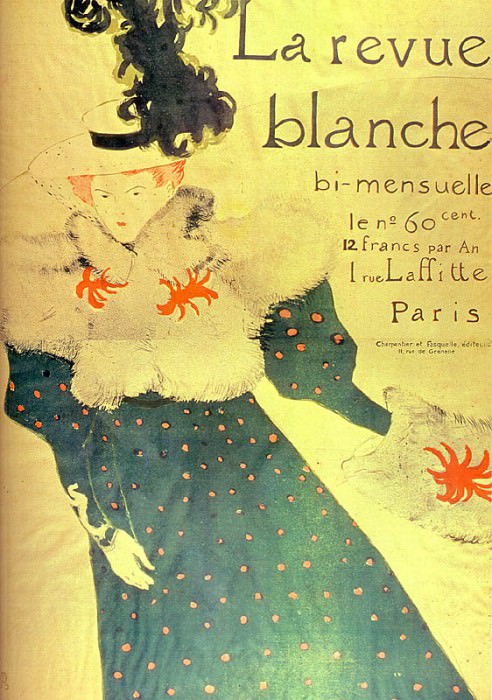
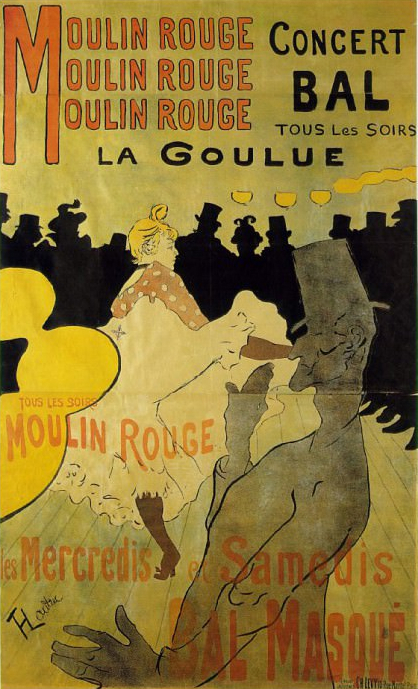
Henri de Toulouse-Lautrec, «La Revue Blanche, ” 1895 and „Moulin Rouge: La Goulue, ” 1891
Decorative typography, ornamentation, complex composition, and a unique authorial style become the defining characteristics of the early poster.
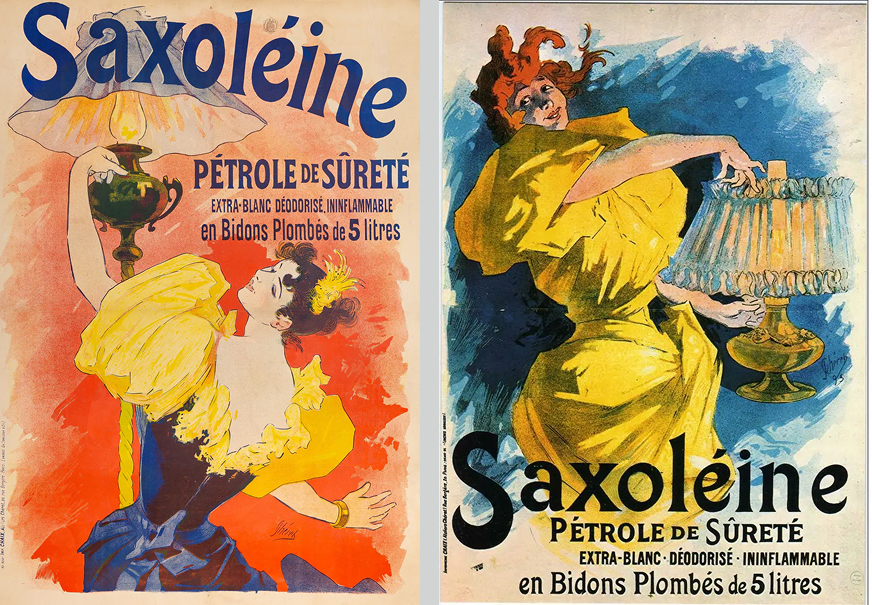
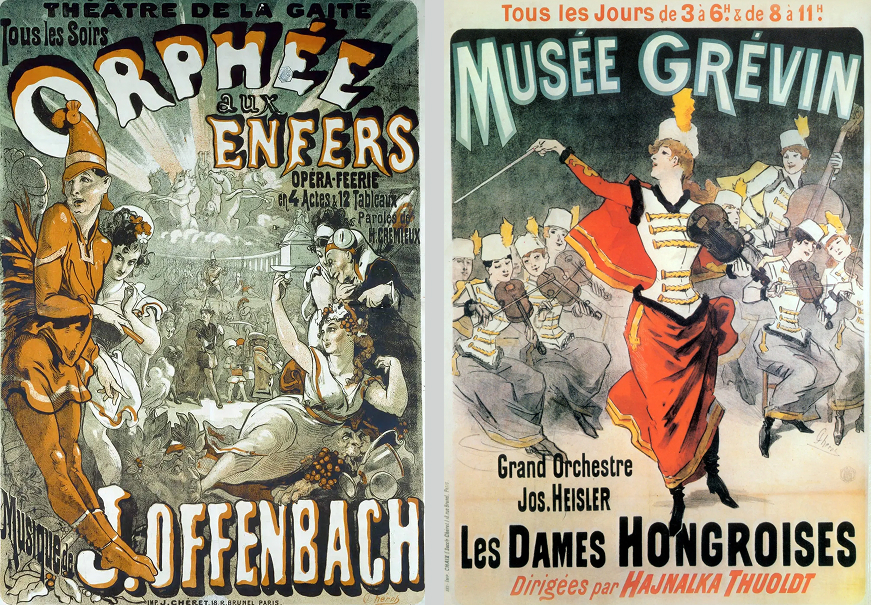
Jules Chéret, advertising posters and theatrical flyers, 1888–1891
This approach is especially vivid in Art Nouveau posters, which flourished between 1890 and 1910. This style spread rapidly across Europe, enabling the poster to establish itself as a universal medium for quickly conveying information and visual imagery. Characterized by flowing lines, natural motifs, and ornamentation, this era fully showcased the artist’s decorative artistic vision.
Alphonse Mucha, advertising posters, 1897
Early decorative posters became a vital stage in the formation of Modernism and the subsequent development of graphic design. They began to actively combine imagery, typography, and information structuring. However, this approach remained closely tied to decorative aesthetics and artistic expression, and over time, it ceased to fully meet the demands of the industrial age. Gradually, technological progress and development required a more functional and rational approach to organizing visual information.
3. Transition to the Modernist Visual System
In the first half of the 20th century, alongside the development of modernism, the approach to graphic design changed significantly. While early posters were closely tied to decoration and artistic expression, new artistic movements increasingly aimed for simplification of form, geometry, and functionality. Design gradually began to be perceived not just as a means of visual impact, but also as a tool for organizing information.
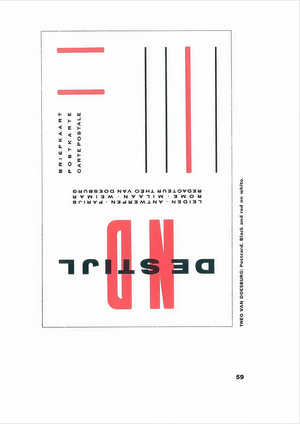
Constructivism, Futurism, the Bauhaus, and the De Stijl movement significantly influenced the formation of a new visual language. Artists and designers began to abandon excessive decoration and complex composition in favor of clear structure, typography, and visual logic.
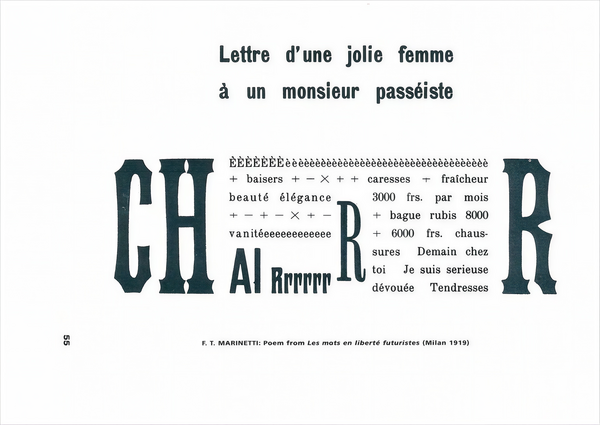
Jan Tschichold, fragments from the book «The New Typography, ” 1928
John Childe described the fundamental principles of Modernist typography and a functional approach to design in his book. He advocated prioritizing clarity and rationality, thereby laying the foundation for the future principles of Swiss design.
El Lissitzky, «Beat the Whites with the Red Wedge! ,» 1920
El Lissitzky was one of the outstanding figures of the Russian avant-garde. In his work, the poster became more geometric, laconic, and functional. Alongside other representatives of Russian Constructivism, he also laid the groundwork for the contemporary approach to design.
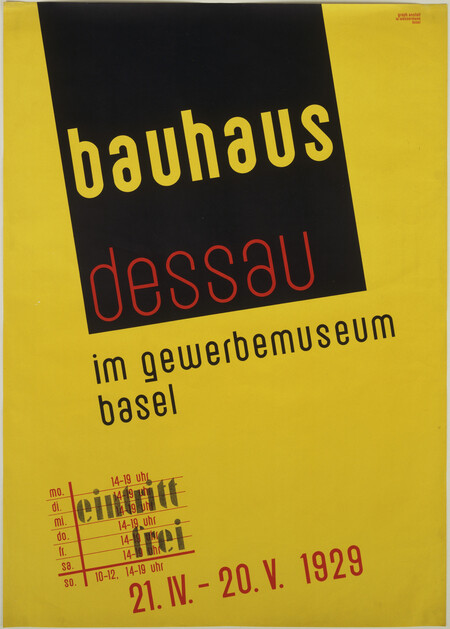
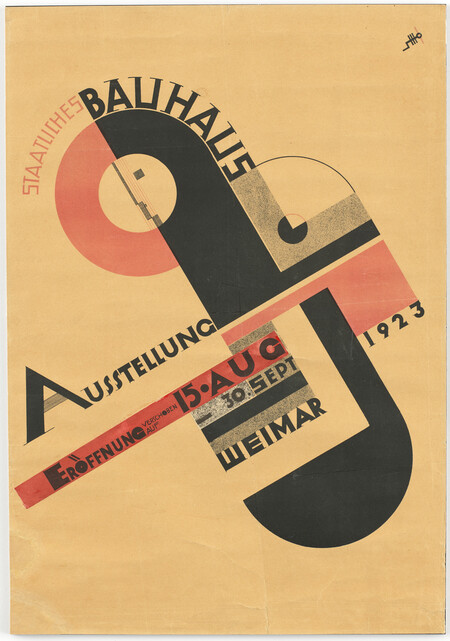
Several artists, Bauhaus exhibition poster series, 1923
In Bauhaus school posters, the use of asymmetry and the deliberate tilting of elements within a unified system are noticeable, along with a typography that, unlike Art Nouveau, possesses a single structure and consistent letterforms.
Theo van Doesburg, «Composition VIII (Cow), ” 1918