EP–133 K.O.II Sampler Case / 2023 / Teenage Engineering
Navigation
- Concept
- Origins of Functionalism: Dieter Rams and the Braun Philosophy
- Function as a Visual System: The Braun Design Language
- A New Interpretation of Functionality: Teenage Engineering
- From Minimalism to Play Logic: A Comparative Analysis of Braun and Teenage Engineering
- Conclusions
[1] Concept
Industrial design has continuously re-evaluated the relationship between form, function, and the human being throughout the 20th and 21st centuries. While the modernist approach strove for clarity, rationality, and freeing the object from superfluous ornamentation, contemporary industrial design increasingly views the product not merely as a tool for accomplishing a specific task, but as an object of emotional and aesthetic experience.
One of the most influential proponents of modernist functionalism is the German designer Dieter Rams, whose work at Braun shaped the recognizable visual language of consumer electronics in the latter half of the 20th century. His approach was founded on the principles of rationality, simplicity, and durability. His famous dictum, «Less, but better, ” became a particular expression of this philosophy: good design must focus on functionality, excluding everything that does not contribute to enhancing it.
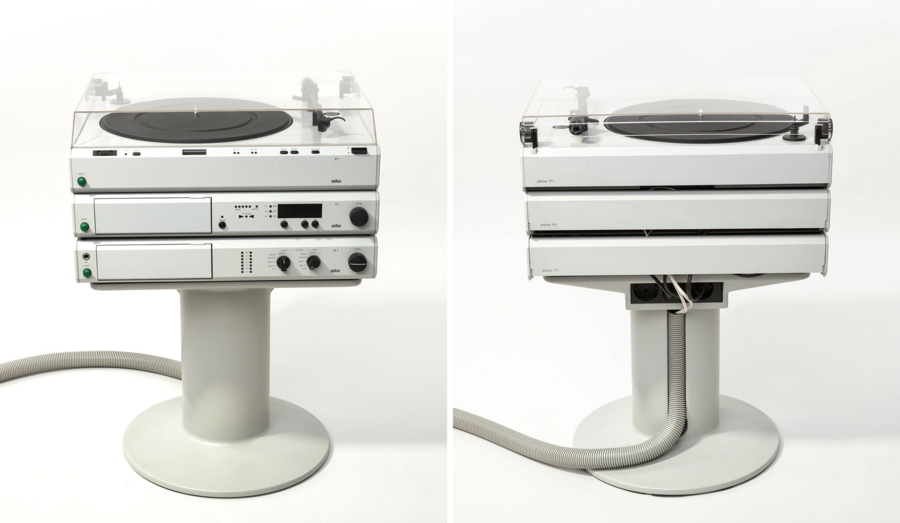
Modular Braun Atelier System Audio System / 1980 / Dieter Rams, Peter Hartwain
Several decades later, Teenage Engineering emerges, demonstrating a different approach to device design. Its products are characterized by the active use of color, expressive geometry, unconventional interfaces, and a distinct focus on the physical experience of user interaction with the object. Despite the differences between the companies, I find a significant amount of similarities between them, both visually and conceptually. Even amidst experimental playfulness, there remains a dedication to structure, compactness, and functional clarity.
OP-1 Field Portable Synthesizer / 2022 / Teenage Engineering
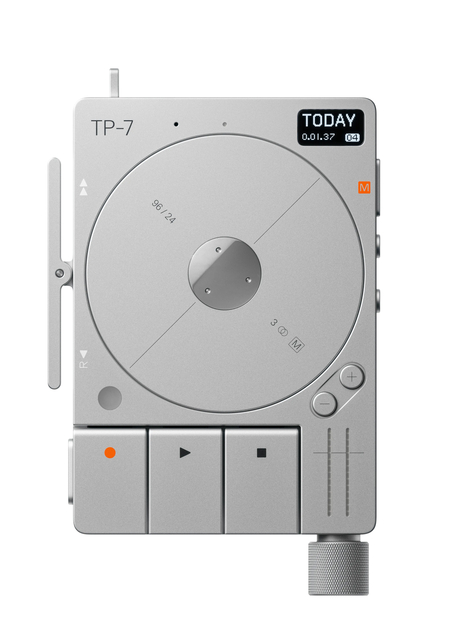
1. Braun TG60 Tape Recorder / 1965 / Dieter Rams 2. TP-7 Portable Recorder / 2023 / Teenage Engineering
The topic selection stems from an interest in transforming modernist principles within contemporary industrial design and a desire to understand how the concept of functionality is evolving amidst technological advancement and user culture. Comparing Braun and Teenage Engineering allows for an examination of both the differences and the continuity in their design approaches. The subject of the research is the changing methods of working with functionality in industrial design.
The research structure is built on a thematic and comparative-analytical principle. First, it examines the historical prerequisites of functionalism, Dieter Rams' philosophy, and the formation of Braun’s visual language. Next, it analyzes the specific characteristics of the company’s products: geometry, color system, materials, and interface. The following section is dedicated to Teenage Engineering and the study of how similar parameters are reinterpreted through expressive form, color coding, tactility, and gameplay mechanics. The final stage involves a direct comparison of the two approaches, identifying common principles and divergences, and formulating conclusions about the transformation of functionality in contemporary industrial design.
The key question of this research is as follows: How has the understanding of functionality in industrial design evolved from Dieter Rams and Braun to Teenage Engineering, and how has this transformation influenced form, function, visual language, and user experience?
The main hypothesis is that contemporary industrial design does not abandon the principles of modernist functionalism, but rather reinterprets them. If functionality in Braun design was expressed through restraint, a clear hierarchy, and the omission of superfluous elements, then in Teenage Engineering, similar principles receive a new interpretation through color, tactility, and the physical and emotional experience. It is proposed that there is a transition from understanding functionality exclusively as an object’s ability to efficiently perform a specific task to a broader concept of functionality as a multifaceted user experience.
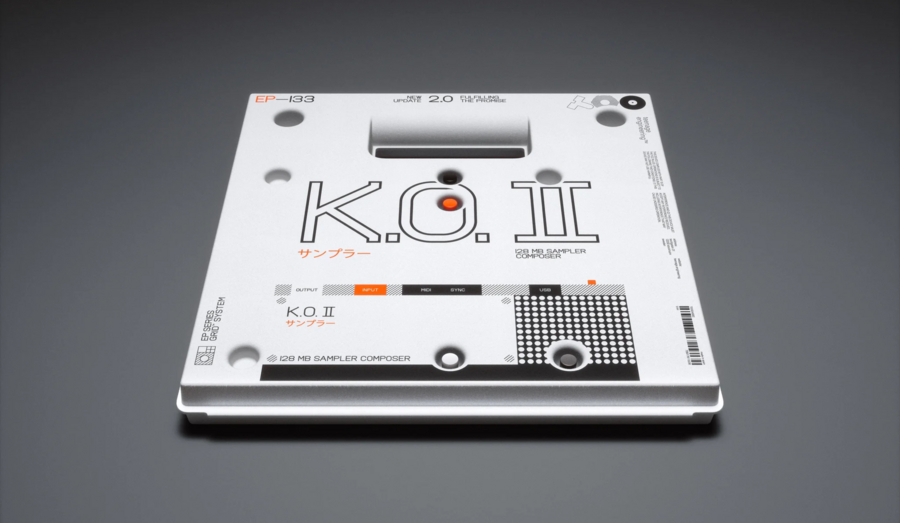
Sampler EP–133 K.O.II / 2023 / Teenage Engineering
[2] Origins of Functionalism: Dieter Rams and the Philosophy of Braun
The post-war period marked a crucial phase in the development of European industrial design. Technological advancements, expanding production, and the introduction of new goods necessitated a rethinking of the aesthetic of household appliances. It was during this period that Braun began to establish a new approach to home appliance design. Collaboration with representatives of the Ulm School of Design, including Hans Gugelot, played a vital role in this process. In 1955, Dieter Rams joined the company and later headed Braun’s design division, becoming one of the key architects of its visual identity.
Where earlier devices were often housed in decorative casings reminiscent of furniture, the modernist approach called for a more direct expression of their technical nature. This manifested in Braun’s design through a rejection of superfluous decoration and a drive to make the device visually legible, while maintaining a clear connection between its appearance and its functional purpose.
1. Grundig 3033/56/S Radio Receiver / 1956 / Grundig 2. Braun SK 4 / 1956 / Dieter Rams, Hans Gugelot
One of the early landmark projects was the SK 4 radio player, designed in 1956 byDieter Rams and Hans Gugelot. Instead of a traditional wooden casing, the designers used a metal construction with a transparent acrylic lid. This allowed the appliance to move beyond masquerading as a piece of furniture—its internal workings and mechanisms became part of its identity.
Braun SK 4 / 1956 / Dieter Rams, Hans Gugelot
Braun SK 4 / 1956 / Dieter Rams, Hans Gugelot
This approach reflected a broader shift in the perception of industrial design. Technology no longer required decorative masking. Instead, its constructive logic became the basis of the object’s very aesthetic.
Subsequently, Rams formulated ten principles of good design, among which utility, comprehensibility, unobtrusiveness, durability, and minimalism are especially relevant to this study. His philosophy was not simply about eliminating decorative elements. Rams emphasized that good design must take into account not only the functional needs of a person but also their psychological and aesthetic needs.
Braun PA 2 Slide Projector / 1956 / Dieter Rams
The «Less, but Better» principle suggests not an absolute absence of expressiveness, but a concentration on what is essential. Every element of the product must be justified, and the visual form should help the user understand the system and interact with it.
Thus, Braun’s aesthetic is built upon rationality. Form becomes a method of organizing information, the design demonstrates the object’s function, and visual restraint allows the user to focus on its purpose.
Braun Product Range / 1965 / Braun
[3] Function as a Visual System: The Design Language of Braun
In Braun products, functionality is primarily expressed through the organization of form and the composition of object elements. The design does not seek to compete with the device’s purpose, but rather subordinates visual solutions to the logic of its use.