Медиа
«Почему это красиво?»
Media Objective
The media’s goal is to popularize art and design among people without specialized education. What this means: we make art and design accessible and engaging for a broad audience that does not hold a degree in art history or design.
Takeaway for the reader: they develop visual literacy. They begin to notice visual decisions that they previously overlooked—why this sign looks cheap, why this advertisement is compelling, or why this painting costs millions.
«Why is this beautiful?» — a channel designed to help people stop feeling like they aren’t «in the know» when it comes to art and design. We explain complex concepts in simple language and show that art isn’t just about museums or an elite circle—it’s about what surrounds us every day: signage, advertising, memes, packaging, interfaces, and paintings.
Themes
Segment: People aged 18–35, who live in the city and consume visual content daily (social media, advertising, signage, apps, memes), but do not have formal training in art or design.
Narrow topic: Art and design in daily life—a breakdown of what we see every day. Why it looks the way it does, what the creator intended, and how much it costs. Explained in simple language, without jargon or academic complexity.
Search Demand Analysis (Yandex Wordstat)
The query, «How to understand art, ” receives 6,824 inquiries per month. This confirms that the audience is actively seeking explanations and has a need to comprehend art.
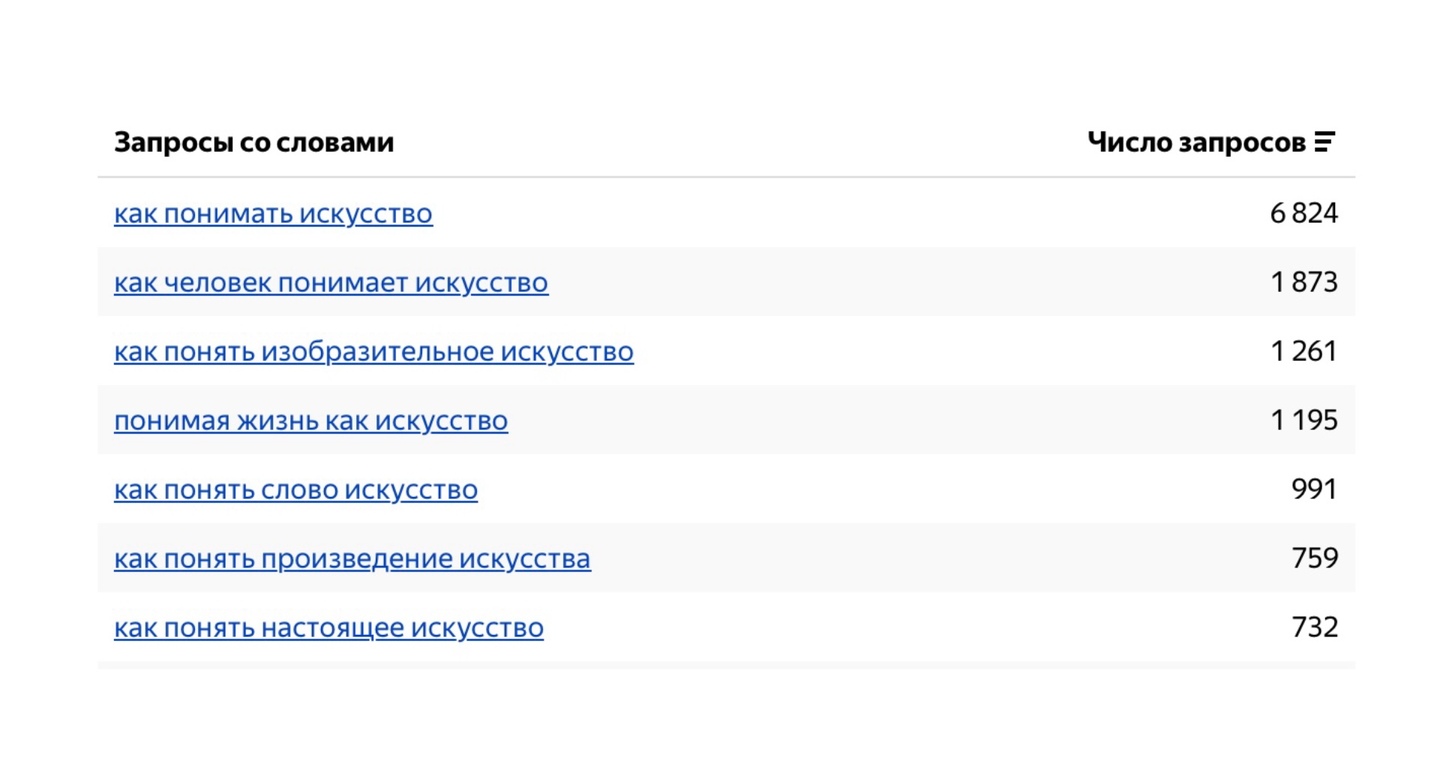
Search Results
Service
Target Audience
My project falls under B2C. However, to reach four distinct customer segments, I divided the B2C audience based on motivation and context.
Segment 1. «I want to understand, but I’m shy»
People who feel insecure about art. Those who are afraid of looking foolish. Those who want to close this unresolved issue.
Segment 2. «I want to apply»
People who need to apply visual knowledge in their work: presentations, social media, design/styling.
Segment 3. «I Want to Notice»
People who want to develop their visual literacy and see beauty and logic in everyday life.
Segment 4. «I want to understand money and pricing»
People interested in why one thing costs millions while another costs next to nothing. Money as an entry point to art.
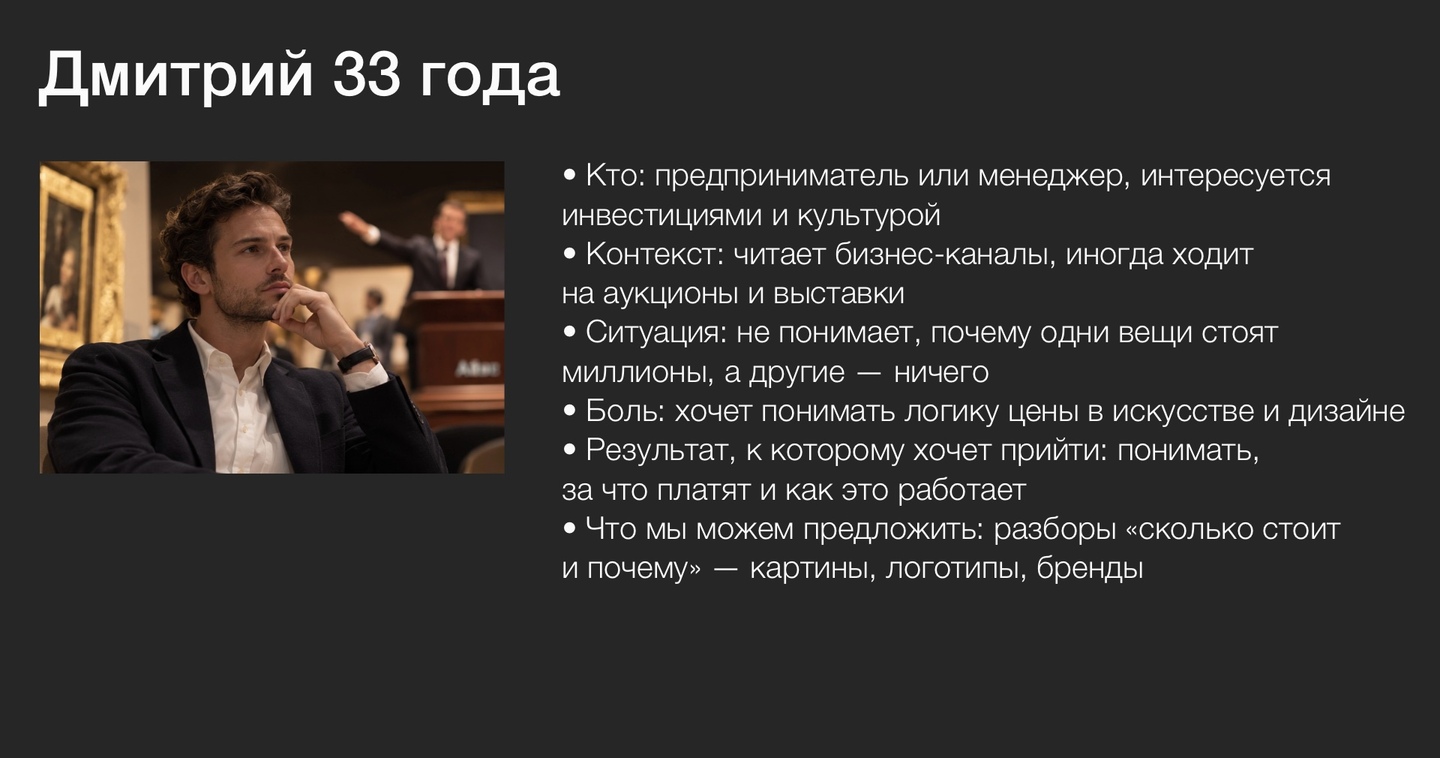
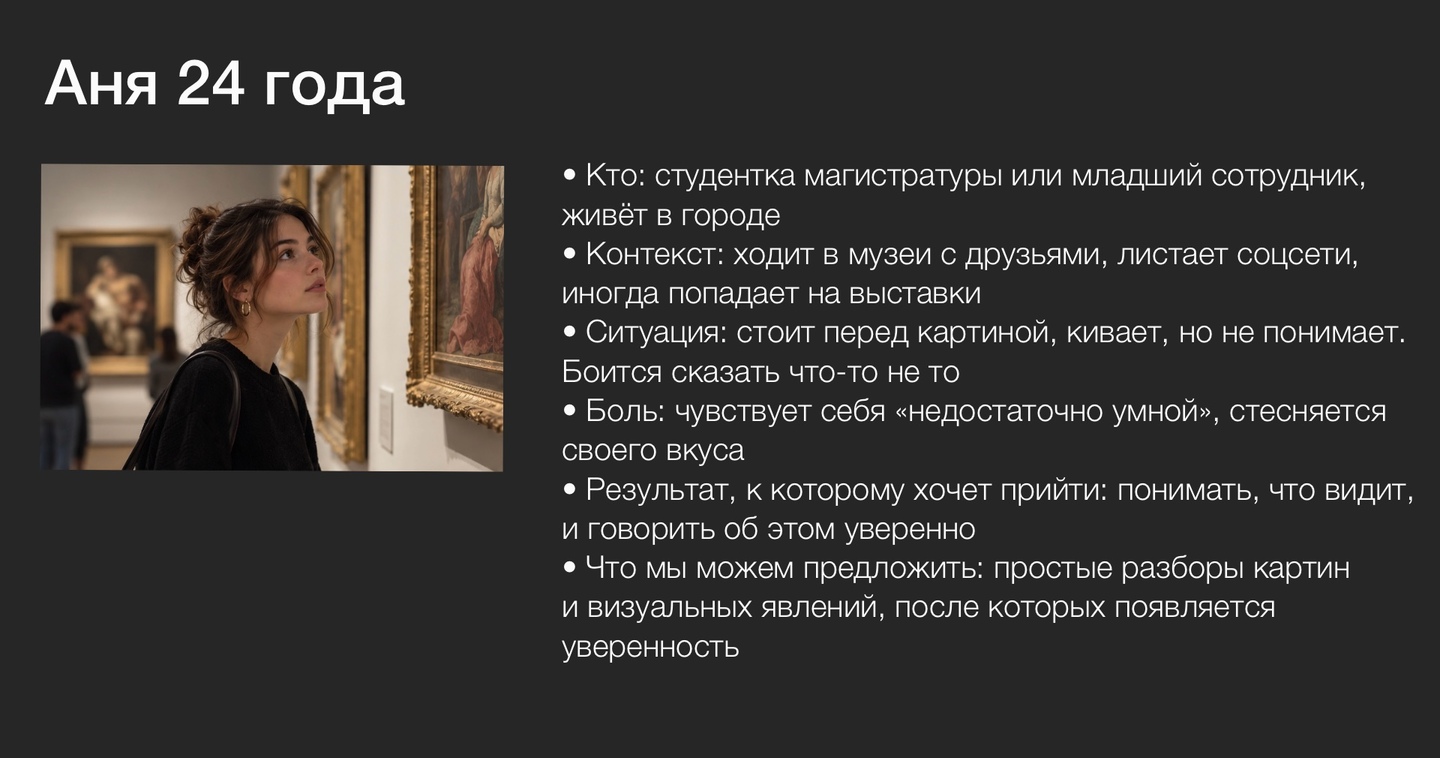
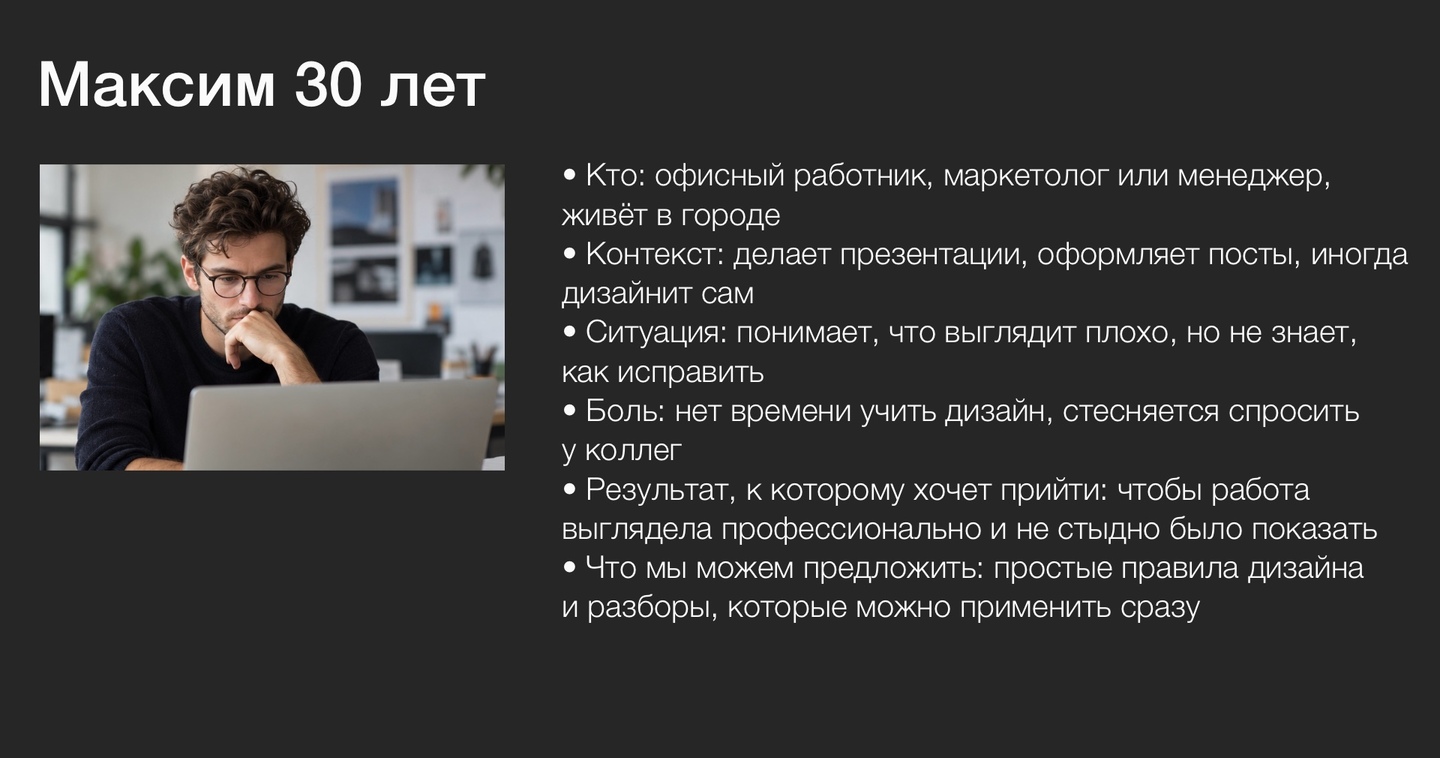
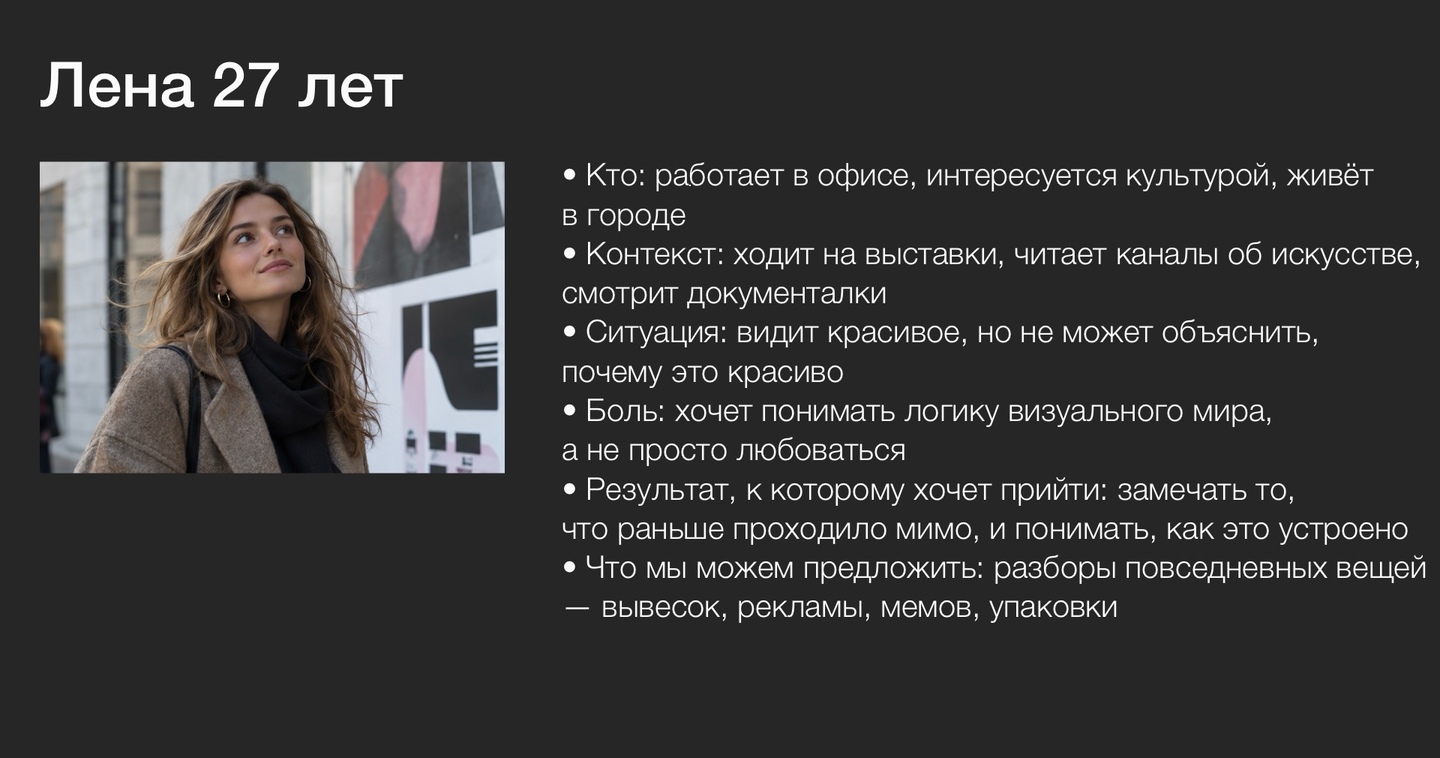
Target Audience by Character
Images of people were generated using
Distribution Channel
Zen is the primary platform. We publish articles, cards, and videos here. Zen’s algorithms bring in new readers through search and recommendations.
VKontakte is a supplementary channel. We duplicate announcements and participate in relevant communities. It serves as an additional traffic source.
How do people find us?
Finding us on Zen — someone types in «how to understand art”—and finds our article. • Feed Recommendations — the algorithm shows the article to those interested in the topic • Subscription Feed — those who are already subscribed see the new posts • Similar Channels — Zen recommends our channel alongside other art-related channels • Tags and Categories — articles appear in thematic collections
Through Search Engines • Yandex — the article is indexed and found via regular search • Google — the same applies • Images — if the visuals are strong, people find us through image search
Through Collaborations • Mutual Mentions — we arrange cross-promotion with other art channels • Guest Posts — we write for another channel, and they link back to us • Joint Series — we create content together with another author
Competitive Analysis
Competition Criteria (5 Criteria)
- Clarity of Presentation — Do they explain complex topics using simple language or overload the reader with jargon?
- Relatability — Do they write about museums or about things people see every day?
- Tone of Voice — Is the tone snobbish, highly academic, or conversational and friendly?
- Visuals — Are there cards, infographics, photos, or just text?
- Frequency and Format — How often do they publish, and what topics do they cover?Direct Competitors: Channels and blogs on Dzen that write about art and design in simple language.Indirect Competitors: Any channels about culture, design, and visuals that capture our audience’s attention.Potential Competitors: Channels with memes, aesthetics, and content that conveys the audience’s emotional state. These are accounts that aren’t currently doing in-depth analyses but could start—like meme pages or aesthetic image accounts.
Direct