Topics — Concept — Where Fear Comes From: Supernatural Entities in Folklore — Darkness, Forest, and Attic: The Space of Childhood Fears — Scary on the Outside, Kind on the Inside — Humor as a Way to Overcome Fear — From Enemy to Friend: The Evolving Relationship Between Children and the Supernatural — How Animation Makes Supernatural Entities Harmless — Conclusion
Concept
Childhood fears are an important part of growing up and understanding the world around us. In childhood, darkness, unfamiliar sounds, abandoned spaces, and fantastic creatures can seem like a real threat. What an adult views as fictional can sometimes be a source of intense anxiety for a child. Figures of malevolent spirits are particularly interesting in this regard—leshy, ghosts, house spirits, devils, and other fairy-tale characters. They are simultaneously frightening and alluring, sparking curiosity and forcing the imagination to work.Soviet animation from the 1980s displays a unique approach to these characters. Traditionally frightening beings gradually shed their sinister nature; they turn out to be kind, funny, clumsy, lonely, or simply misunderstood. Sometimes, they themselves try to appear scarier than they actually are. As a result, the common perception of malevolent power changes: instead of a dangerous adversary, the viewer encounters a character one can meet, befriend, or laugh at.
Examining Soviet animation from the 1980s allows us to explore how fantasy, the supernatural, and the frightening were depicted in the children’s culture of that era. On one hand, Soviet culture aimed to instill a rational view of the world in children; on the other, folklore and fantasy remained an essential part of children’s leisure and artistic education. Cartoons could reference traditional beliefs and fairy-tale characters, yet they simultaneously reinterpreted them in line with evolving concepts of good, evil, friendship, and human virtue.
The research suggests that Soviet animation from the 1980s presents a unique method of engaging with children’s fears. The supernatural often ceases to be a mere embodiment of danger and transforms into a character that can be understood, accepted, and even loved. Fear gradually loses its power through exposure to the unknown, humor, and a shift in the conventional perception of the fantastic.
Where Fear Comes From: Superstition in Folk Beliefs
Figures of malevolent spirits have always held a special place in Russian folklore. Leshy, domovoy, kikimora, vodyanoy, and other mythological characters were tied to people’s conceptions of a world that cannot be fully explained or controlled. They could inhabit the forest, water, home, or other spaces bordering the familiar and the unknown. In folk tales, encountering such beings often became a trial for the person: they might get lost, become frightened, lose their way, or face an inexplicable event.
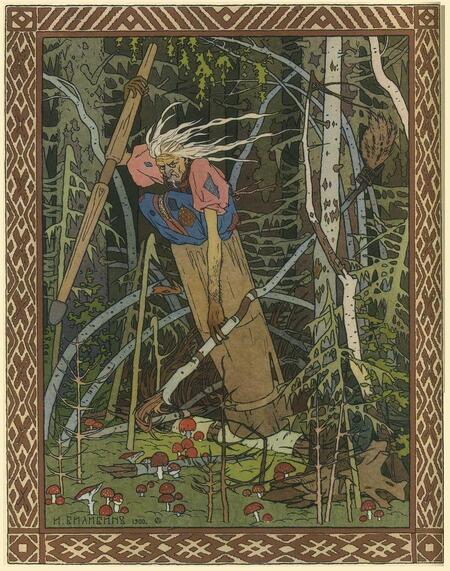
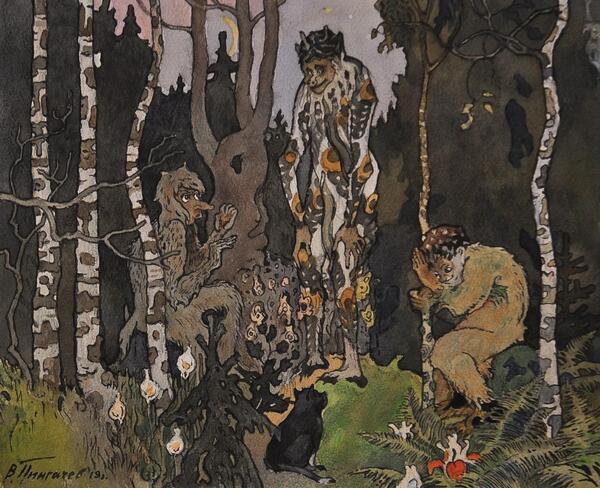
[1] Ivan Bilibin. Baba Yaga, — 1899 [2] Vladimir Pingachev. Leshy, — 2019
In Soviet animation, these figures are given a new reading. Characters traditionally associated with danger and the unknown gradually become heroes of children’s stories. Their folkloric origins remain, but their character and functions can change noticeably. The Leshy transforms into a benevolent forest dweller, the Domovoy becomes an unusual neighbor, and the ghost becomes an amusing creature capable of experiencing fear itself.
This reinterpretation allows us to examine how animation adapts traditional conceptions of malevolent spirits for a child audience. It is not only important how these characters look, but also what kind of relationship they establish with humans.
Darkness, Forest, and Attic: A Space of Childhood Fears
The fear in childhood perception is often linked not only to specific entities but also to the spaces in which they might appear. Darkness, the woods, the attic, the basement, or an empty room become places where the familiar world takes on unknown and unsettling qualities. In such spaces, a child cannot always discern what is near them, where a sound is coming from, or whether danger truly exists.
In animation, space plays a vital role in establishing atmosphere. An ordinary forest can feel mysterious because of night lighting, unusual shadows, and sounds. An attic becomes a place where unknown creatures might hide, and darkness transforms into a self-sufficient source of unease. In this context, the viewer often knows no more than the protagonist—uncertainty becomes part of the visual narrative.
In the animated film «Not Scary at All» (1981), two brothers go out at night to pick flowers for their mother and encounter ghosts. The nighttime road and the appearance of unusual creatures initially create a situation that might frighten a child. However, the subsequent development of the plot subverts the initial expectation: the ghosts turn out to be less dangerous than they initially appeared.
Scary on the outside, kind on the inside
One of the most interesting techniques in Soviet animation is the transformation of the familiar archetype of malevolent supernatural forces. Characters that in folklore might invoke fear develop traits on screen that contradict their traditional reputation. They can be kind, shy, clumsy, or comical. Sometimes their appearance remains unusual and even frightening, but their behavior completely alters the impression they leave.
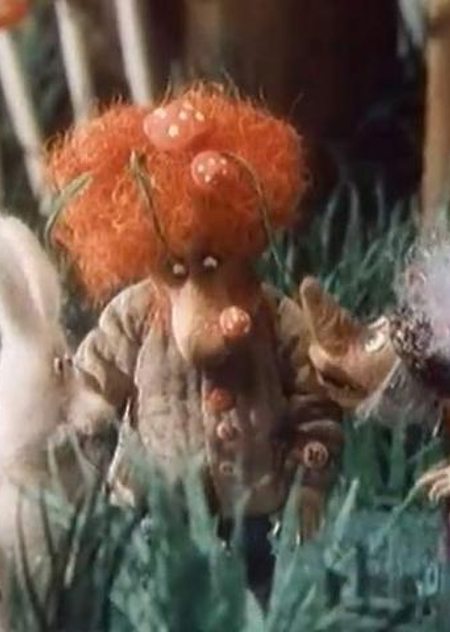
This idea is particularly vividly realized in the animated short «Respected Leshy» (1988). The plot centers on Baba Yaga persuading the kind Leshy to transform into something frightening. The central conflict is built upon the contradiction between traditional notions of what a forest spirit ought to be and the hero’s true nature. The Leshy does not strive to frighten others, even though that is exactly what is expected of him. His kindness constitutes a peculiar disruption of the established fairy-tale order.
In «Not Scary at All» (1981), a similar change occurs with the ghosts. Their initial appearance is perceived as a potential threat, but it gradually becomes clear that they are incapable of harming the children. Furthermore, they eventually begin helping the brothers themselves. The frightening image loses its power not because of a change in appearance, but because of the characters' actions.
Or, for example, Uncle Aug from the eponymous animated series (1979)—a forest creature who lives in his own world and perceives himself as an unusual being. However, his behavior, habits, and interactions with others make him more endearing and charming than frightening. Here, the supernatural gradually becomes a part of everyday life.
Thus, Soviet animation encourages the viewer to see supernatural beings not as an absolute embodiment of evil, but as independent characters with their own desires, habits, and weaknesses. Fear of them transforms into interest in their character.
Humor as a means of overcoming fear
Humor has become one of the primary ways to alter our perception of the frightening. When a viewer encounters an unusual creature for the first time, its appearance and sudden arrival can provoke anxiety. However, if the character behaves absurdly, finds itself in comical situations, or is frightened itself, the initial impression gradually shifts.In animation, the comedic effect is often generated through exaggeration. Unusual proportions, abrupt movements, peculiar gait, grimaces, and unexpected reactions make the character less realistic—and thus, less menacing. Pauses and editing also play a vital role: a viewer might anticipate a terrifying event, but instead, they receive a comedic resolution.
In the animated film «Not Scary,» the humor is inherent in the very premise: children encountering ghosts. The creature, which is meant to instill fear, turns out to be anything but scary, and the children demonstrate courage and confidence. Music plays an additional role; a «Song of Fears» was composed for the film, transforming frightening imagery into a playful and memorable part of the animation. This is a particularly interesting example of how sound can alter the emotional perception of a scene.
In «The Venerable Leshy,» comedy is constructed differently. Here, the humor arises from a kind character’s own desire to meet the expectations of those around him and become frightening. The audience understands that his character contradicts this role, so his attempts to appear menacing are perceived more as a performance.
Humor allows us not just to mock the monstrous, but to alter the distance between it and the viewer. What initially seemed unknown and dangerous becomes familiar and understandable. Laughter helps relieve tension and reveals ordinary human characteristics within a fantastic creature.
From Enemy to Friend: The New Relationship of the Child and the Unclean
In traditional fairy tales, encounters between a human and a malevolent force are often framed as conflict. The human must defend against a dangerous creature, outwit it, or find a way to avoid the encounter. In children’s animation, the relationship between a person and a fantastical character can unfold differently. Instead of confrontation, the possibility of acquaintance, mutual support, and friendship emerges.
In «Not Scary» (1981), this transition is particularly noticeable. Initially, the ghosts function as the figures meant to frighten the children. However, the brothers are unfazed by fear, and gradually the creatures change their attitude toward them. Consequently, the initial conflict evolves into collaboration: the ghosts begin to help the children. Thus, the characters transform not only in the eyes of the viewer but also in their relationships with one another.
Another example is «Kuzya’s Home» (1984). The household spirit becomes part of the home environment, interacting with people not as a threat, but as an unusual neighbor. His presence can create comedic situations, yet it does not undermine the feeling of domestic security. On the contrary, the fantastical character becomes integrated into everyday life.
How Animation Makes Monsters Harmless
The character’s form is one of the primary tools for creating an image. Sharp lines, elongated proportions, and abrupt movements can heighten a sense of danger, whereas rounded forms, soft lines, and awkward plasticity make a character appear more benevolent. Moreover, appearance does not always align with character: a character may look unusual or even frightening yet behave in a completely harmless way.
Movement is particularly significant. In animation, even a small detail—a trembling hand, an uncertain step, an unexpected fall, or a funny grimace—can completely alter the audience’s perception of a character. It is often through this physical dynamism that it becomes clear that a frightening creature poses no real threat.