Concept
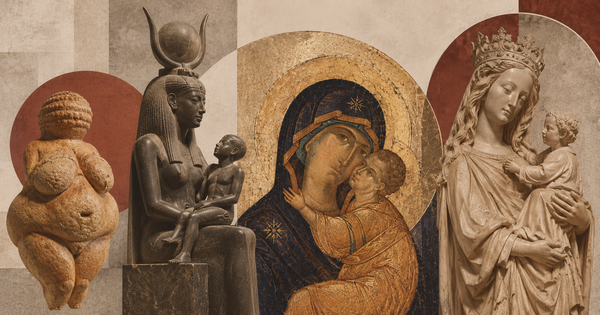
Since ancient times, humanity has strived to understand itself and the world around it. One of the earliest ways to express this urge was through the depiction of the human body. Even in the Paleolithic era, people created small figurines in which the human form took on unusual shapes and acquired special symbolic meaning. However, the longer you look at these figures, the more questions arise. Why did ancient masters depict people this way? Why were some body parts exaggerated while others were almost erased? And what symbol underlies these figurines?
Why did ancient people depict the human body in this manner, and what views of life, nature, and the self were they striving to convey through these images?
These questions have captured my interest. Through this research, I aim to trace the evolution of the human body in art—which features became most significant and why. Particular attention will be paid to the symbolism of female and male figures, unusual anthropomorphic depictions, and the possible function of these figurines. Ritual objects, amulets, fertility symbols, or embodiments of supernatural beliefs—there are countless interpretations, each allowing a new perspective on these finds.By studying the forms, proportions, materials, and execution techniques, I strive to better understand what motivated the ancient artisans and what meanings they imbued in their creations. It is crucial not only to analyze the images themselves but also to consider the living conditions, beliefs, and worldview of the people of that era.This research is an attempt to look beyond the conventional representation of the human body and see something deeper within it. Perhaps Paleolithic figurines tell us less about what people looked like thousands of years ago and more about how they perceived themselves—what they considered important and what they believed in. After all, by creating their own image, humans may have first attempted to answer the question of their own being.Comparing finds from different regions will allow me to trace which traits recurred in the depictions and which were unique to specific cultures.
My hypothesis is that Paleolithic anthropomorphic figurines were created not so much to realistically depict humans as to convey concepts vital to ancient society—concepts related to life, fertility, procreation, and the organization of the surrounding world. Their distinctive features reflected a symbolic perception of the human body and its role in the world.
Navigation
1 2 3 4 5 6 7
Chapter I. Paleolithic Idols: General Characteristics
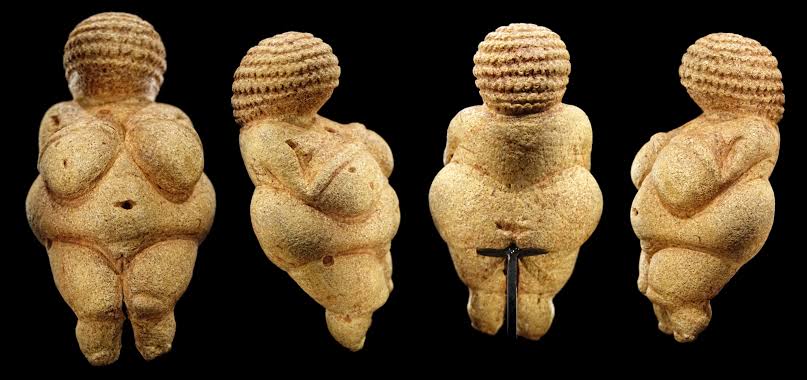
Venera Vilendorfska was found in Austria on August 7, 1908.
Paleolithic Idols are small sculptural figurines created by ancient people during the Paleolithic era. Most often, they depicted humans, predominantly female figures, although animal figures are occasionally found. The idols were made from stones, bones, mammoth tusks, and even clay. These statuettes possessed unusual characteristics. Certain body parts were intentionally emphasized, while others were almost erased. Despite the similarity among some idols, each find has its own distinctive features, allowing us to trace the diversity of artistic forms and methods of representing the human figure in primitive art.
Materials and Production Techniques
The selection of material largely dictated the characteristics of the finished sculpture and the methods of its fabrication. Soft types of stone allowed for giving the raw material the desired shape, while mammoth ivory and bone demanded more meticulous and careful work. Ceramic pieces, in turn, required forming and subsequent firing.
Various versions of Venus (Lössl Venus, Dolní Věstonice Venus, Willendorf Venus)
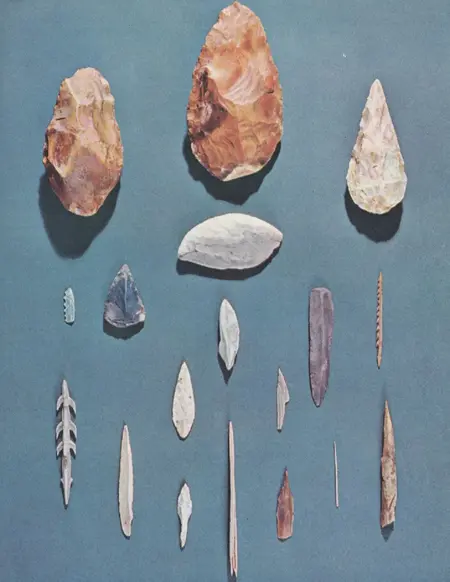
Ancient masters utilized primitive but highly effective tools to process materials. Among these were flint chisels, scrapers, and stone flakes. With these tools, they removed excess material, carved depressions, applied details, and smoothed surfaces. Some figurines were further embellished with engraving or coated with mineral pigments, such as red ochre.Despite the absence of modern tools, ancient masters were capable of achieving expressive forms and meticulously refining details. This attests to the development of their practical skills and their proficiency in working with various natural materials.
Bone drills and engraving tools made from animal bone and horn
Idol Geography
Map of locations where some of the idols were found
Paleolithic idols have been discovered across a vast territory of Eurasia—from Western Europe to Siberia. While the majority of known finds are concentrated in Europe, individual groups of figurines are found significantly further east. This allows us to trace the spread of the tradition of creating small sculptures across different regions.Among the most famous discovery sites are the Höhle Fels cave in Germany, where one of the oldest female figurines was found, Villendorf in Austria, Dolní Věstonice in the Czech Republic, as well as Kostenki and Gagarino in modern-day Russia. The finds from Malta and Bureti in Siberia are particularly interesting to the east, as they were predominantly crafted from mammoth ivory.
1,