Navigation
I. Origin of the Image
II. The Female Body as Form
III. Face and Individuality
IV. Material and Technique
V. Diversity of Images
VI. Regional Characteristics
VII. Language of Gesture and Surface
VIII. Possible Function
IX. Modern Perspective
X. Comparison and Conclusions
Concept
The female body is one of the oldest images in the history of human art. Long before the advent of writing and early civilizations, people created small female figurines, which are now known as Paleolithic Venus figures. Despite their outward similarity, these representations vary significantly in proportion, detailing, and execution. Some figures feature distinctly voluminous forms, others possess slender silhouettes, and a third group presents almost abstract depictions of the human figure.I was interested in why ancient masters, drawing upon a single image, rendered it so differently. Can these sculptures be considered reflections of ideals of female beauty, or was their appearance linked to entirely different concepts?The foundation of this research rests on the hypothesis that the Paleolithic Venus figures did not embody a singular vision of female appearance. Their forms may have been determined by diverse purposes: conveying physical characteristics, expressing symbolic ideas, adhering to manufacturing traditions, or serving the intended function of the objects themselves.
To test this hypothesis, I am examining Upper Paleolithic female figurines recovered from Europe and North Asia. The primary selection principle is the expressive quality of each object’s visual characteristics. I compare silhouettes, proportions, depictions of specific body parts, surface treatment details, and materials. Particular attention is given to which elements the ancient artisans emphasized and which they intentionally left undeveloped or which were limited by technical constraints.
The research is structured according to the principle of a gradual transition from the general to the specific. It first examines the origin and distribution of Paleolithic Venus figures, then analyzes their visual language, regional variations, and methods of manufacture. The concluding section is dedicated to the main hypotheses regarding their function and the issue of interpreting ancient imagery in contemporary contexts.
The textual foundation relies on archaeological studies, museum publications, popular science articles, and Vladimir Iskrin’s book, «The Mystery of the Venus of Antiquity.» When analyzing sources, particular importance is placed on distinguishing established archaeological facts from research hypotheses.
The primary objective of this work is not to find a single explanation for all Paleolithic Venus figures, but rather to identify the characteristics of the depiction of women in prehistoric art. Comparing the visual material allows for these figurines to be viewed as independent artistic motifs reflecting the diversity of ancient perceptions of the human body.
The core concept of the research
Why do Paleolithic female figurines have such varied forms, and what aspects of their depiction allow us to understand the ancient person’s relationship with the female body?
Hypothesis
Paleolithic Venus figures did not represent a singular ideal of female beauty. The diversity of their forms suggests the existence of multiple ways to depict the female body, each potentially holding its own symbolic, social, or practical meaning.
In this study, this hypothesis will be tested by comparing figures from different regions and Upper Paleolithic periods.
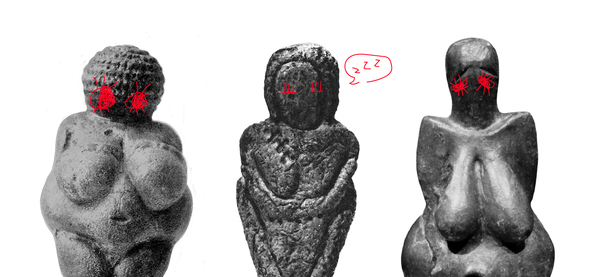
This is particularly relevant because the common perception of the Paleolithic Venus as a fully faceless woman does not reflect the full spectrum of archaeological finds.
I. The Origin of the Female Image
The history of Paleolithic Venus figures does not begin with a single artistic canon, but with numerous small depictions of the human form discovered across the vast territory of Eurasia. Archaeological findings show that the female figure became one of the themes in Upper Paleolithic portable art.
Furthermore, thousands of years may have passed between individual works.
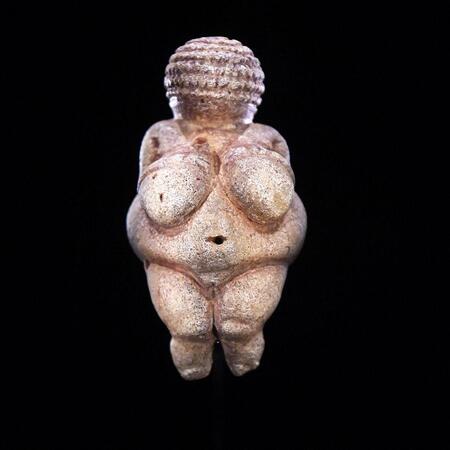
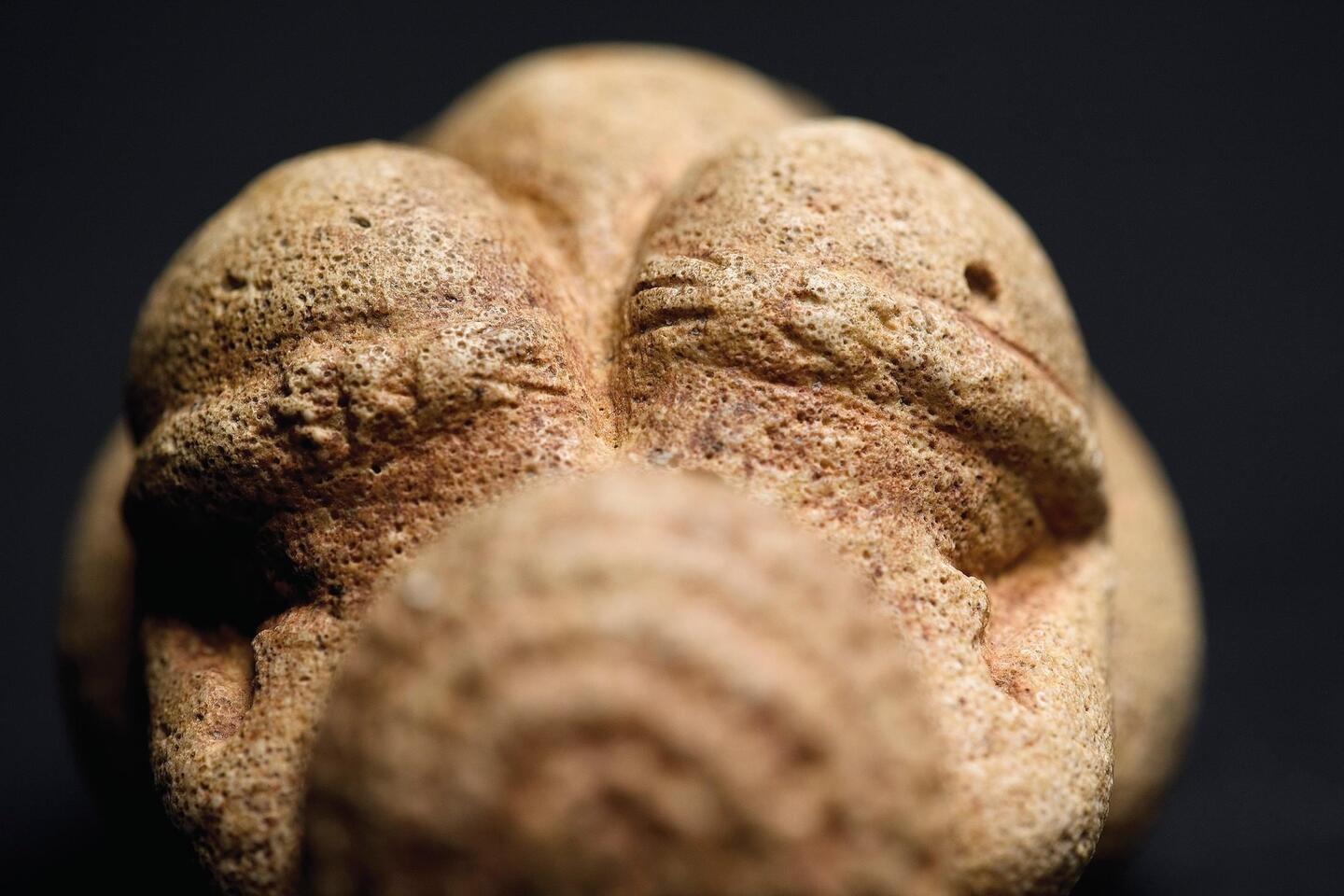
Venus Villendorf. Artist unknown. Approximately 30,000 years ago. Oolitic limestone, traces of red ochre. Gravettian.
Sculpture of the female body predates written records of human culture. Small figurines preserved ideas about the form of the body, but not explanations from their creators. Therefore, the study begins with the object itself: its silhouette, proportions, and details.
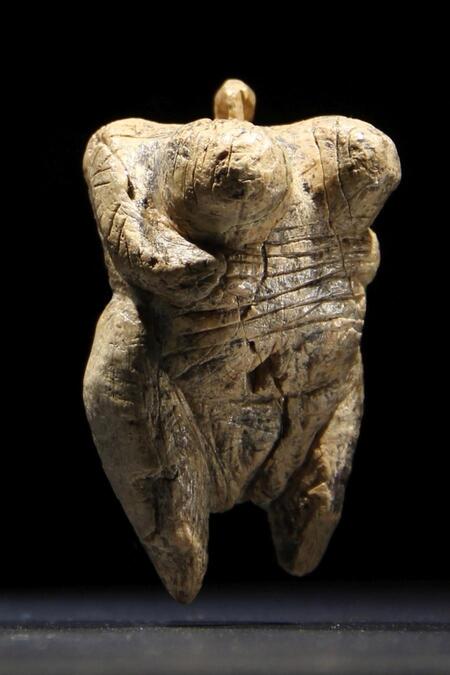
Beneva from Hole-Fels. Approximately 40–35 thousand years ago. Mammoth tusk.
Venus of Chole-Fels belongs to the group of the oldest known three-dimensional representations of a woman. The master emphasized the chest and lower torso, leaving the arms and legs almost unfinished. Instead of a head, there is a protrusion with an opening, suggesting the figurine was meant to be hung.
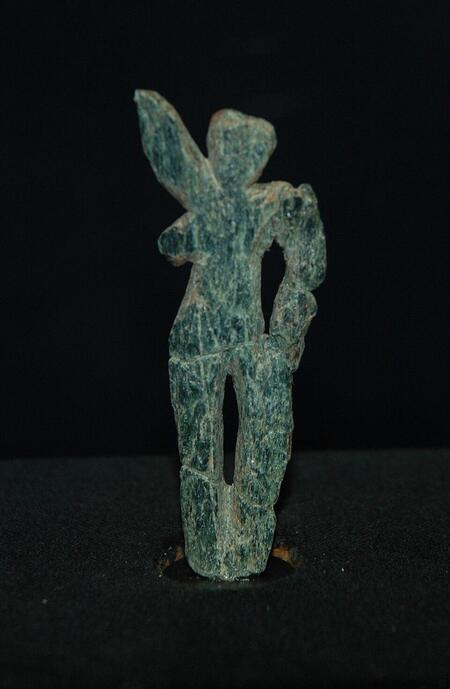
Statuette from Galgenberg. Artist unknown. Circa 36,000 years ago. Amphibolite slate. Aurignacian.
Why are they called Venuses?
The term «Paleolithic Venus» was coined by 19th-century researchers, not by the creators of the figurines. The name is linked to an ancient goddess of love and beauty, although tens of thousands of years separate the two artistic traditions. The name itself can influence our perception, causing us to look for the ideal of beauty or a symbol of sexuality first in the figurines.
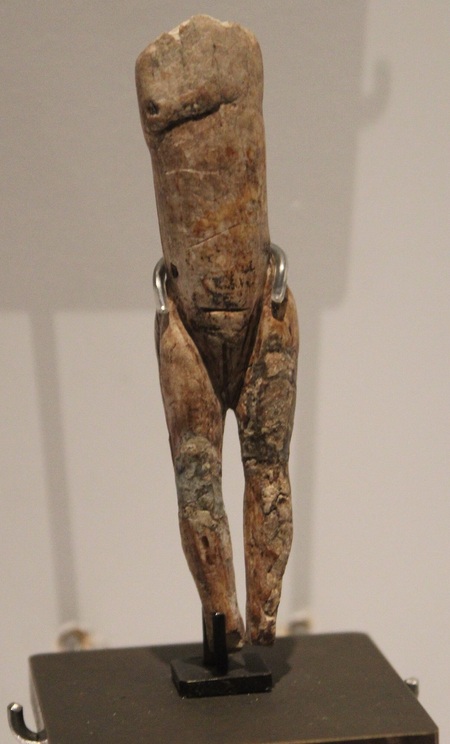
«Shameless Venus» from Lozère-Bass. Artist unknown. Circa 17,000 years ago. Mammoth tusk. Madeleine
Venus, the Shameless
The Geography of Female Representations
Paleolithic female images have been discovered at significant distances from one another. This suggests a widespread practice of depicting humans, but it does not, in itself, prove the existence of a single cult or a unified belief system. Comparing the finds helps reveal both similar characteristics and regional distinctions.
Time and the Evolution of Form
Female figurines were created during various periods of the Upper Paleolithic. Therefore, visual similarity between two finds does not necessarily indicate they were contemporaneous, and differences do not always signify a sequential development of artistic style. On the scale, it is important to show that the history of Paleolithic Venus figures is not reducible to a single line of evolutionary form.
II. The Female Body as an Artistic Form
Proportion as a Means of Expression
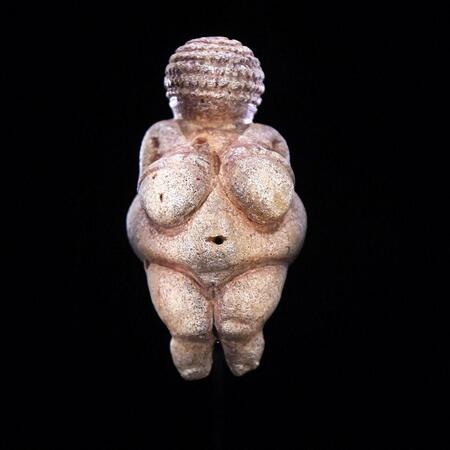
Venera Villendorff. Author unknown. Approximately 30,000 years ago. Oolitic limestone, traces of red ochre. Gravettian. (Reproduction)