TOPIC
From Object to Icon: The Evolution of the Souvenir’s Visual Image
Navigator:
Concept
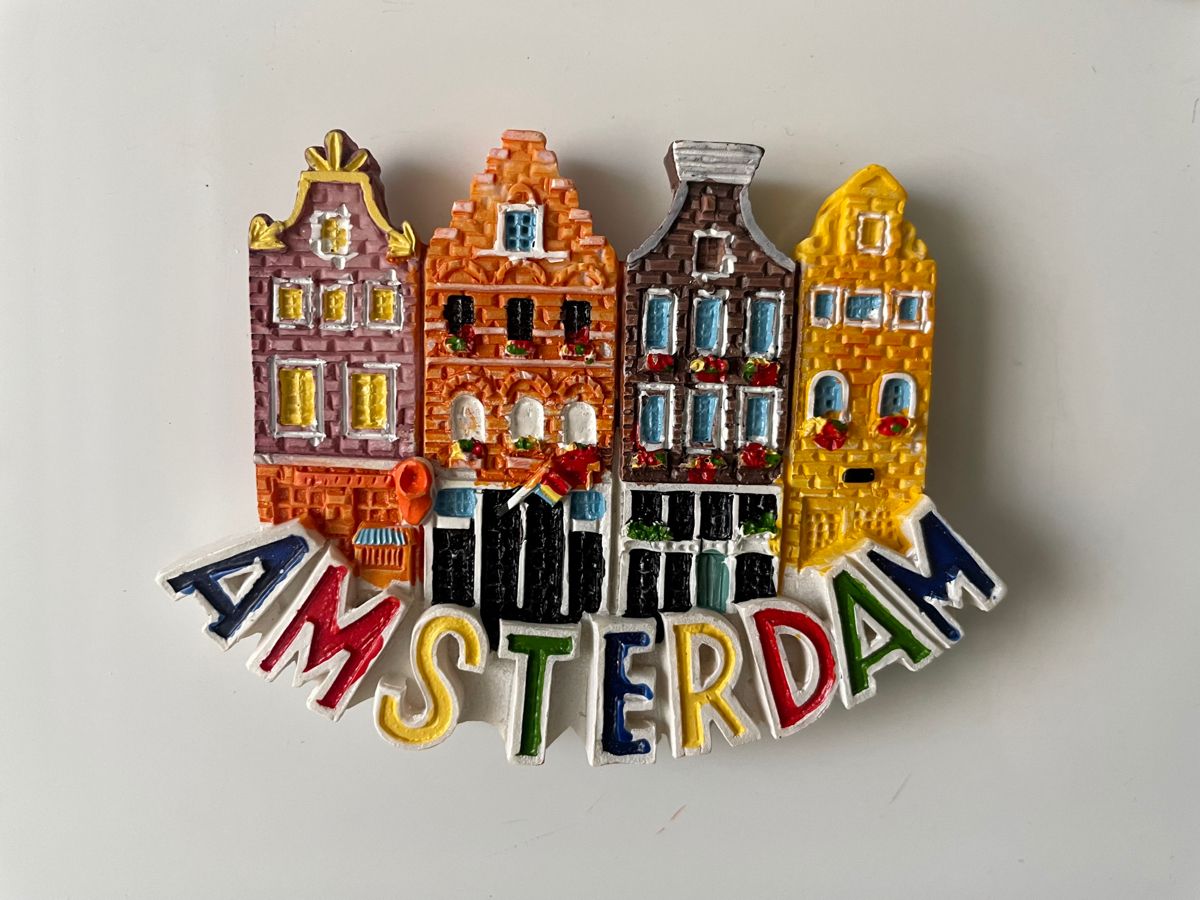
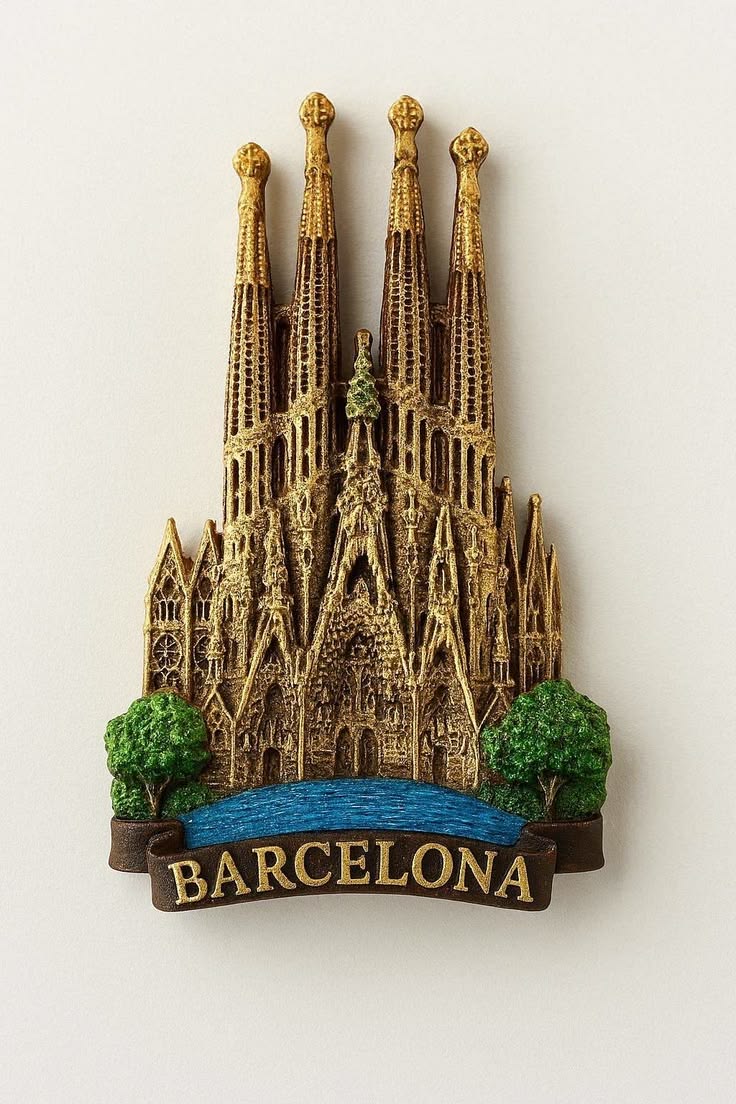
A souvenir belongs to objects that surround us everywhere but are rarely the subject of systematic study. Yet, in a small item, concepts of place, its nature, and culture are combined, along with the expectations of who buys the item and who it is given to. By choosing this topic, the author was guided by the idea that a souvenir that directly visualizes a place—such as a postcard showing a view, an engraving of a panorama, a plate, or a magnet with a silhouette of a landmark—represents the purest case of the connection between an image and a place. Here, the visual image serves the primary function rather than accompanying another, such as taste, craftsmanship, or utilitarian purpose.
Three groups of subjects were excluded to narrow the scope of the research.
The first group includes folk crafts because their imagery is based on an inherent tradition of ornamentation and craftsmanship, rather than the depiction of a specific place.The second group covers edible souvenirs, in which the visual image loses its independent meaning and submits to the logic of taste and packaging.The third group unites objects where place is present only in the name or as a general motif, without a recognizable visual reference to a specific territory. This differentiation allows for the comparison of images of the same nature and function without blurring conclusions with disparate material.
The relevance of this work stems from the fact that in recent decades, the pictorial principles of souvenir products associated with a place have changed significantly. Early forms, such as postcards with panoramas, engraved city views, and lithographs, aimed for an accurate reproduction of the landscape and architectural ensemble. Later mass-produced series from the 1960s–1980s relied on photography and vibrant printing, whereas contemporary items increasingly utilize contour silhouettes, simplified geometric forms, and monochrome color schemes. This transition impacts not only aesthetics but also the very logic connecting place and object: the image ceases to be a copy of the landscape and begins to function as a sign, capable of denoting a place without reproducing it.
The core research question is formulated as follows: how has the visual image of a place, embodied in a souvenir, transformed from representational fixation to symbolic designation, and what mechanisms of this transition can be identified within the visual sequence?
The question is original because souvenir merchandise that directly depicts a location is typically treated in economic and marketing studies as a consumable object, whereas the dynamics of its visual solutions—including contour simplification, detail reduction, and the shift toward typography—remain insufficiently addressed in design research.
HYPOTHESIS
The hypothesis posits that the evolution of the visual representation of a place in souvenirs moves from a model of «representation» to a model of «signification.» In the early stages, the object strives to maintain recognizable resemblance to the place by relying on perspective, detailing, and landscape accuracy. At the contemporary stage, the decisive factor becomes the sign’s ability to be instantly recognized and reproduced across various contexts—from fabric printing to a digital icon. Correspondingly, the transition from place to symbol is not a loss of connection but a reconfiguration of that connection through graphic conventions, color, silhouette, and typography.To test this hypothesis, the author plans to employ visual analysis with elements of comparative comparison. The visual sequence will be structured according to chronological and typological principles. It will include materials reflecting the successive stages of development of place-based souvenir products: engraved and lithographed views, photographic postcards, mass-produced tourist series, as well as modern items featuring silhouette and minimalist graphics. Each illustrative block will be accompanied by an authorial commentary explaining which visual choices capture the shift in image and how those choices relate to the proposed hypothesis.
The theoretical significance of this work lies in systematizing the visual attributes of the souvenir image, while its practical significance is in the ability to use the observations obtained when developing local identities, tourism brands, and souvenir collections.
Introduction
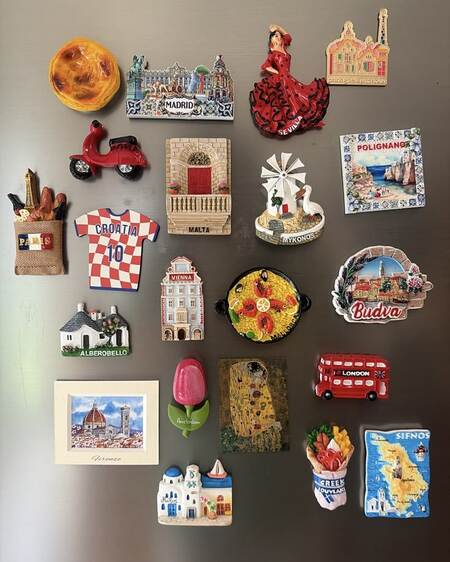
In the modern world, souvenirs surround us everywhere. People acquire them to remember trips and events, give them as gifts to loved ones, use them as advertising materials, or simply incorporate them into daily life. The assortment of souvenirs is extremely diverse—ranging from small keychains and magnets to interior design items, clothing, tableware, decorative and applied arts pieces, and designer objects.
Despite differences in form, materials, and production methods, many souvenirs share one common feature—they are tied to a specific place. They depict architectural monuments, cityscapes, natural features, national symbols, local ornaments, and other elements that allow an object to be associated with a particular territory.
Souvenirs become a peculiar material carrier of memory. They allow one to preserve the impression of a journey and transpose part of the acquired experience into one’s familiar environment. However, their value is not always defined by practical utility or cost. Much more significant is the symbolic connection of the object to a place, event, or person.
Chapter 1. Memory of Place
CHAPTER 2
Chapter 3
Chapter 4
Chapter 5
CONCLUSION