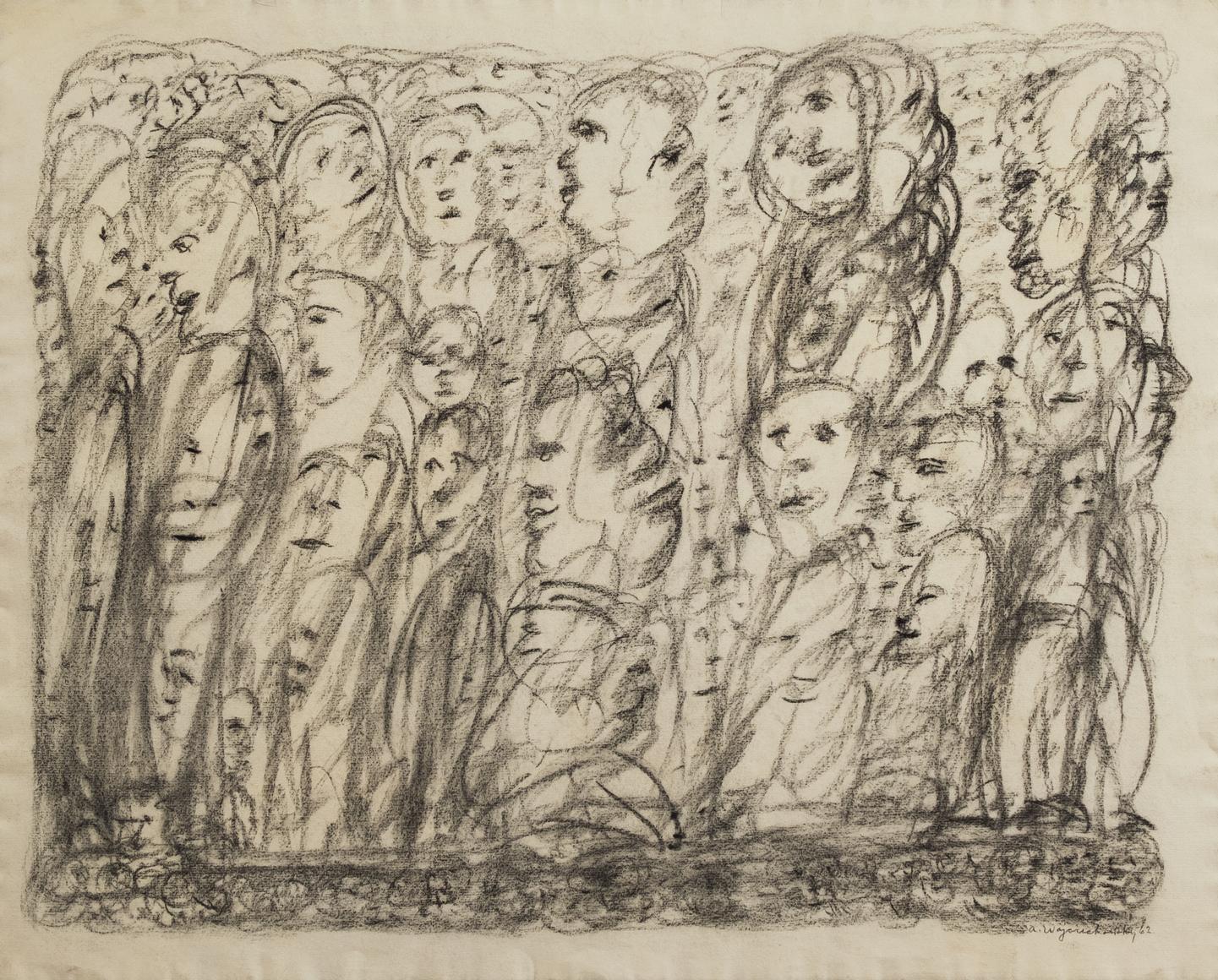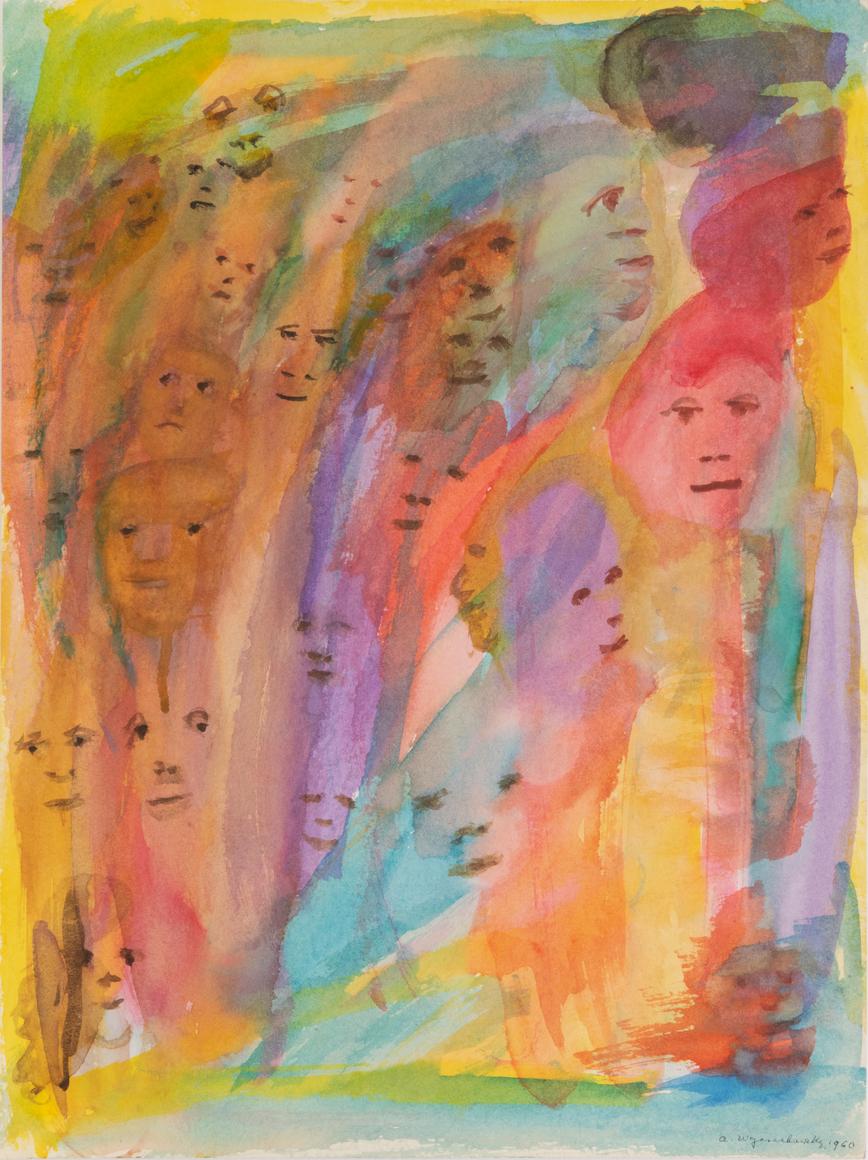

The human face has traditionally occupied a significant position in the visual arts, serving as a means to convey individuality, character, and emotional state. However, its representation is not always limited to portraiture. The face can be repeated multiple times, altered in scale, overlaid onto other images, and become part of a complex graphic structure. These techniques are particularly evident in Art Brut—an artistic movement whose concept was proposed by Jean Dubuffet in 1945 to denote creativity that develops primarily outside of academic traditions and conventional artistic norms [1]. The selection of this theme stems from an interest in how the repetition of the human face becomes a way to form an individual artistic language. In the works of certain artists, the eyes, head contours, and other recognizable features of Art Brut form rhythmic sequences, fill space, and connect with abstract elements. Meanwhile, the face can simultaneously retain human characteristics while acquiring properties of an ornament. This work focuses not on the diversity of facial representations, but on the specific mechanisms of its transformation: repetition, scale change, overlapping, and integration into ornamental structures. Thus, the key research question is formulated: how does the representational function of the human face change when the artist treats it as a graphic element that can be manipulated in various ways within a composition? For this study, artists whose work belongs to Art Brut or is examined in the context of closely related outsider art have been selected. Their artistic practices developed primarily outside of academic tradition and are characterized by independent modes of representation. Despite differences in artistic methods, the works of these artists are united by a consistent engagement with the human face, which is repeatedly reproduced, transformed, and integrated into complex compositional structures. The primary authors of this study are Mage Gill, Edmund Monsell, and Minnie Evans.
The primary principle for material selection is the visual significance of the recurring face—both within a single composition and across a series of works. The research includes at least 40 images sourced from museum collections, specialized archives, and exhibition catalogs with verifiable attribution. The analysis is based on comparing form, scale, the number of faces, compositional rhythm, and the figure’s interaction with the background. The research structure follows the logic of how the role of the face changes within the artwork. The face is sequentially examined as a recognizable image, a recurring motif, a compositional element, and a part of the ornamentation. The concluding section is dedicated to comparing the artistic languages of three principal artists. This sequence reflects principles of visual analysis rather than the chronology of their work. Textual sources are used to establish historical context, verify facts, and refine existing interpretations. Priority is given to scholarly articles, museum catalogs, and research by experts in Art Brut. Biographical details are incorporated as necessary, without attempting to explain the artistic characteristics of the works through the authors' psychological states. The hypothesis of this research is that the multiple repetition of the human face can alter its representational function: it transforms from an independent image into a structural element of the composition that forms rhythm and ornamentation. Furthermore, the face does not necessarily lose its individuality or recognizability. Comparing works by different authors will reveal common principles of this transformation and variations in how individual artistic languages are formed.
The Face as a Recognizable Image
The human face remains recognizable even when its features are significantly simplified or distorted. Realism and intricate detail are not always necessary for recognition; a distinct placement of the eyes, nose, and mouth—sometimes augmented by a head contour—is often sufficient. In Brutalist art, these elements frequently adopt unusual forms yet retain the ability to convey a human presence.This chapter examines which visual cues allow a face to be recognized and how the interpretation of those cues shapes each artist’s distinctive visual language. By comparing the works, we can identify consistent methods of depicting the eyes, nose, mouth, and facial expression—elements that later form the basis for compositional repetition and complexity.
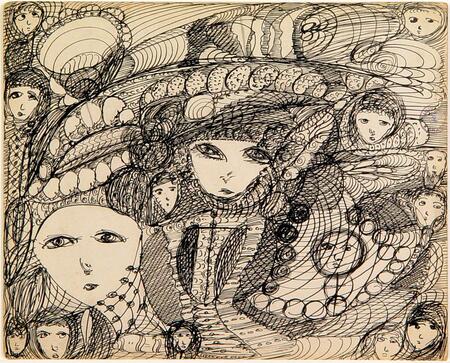
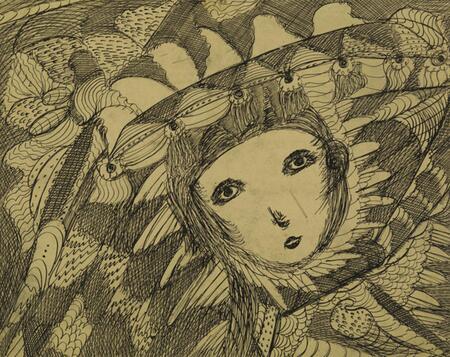
Mage Gill, «Untitled, ” before 1958, France / Mage Gill, „Squinted View, ” c. 1940
Edmund Monsel, «Untitled, ” 1949, Lausanne
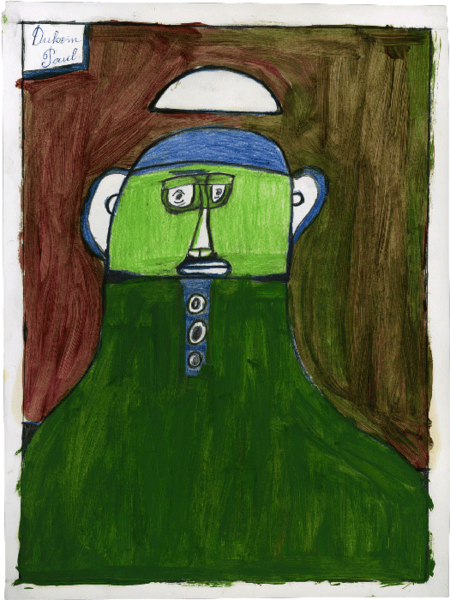
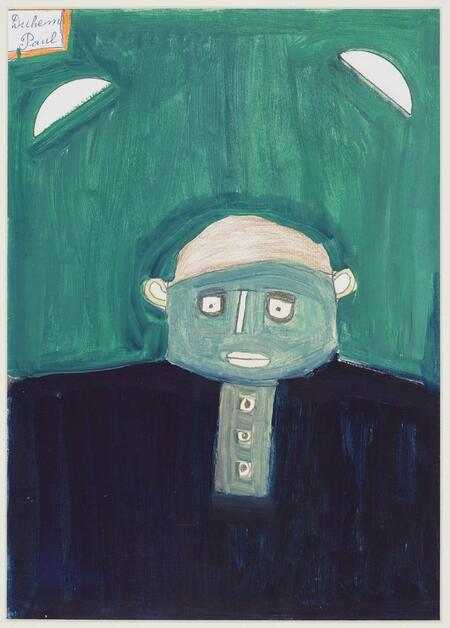
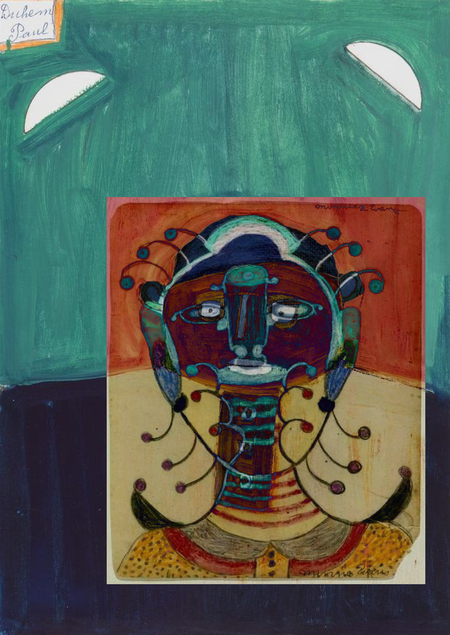
Paul Duyem, «Untitled,» 1990–1999
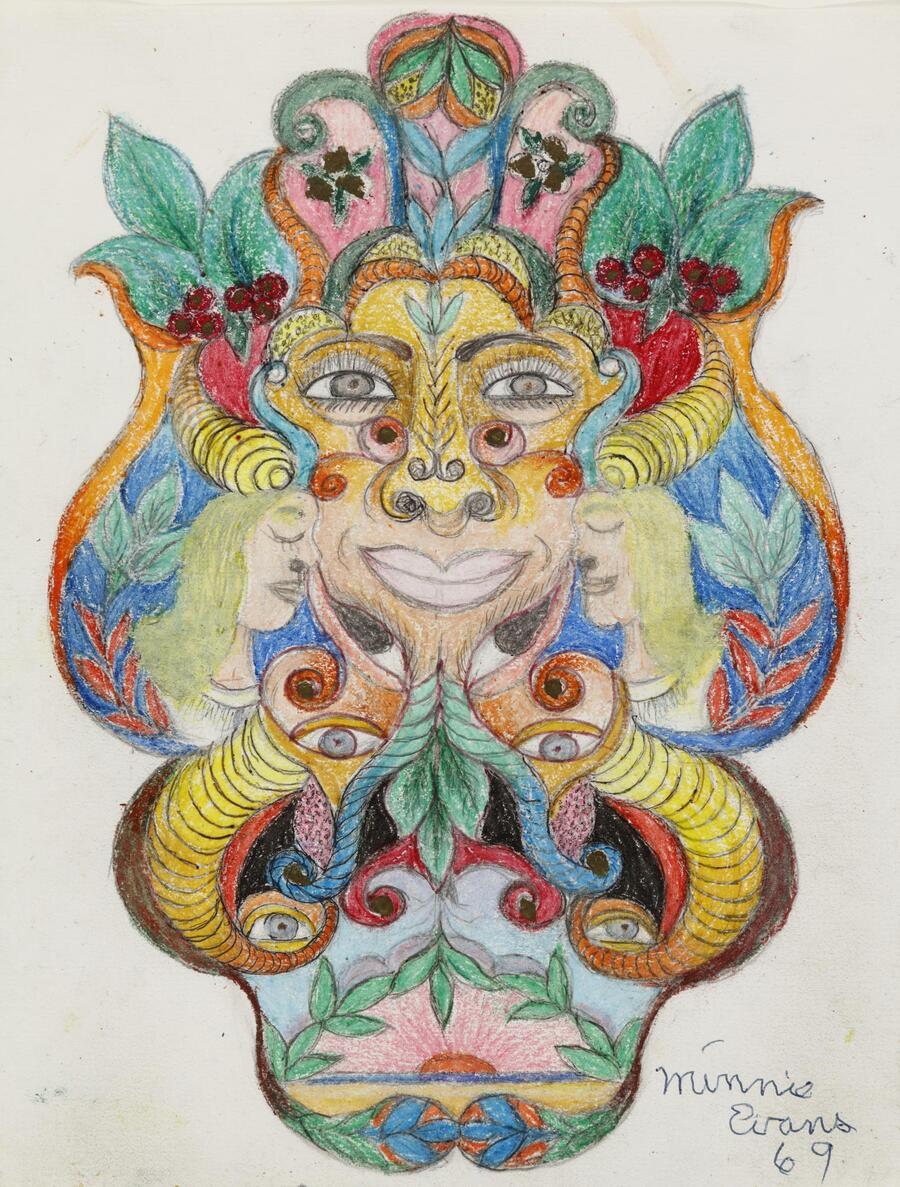
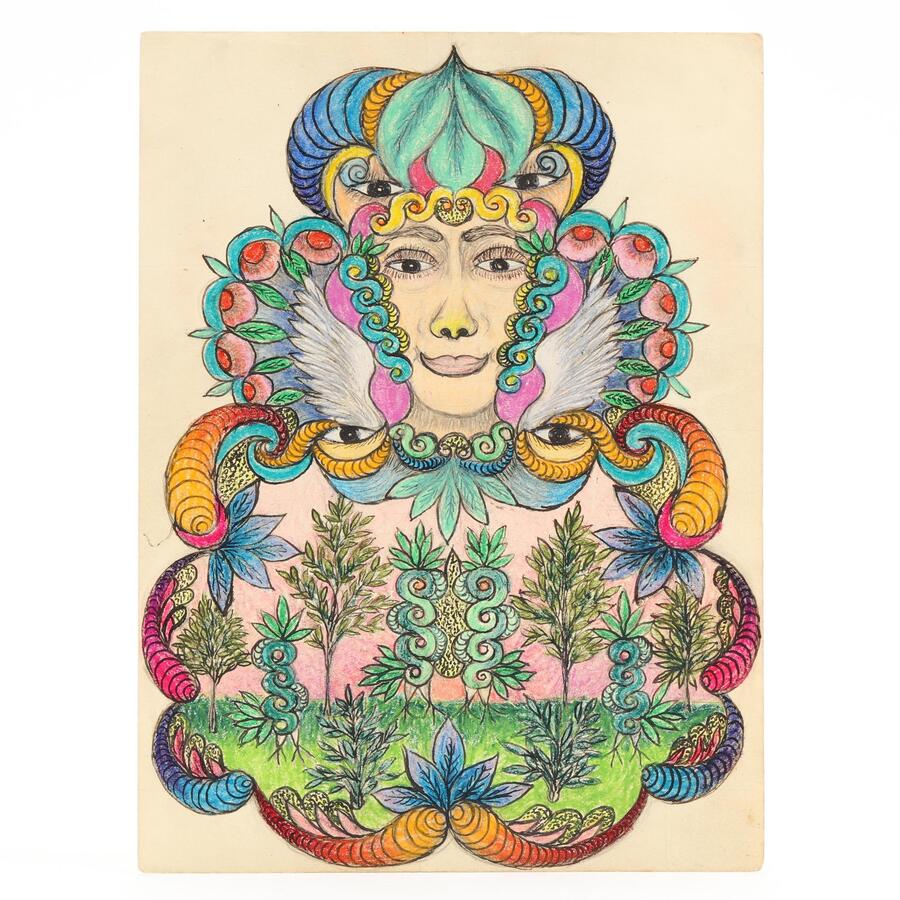
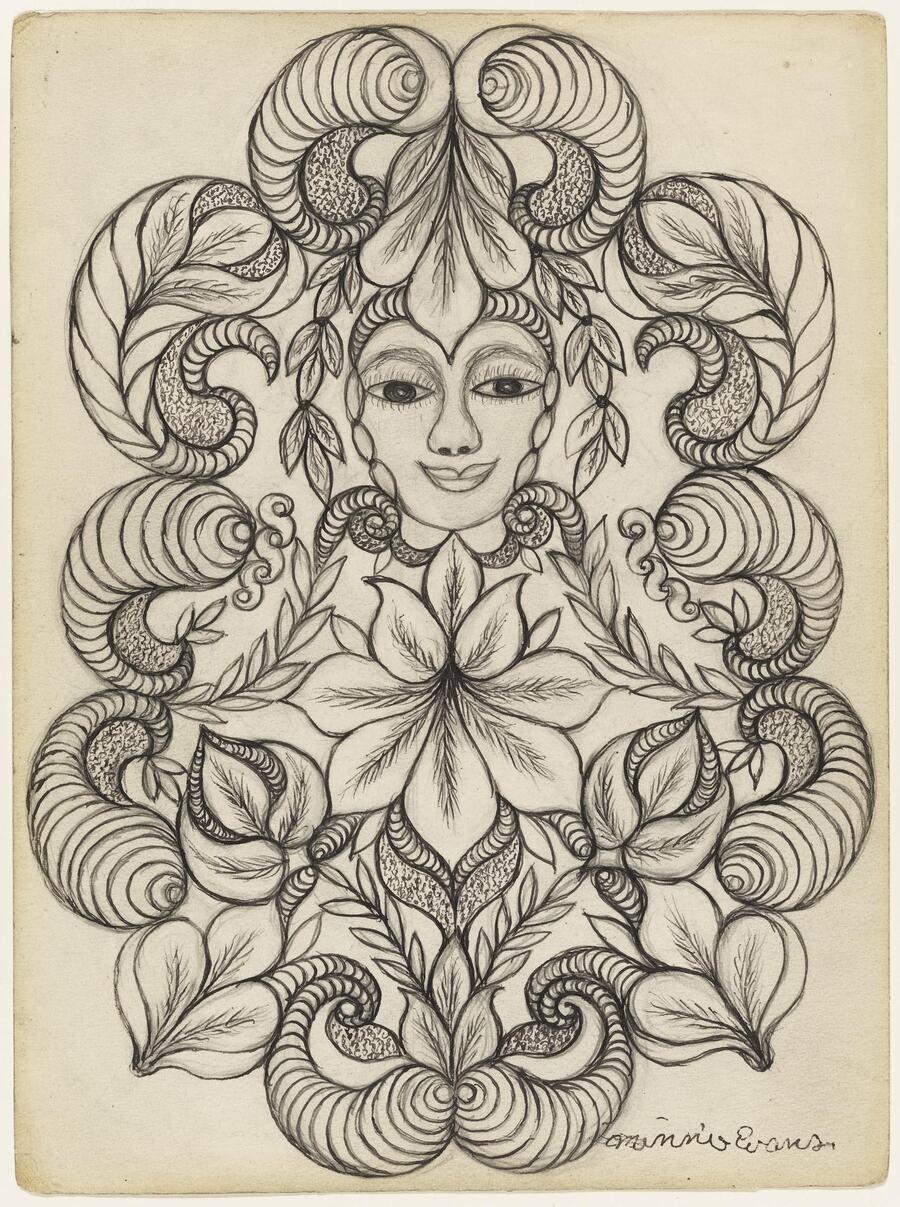
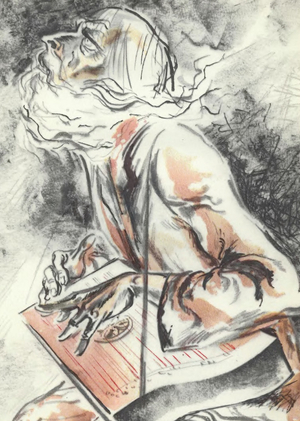
The comparison of the works reveals that the recognizability of a human face is not dependent on the realism of its depiction. The primary role is played by the characteristic placement of the eyes, nose, and mouth, as well as their proportion to the overall contour of the head. Moreover, each artist develops their own distinct facial type: for Mae Gill, it is female images featuring expressive eyes and delicate features; for Edmund Monsell, it involves elongated male faces with characteristic noses and mustaches; and for Minnie Evans, it comprises symmetrical fantasy figures linked to natural forms. Thus, recognizability is achieved not through precise reproduction of human appearance, but through the preservation of specific visual attributes. The stability of these attributes allows artists to return repeatedly to a single image type, gradually altering its form and compositional role.
The Face as a Recurring Motif
In the previous chapter, we identified the distinctive features that allow a human face to remain recognizable even in stylized representation. However, in Art Brut works, these images rarely exist in isolation: artists repeatedly return to them, reproducing similar faces within a single composition or across a series of independent works. This repetition does not necessarily imply precise duplication. By retaining certain characteristics, artists alter the proportions, expressions, angles, and scale of the images. The goal of this chapter is to determine whether the recurring face remains consistent or acquires new characteristics each time, and furthermore, to investigate the role variation plays in forming a stable artistic motif.