Introduction
Painting has never existed independently of the space surrounding it. The perception of a painting is influenced not only by the image itself but also by the location where it is displayed, its history, and its modes of distribution. Today, a work can exist simultaneously as a material object, a digital image, a museum exhibit, and a collectible item. In the article «Painting Beyond Itself, ” David Joselit proposes the concept of transitional painting to describe artistic practices that illustrate the work’s dependence on institutions, technology, and the market. However, a question arises: if a painting is constantly moving between different contexts, does this mobility truly allow it to overcome objecthood, or does it, conversely, create new possibilities for the commodification of art?
Transitional painting by Joselita and an example by Utah Keter
For Joselit, transitional painting is not simply a picture that «travels» between a museum and a screen. It is a work that displays its connection to the artist’s body, the exhibition space, the history of painting, and the art economy. Joselit distinguishes between diachronic transience—movement through time and dialogue with tradition—and synchronous transience: the embedding of the painting within current social and technological contexts.
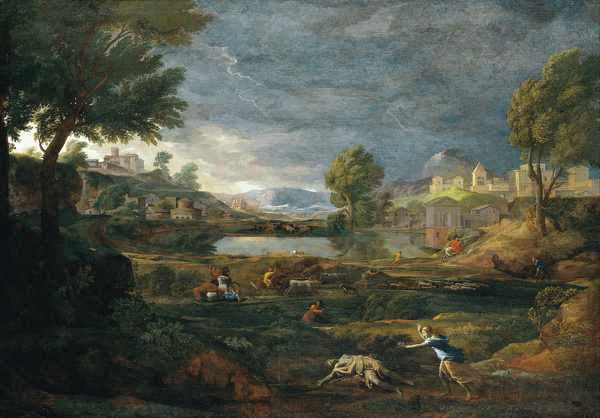
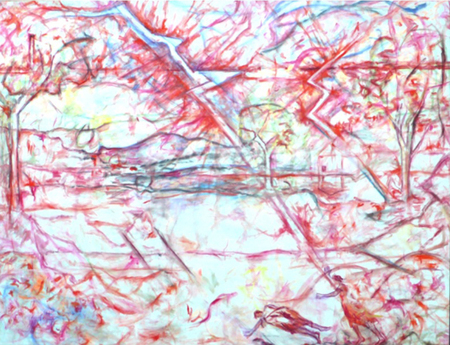
Nicolas Poussin. «Landscape with a Pyramid and a Fish, ” 1651. Canvas, oil / Yuta Keter „Hot Electrode (after Poussin), ” 2009. Acrylic, mixed media on canvas
This idea is well illustrated by the example of Yuta Keter. In Hot Electrobe (After Poussin) (2009), she reinterprets Poussin’s landscape into a red, almost monochromatic image tied to the memory of the AIDS epidemic. At the Lux Interior exhibition, the painting was incorporated into performances, thereby linking art history with political memory and bodily experience.
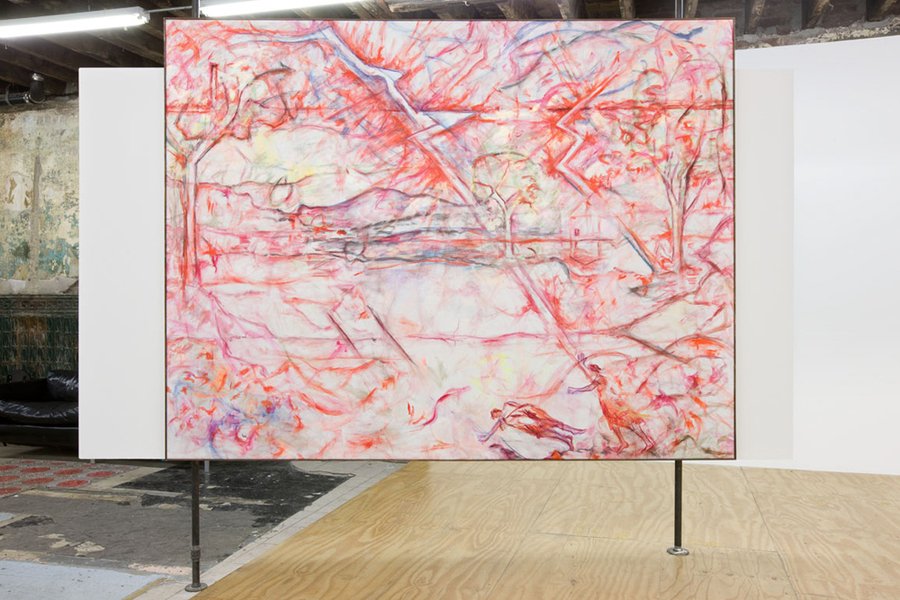
Yuta Keter, «Hot Electrode (After Poussin), ” 2009. Acrylic, mixed media on canvas
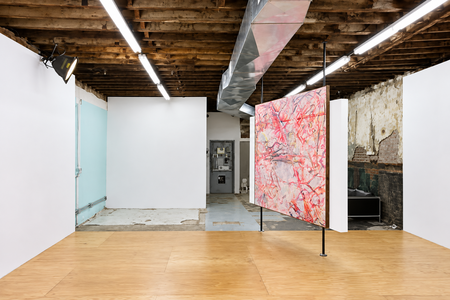
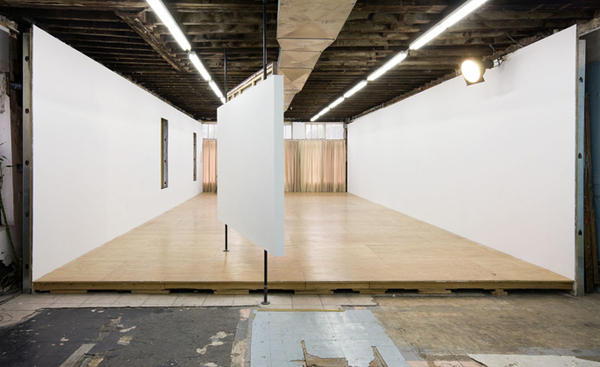
View of the installation «Hot Electrode (after Poussin)» in the Reena Spaulings Fine Art Gallery, 2009 / Yuta Keter. «Lux Interior, ” 2009. Overall view of the exhibition space.
Digital Circulation: Heath Steyerl and Wade Garton
Transience can also be viewed from another angle. Hito Steyerl shows that digital images are copied, compressed, and moved between platforms. Her concept of the «poor image» describes a low-quality copy whose value can be determined by the speed and scale of its distribution, rather than by material scarcity. Steyerl views circulation differently from Joseph Lee: she is interested in how artistic practice demonstrates the network, while he is interested in how the circulation of images becomes a social and economic environment. Digital distribution expands access to art but makes the image dependent on platforms and attention.
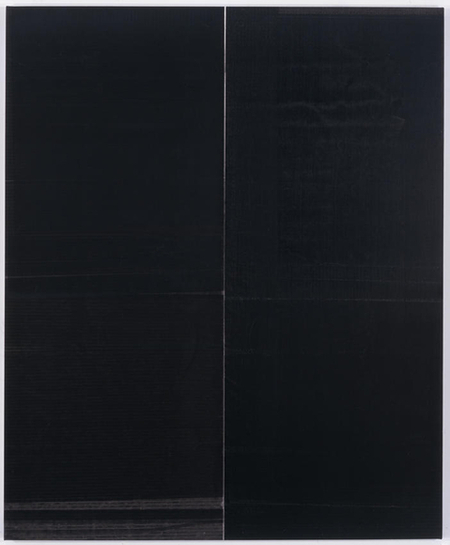
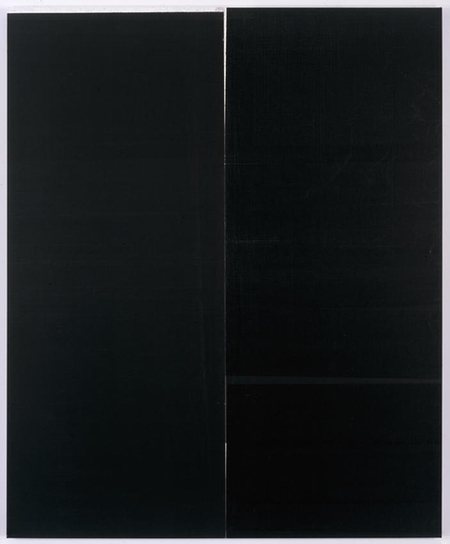
Wade Garton, Untitled, 2007. Digital print on canvas, 213.4 cm × 175.3 cm / Wade Garton, Untitled, 2007. Digital print on canvas, 213.4 cm × 175.3 cm
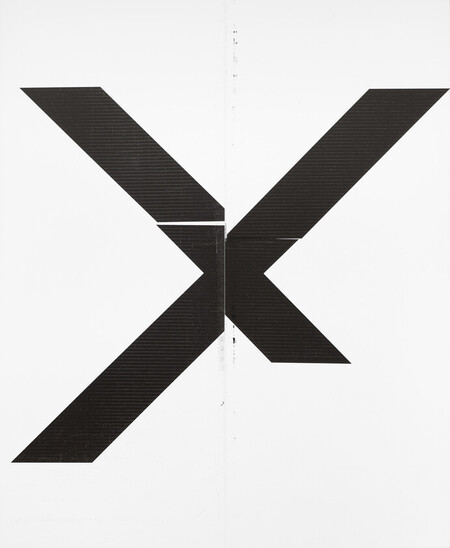
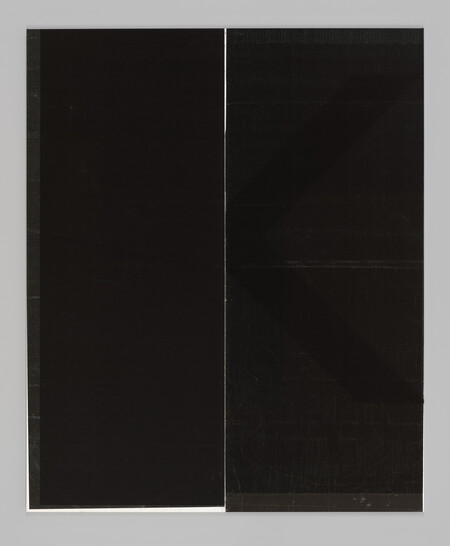
Wade Garton, Untitled, 2007. Inkjet print on linen, 214 × 176.5 cm / Wade Garton, Untitled, 2007. Ink on linen, 214,3 × 175.9 cm
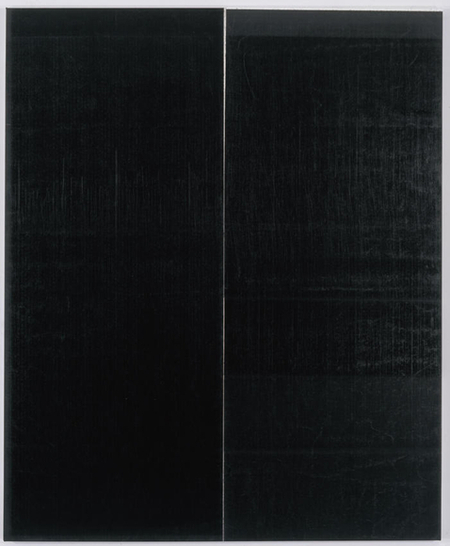
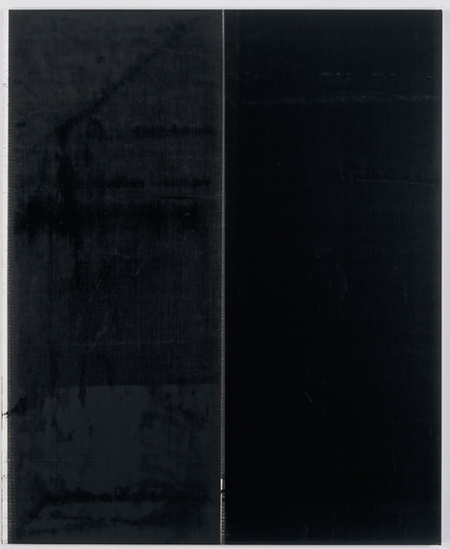
Wade Garton, Untitled, 2007. Inkjet print on canvas, 213.4 cm × 175.3 cm / Wade Garton, Untitled, 2007. Inkjet print on canvas, 213.4 cm × 175.3 cm
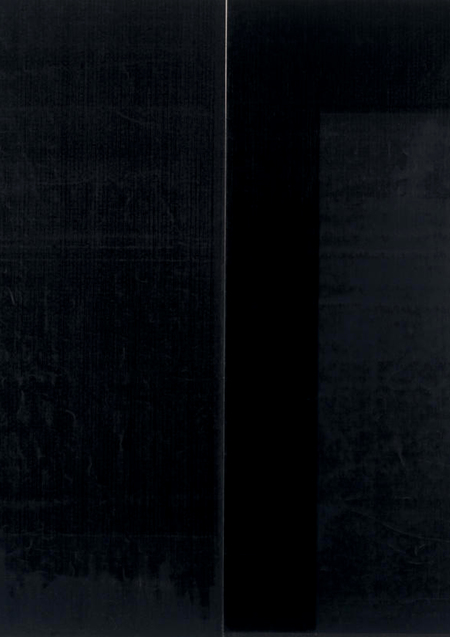
Wade Gaiton’s practice allows for a comparison of these ideas. In his 2007 work, Untitled, images are created using digital files and a inkjet printer that prints directly onto linen. It is important here to distinguish between the digital file, the material artwork, and the reproduction: the file can be reproduced, the canvas remains unique, and the photograph only conveys its image. Painting transitions into a new state—machine printing becomes part of the artistic process, and its characteristics and imperfections shape the surface of the painting. This is particularly evident in the series of black monochromes, where the repeating digital form acquires unique characteristics with each instance.
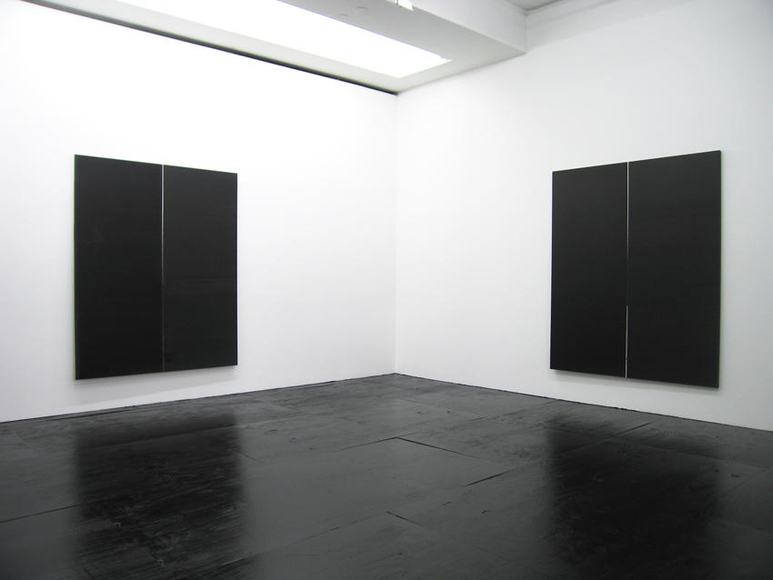
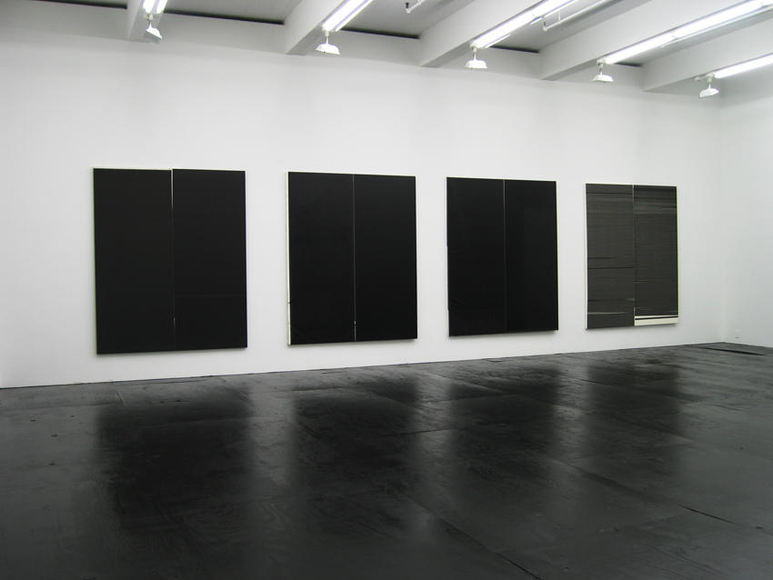
Wade Garton, Exhibition View at Friedrich Petzel Gallery, New York, 2007
From Joselita’s perspective, these works demonstrate transience: the image moves between a digital file, canvas, and exhibition. Steyerl’s ideas allow for an additional consideration of the dissemination of their digital reproductions. In this way, the original remains a unique material object, even when its image is freely distributed.