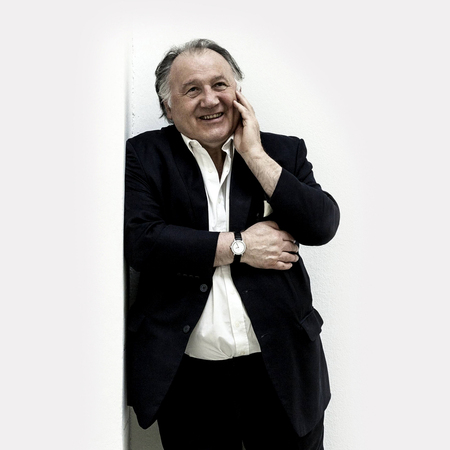
Peter Weibel
Austrian artist, media theorist, curator, and one of the key figures in media art from the second half of the 20th century into the beginning of the 21st century.His work has significantly influenced perceptions of what an art exhibition can be, how art and science should interact, and what role the viewer plays in creating artistic meaning.Presentation Hypothesis
The main feature of Veybel’s approach is that he viewed the exhibition not merely as a space to display works, but as an instrument for knowledge production. In his projects, art becomes a means of studying technological, political, and social processes, and the museum functions as a platform for experimentation, discussion, and critical engagement with contemporary life.Biography
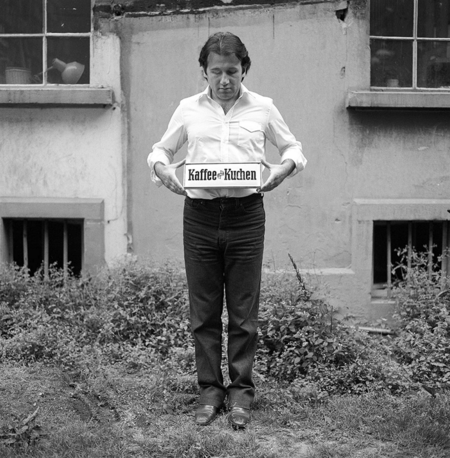
Peter Weibel was born on March 5, 1944, in Odessa (USSR). At the end of World War II, his family moved to Austria, where he spent his childhood.Weibel received an interdisciplinary education unusual for a future artist. In Paris and Vienna, he studied literature, medicine, mathematics, logic, philosophy, and cinema.While he did not receive a traditional art education, it was precisely the combination of humanities and exact sciences that formed the basis of his intellectual method.
Veybel’s career developed across artistic, academic, and institutional spheres.1984–1989 He taught video and digital art at the State University of New York at Buffalo (SUNY Buffalo).1986–1995 He was involved in the artistic direction of Ars Electronica—one of the most crucial international platforms for art and technology.1989–1995 He founded and headed the Institute of New Media at the Städelschule in Frankfurt am Main.1993–2011 He served as the chief curator at the Neue Galerie Graz in Austria.1999–2023 He led ZKM—the Center for Art and Media (Karlsruhe, Germany).Additionally, Veybel curated Austria’s participation in the Venice Biennale from 1993–1999, was the artistic director of the III Seville Biennale in 2008, and the IV Moscow Biennale of Contemporary Art in 2011.In 1984, he became a professor at the University of Applied Arts in Vienna and subsequently taught at various international institutions.
The most significant stage of his curatorial career is connected with ZKM.
Under his guidance, this center developed not only as a museum but also as a research institution, bringing together artists, programmers, philosophers, scientists, and technology specialists.
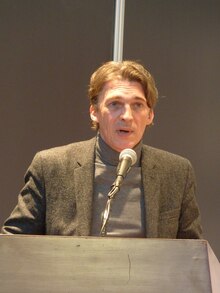
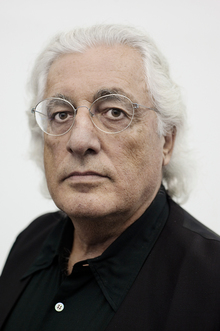
Peter Vaibel, photo by Andrea Fabbri
Vaibel died on March 1, 2023, in Karlsruhe.
Core Theoretical Works and Ideas
Väibel left behind a vast legacy of research articles, theoretical texts, catalogs, and collective publications. For understanding his curatorial work, the following publications are particularly important:
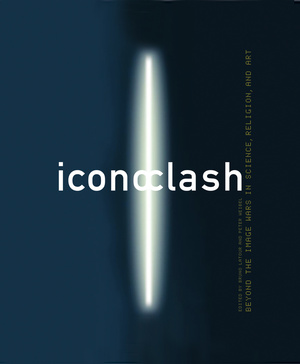
The book was prepared by Vaibel in collaboration with philosopher Bruno Latour and is related to an exhibition of the same name.
The central research question is: why do people simultaneously need images, trust them, and seek to dismantle them?
The authors draw parallels between religious iconography, works of art, scientific visualizations, and political symbols. The image is examined not as a neutral carrier of information, but as an object connected to belief, power, truth, and conflict.
This publication is particularly significant for Vaibel as it demonstrates the transformation of the exhibition into an independent philosophical study.
One of Veblen’s central ideas is that the development of digital technologies dismantles the traditional hierarchy of artistic media.Previously, painting and sculpture were considered primary art forms, while photography, video, and computer art occupied a secondary position for a long time.In the post-media state, various media become equal and interact freely with one another. Painting can utilize digital graphics, sculpture can incorporate video, and art installations can employ computer algorithms.For curatorial practice, this means the necessity of abandoning rigid boundaries between disciplines and grouping works created with the most diverse technologies within a single exhibition.
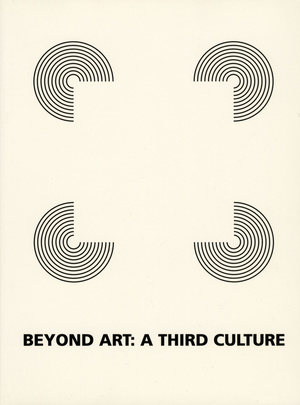
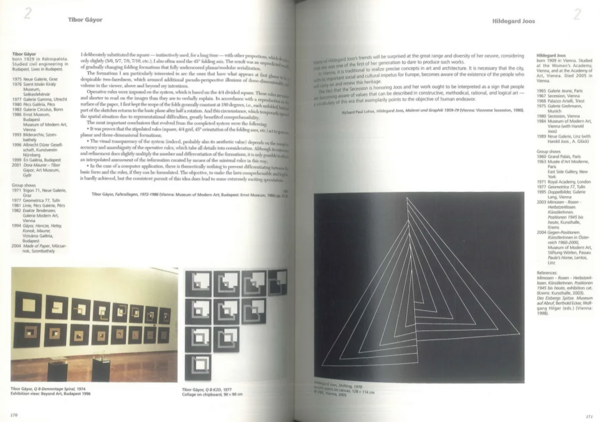
This collective study, edited by Weibel, examines the relationship between art and science using Austria and Hungary of the 20th century as case studies.
The core concept is the possibility of forming a «third culture”—one that transcends the division between natural sciences and humanities/arts.
Weibel demonstrates that the history of art is inseparable from the development of mathematics, cybernetics, perception psychology, philosophy of language, and technology.
In his exhibitions, he consistently implemented this principle, combining artworks with scientific models, research materials, and experimental devices.
Connecting Theory with Curatorial Practice
Wiebel’s theoretical interests directly dictated the structure of his exhibitions. Three interconnected principles can be identified.First, art is a method of knowing, not merely an aesthetic object.Second, media shape reality, so artistic investigation must account for technologies, communication systems, and methods of image production.Third, the museum must not remain an isolated space of art, because the most crucial questions of contemporary life arise at the intersection of art, science, politics, and public life.
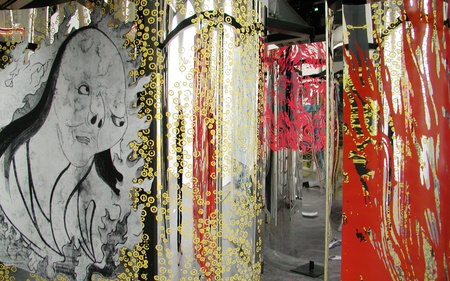
Iconoclash Exhibition, ZKM, Karlsruhe, 2002Venue and Dates: ZKM, Karlsruhe, Germany, May 4 — September 1, 2002.Curators: Peter Weibel, Bruno Latour, Peter Galison, Adam Lowe, Josef Leo Körner, Dario Gamboni, and Hans Ulrich Obrist.
The exhibition is dedicated to iconoclasm—the destruction of images, symbols, and objects possessing cultural or religious significance.
However, the curators were interested in more than just the physical destruction of these representations. They sought to explore a deeper contradiction: why do images simultaneously evoke trust and suspicion, become objects of veneration, and be subjected to destruction?
Traditionally, iconoclasm has been viewed primarily within a religious context, such as in connection with the destruction of icons or cult statues.
Väibel and his colleagues expanded this problematic, incorporating scientific imagery, contemporary art, political symbols, and visual technologies into the discourse.
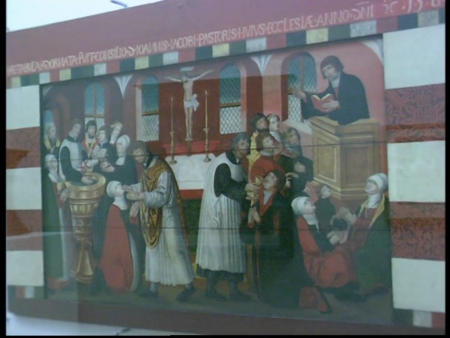
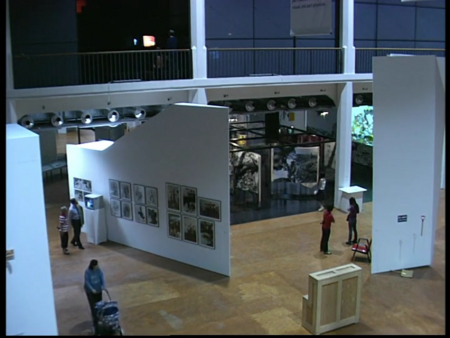
Iconoclash Exhibition, ZKM, Karlsruhe, 2002
The destruction of the Buddha statues in Bamiyan by the Taliban in 2001 provided a crucial historical context. This episode demonstrated that the struggle surrounding imagery remains relevant even in the era of global visual culture.
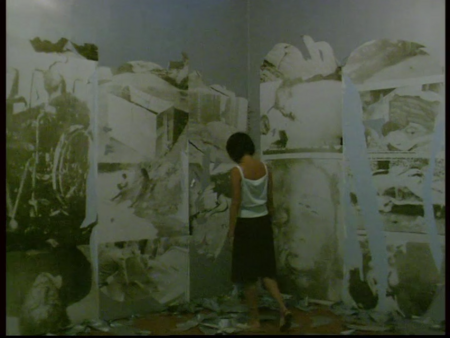
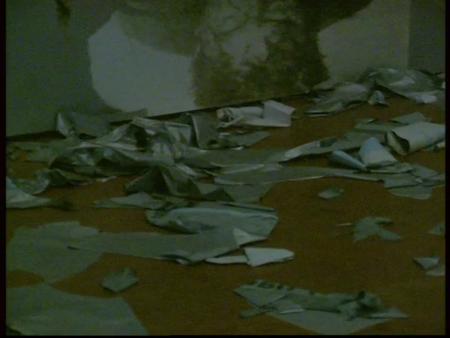
Iconoclash exhibition, ZKM, Karlsruhe, 2002
The central thesis of the exhibition was that the creation and destruction of images are not opposing processes. Often, the destruction of one image becomes the prerequisite for the emergence of a new mode of representation.
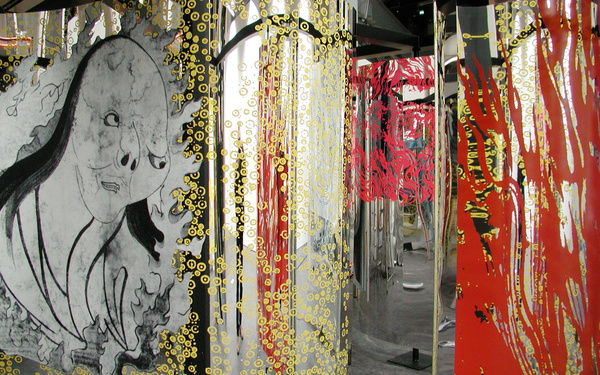
Iconoclash was not a traditional themed exhibition but rather a peculiar philosophical experiment unfolded within a museum space.One of its defining characteristics was the integration of historically and disciplinarily diverse materials. Works from classical and contemporary art, religious artifacts, scientific instruments, documents, and visual models were examined on an equal footing.The spatial organization was equally significant. Architect Manfred Wolf-Plottegg designed a labyrinthine exhibition featuring various pathways. Instead of a singular, linear narrative, visitors were encouraged to forge their own connections between the objects.
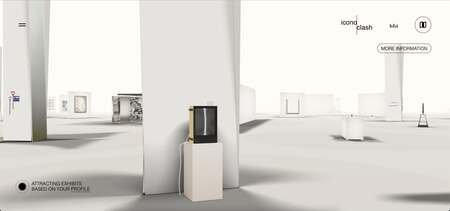
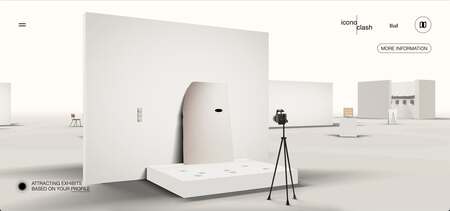
Fragments from the virtual exhibition Iconoclash, ZKM, Karlsruhe, 2002
Participants and most notable works