About Me
I am a narrative designer and 2D artist. I contribute to game development projects at the intersection of narrative and visual design. I develop game worlds, narrative structures, characters, and their stories, as well as create a game’s visual content, including character, environment, and prop concepts, and UI elements.
My Approach
I work at the intersection of narrative design, worldbuilding, and visual development. My goal is not simply to come up with a story, but to establish connections between its different elements so that the narrative, visuals, and gameplay mechanics complement one another and remain consistent. For example, a character’s personality and backstory can be reflected in their visual design, while the story can change depending on the player’s decisions and actions.
Skills
— I work with dramatic structure and storytelling, character psychology, and backstories. I draw on mythology and folklore in both narrative and visual development.
— I develop the structure of game worlds, including their symbolism and atmosphere.
— I collaborate with team members, adapt narrative documentation to the needs of different departments, and provide colleagues with the materials they need.
— I create connections between visuals, narrative, and game design.
Target Audience & B2B Collaboration
Нужен текст
Selected Projects
Patelfall
Project Overview and Team
Patelfall is a student team project: a 2D computer game in the flower shop simulation genre. Players select flowers and arrange bouquets for customers. As each day passes, they discover the story of the flower shop, the owner’s family, and the customers.
The project was developed by a team of students. My primary role was narrative designer. I also took on some 2D art tasks, creating in-game objects and UI elements.
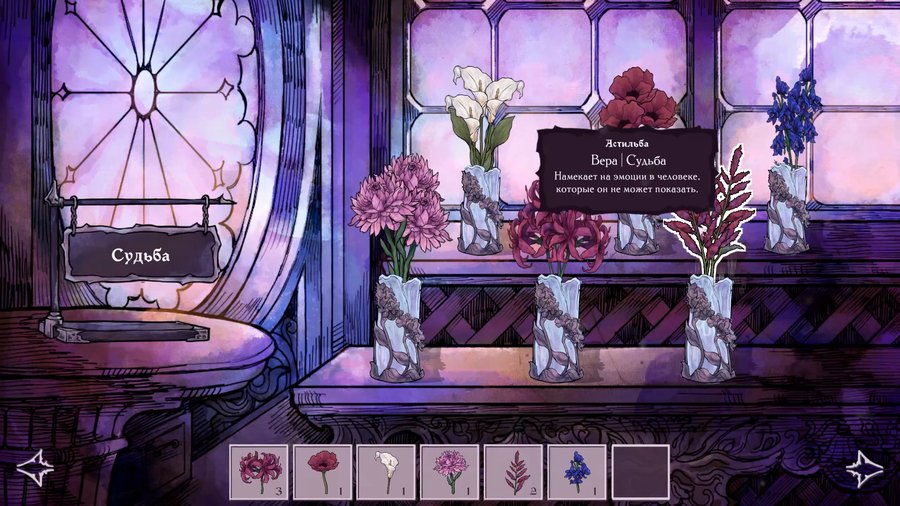
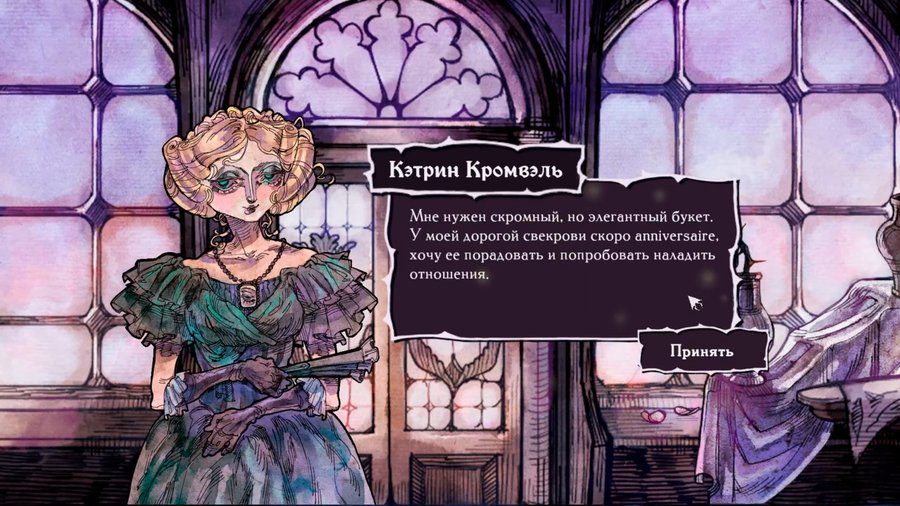
Screenshots from the game
Project Goals
The goal was to create compelling characters and stories that players would want to follow, while building a cohesive world around the flower shop.
For each character, I needed to develop a backstory, fears, secrets, relationships with other characters, and possible endings. A separate storyline was developed for the protagonist and their family.
The narrative was designed to support the gameplay: the selection of flowers in a bouquet influenced story progression and character endings, while the in-game newspaper revealed information about the world and additional details about the characters.
My Role
As a narrative designer, I developed character profiles, individual storylines, endings, and the relationship system between characters. I also gathered information and references for a team member responsible for writing the in-game newspaper.
As a 2D artist, I created game assets, including the newspaper, UI elements, flowers, scissors, wrapping paper, and other props.
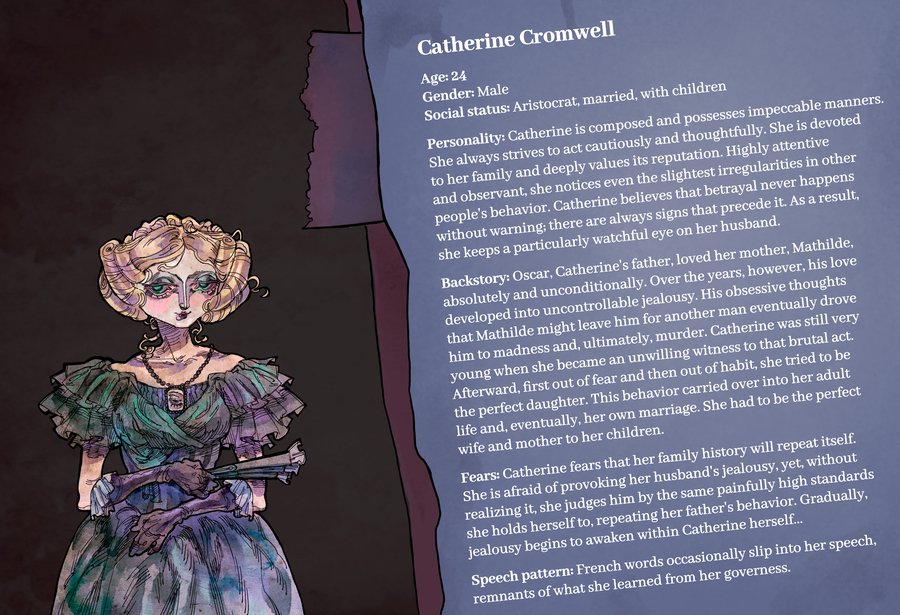
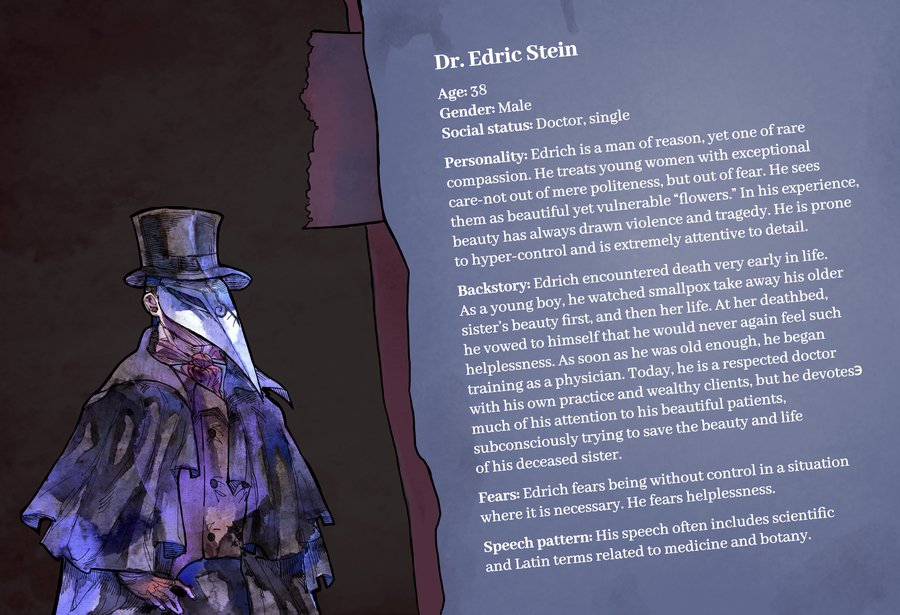
Examples of Character Profiles
Process
Starting from the game’s central theme, I developed the characters' backstories. Based on these, I established their personalities, fears, and speech patterns. I then used these traits to develop their individual storylines and endings.
For the newspaper and character monologues, I gathered narrative details, references, and worldbuilding information to ensure that the texts revealed the story consistently, avoided contradictions, and supported the characters' storylines.
For the visual side of the project, I created props while maintaining the game’s overall visual style. The flowers needed to be expressive and stylized while remaining recognizable. I also designed interactive objects and UI elements.
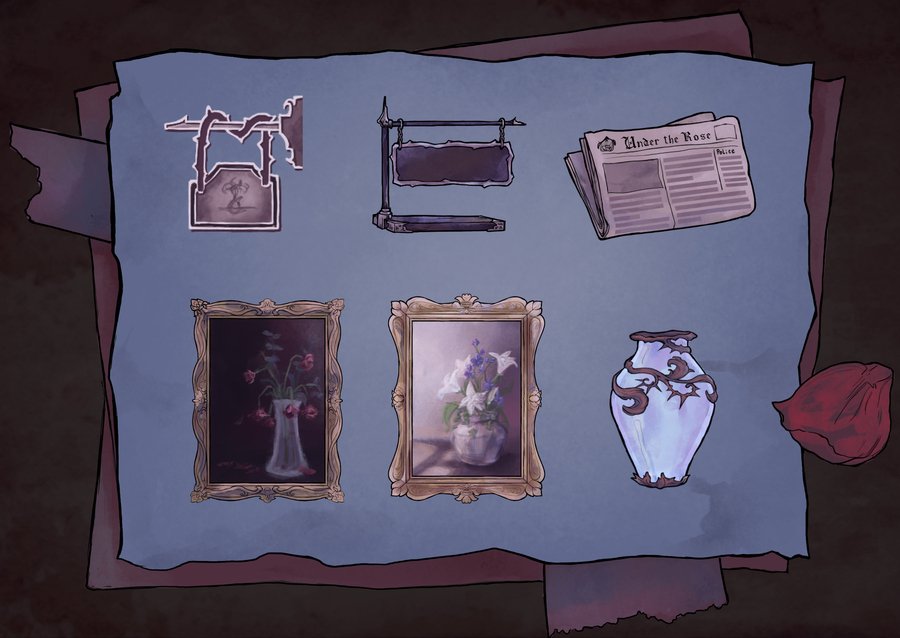
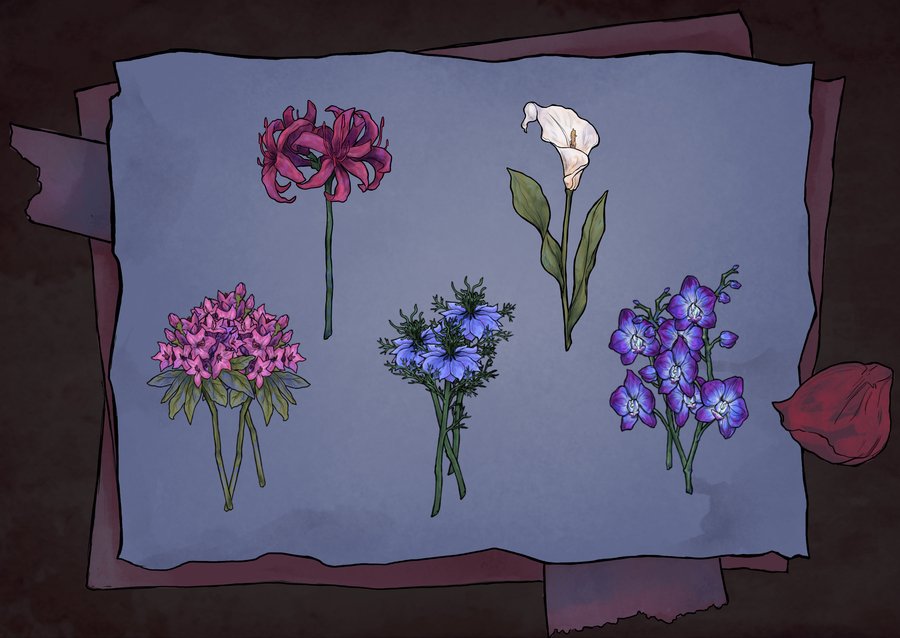
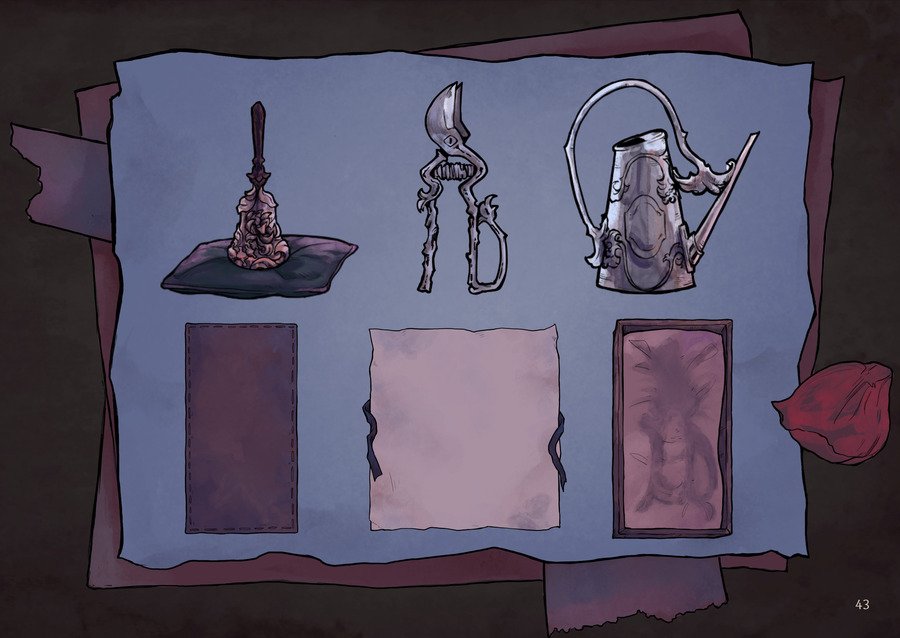
Examples of game assets
Results
As a narrative designer, I created the characters, their relationship system, interconnected storylines, endings, and in-game texts. This helped connect the bouquet-making and selling mechanics with the game’s narrative.
As an artist, I created prop, flower, and UI assets that supported the game’s overall visual style. My visual assets helped establish the atmosphere and shape the look of the interface.
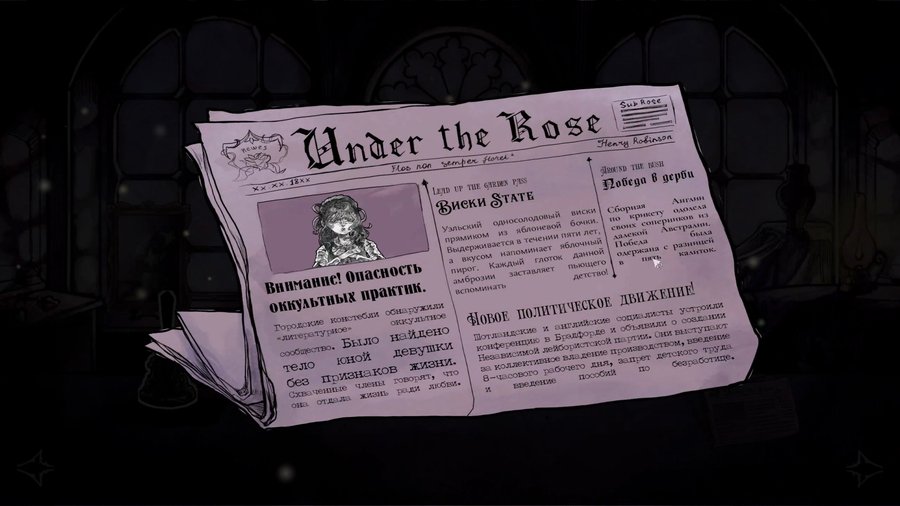
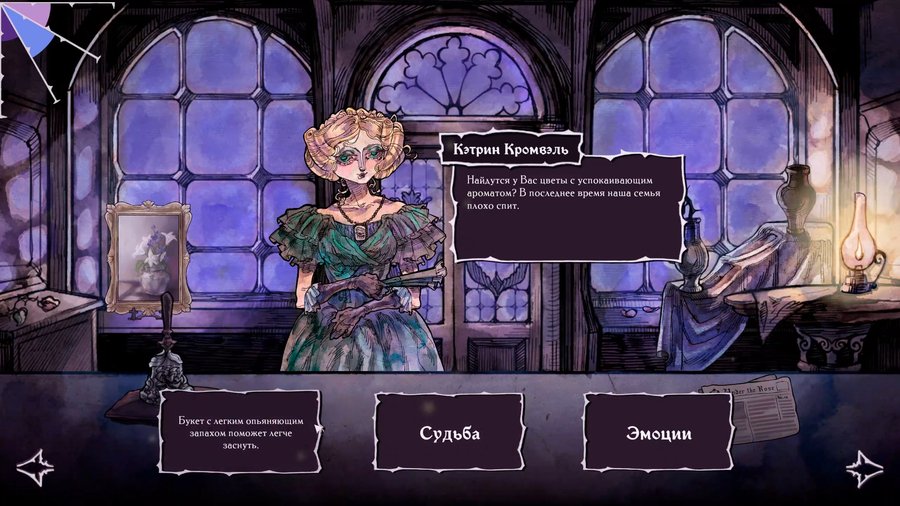
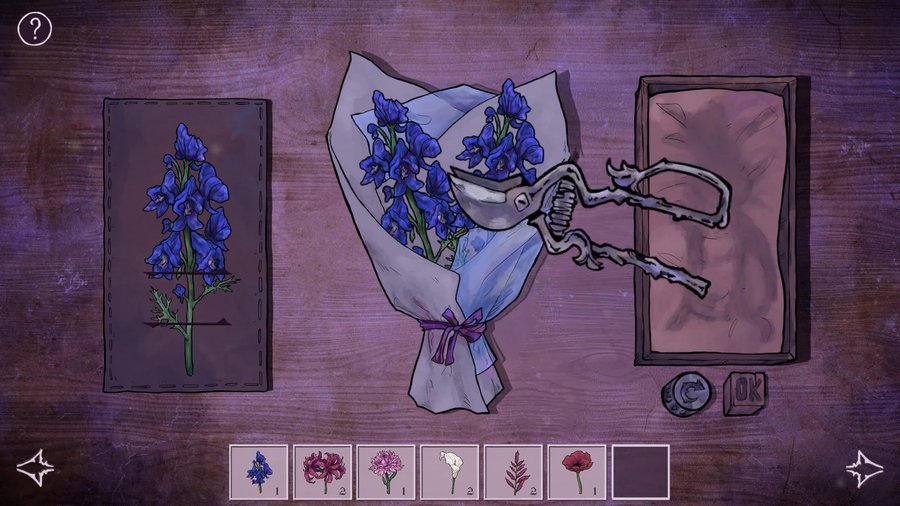
Screenshots from the game
Blood of Bracken
Project Overview and Team
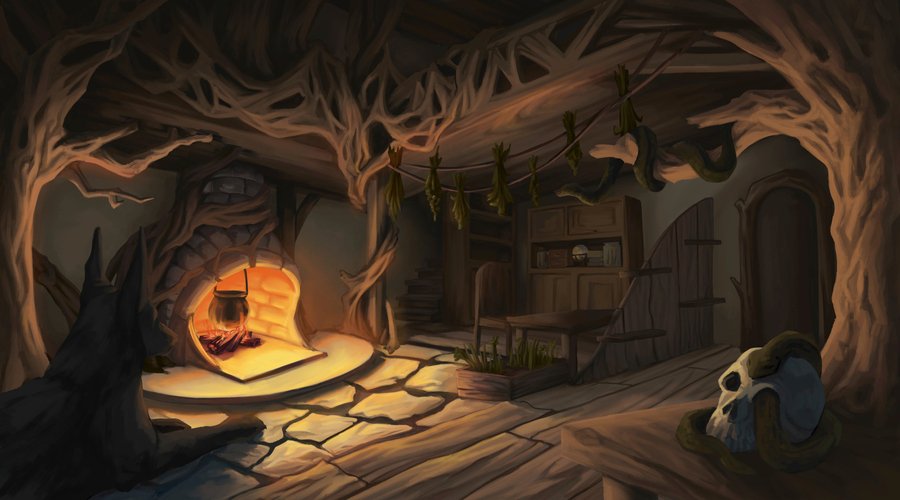
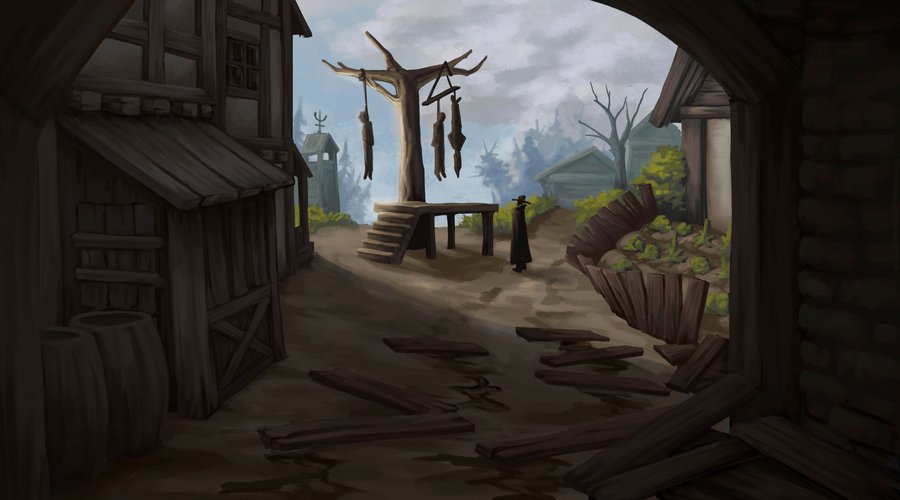
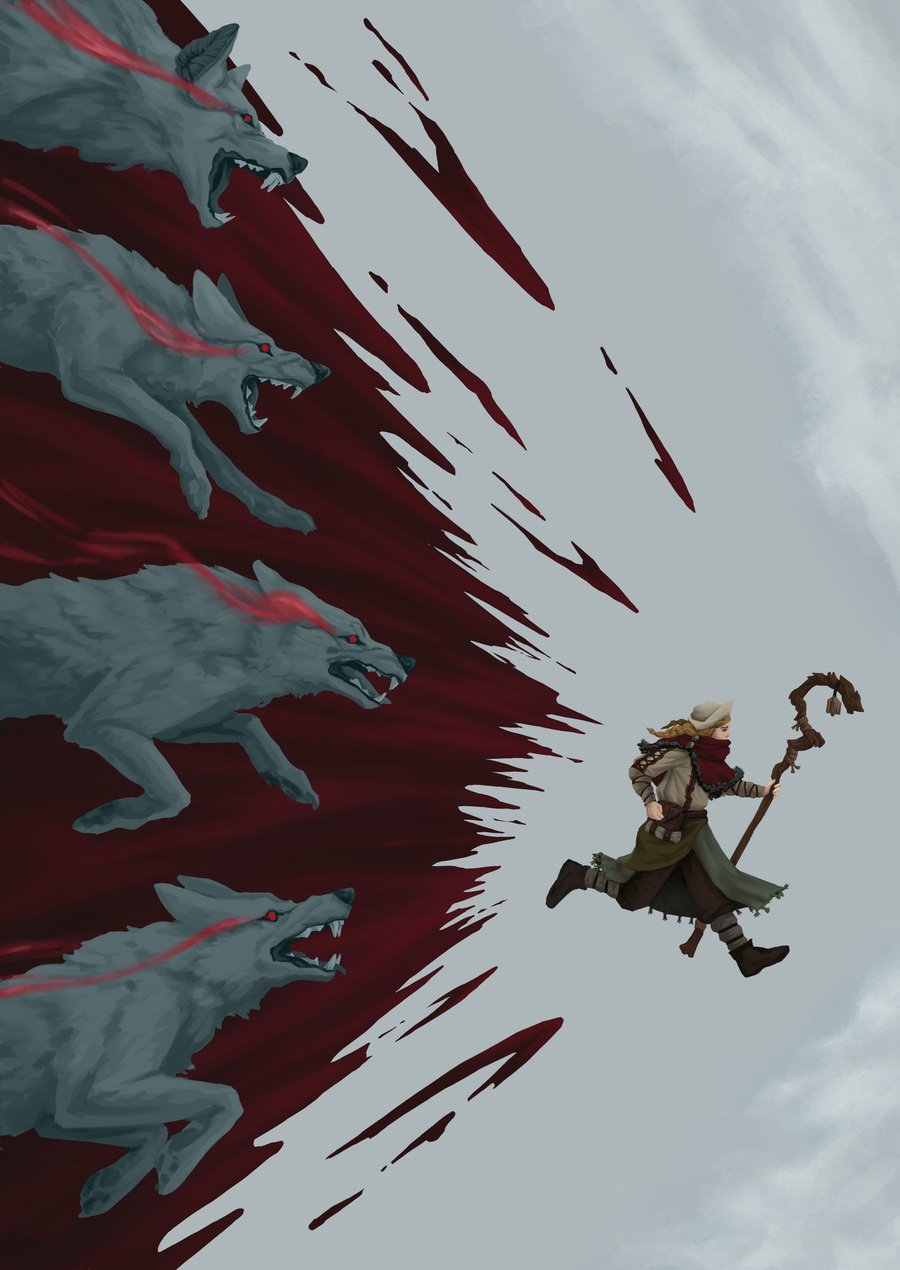
Blood of Bracken is a personal concept art project in the dark folk fantasy genre. Its setting is inspired by the legend of the Beast of Gévaudan and the atmosphere of 18th-century Flanders.
The project was completed individually as part of a student assignment, focusing on world lore, setting development, and character and environment concept art.
Project Goals
The first goal was to establish the foundations of the world: its atmosphere, historical period, potential inhabitants and creatures, as well as its rules and defining characteristics.
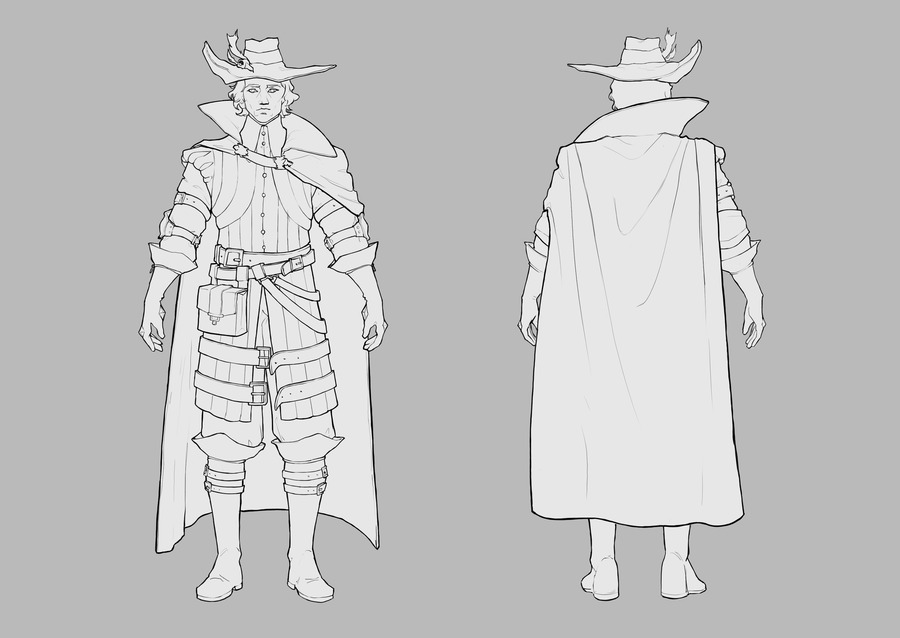
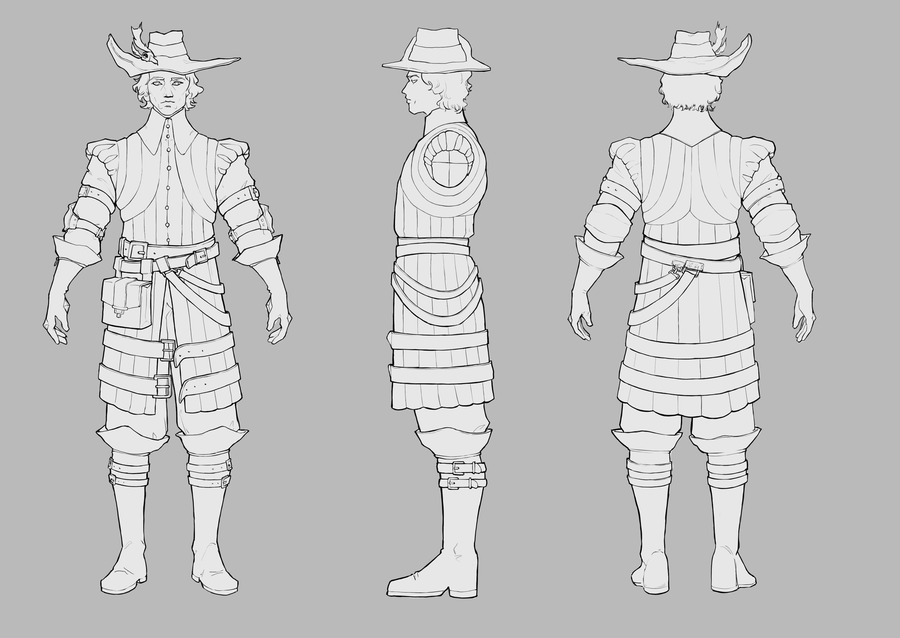
The main goal was to create four character concepts and three environment concepts that would feel like parts of one cohesive world. Two characters required further development: one needed a finished render, while the other required a technical drawing.
My Role
As this was an individual project, I combined the roles of narrative designer and artist. As a narrative designer, I developed the lore and setting. As an artist, I created character and environment concept art for the world.
Additionally, I produced a render of one character and a technical drawing of another, detailing the design’s construction, features, and visual characteristics.
Process
The project began with worldbuilding. I identified historical and folkloric sources and references for the narrative and visual elements, established the overall tone of the world, and defined the role of supernatural elements.
I then wrote brief character notes and began developing their visual designs based on the lore and setting. For each character, I considered their clothing, equipment, silhouette, color palette, and details.
When designing the environments, I focused on atmosphere, scale, and visual details that reinforced the setting’s folkloric foundations.
Results
The project resulted in a foundational outline of the world’s lore and setting, four character concepts, three environment concepts, one character render, and one technical drawing.
Through this project, I translated narrative ideas into concrete visual decisions and connected the visual development to the world’s underlying lore. I also drew on mythology, folklore, and historical motifs in worldbuilding and concept art.