1. Media Concept
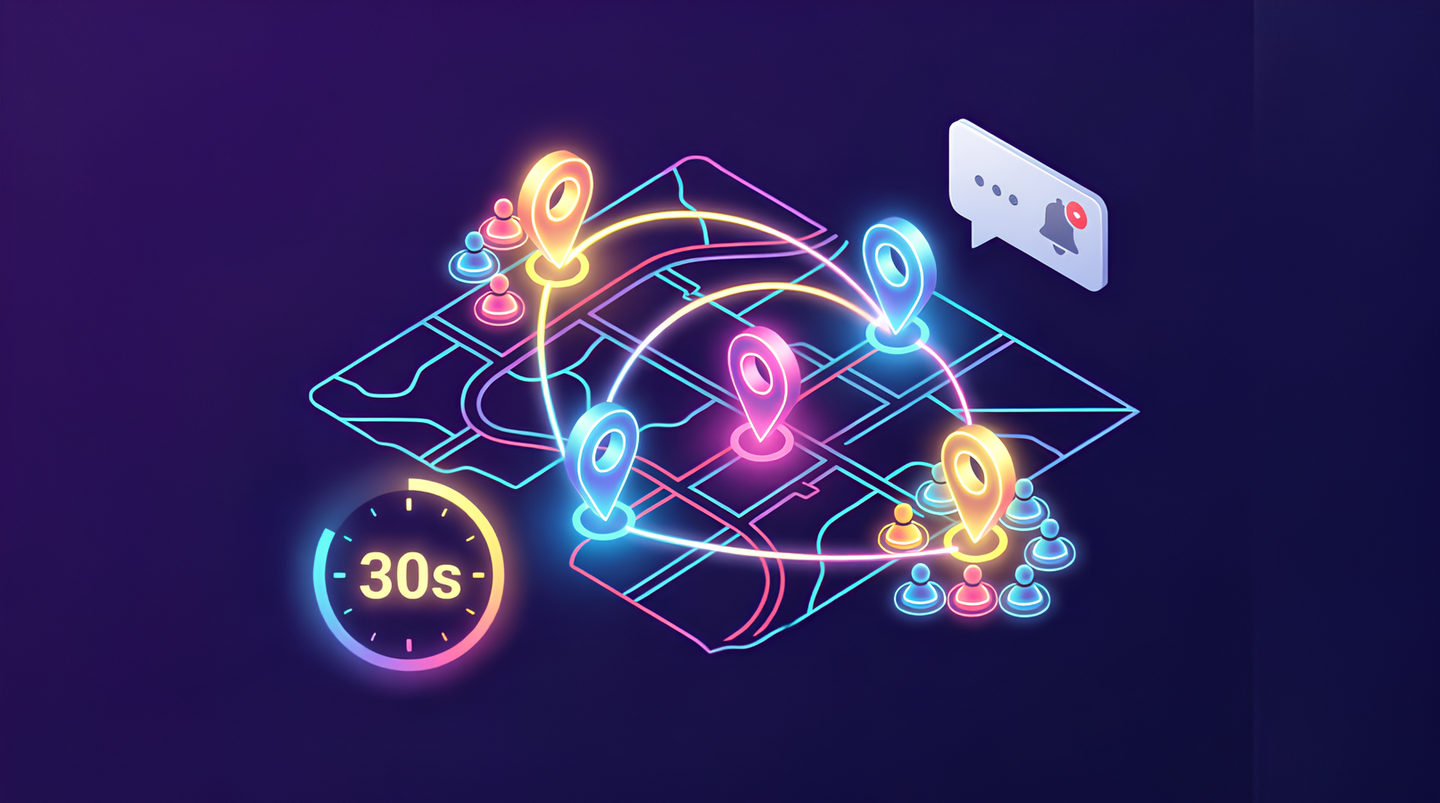
Mission and Problem Solved Today, spontaneity has become a genuine luxury. Getting to a great event and having a vibrant time involves a torturous hour of sifting through event listings, endlessly scrolling through posts across dozens of public pages, reading reviews, and prolonged coordination in messengers. We are creating a leading digital platform (media + service) that restores people’s right to spontaneity. We aggregate, visualize, and simplify participation in offline events, cutting the time needed to find the perfect leisure activity from an hour down to 30 seconds. The key innovation: we give users the tool to create their own points on the map and instantly form communities around them (via built-in or linked chats), eliminating coordination chaos in messengers.
Key Content Principles:
- Hyperlocal: not «where to go in Moscow, ” but „what is happening in your neighborhood today.“
- Spontaneity: the content must prompt people to leave the house right now.
- Utility + Emotion: every piece of material provides either a tool (guide, template, checklist) or inspiration (story, interview, curated selection).
- UGC Focus: we show what the users have created, not what the organizers have done.
Navigation: «Right Now» — a digest of today’s and tomorrow’s events with a map. «Hidden Scenes» — subtle spots and gatherings that few people know about. «Do It Yourself» — guides on how to organize your own event (from a small get-together to a festival). «Faces of the City» — interviews with organizers, DJs, artists, and bartenders. «Radar Reports» — user stories: how they found friends, love, or a job through events. «Post-Mortem» — honest event reviews: what worked, what didn’t, and if it’s worth going. «Vibe Map» — curated selections by mood: «for solo, ” „for a date, ” „for a group, ” „for the soul.“
Formats: Short posts on Telegram, carousels on VK, POV-style Reels/Shorts, podcast interviews (15–20 min), weekly email newsletter, user stories with a hashtag. Visual Language: Minimalism + neon. A black-and-white base with an accent color (purple/electric). Lots of maps, application screenshots, and candid photos from events. Font—Helvetica/Inter.
2. Data Sources for Media
Content is generated from four independent streams that ensure the map is constantly updated: 1. User-Generated Content (UGC) — the priority source: events created by regular users (apartment gatherings, street sports, group runs, master classes). This also includes reviews, photos, and participant check-ins after events.
2. Automatic Parsing (Aggregation): Open APIs and RSS feeds: Timepad, Yandex Afisha (only free or low-budget events). We also parse thematic Telegram channels and VK public pages using keywords such as «apartment gathering, ” „networking, ” and „free exhibition.“
3. B2B Partners: Direct event submission by owners of bars, co-working spaces, anti-cafes, and independent promoters via the organizer’s private account.
4. Media Editorial: Exclusive selections („Hidden Buzz“), interviews with organizers, and vetted routes that do not appear in automatic parsing.
3. Data Schema: Separation of Machine and Human Processing
For project scalability, it is critically important to separate data streams. Manual processing is reserved only for tasks that require empathy or complex judgment.
Machine Processing
1. Collection and Normalization: NLP algorithms extract entities from raw text (VK or Telegram post)—name, date, time, price, address. 2. Geocoding: Automatic conversion of a textual address into coordinates (latitude/longitude) for placing a map pin. 3. Primary Moderation (AI): Checking text and images for spam, profanity, NSFW content, and prohibited topics. 4. Clustering: Grouping nearby map pins based on the zoom level. Trigger logic: Calculating a geo-radius and sending «Radar» Push notifications when a user enters the event zone. 5. Archiving: Automatically hiding events that expired more than 2 hours ago.
Manual (handcrafted) processing
1. Complex Moderation: Reviewing user complaints, vetting events with borderline trust ratings from AI, and manually approving «closed» events. 2. Editing and Curation: Writing curated selections, fact-checking interviews, and manually featuring the «Event of the Day» on the homepage. 3. B2B Relations: Onboarding major partners and verifying documentation for the «Verified Organizer» badge. 4. Community Management: Resolving conflicts within event chats, banning malicious users, and gathering feedback to improve the product.
4. Guidelines for Automated Services in the Schema
To prevent automation from becoming spam or degrading the user experience, the algorithms operate according to strict rules.