«Size Inclusivity» is a research project focused on the availability of women’s clothing for people with diverse body types. The work compares Russian fashion brands based on five criteria: size range, availability of XL+, diversity of categories, availability of measurements, and representation of different figures.
The main objective of this research is to demonstrate that having a large range of sizes does not guarantee the possibility of assembling a complete wardrobe. The study’s findings were adapted for an exhibition format and presented at the HSE Art and Design School’s «New Fashion Days» event.
02. Booth Concept: Interactive Dressing Room
The basis of the exhibition design was the concept of an interactive dressing room—a space where visitors could match different body types with clothing options presented by various brands.
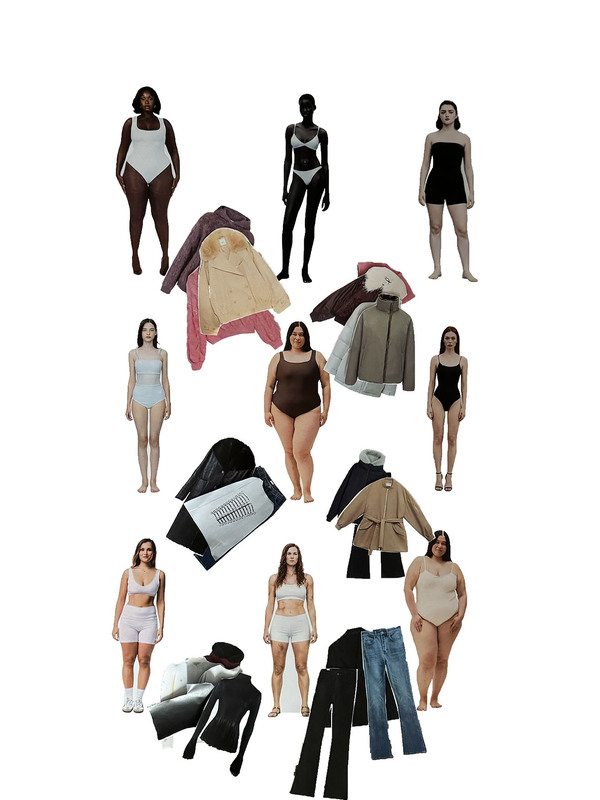
Instead of a traditional informational poster, the project combined research infographics with physical wardrobe elements. Cutouts of models of different builds and clothing items transformed into a visual constructor.
The concept was built around a simple question: can a complete outfit be put together for every body type using the assortment of a single brand?
Thus, the study of size charts gained a tangible form, allowing visitors to consider clothing availability not as an abstract metric, but as a practical selection task.
03. Visual System Development
The visual language of the booth continues the aesthetics of fashion research: a high-contrast black and white palette, large, narrow typography, a modular grid, and analytical infographics.
The centerpiece of the composition is an information poster detailing the project’s title, methodology description, evaluation criteria, and comparative brand diagrams.
Radial charts were used to visualize the rating, allowing results to be compared across multiple criteria simultaneously.
The layout was constructed by combining two levels of information: large headings and graphics ensure quick readability, while smaller annotations allow for a deeper understanding of the research findings.
04. Preparation of Visual Materials
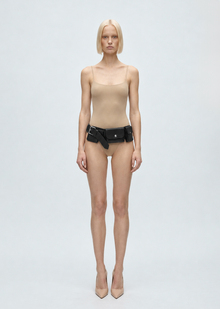
For the interactive portion, a series of paper cutouts was developed: figures of models with varying body types and clothing selections categorized by type.
The model images are presented against a neutral background, wearing minimalist attire. This approach allowed the focus to remain strictly on the differences in body proportions, without distraction from image styling.
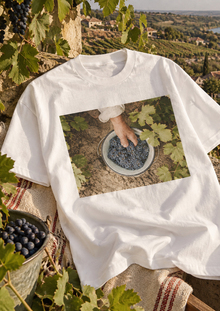
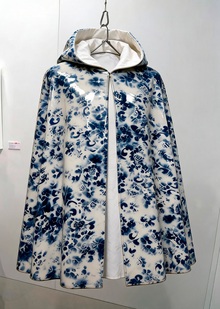
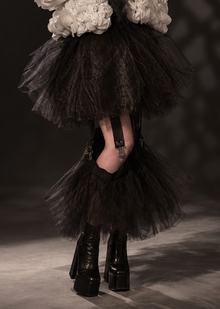
Separate images were prepared for outerwear, knitwear, trousers, and other wardrobe pieces. These items were grouped into small compositions, resembling curated outfits for styling purposes.
Each element was isolated from its original background so that it could be used independently after printing.
05. Materials and Printing
Printed paper materials were used to create the stand. Main production elements included:
An informational poster featuring graphs and research findings.
Paper cutouts of models, precisely trimmed along the outline.
Separate clothing sets for the interactive installation.
Metal clips for fastening and manipulating elements.
When preparing the mockups for printing, it was crucial to maintain the legibility of the fine infographics, the contrast of the text, and the detail in the clothing imagery.
The various scales of the printed materials established a visual hierarchy—from the main headline to the small wardrobe items that could be examined up close.
06. Visitor Interaction
The stand was conceived not only as a carrier of information but also as a tool for investigation through interaction. Viewers could compare silhouettes, examine the suggested garments, and mentally assemble looks for different body types. The ability to rearrange the fixed elements supported the dressing room concept. A crucial part of the idea was the absence of a single «standard» body. Instead of one universal model, the stand displayed several figures, emphasizing the diversity of customer body parameters and needs. A QR code on the poster linked the physical exhibit to the digital aspect of the research, allowing users to move from brief visual comparison to more detailed materials.
07. Results
The project culminated in an exhibition stand that integrated research analytics, graphic design, and elements of physical communication. The development allowed us to translate complex data regarding size charts into an understandable visual system. Diagrams illustrated the differences between brands, while paper figures and clothing helped visualize the practical implications of these distinctions. The core concept of the project is that size inclusivity is not determined by the number of sizes listed on a tag, but by a person’s ability to select clothing that matches their body shape, needs, and personal style. The stand for the «New Fashion Days» served as a physical extension of the research and a way to draw attention to the issue of sizing limitations in the modern fashion industry.