Concept
Gothic style in cinema is characterized by a somber atmosphere, psychological horror, and intense tension. When describing the visual aspects, attention can be drawn to ancient castles, a melancholy mood, and an abundance of dark and gray colors. Some films are entirely produced in this style, while others only partially incorporate gothic characteristics. Elements of this style can be found in vastly different genres—from comedy to psychological horror.
While Gothic studies are a popular topic, the visual language of the fairytale genre within Gothic cinema is often examined either fragmentarily or strictly tethered to specific directors (Tim Burton, Guillermo del Toro).
Gothic fairy tale refers to films where a fairytale plot or structure merges with a gothic visual poetics—characterized by dark spaces, melancholic atmosphere, grotesquery, a dark color palette, and motifs of palaces, among other elements.
Gothic fairy tales utilize the most characteristic features of classic Gothic, merging folklore or original stories with a heavy and somber atmosphere. This combination transforms the Gothic fairy tale into a completely unique cinematic phenomenon, elevating it beyond a mere frightening story wrapped in darkness to a complex system of visual imagery.
Gothic aesthetics are frequently applied when adapting fairy tale plots. The melancholic atmosphere and the ability to beautifully depict rather grotesque elements through the visual hallmarks of Gothic make it a highly expressive medium for realizing fairy tale aesthetics, which often trace their origins to the Middle Ages.
Gothic fantasy establishes its own visual language by contrasting familiar and fantastical spaces. The isolation of architecture, the deformation of the surrounding environment, the subdued color palette, and the organization of light do more than simply create a somber atmosphere—they delineate the boundary between worlds. Furthermore, the fantastical space acquires gothic characteristics not just through individual objects or decorations, but also through how it is composed in the frame.
The visual material for the research was selected based on its affiliation with the Gothic visual tradition, as well as its narrative content, which must either be a reinterpretation of a fairy tale or a story created according to fairy tale conventions.The textual sources underpinning this research were diverse—ranging from historical books on the history of cinema to studies on Gothic as a phenomenon in principle. This variety allows for a deep immersion into the subject and provides a comprehensive understanding of the topic under discussion.The structure of the research is built on the principle of thematic immersion. The first chapter will analyze what immediately catches the eye and allows discussion of the film’s commitment to the Gothic fairy tale: space and set design. The second chapter will focus on the characteristics of light and color palette. The third chapter, meanwhile, will address cinematography techniques and composition.
1. Space and Scenography
A defining characteristic of Gothic tales is the setting. The two primary locations are a castle or another ancient medieval structure, and the forest, which is an inseparable part of the narrative.
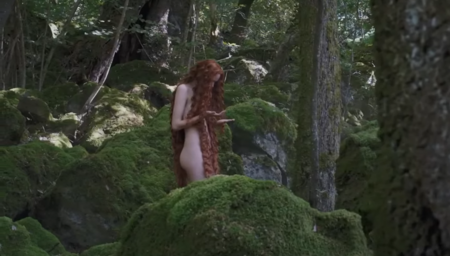
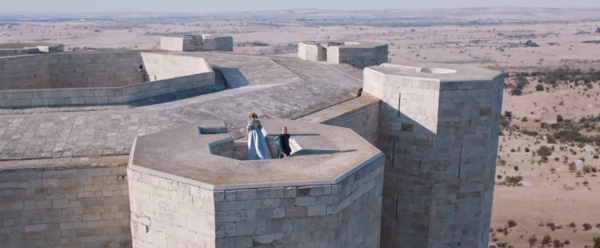
«Scary Tales, ” directed by Matteo Garrone, 2015
«Faust’s Labyrinth,» directed by Guillermo del Toro, 2006
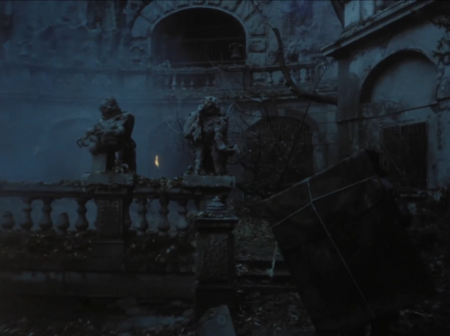
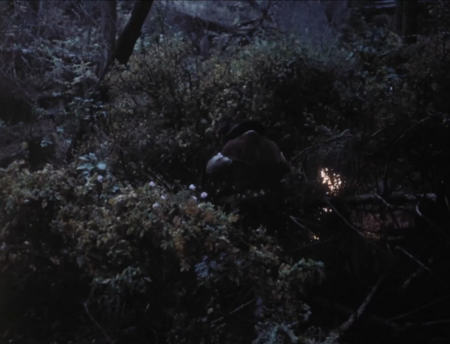
«Beauty and the Beast, ” directed by Yurai Hertz, 1978
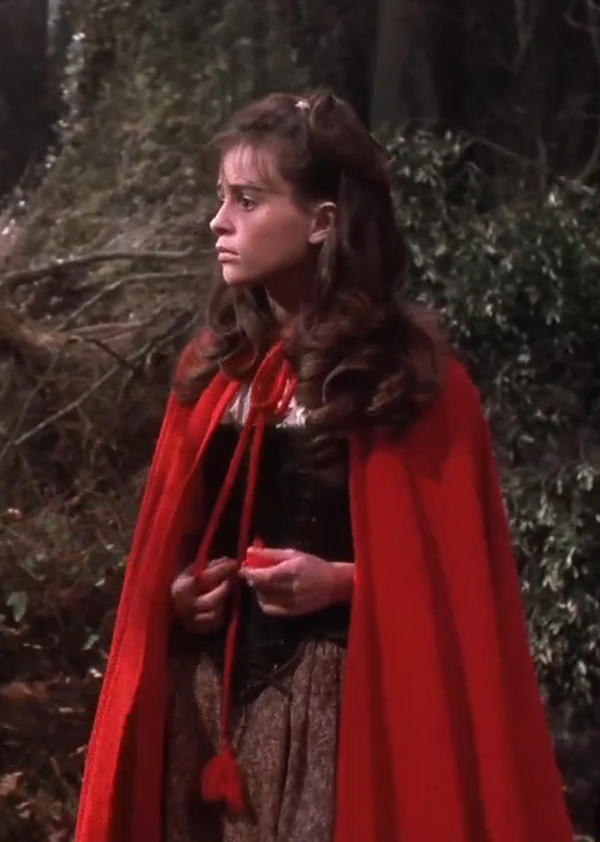
The settings where the main narrative unfolds are almost always situated on territory isolated from the main world. For instance, in the film «The Company of Wolves,» the initial scenes show that the heroes' house has a large, open yard. The primary location in the film—the village where the main protagonist lives—repeats this pattern: the entire settlement appears very enclosed and cut off from the rest of the world by the surrounding forest.
«Wolf Pack, ” directed by Neil Jordan, 1984
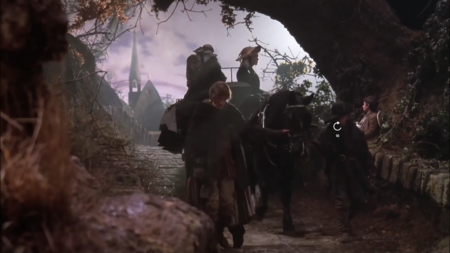
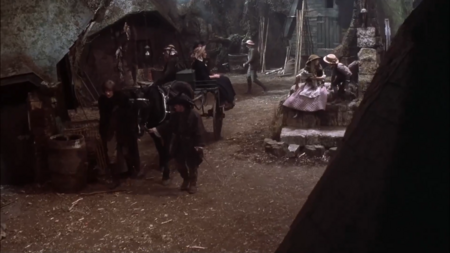
«The Wolf Pack, ” dir. Neil Jordan, 1984
«Sleepy Hollow, ” directed by Tim Burton, 1999
«Scary Tales, ” directed by Matteo Garrone, 2015
In «The Sleepy Hollow, ” the forest is one of the important settings—it looks malevolent and gloomy, its paths are narrow, and the trees seem as if they want to grab the characters.
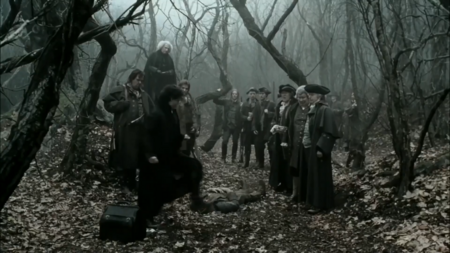
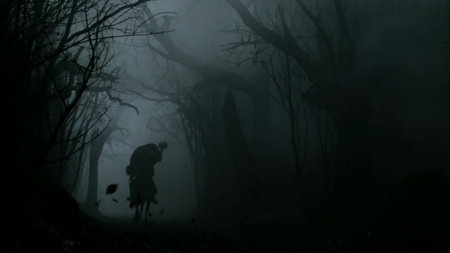
«Sleepy Hollow,» dir. Tim Burton, 1999
The character of the architecture and set design corresponds with the structure of the fairy tale world. They often appear weathered and abandoned. Whereas gothic films, which are usually brought to mind when discussing the genre, maintain a consistent stylistic character in the environment for most of the runtime, the spatial construction in gothic fairy tales is built on the contrast between two worlds—the one in which the hero existed before the main events, and the fairy tale world. For instance, the hero’s original world is depicted as more open and contrasting, while the fairy tale world portrays a smaller, narrower, and darker environment.In the film «Beauty and the Beast, ” the home where the main character lives is quite spacious. It features minimal decoration—only the essentials for a household and a few luxurious objects, with no sign of decay. When the heroine enters the Beast’s castle, she is presented with a completely different scene: cracked walls, antique armor, dirty and dusty objects, and plants covering the walls and ceiling, which make the castle feel narrower and more concealed.
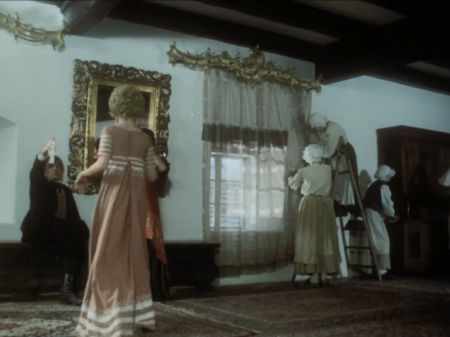
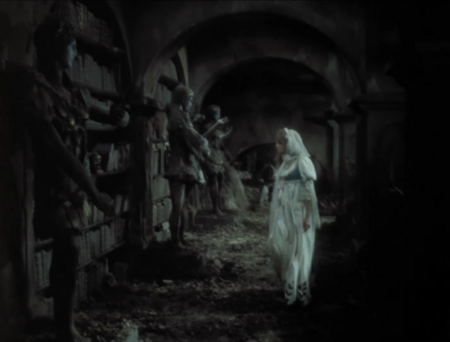
«Beauty and the Beast, ” directed by Yurai Hertz, 1978
Also in the film Pan’s Labyrinth, the main character’s home appears spacious—there is plenty of outdoor area, and the rooms are quite large, capable of accommodating several people. In the labyrinth, however, the walls soar upward, blocking any exit and creating a sense of enclosure, and the space itself is small even compared to the girl.
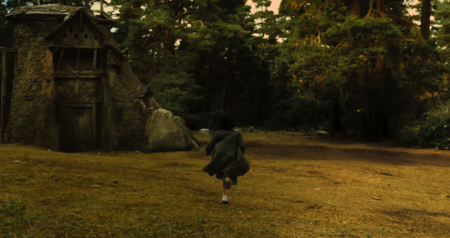
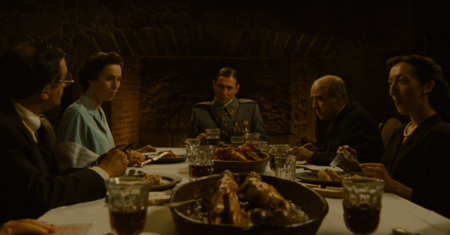
«The Fauno, ” directed by Guillermo del Toro, 2006
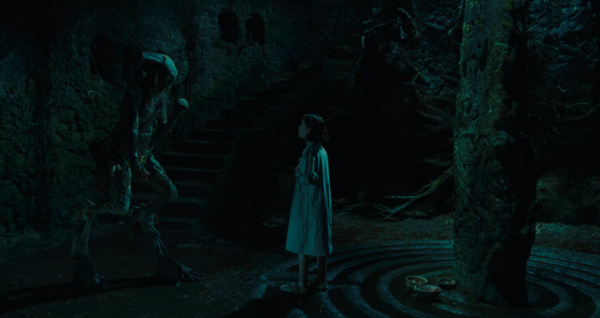
«Faust’s Labyrinth, ” directed by Guillermo del Toro, 2006
Gothic aesthetics are object-oriented, meaning that films in this style will feature a serious attention to set design and the objects surrounding the characters. This idea is traceable in gothic tales not only from the perspective of gothic aesthetics but also from the standpoint of fairy tale narratives themselves—special magical items, potions, books, etc., play a rather important role in these tales. Because of this, the concept of object-orientation in gothic narratives aligns perfectly with fairy tale plots.
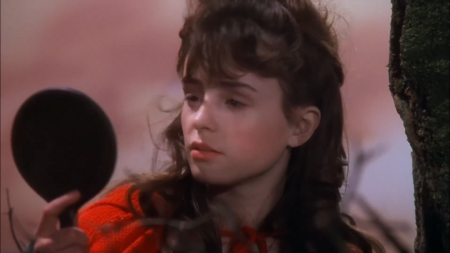
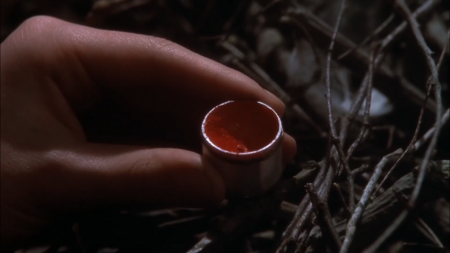
«The Wolf Company,» directed by Neil Jordan, 1984
«Pan’s Labyrinth, ” directed by Guillermo del Toro, 2006
Decor sets in Gothic fairy tales are portrayed as antique and dusty, regardless of how expensive the object is shown to be. They typically feature a rather somber color palette.
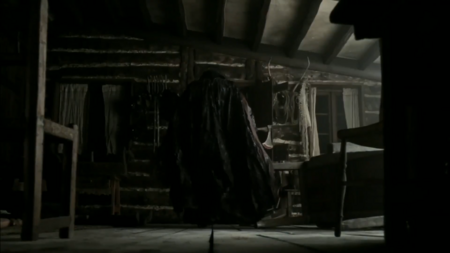
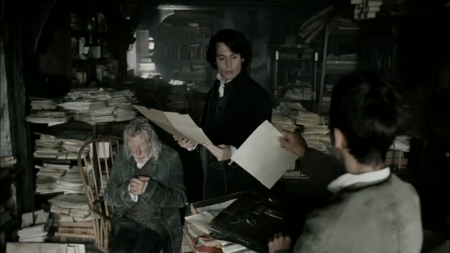
«Sleepy Hollow,» directed by Tim Burton, 1999
«Beauty and the Beast,» directed by Yuray Hertz, 1978