Visual storytelling as a tool 1ver
Why you should choose me to develop your product
WHY DOESN’T IT LAND?
Brands, studios, and organizations produce more content than ever —
and still fail to connect.
The message is right, but the delivery is flat: no emotion, no character, no recall.
Great content exists, but it doesn’t stick. Audiences scroll past. Brands blend in. Complex ideas stay unexplained. Good ideas fail when they’re told without emotion. No story → no connection → no action.
THE WAY I WORK
Every project starts with the same question: how do we make the audience feel something?
I take a complex topic and turn it into a human story with characters, emotions, and a clear narrative arc.
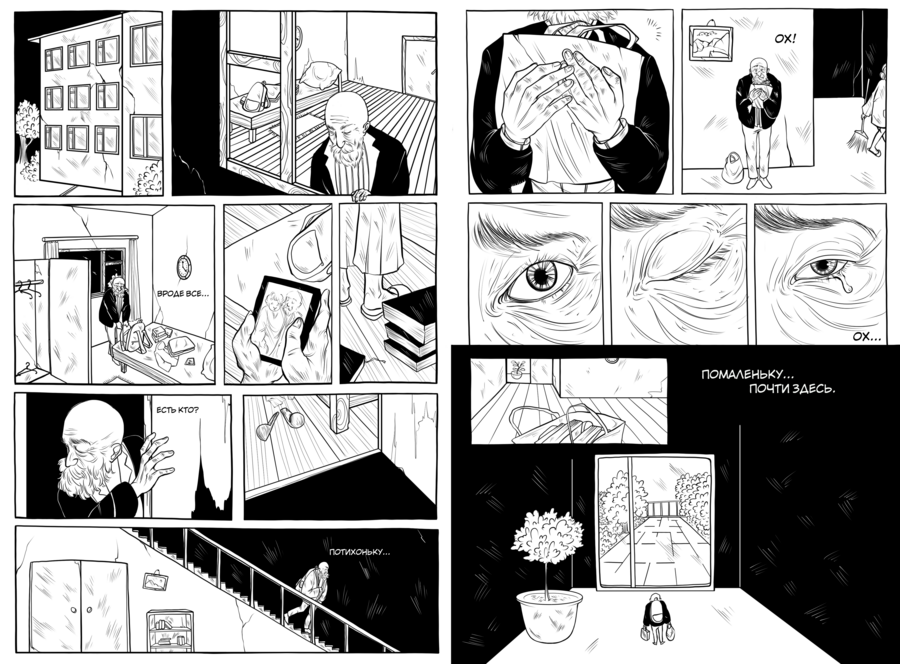
Comic-reportage «On the Other Side of the Streets»
That story then becomes a visual — a comic, a poster, a concept, an illustration — chosen to fit the medium and the task.
The format changes. The method never does.
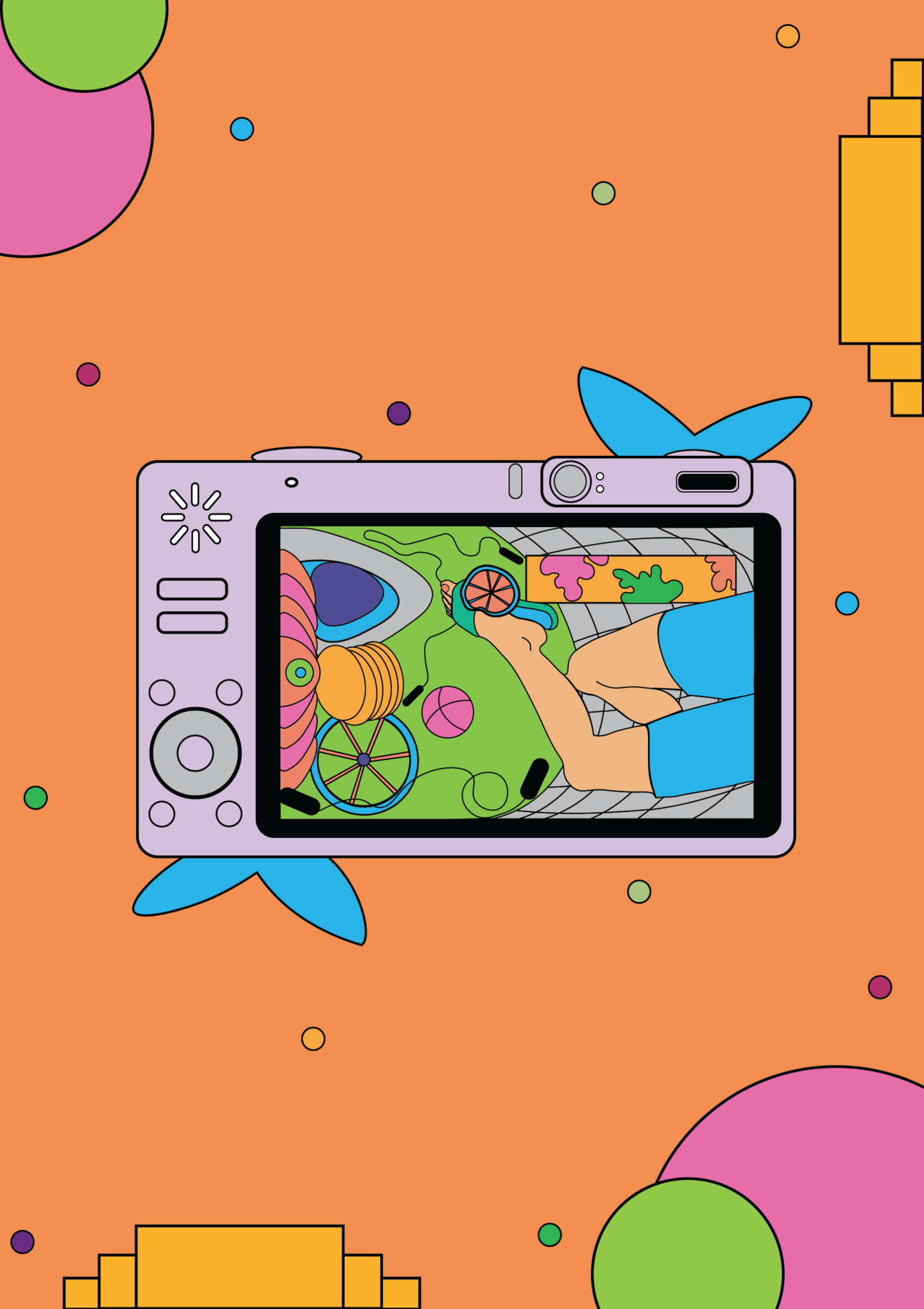
A series of illustrations titled «Shall We Go to the Zoo?»
I don’t just produce visuals, but I design the emotional connection between your message and your audience. My job is to make sure that when someone sees your content, they don’t just scroll past it.
They feel something, they remember it, and they act on it.
Whether the goal is a donation, a purchase, a download, or simply attention, the visual storytelling is built around that outcome from the very first sketch.
Children’s comic «It’s Meow-o’Clock: Here Comes the Tippy-Taps!»
SO WHAT’S THE TRICK?
Every project follows the same path. First, I dig into the subject: I research the topic, the audience, and what the client actually needs the viewer to feel. Then I find the human story inside it — the character, the conflict, the emotion that makes an abstract idea personal.
Only after that do I choose the format and build the visuals around that story, whether it’s a comic, a poster, a character, or a concept.
Each of the projects that follow is a proof of this method working in a different context.
Turning statistics into human faces
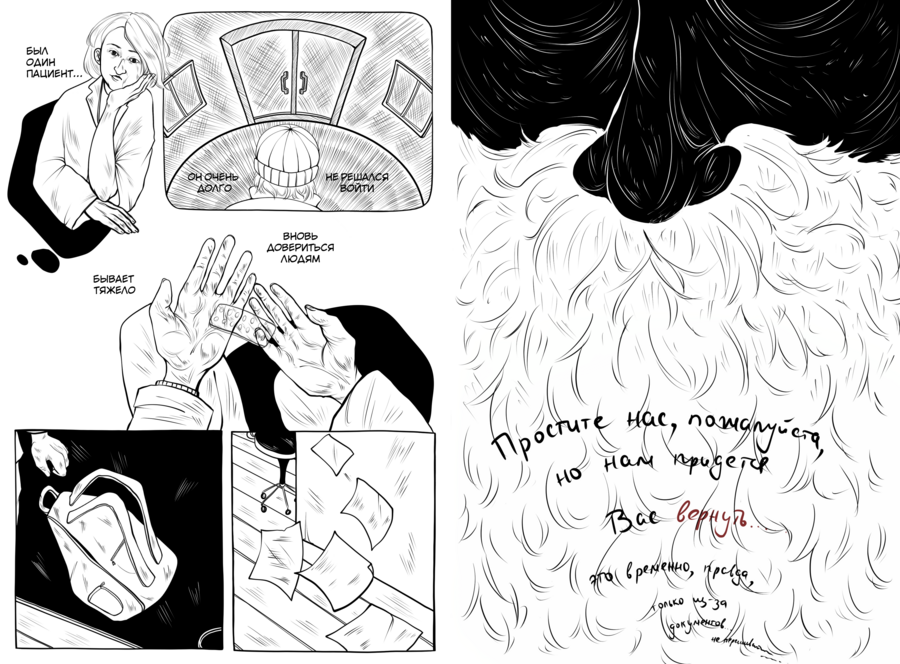
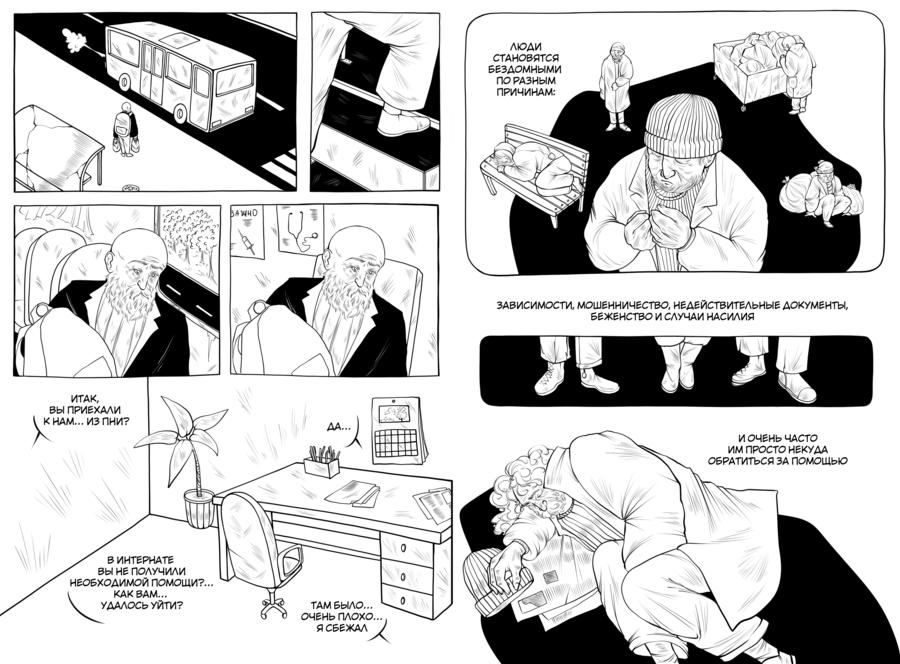
Comic-reportage «On the Other Side of the Streets»
Charities often struggle to communicate the reality of homelessness because statistics and dry reports fail to evoke empathy. The client needed a way to show the human face behind the social issue, making the audience not just aware of the problem, but genuinely willing to support the cause.
The visual language is intentionally stark, using high-contrast black-and-white ink to emphasize the harshness of the streets and the psychological weight of the character’s journey.
Comic-reportage «On the Other Side of the Streets»
I applied the method by creating a documentary comic that follows a single protagonist — an elderly man navigating life after escaping from a retirement home.Through careful pacing, close-up expressions, and the use of real-world details (like lost documents and the emotional weight of asking for help), I translated the clinical reality of the hospital into a deeply personal narrative.
Comic-reportage «On the Other Side of the Streets»
Comic-reportage «On the Other Side of the Streets»
People do not empathize with abstract numbers, but they empathize with faces and personal stories.
By focusing on one man’s specific experience — his fear, his loss of trust, and his eventual relief — the comic bypasses the reader’s defense mechanisms.
This approach transforms passive readers into active supporters.