Navigation
1. Research Concept; 2. Early Book Covers: Shaping the Visual Image of Lolita; 3. Stanley Kubrick’s Film Adaptation (1962): From Cinematographic Image to Book Cover; 4. Lolita Beyond the Book and Cinema: The Image in Advertising and Photography; 5. Adrian Lyne’s Film Adaptation (1997): A New Visual Interpretation and Its Reflection in Book Design; 6. Conclusion.
Research Concept:
Vladimir Nabokov’s novel, Lolita (1955), has inspired numerous visual interpretations—from book covers to movie posters and promotional photography. I found it particularly interesting to trace how the image of Lolita was formed and what role the screen adaptations by Stanley Kubrick (1962) and Adrian Lyne (1997) played in this process.
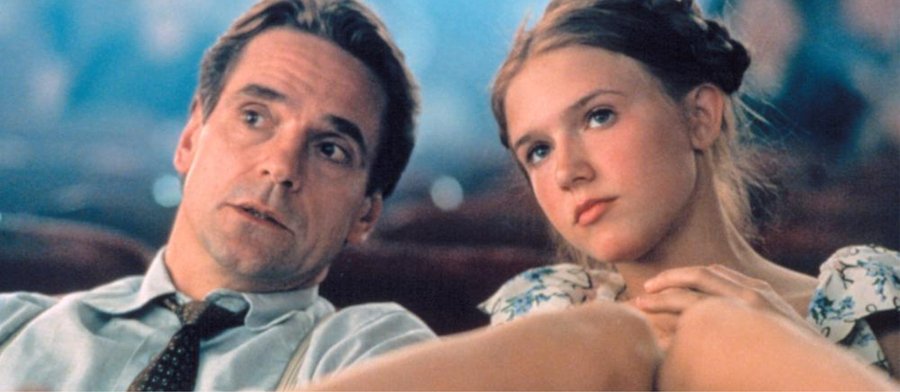
«Lolita, ” directed by Adrian Lyne, 1997. A still from the film
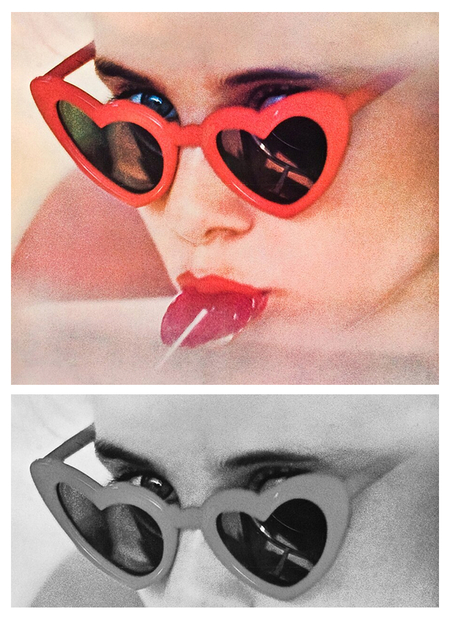
I am interested in comparing the covers before and after the film adaptations. On some editions, the heroine is not depicted; on others, a figure of a young woman appears, and in some, photographs of the actresses and recognizable elements of the cinematic persona are used.For instance, heart-shaped glasses and lollipops are primarily associated with the promotional photos for Kubrick’s film.I am interested in how these elements transition from film and advertising onto the covers and how they change their function in this new context.
Therefore, the key question of my research is: how has the visual image of Lolita evolved in book design, cinema, and advertising photography following the release of the adaptations? What compositional, color, and graphic techniques recur across different media, and how do they influence the character of the heroine’s portrayal?
I suggest that the promotional materials for the screen adaptations, particularly the Kubrick film, influenced the design of parts of subsequent editions of the novel.
However, this influence can manifest in various ways: through the direct use of photographs, the repetition of accessories, the choice of angle, or the way the heroine’s age is portrayed.
For the research, I will select covers of various year editions of «Lolita,» posters and promotional photographs from two film adaptations, as well as individual examples from magazine design and fashion photography where a connection to the heroine’s image can be established. I will arrange the materials chronologically to compare the design decisions before and after the films were released. The main criteria for analysis include composition, color, typography, framing, posture, and recurring subject details.
When selecting textual sources, I will rely on research concerning the history of book design, publications about screen adaptations and their promotional materials, as well as articles on visual culture. These resources will help refine the dating, authorship, and context of the images. The core of the work will remain a comparison of the visual field, rather than an evaluation of the novel’s content or the presumed audience reaction.
For easier reading, this research is divided into several parts arranged chronologically.
ImageSmirnov A. A Fatal Attraction: 20 Years of the «Lolita» Drama // Lumière: A Film Journal. — 2017. — October 2. — URL: https://lumiere.su/rokovoe-vlechenie-20-let-drame-lolita/ (Accessed: 11.11.2026).