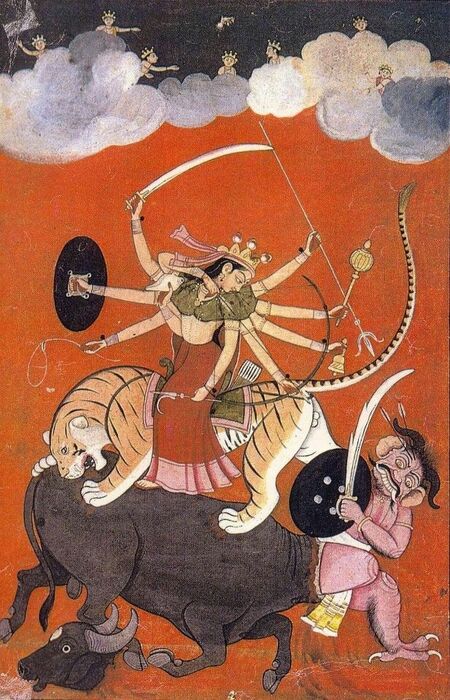
Among vibrant Indian artworks, it is difficult to grasp the specifics of the central characters' depiction, but every detail holds meaning. The number of arms is not arbitrary, nor is the color. Most surprisingly—even the gestures and objects held in their hands are not merely part of the composition, but carry a specific meaning for a particular narrative. In this study, I intend to examine these seemingly minor details in painting and sculpture to uncover the significance of each one.
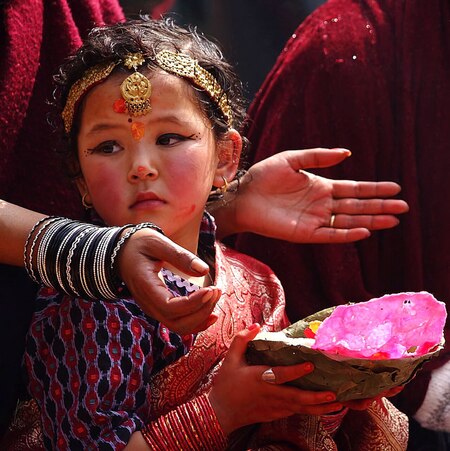
However, in my research, I consider not only Indian art but also Nepali art, because the same religion developed in both countries, which makes their cultures very similar. Buddhism also developed in Nepal, but I am only studying the Hindu aspect of Nepali spiritual painting.
богиня Варахи
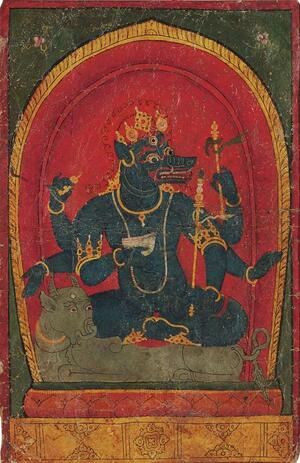
демон Равана
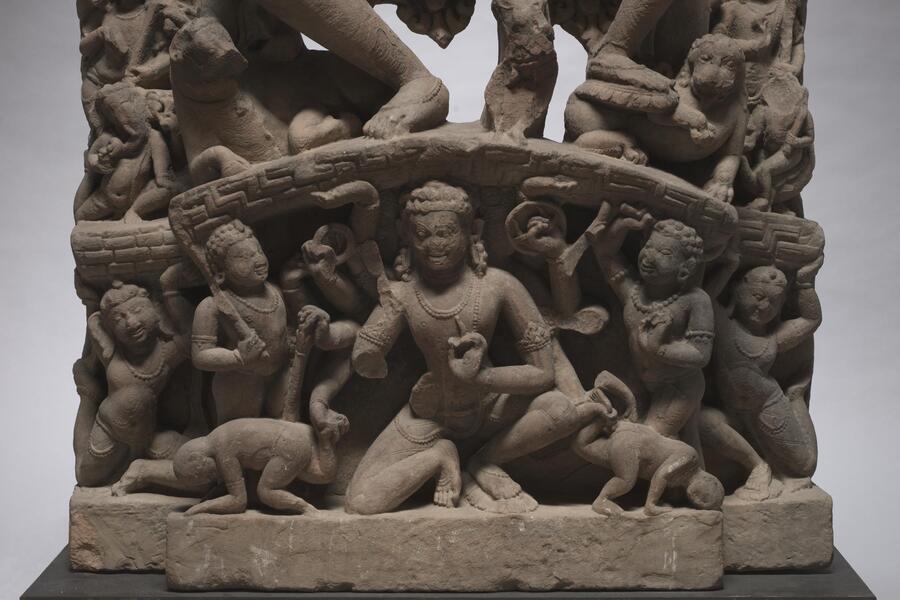
To begin, I would like to compare two contrasting characters: the goddess Varaha (on the left) and the demon Ravana (on the right).
At first glance, the goddess seems far more formidable than the demon, who looks even more human, but it’s all in the details.
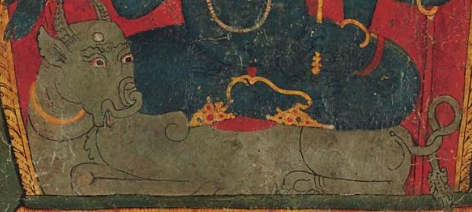
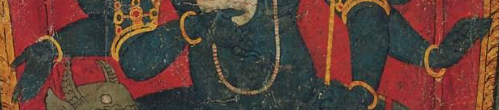
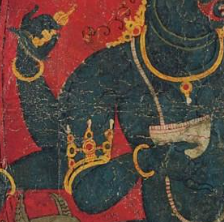
Note the hands of the goddess Varaha: the open palms on the right and left form a gesture of bestowing grace and protection, while the golden attributes are ritual objects that also signify the heroine’s sacred status. Furthermore, even the buffalo is not accidental—it is the goddess’s sacred animal. The trinity (her boar head, the buffalo below, and the human body) unites three forms of the goddess’s existence.
1/3