
Navigation
1. Concept 2. Human: Color 3. City: Form 4. Natural Environment: Color 5. Animals: Light 6. Conclusion
Concept
Human: composition
City: form
Natural Environment: Color
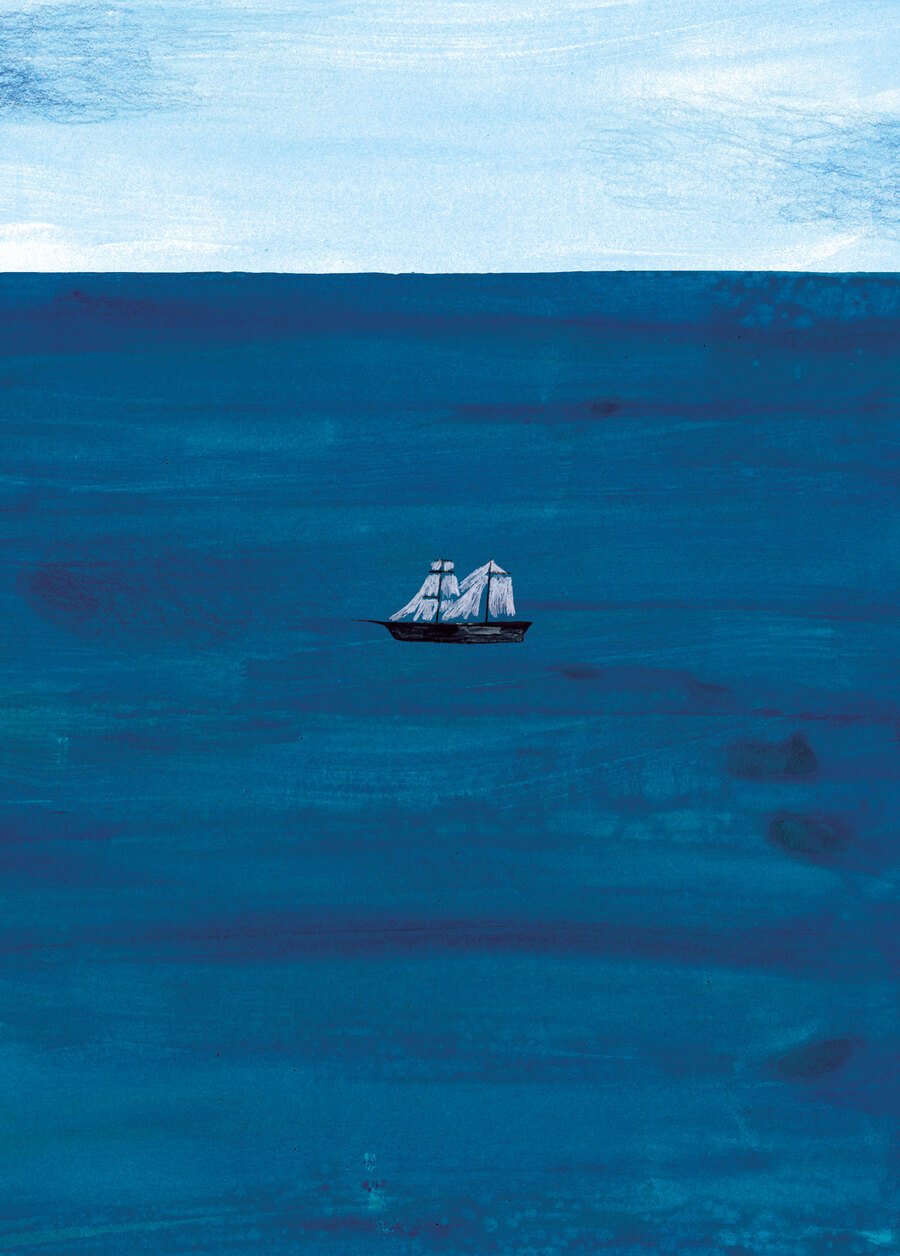
Bright color, despite its accentuating nature, can conversely fail to highlight or emphasize anything in a composition, compelling the viewer to scrutinize and seek what nature has intentionally concealed from outsiders. Although Mark Martin uses saturated colors, their hues are very close to one another, causing the figures in the overall scene to merge with the surroundings, rendering the image indistinct and masking details—transforming everything into one complex shape, much like wild animals hiding from predators. Thus, the artist employs color saturation not to create an accent or emphasize details, but to work toward shaping a single, complex, multi-figure composition.
Animals: Light
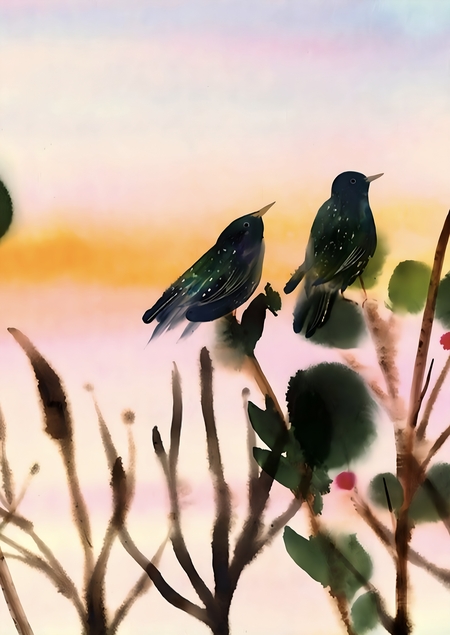
Nature is not easily replicated. Yet, the illustrator manages this by using light as an accent in their work—not a simple accent, but a distracting one. Sometimes, it is important to illuminate not the main subjects of the composition, but what stands out in life itself. By emphasizing secondary details, leaving them as light and shadow, the focus shifts to them, and everything else blends into a mass as a result. Thus, the vibrancy in Mark Martin’s illustrations recedes into the background, concealing the local inhabitants and drawing attention to the light, obstructing the initial view of the key elements, just as in life and in nature.
Animals, like people, are always surrounded by something. Each one lives in its habitat, interacts with it, contrasts with it, or adapts to it. Sometimes the light seems too much, illuminating with excessive intensity, as if hiding much from our eyes. But often, that is the very essence of nature: to conceal, not to reveal. By working with a large amount of very bright light, Mark Martin obscures the basic forms, almost blinding the viewer and slowing their perception. In this way, the illustrator mirrors the natural picture of nature, where animals do not simply camouflage themselves—they merge with their environment.
Thus, light largely contributes to revealing the animals' activities, often not directly, but by allowing the eye to first acclimate to the scene, examine both primary and secondary elements, and see nature as it appears in reality—sometimes not overtly, but with a touch of sentimentality. Such techniques illuminate not only the animals and their actions but also help reveal their character, as each one is unique in its own way. By shining a light on life, Marc Martin helps it become evident and meaningful even during the most ordinary and routine actions. In this way, all living things and their existence find importance and value in every moment.
Pattern: rhythm
Patterns are also an important and significant part of Marc Martin’s art. At first glance, the seemingly simple patterns and elements appear similar, yet they are executed in completely different ways. The variety of patterns in the artist’s work helps reveal the life inherent in diverse subjects and narratives—and most importantly, allows one to sense different rhythms of life.
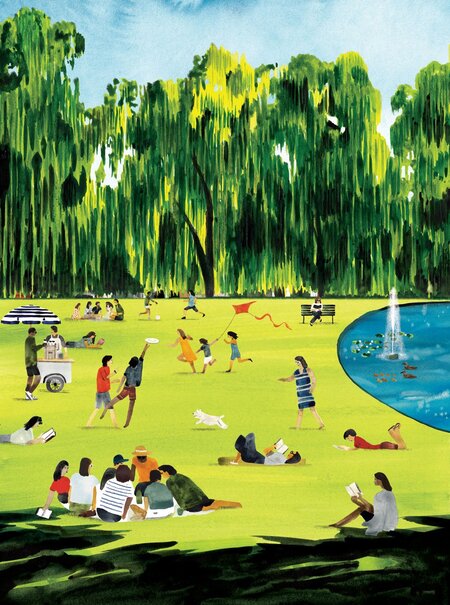
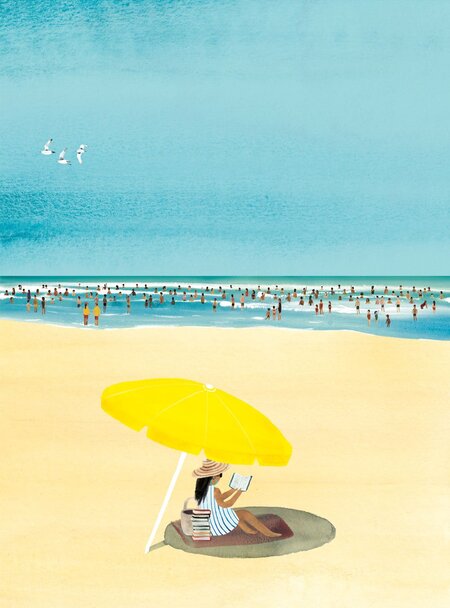
A pattern does not necessarily need repetitive elements. For example, in a pattern, an artist can depict the individuality and uniqueness of each person in their own style, showcasing the interaction and vibrant life within a crowded setting. Such patterns leave very little space between elements, overflowing with small details and features. This creates a sense of rhythm, momentum, and speed, which helps the viewer feel the value of every single moment. However, because of this high level of detail, after an initial overview of the composition, the illustration doesn’t allow the viewer to move past it; instead, it prompts a second look, delving into the very narrative by examining each scene.
Sometimes the chaos of the city gives way to the frantic speed and unhurried pace with which everything rushes somewhere. In the pattern itself, perfect little heroes and details alternate with large, monumental forms—everything is directed and moving in all directions; geometric precision gives way to the randomness of nature, and there is almost no empty space in the composition—creating a sense of velocity. Everyone is bustling, rushing about their business, running late and having not a single second to pause. That crazy rhythm emerges—the rhythm to which most city dwellers in the metropolis have become accustomed.
Although it may seem ordinary, Mark Martin skillfully transforms common patterns and repetitive details into narratives and stories that help evoke and feel the flow of life processes: whether speeding up amidst the crowd or conversely, slowing down to savor the moment.
Illustrators' patterns, by their very definition, speak more to the life of society than to individual lives. They tell stories about the social fabric and how time is mutable—about times when you are not alone, when everything depends on more than just you, about how time, in our perception, has the quality of stretching or compressing during inappropriate moments, yet it continues to flow onward alongside life.
Conclusion
jjj