
Care Quota — A 2D video game about growing organs in a corporate garden in the dark fantasy resource management genre.

A world where human organs grow on flowers and trees. Hearts bloom instead of buds, eyes grow like grapes, and buds can be harvested from a bush.At first glance, medicine had triumphed here, but even this miracle eventually turned into a business.


USP: Papers on organ cultivation in a garden
Theme — Complicity
The fear of losing oneself and one’s place makes a person an accomplice to the system that kills others.
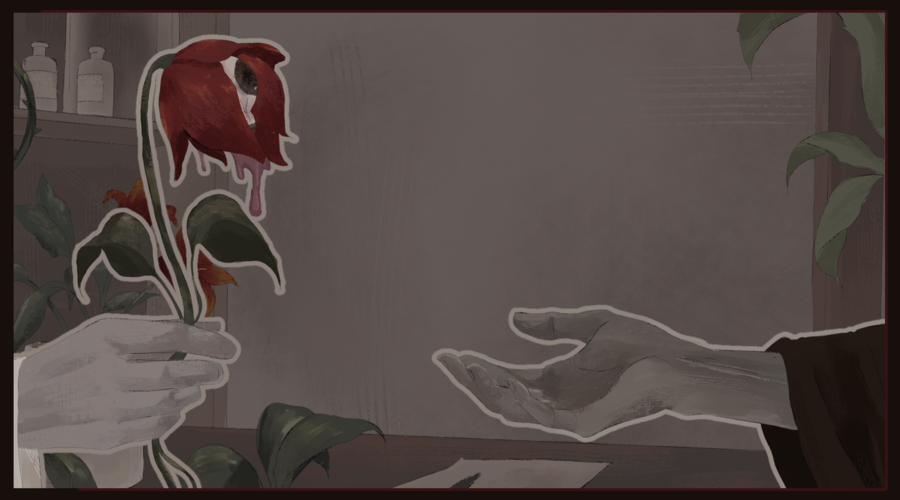
Upon discovering the corporation’s abuses, the protagonist continues working within the system, hoping to keep his job. Meanwhile, the player must constantly choose between the quality of the organs being cultivated and meeting production quotas.
Player Experience
Engagement in work, production oversight, and the stress of tight deadlines give way to moral distress from the necessity of choosing between saving a mother and ensuring patient well-being.
A workday at the nursery consists of four stages: Client Intake — reviewing grievances and selecting the appropriate organ. Cultivation — tending to the plants and harvesting the organs. Quality Control — inspecting the organs for defects and preparing them for patients. End of Shift — tallying completed orders, calculating wages, and applying fines.


Garden Work
Core Cultivation Mechanics — seed selection, planting schedules, and plant care. One must account for organ maturation timelines and client needs, as errors lead to wasted time and resources.
After harvesting, the player checks the organs for defects and chooses one of three actions: Approve — sell the quality organ to the client. Dispose — discard the defective organ, but the time spent cultivating it will be wasted. Hide defect and lie — meet the quota, putting the patient at risk.


At the end of the shift, the corporation evaluates plan completion, calculates salary, and imposes penalties. You can lose your job due to penalties, and while hiding defects might help in such a case, it will never benefit the clients.
Pillars
1. Every body part requires time, but the corporation demands results.2. A mistake is an acceptable error, but are the consequences acceptable?3. Management in conditions of scarcity