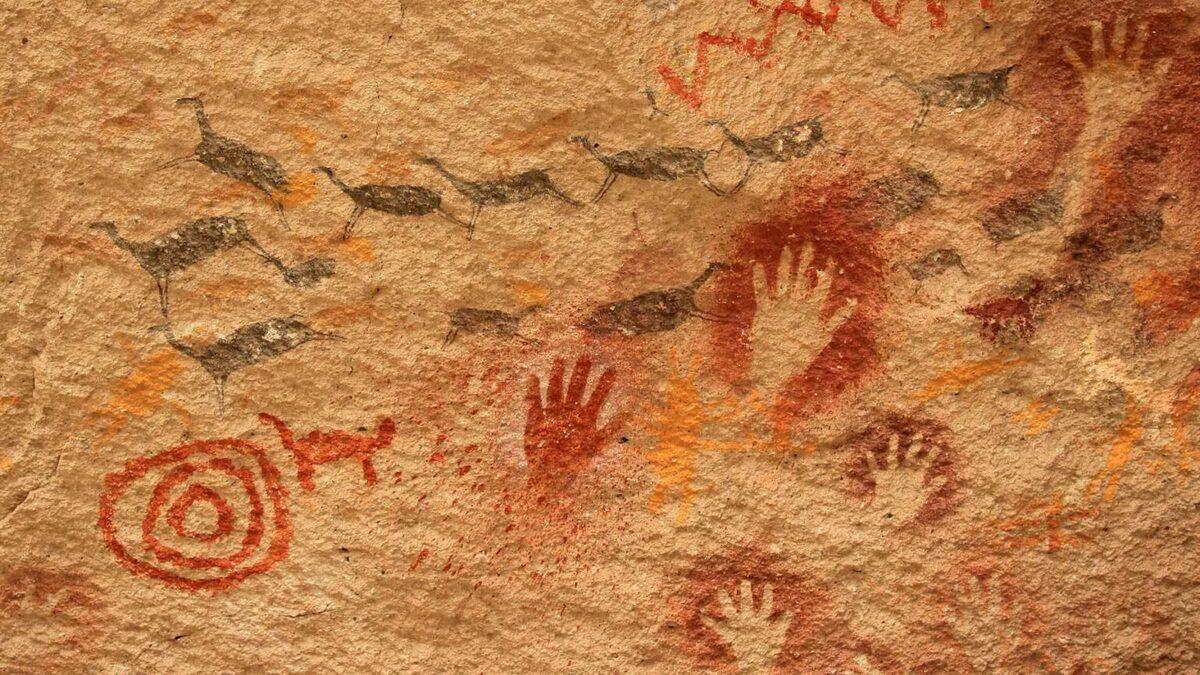
Человек и животное в искусстве верхнего палеолита.
Михальская Виктория Э. Брицп263
Navigation
- Research Question
- Animal Imagery in Caves
- Human Imagery
- Comparative Cave Analysis: Lascaux, Chauvet, Pech-Mersel
- Hypothesis Discussion
- Conclusion
Why are there so many animals and so few people on cave walls?
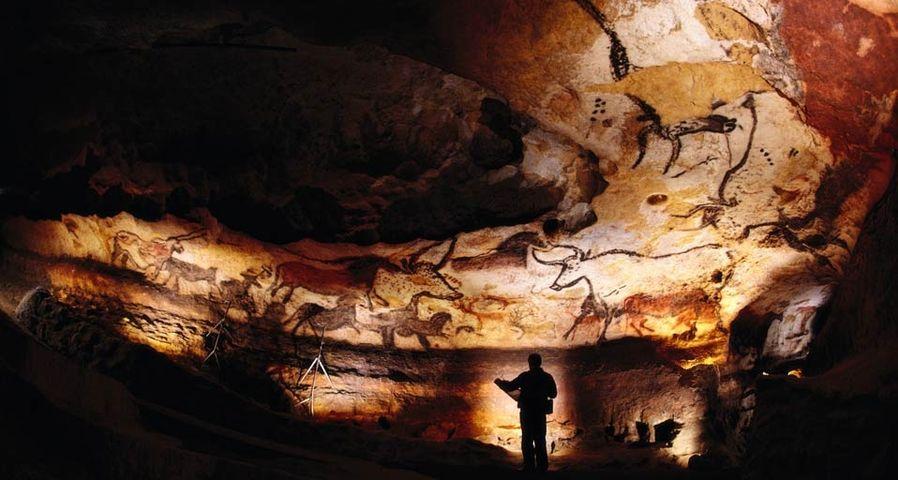
Chauvet Cave
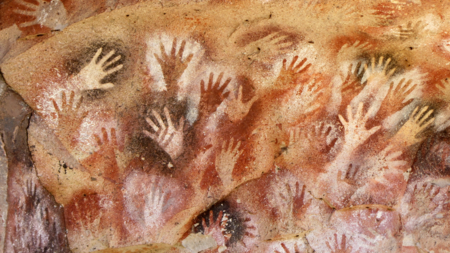
Archaeological data indicate that animals make up a significant portion of cave paintings, while human figures appear much less frequently.
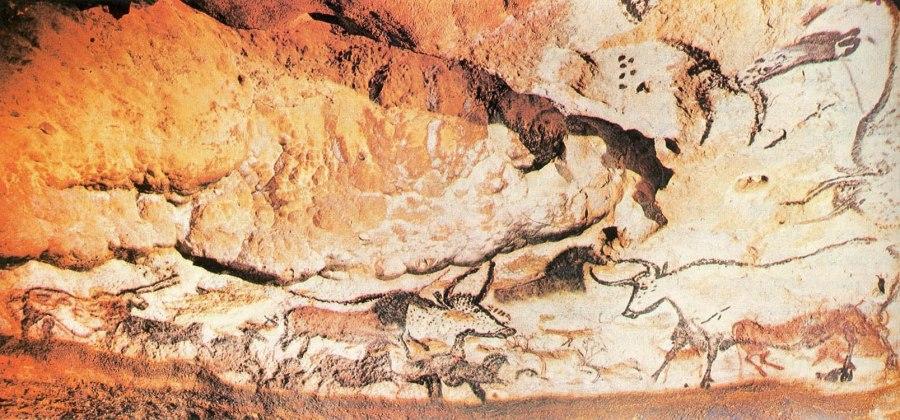
Bull Room
Researchers lack a single explanation for why animals were depicted more frequently than humans. Several main theories have emerged from the study of Paleolithic art, all attempting to explain the choice of subjects and the significance of the images.
One hypothesis connects the depictions to the daily life of hunters. Animals were a crucial part of their surrounding world: human survival depended on them, they watched them, studied their behavior, and they could represent danger. Therefore, interest in animals might have found expression in art.
Another theory views animals as symbolic figures. Researchers suggest that the images may have been linked to rituals, beliefs, myths, or concepts regarding human interaction with nature.
There is also the premise that the caves themselves held special meaning. The images were not placed randomly: some were located in hard-to-reach chambers, while others formed complex compositions. This allows us to view cave painting not just as wall decoration, but as part of specific cultural practices.
However, contemporary research cautions against searching for one universal cause. The meaning of the images may have varied depending on the time period, location, and specific culture.
Mural with animal depictions. Chauvet Cave, France.
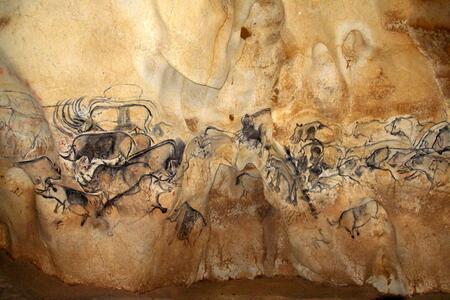
Comparing the various caves reveals that the composition of depicted animals was not uniform. Each cave features specific species that hold particular prominence within the compositions.For instance, horses predominate in Lascaux, while deer, wild bulls, and bison are also frequently found. In contrast, the Chauvet Cave particularly features lions, mammoths, rhinoceroses, and bears. This difference is significant because it demonstrates that ancient artists were not merely depicting every animal they encountered in their environment.Researchers studying the Chauvet Cave specifically note that its imagery does not represent an accurate depiction of the daily surrounding environment. The choice of animals reflected certain cultural preferences. Furthermore, the assortment of most frequently depicted animals varied across different archaeological cultures.Consequently, the selection of imagery depended not only on the natural surroundings but also on the worldview of the people who created these images. Comparing several sites allows us to see that animals held an important place in art, though the specific species and methods of their depiction could vary significantly.