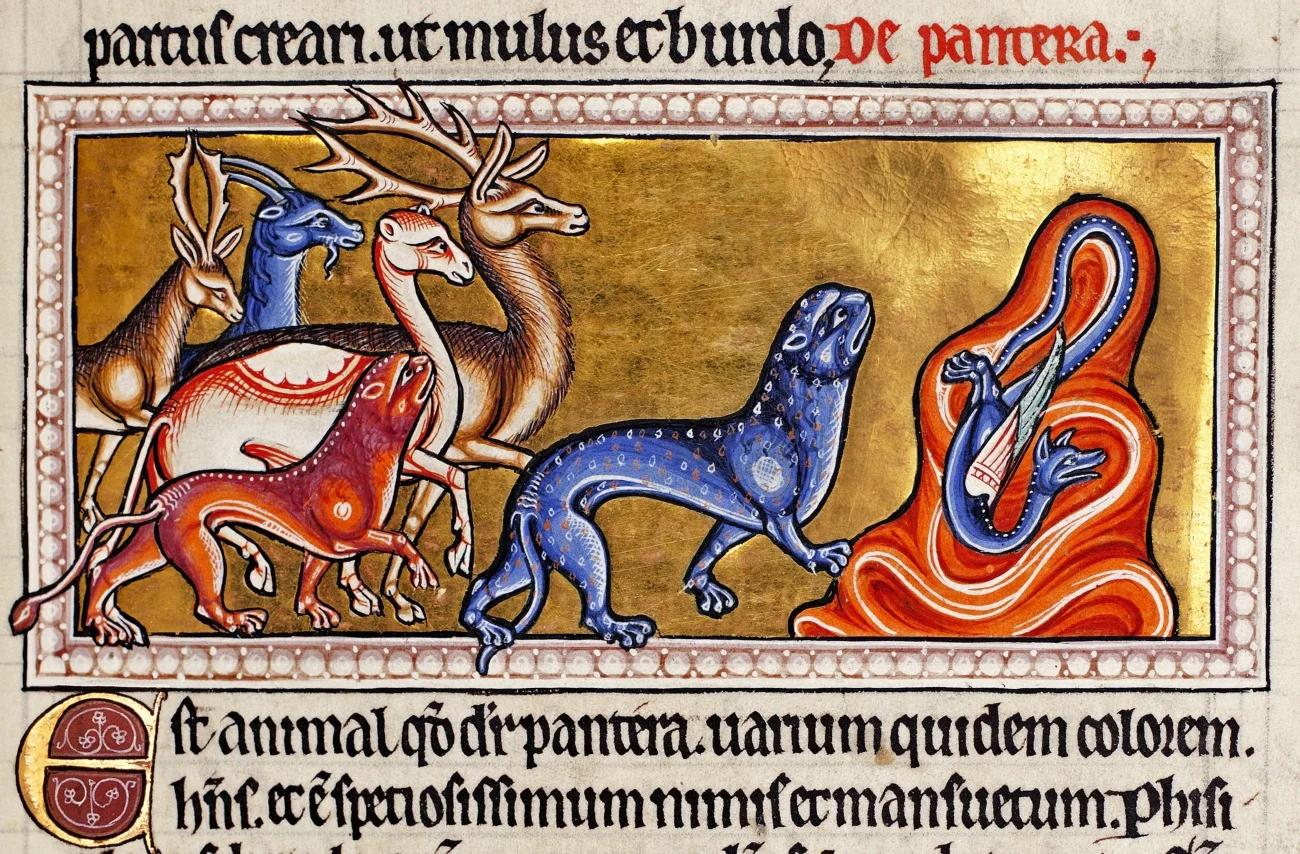
Что символизировали животные в искусстве 12-14 веков
Contents:
Concept
Introduction
1. Lion.
2. Unicorn.
3. Pelican.
4. Fox.
5. Deer.
Conclusion
Concept
Animals held a special place in the artistic culture of the Middle Ages. They appeared in religious manuscripts, frescoes, mosaics, the sculptural decoration of churches, and everyday objects. However, their depictions were far from always an attempt to accurately reproduce the appearance of a living creature. In medieval art, the animal often served as a bearer of specific meaning: it could symbolize virtue, sin, religious truth, or a human quality.
The goal of this visual study is to examine how animal images were utilized in European art before the 14th century and how they conveyed the religious and moral concepts of the era.
Particular attention is given to medieval bestiaries—illustrated manuscripts in which descriptions of animals were accompanied by accounts of their behavior and symbolic interpretations. These books merged the concepts of nature inherited from ancient culture with the Christian worldview. The animals within them became unique examples through which the reader could reflect upon human nature and the structure of the world.
The study is built around several figures: the lion, the unicorn, the pelican, the fox, and the deer. Each allows for an examination of a distinct facet of medieval symbolism. The lion was connected with strength, power, and the image of Christ; the unicorn—with purity and the Christian idea of incarnation; the pelican—with sacrifice; the fox could represent cunning and deception; and the deer—spiritual aspiration and religious renewal.
When selecting visual material, consideration is given not only to the images themselves but also to their context: the manuscript’s title, the time and place of creation, compositional features, color palette, the animal’s placement on the page, and its interaction with other figures. It becomes important to compare how the same image could have been used in different artistic and religious contexts.The core principle of the study is comparing the image with its symbolic meaning. For instance, it is not enough merely to note the presence of a lion on a manuscript page; one must examine how the artist conveys its power, why the beast occupies a specific position in the composition, and how the image relates to the accompanying text.The work also examines the distinction between real and fantastical creatures.
Introduction.
During the Middle Ages, nature was perceived not only as the world surrounding humanity but also as an integral part of the divine design. Every living creature could possess a special significance. Animals became symbols through which the structure of the world, human qualities, and religious ideas were explained.
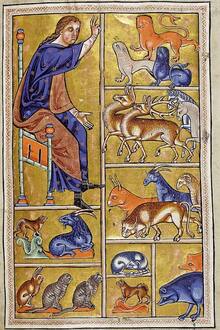
Miniature of Adam naming the animals, Aberdeen Bestiary (12th century, England)
Research Question: How did medieval artists transform the imagery of real and fantastical animals into symbols of religious ideas and human qualities?
Hypothesis: Primitive and schematic depictions of animals formed a distinctive visual language through which profound concepts became understandable and memorable.
Spread from the Rochester Bestiary
The main material for the study will be bestiaries—medieval illustrated books about animals. In these texts, the description of the beast coexisted with an illustration and a moral interpretation. It was the text and the symbolic depiction of the animal that gave it its symbolic meaning. The research will also include other sources of animal imagery, such as stained glass.
A spread from the Bodleian Bestiaries
One source of the bestiary tradition was the ancient text, «The Physician.» In it, stories about animals received a Christian interpretation. Medieval authors and artists developed this tradition by combining ancient ideas, oral narratives, and religious symbolism.
A spread from the Aberdinese bestiaries
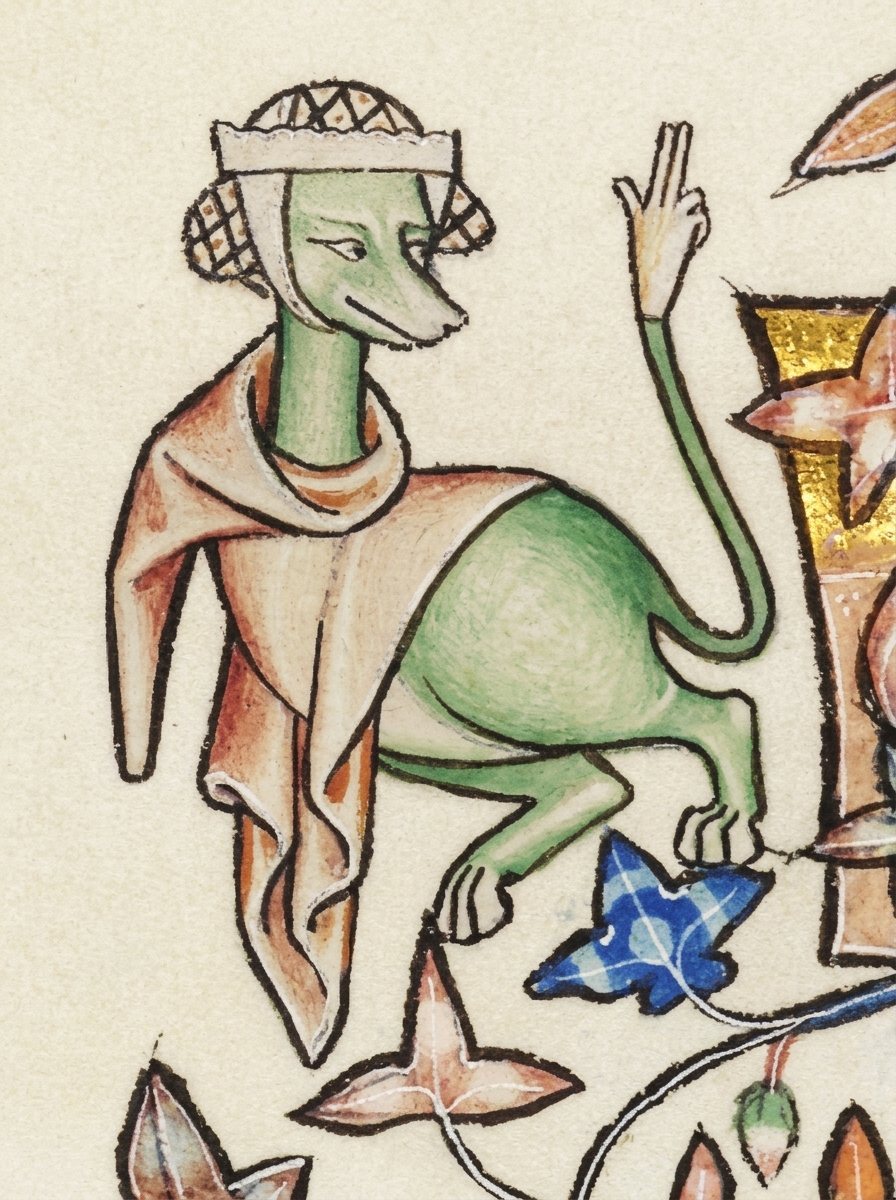
Manuscript page from the 14th century with illustrations from the work «The Romance of the Fox» (Le Roman de Renart), the episode «The Well Trap.»
The bestiary page often combined text, image, and ornamentation. The illustration helped students remember the story and its moral meaning. The image could be stylized, vivid, and nearly flat because its purpose differed from that of a realistic animal portrait.
The center of the research features a lion, unicorn, pelican, fox, and deer. I decided to examine images of these animals in my study because they symbolize important ideas and qualities central to the worldview of Medieval people.
1. Lev.
The lion held a special place in medieval symbolism. Its strength, majestic bearing, and positioning among other animals naturally conferred upon it power. In bestiaries, it was often depicted as a mighty and extraordinary creature.
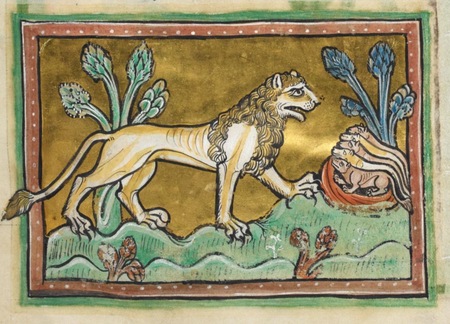
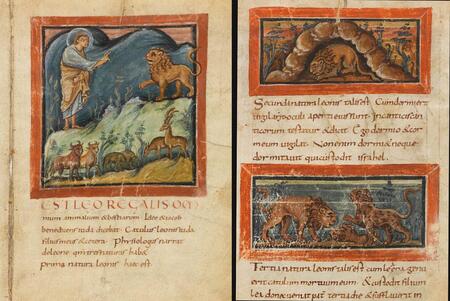
1. Lion from the Rochester Bestiary 2. Excerpt from Bern’s «Physiologus»
Leo from the manuscript «Flowers of Nature»
In the miniatures, the lion is often depicted with a pronounced mane, powerful paws, and an expressive posture. The artist was not striving for an accurate depiction of the animal; rather, conveying the strength and majesty of this creature was what mattered more.
«Lions breathing life into their cubs» from the Royal Bestiary.
«Lions Resurrecting Their Cubs» — the lower tier of the MS. Bodley 764 bestiarium miniature.
Medieval bestiaries contain a story that lion cubs are born lifeless, and the father brings them to life on the third day. This legend was used as an allegory for the Resurrection of Christ on the third day after the crucifixion. Consequently, one can surmise that at that time, the lion symbolized Christ and carried a certain religious meaning.
«Leo in a Medallion» — a fragment of the mosaic decoration of the Palatine Chapel
Leo was connected not only to religious symbolism but also to concepts of power. His image appeared in heraldry, architectural decoration, and works of art, becoming a symbol of strength, dignity, and high status.
The image of the lion connects physical strength with spiritual victory. Through it, medieval art illustrates how the animal’s qualities transform into a religious metaphor. The lion becomes not only the king of beasts but also a symbol of overcoming death.
2. Unicorn.
The unicorn is one of the most recognizable mythical creatures of the Middle Ages. Its image embodied concepts of rarity, purity, and vulnerability.