Религиозная символика жестов рук в искусстве Западной Европы и Древней Руси X–XIV веков
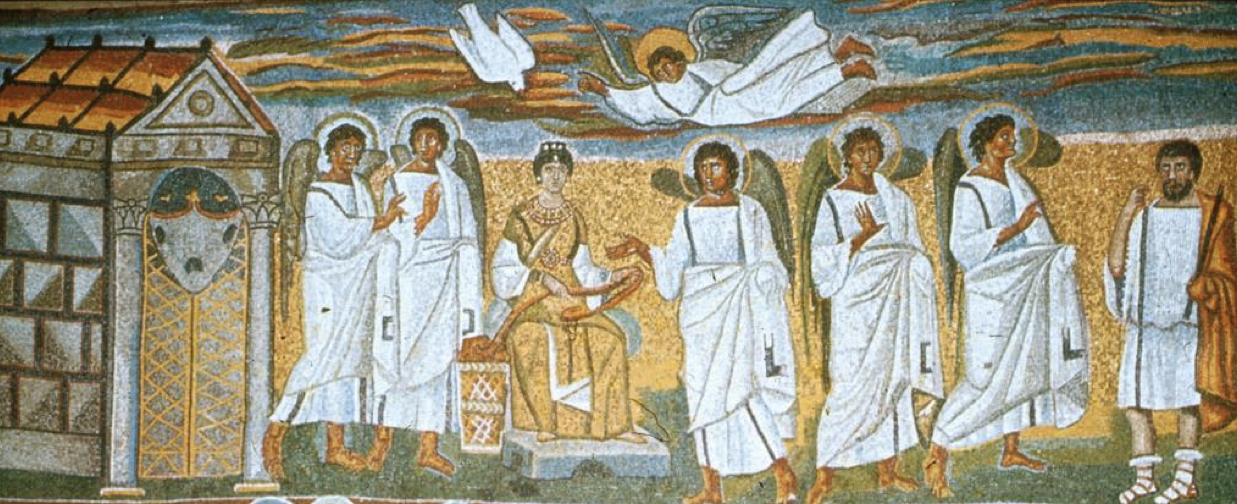
Работа римских мозаичистов, «Благовещение», 432-440 гг.
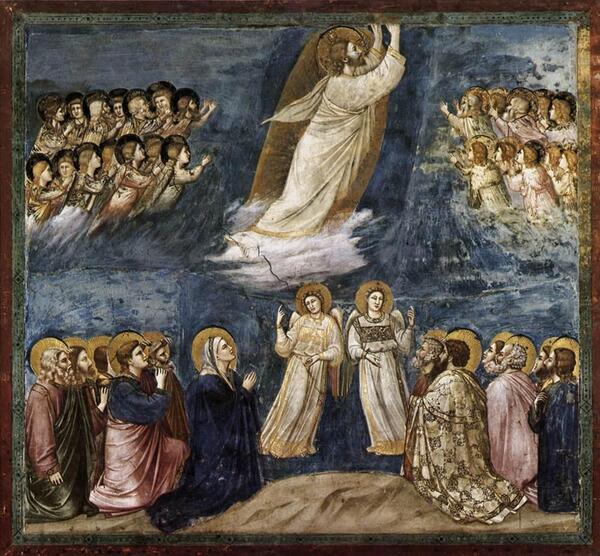
«And he led them out of the city to Bethany and, having raised his hands, blessed them.» [1]
Navigation
1. Research Concept
2. The Hand as a Sign of Power
3. The Hand as Address
4. The Hand as Pointer
5. The Hand as Contact
6. Conclusion
7. Bibliography
8. Image Sources
Research Concept
A raised hand in medieval art can signify many different things. For the Orantes in St. Sophia Cathedral in Kyiv, it is prayer; for Christ on the throne, it is a blessing; and for Archangel Gabriel in the «Ustyuzh Blessing, ” it might be words addressed to Mary. The hand barely changes, yet its meaning is interpreted differently—a distinction that can only be clarified by the rest of the scene: who is making the gesture, to whom it is directed, and what is transpiring around it. This variance became the genesis of the theme. The factual foundation of this work relies on museum catalog descriptions, which were consulted to verify the titles, dates, provenance, and techniques of the works. Scholarly publications are necessary to provide context and for cases where a gesture is interpreted differently, and an article on gestures in religious art explains the origins of those specific gestures.
Material Selection Principle
The work compiles pieces from Western Europe and Ancient Rus' dating from the 10th to the 14th centuries. These parameters allow for tracing gestural language across several centuries and comparing two traditions that share a common Christian foundation but not always common conventions. For the Ancient Rus' works, I considered the influence of Byzantine art. The visual sequence consists of twelve pieces: icons, frescoes, mosaics, sculpted reliefs, and painted panels. The primary criterion was the gesture itself: I selected works where the positioning of the hands alters the meaning of the scene or illustrates the relationship between characters. If a hand merely occupies a position without influencing the narrative interpretation, such an example is excluded from the analysis. The dating, origin of the work, and the quality of the image—sufficient to examine the fingers and palms—were also taken into account.
The key research question
How did hand gestures convey religious meanings in the art of Western Europe and Ancient Rus' from the 10th to the 14th centuries, and what distinctive characteristics of their use developed in each artistic tradition?
Research Hypothesis
In the art of Western Europe and Ancient Rus', hand gestures served as an independent means of conveying religious meaning. Despite the shared Christian foundation, artistic traditions employed them in diverse ways to denote divine power, prayer, intercession, and interaction between characters.
I. The Hand as a Sign of Authority
Power in this section is illustrated in three ways: as blessing, as judgment, and as the connection between the earthly ruler and the divine.
1. Blessing as a Sign of Divine Authority
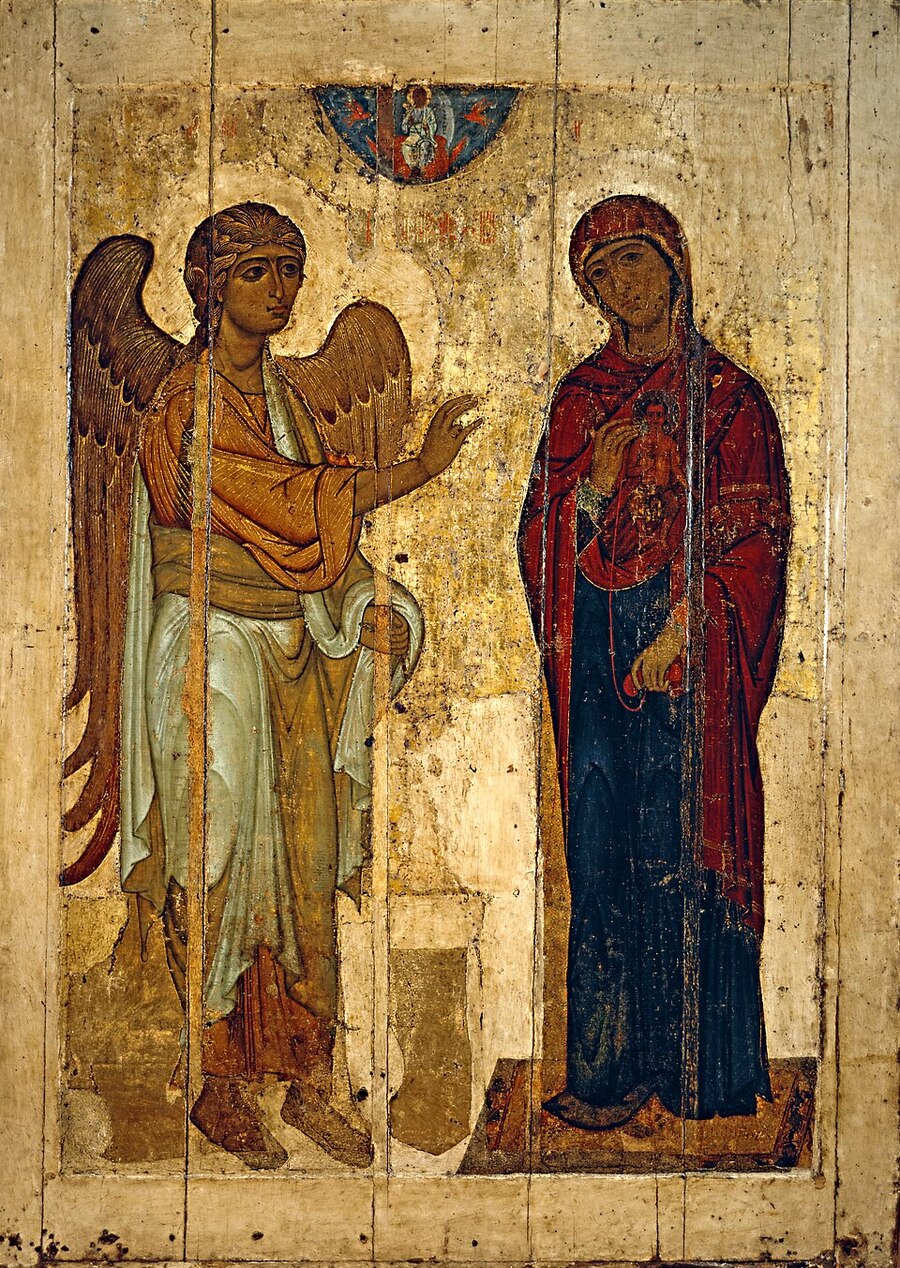
Author unknown. «The Annunciation of Ustyuzh» — Early 13th Century.
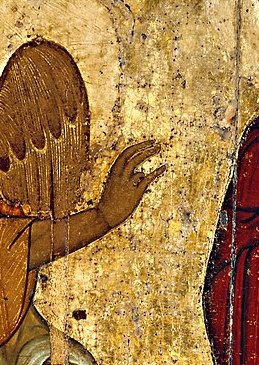
In «The Annunciation,» three hands are engaged. Archangel Gabriel raises his hand with uplifted fingers toward Mary; Christ Emmanuel, in her womb, raises his right hand; and above, the Old Testament figure blesses Mary—a blue ray directed from his hand to her. Gabriel’s gesture can easily be mistaken for a blessing, but the article «Russian Icon» links gestures in religious art to ancient rhetoric: «all of them are connected to the Roman oratorical tradition» [2]. Against the backdrop of this connection, the gesture takes on a different meaning: «for the ancient person, this was an obvious sign that at this moment the archangel is telling the Virgin Mary about the incarnation of Christ in her womb.» If we accept this explanation, the archangel’s raised fingers signify speech—the message he is conveying—while the blessing remains with Christ Emmanuel and the Old Testament figure. There is no definitive answer, so on the icon, I distinguish three actions: the announcement, the incarnation, and the blessing, distributed across three levels.
2. Christ on the Throne: Power Through Position and Gesture
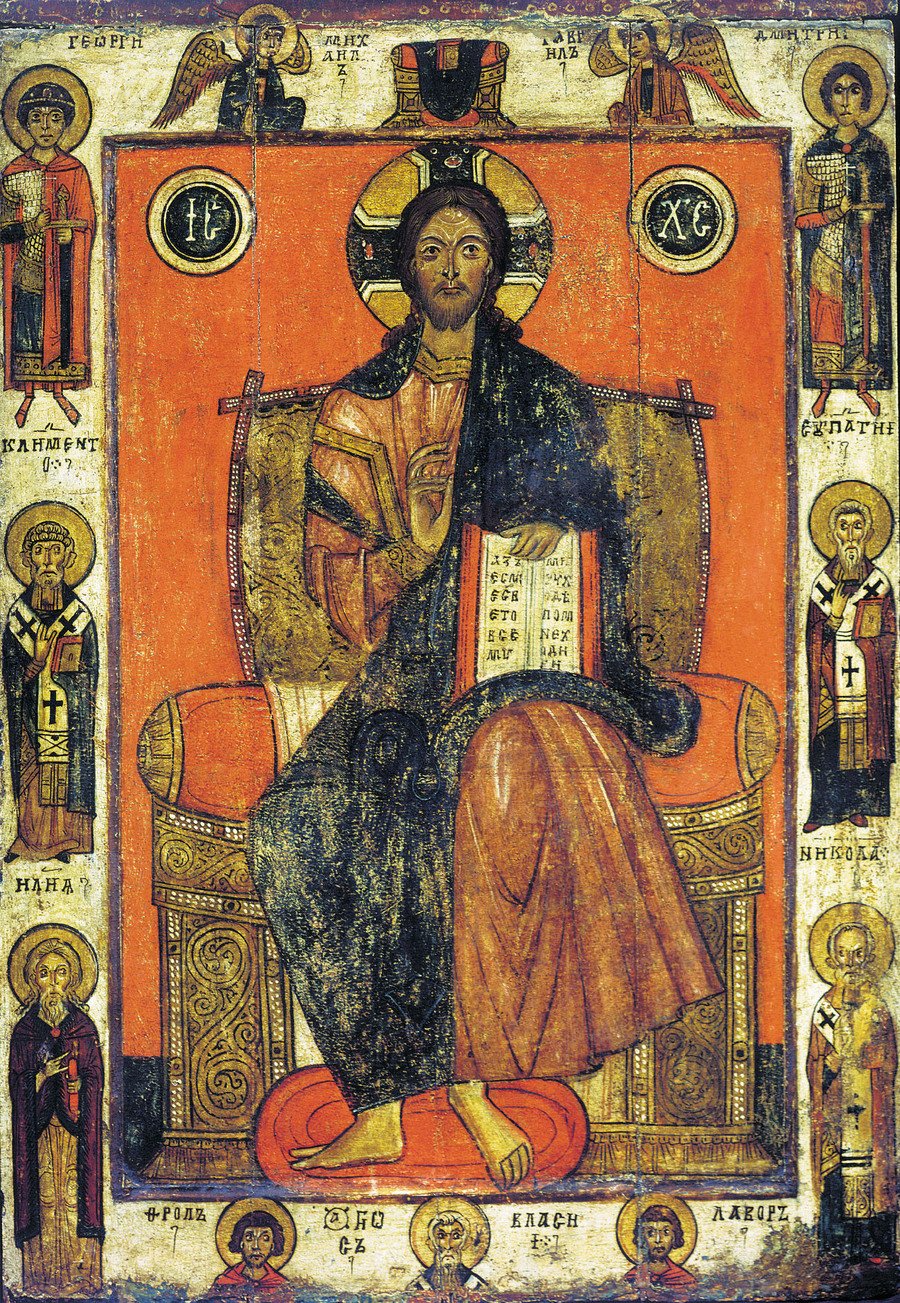
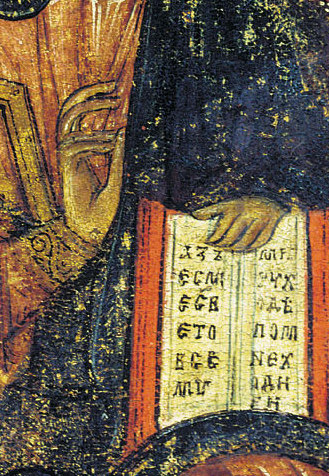
Artist unknown. «Salvator on the Throne with Chosen Saints.» Second half of the 13th century.
Christ occupies the icon: his right hand blesses, while his left supports the open Gospel. Archangels, martyrs, and saints stand around him, with some also offering blessings in the border elements. This gesture, therefore, does not isolate Christ by itself. His central position and throne are emphasized, and the Gospel is connected to his teaching—the blessing hand is directed toward those surrounding him as part of this image. Authority here is conveyed not by the hand itself, but by who that hand belongs to.
3. The Judge’s Decree: The Power to Decide a Person’s Fate
Author unknown. Tympanum of the «Last Judgment» from St. Fouay Church. Late 11th — early 12th century.
Christ as Judge sits on the throne at the center of the tympanum. His right hand is raised toward the saved, and his left hand is lowered toward the condemned—the verdict of the judgment is clear even before one examines the other figures. The relief is situated above the main entrance of the church; the Last Judgment was seen before entering. The dating of the tympanum remains a subject of debate, with researchers placing it approximately between 1080 and 1150.
4. Judicial gesture in 14th-century painting
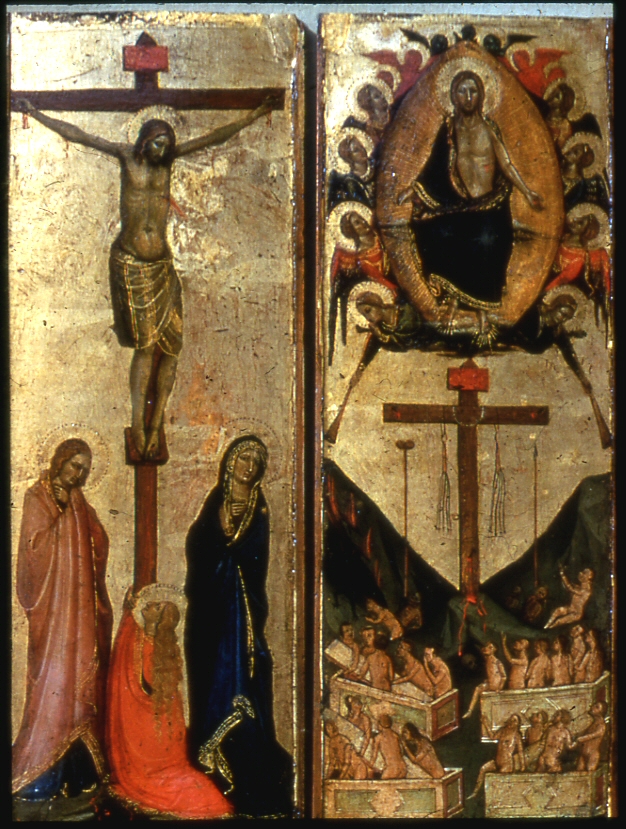
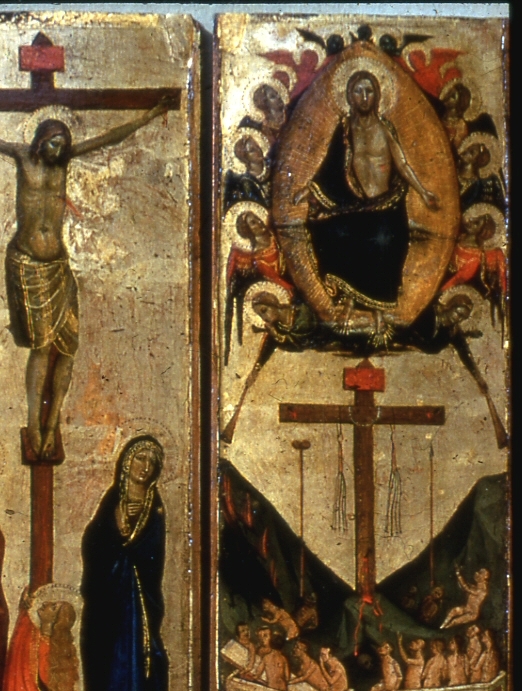
Jacopo del Казаntino. «The Last Judgment and Crucifixion.» 1340–1349.
In Jacopo del Казаentino’s Христос, the judgment follows the same schema, and the museum describes his gestures directly: the right hand «is turned palm upward to indicate that those on his right side will be saved» [5]. The left, turned downward, points to the mouth of hell, where the demon drags the sinner by the hair. The tympanum occupies a vast space above the entrance, and here there is a small pictorial panel, but the principle remains unchanged: the two directions of the hands convey the judgment without explanation.
5. Earthly Ruler and Divine Power
Artist unknown. «Wilton Diptych.» Circa 1395–1399
On the left panel, Richard II kneels before the Virgin Mary and the infant Christ, with patron saints positioned behind him. The king’s arms are extended toward the white banner bearing a red cross, which an angel is holding; most scholars interpret this as a gesture of submission [3]. Christ blesses, but doubts begin to surface beyond that. The National Gallery catalog notes: «The Child’s gesture is ambiguous» [3]. The king’s blessing is clear, but whether Christ grasps the staff of the banner—perhaps to return it to Richard—remains unclear. The banner itself is interpreted in various ways: as the banner of Saint George, as the banner of the Resurrection, or both simultaneously [3]. The focus on the king is intensified during the work itself.Infrared imaging revealed that the angel’s finger to the right of the Virgin Mary first pointed toward Richard’s head, and then descended toward his heart [3]. Next to the Virgin, the angels hold their hands folded: according to the catalog, this is a courtly gesture of reverence and humility [3], and against this backdrop, the infant’s blessing becomes more pronounced. In the general consensus among researchers, the diptych expresses Richard’s conception of the sacred nature of his authority [3]. If in «Christ in Majesty» power belongs solely to Christ, here it is situated between two figures: the king and the blessing Christ.
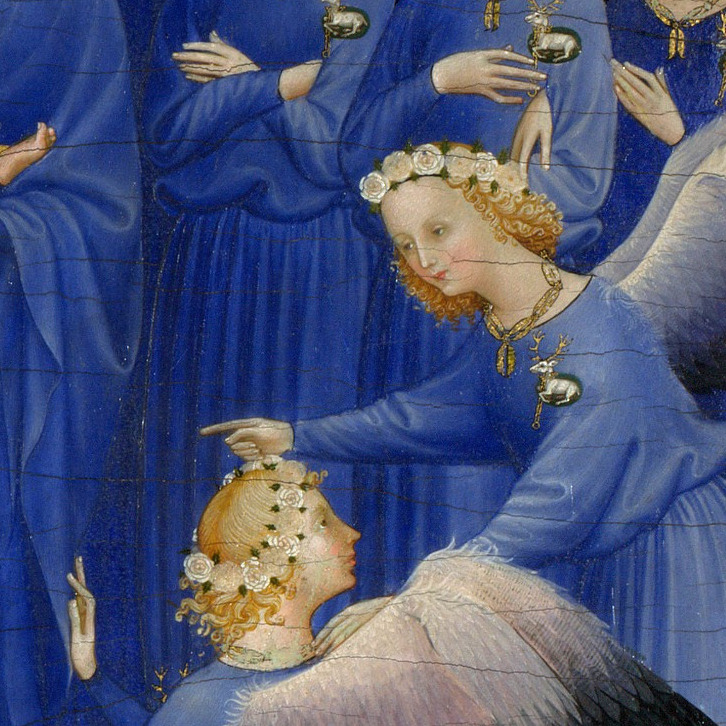
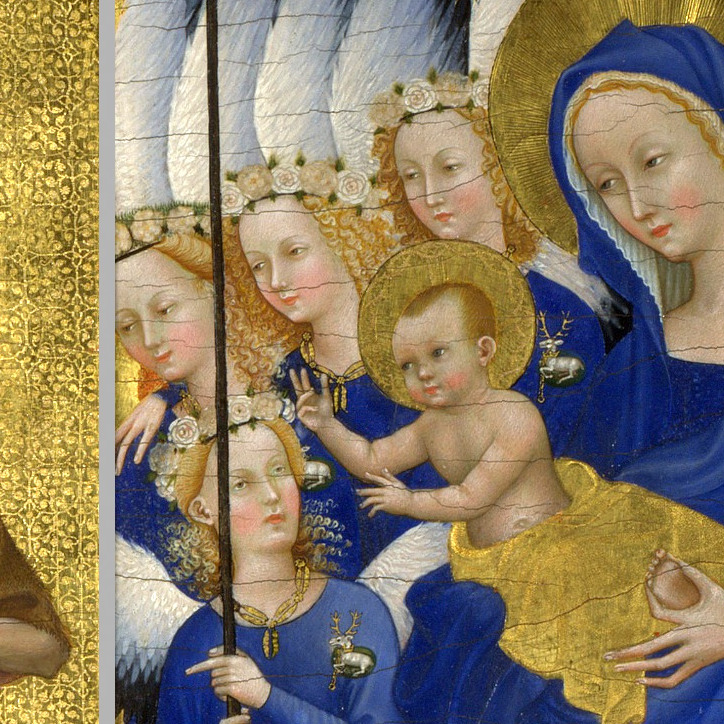
«Wilton Diptych, ” Gestures in Detail