OBJECTIVE
Identify changes in visual language. Compare silhouettes, attributes, expressions, color, and the placement of figures within compositions on dated works from before the 14th century. Specifically differentiate authentic 13th-century Gothic from later reconstructions.
CONCEPT
The image of evil as a composite form. Trace how ancient zoomorphic traits, Christian narratives, and medieval fantasy gradually coalesce into recognizable demon iconography. Formal similarity does not imply direct borrowing—each example is examined within its specific context.
ANCIENT ROOTS
Evil has not yet taken one face.
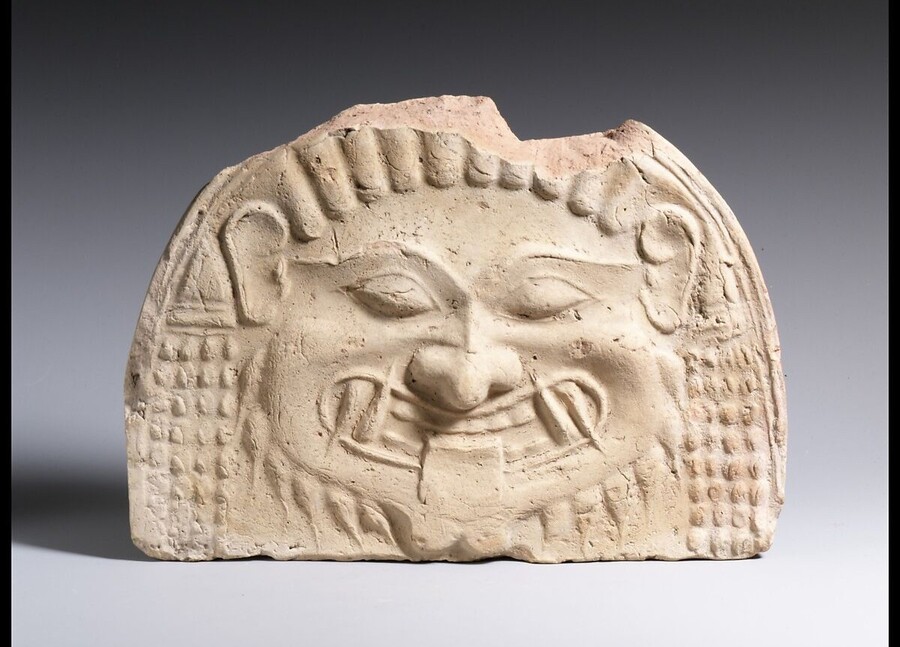
Antefix with a Gorgon head. c. 580–570 BCE, terracotta. Greece
A face looking directly forward. Wide eyes and an open mouth command an encounter with the gorgon’s gaze. She was placed on architecture as a protective icon. The gorgon originates from Greek mythology. Her intimidating appearance could serve as a ward against misfortune. It is important to note: external similarity to a demon says nothing about the function of the image.
Crater with a satirical mask. Circa 520–510 BCE pottery. Greece
The Satyr Becomes a Decorative Symbol On the vase, the character’s features are perceived as an expressive mask: for the artist, the movement of lines and the contrast of facial parts are more important than portrait resemblance. For visual analysis, it is more useful to focus on specific elements—animal body parts, head proportions, posture, and viewer contact—rather than asking, «Does he resemble a devil?»
Amphora with a Satyr c. 480–470 BCE. Terracotta. Greece
Man and beast in one figure The body reads as almost human, but individual features disrupt its familiar anatomy. Later, this kind of hybridity will become a way to signify the inhuman.
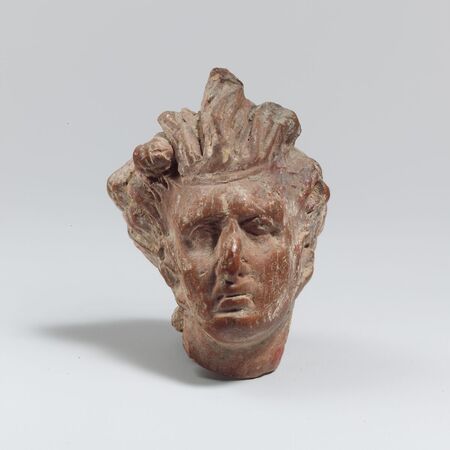
Терракотовая голова сатира
Бронзовая фигурка сатира
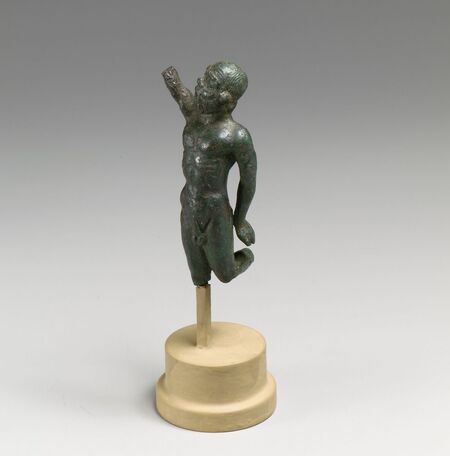
Silhouette and Face The bronze statuette compels the viewer to seek the unusual in its gesture and contour. The terracotta head, conversely, concentrates expressiveness in the eyes, nose, and mouth.
PALE AND LATE ANTIQUITY
Marble Statue of Pan 1st century A.D. marble. Roman Empire
Pan: horns and goat legs The marble statue depicts Pan as a deity of nature. His fur, horns, and bifurcated physique are clearly visible, but they do not initially express Christian evil.
Marble Mask of Pan 1st Century CE, marble. Roman Empire
The horns are almost hidden in the hair. The horns here are not massive; they emerge from thick locks of hair. The effect is built upon a blending of human beard, hair, and individual animal traits. The simplistic narrative of «Pan turning into the Devil» oversimplifies the history. It is more accurate to speak of the similarity of individual visual motifs that may have acquired new meaning within Christian culture.
EARLY CHRISTIANITY
6th Century: The Devil Doesn’t Always Have Horns In early Christian and Byzantine traditions, evil was not always depicted as a hybrid monster. The mosaics of the Basilica of Sant’Apollinare Nuovo in Ravenna are an important landmark for this period. The narrative of separating sheep and goats includes a blue angel; his interpretation as Satan is not disputed.
Altar cross base: angels and dragons c. 1125–1150, metal. Northern Italy
Evil Under the Cross In a 12th-century composition, a dragon is juxtaposed against angels. The meaning of the monster is determined by its place in the Christian narrative, not just by its fantastical anatomy. First—the role, then—the attributes. One can recognize the Devil not only by his horns. The actions, the inscriptions, the neighbors in the narrative, and the upper and lower sections of the image are important. Iconography is not a list of details, but a system of relationships.
ROMANESQUE ART
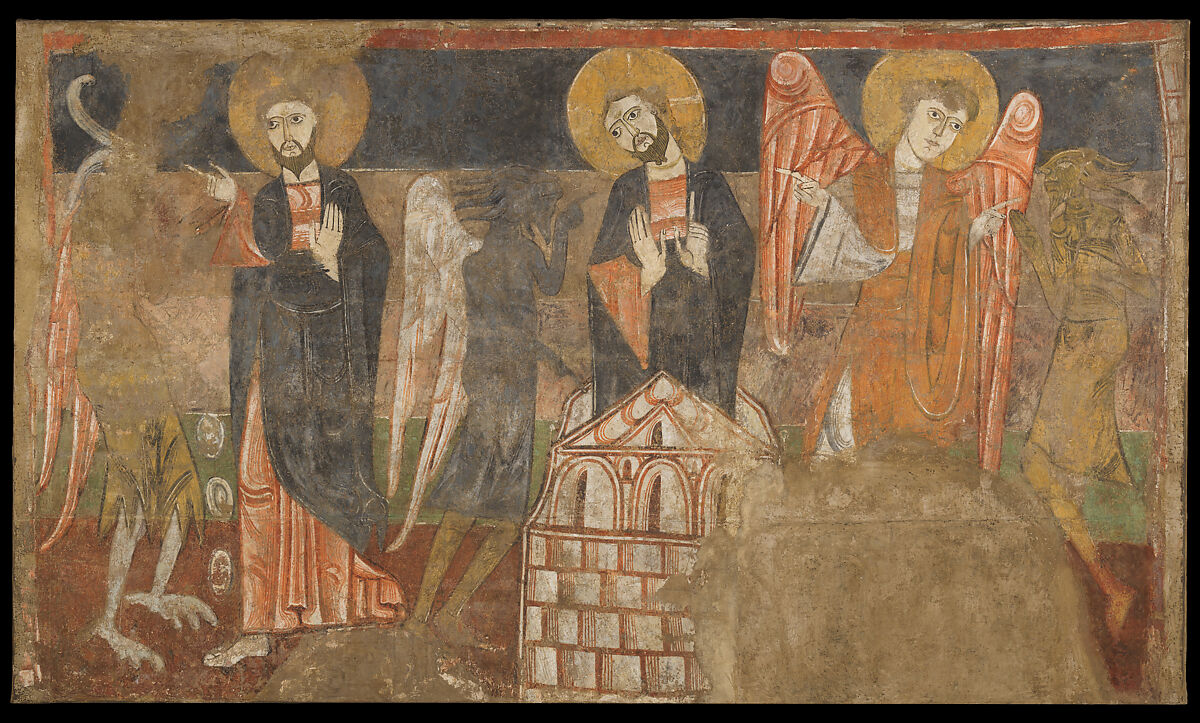
Temptation of Christ by the Devil First half of the 12th century (possibly 1129–1134) fresco, transferred to canvas. San Baudelio, Spain
The Devil Holds a Dialogue with Christ The fresco from San Baudelio depicts the temptations as a sequence of episodes. The repetition of figures within a single frame gives the image the feel of an early comic strip.
Candlestick with a youth and a dragon c. 1140–1160 bronze. Southern Netherlands
Body and dragon are intertwined. On a metal candlestick, the struggle becomes part of the structure. The pattern and figures are difficult to separate from each other—the subject relies on the silhouette of the object.
Консоль с волчьей маской ок. 1150–1200 известняк. Аквитания, Франция
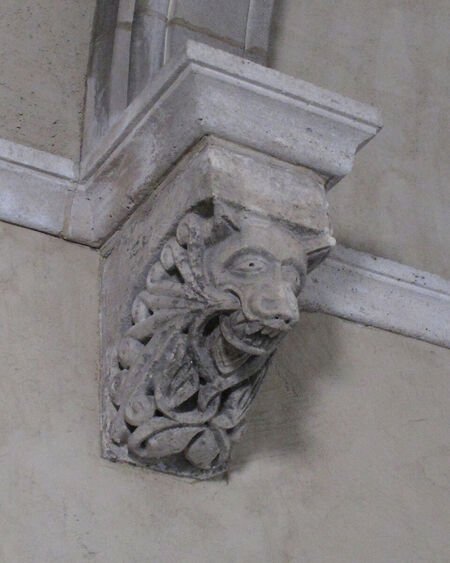
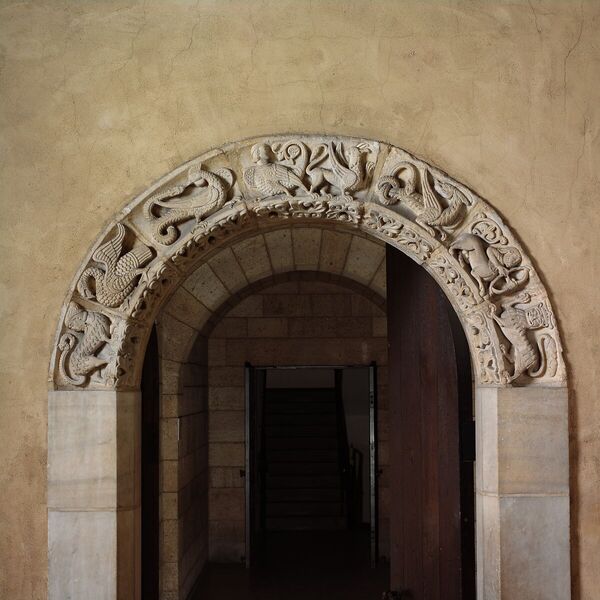
Арка с фантастическими существами ок. 1150–1175 мрамор Нарбонна (?) Франция