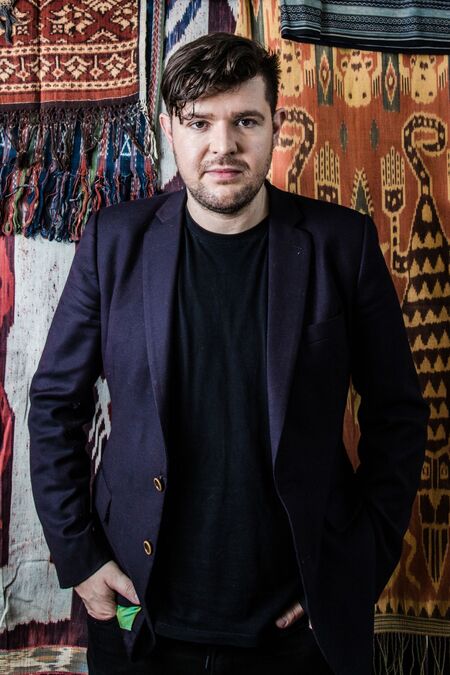
Cosmin Costinas — a curator, art critic, and researcher of contemporary art of Romanian origin, whose work intersects decolonial practices, institutional critique, and sociocultural analysis.
Biography
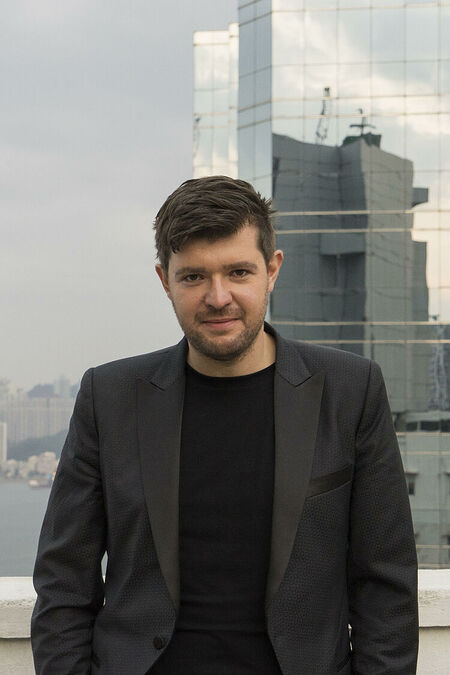
Cosmin Costinas was born in 1982 in Satu Mare, Romania.
He studied art history at the Babes-Bolyai University in Cluj-Napoca (Romania).
From 2005 to 2007, he worked as an editor for documenta 12 Magazines.
From 2008 to 2011, he was the curator for BAK (Basis voor Actuele Kunst) in Utrecht, Netherlands.
From 2011 to 2022, he worked as Executive Director and Curator for the Para Site in Hong Kong.
Since 2022, he has worked as a Senior Curator of Exhibition Practices at the Haus der Kulturen der Welt in Berlin.
Key Theoretical Works
Kosminas Kostinas’s theoretical and research work is presented through critical essays, academic studies, and monographs/catalogs published alongside his key curatorial projects.
Key ideas and concepts:
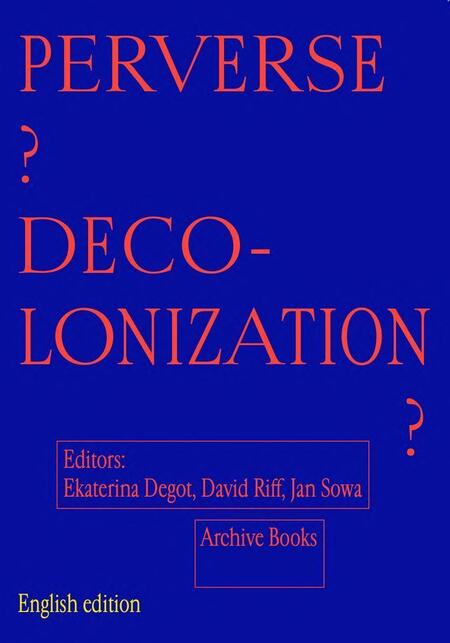
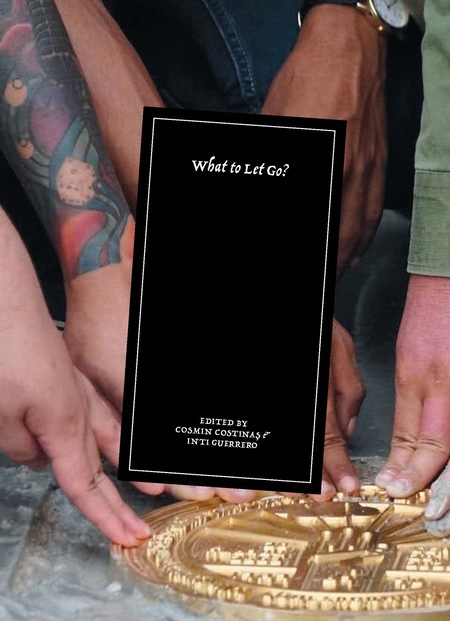
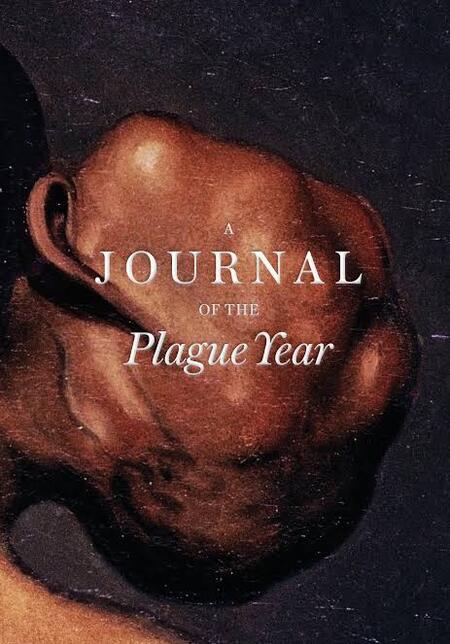
A Journal of the Plague Year. Fear, ghosts, rebels. SARS, Leslie, and the Hong Kong story
The exhibition took place at the Para Site art space in Hong Kong in 2013. It was organized in collaboration with curator and art critic Inti Guerrero.
The conceptual foundation was a reflexive exploration of the social trauma experienced by Hong Kong society during the SARS outbreak in 2003. The title references Daniel Defoe’s novel of the bubonic plague in London in 1722. This allusion sets the tone for the project: the epidemic is examined not from a biological or medical perspective, but as a sociocultural phenomenon that reveals hidden societal phobias and political tension.
Conceptual foundations:
The project’s unique focus lay in merging documentary chronicles, popular culture, and contemporary art to analyze how social crises shape collective narratives within society.
The exhibition featured both global contemporary art stars and local artists:Ai Weiwei, Paul McCarthy, Apichatpong Weerasethakul, Lee Kit, Samson Young, Paik Sang-chun and others.
Striking works featured in the exhibition:
Ai Weiwei, Baby Formula, 2013
One of the most resonant exhibits at the show was Ai Weiwei’s installation «Baby Formula» (2013)—a massive map of China constructed on the floor from 1,815 cans of baby formula. The work was a response to the scandal involving melamine-tainted milk in the PRC and the subsequent shortage of infant formula in Hong Kong, which led to the imposition of strict customs restrictions.
Ligia Pape, Divisor, 1968 (reconstruction — Hong Kong, 2013)
Another key artistic statement of the project was Ligia Pape’s archival performance «Divider,» which the curators recreated in the urban space of Hong Kong. A white canvas with cut-out holes was taken out into the metropolis streets, where random passersby, poking their heads through it, physically merged into a single, moving organism.
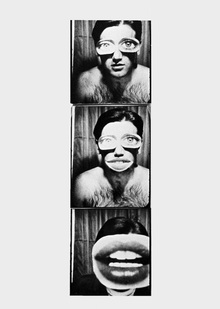
Mo Satt, Face & Fingers, 2008–2009
This is one of the key conceptual photographic series in the exhibition. In this series, the artist, captured in photographs wearing a white medical coat and a mask, uses their fingers to manipulate and cover their own face. This is a direct visual homage to the movement of everyday strict sanitary protocols and biopolitical control.
Ural Industrial Biennale of Contemporary Art
The exhibition took place at several venues across Yekaterinburg in 2010, organized in collaboration with curators Ekaterina Dyogot and David Riff. The conceptual basis was an exploration of how the concept of «labor» has transformed in the post-industrial age—specifically, the transition from heavy factory production to intangible work. The title, «Hitters of Mobile Image, ” ironically links the Soviet epic of the Stakhanovite movement with the modern economy of freelancing and continuous visual content production.
Conceptual Pillars:
The project’s unique focus was placing contemporary art within an active industrial space to explore how remnants of Soviet industry interact with the new service economy.
The exhibition featured participation from both global stars of contemporary art and cinema, as well as Russian and regional artists: Yuri Albert, Yael Bartana, Guy Ben-Ner, Sergey Bratkov, Alexey Buldakov, Lin Ilyin, Andrey Monastyrsky, Rabia Mrue, Deimantas Narkevičius, Pranit Soy, Mladen Stilinovich, Avdey Ter-Oganyan, David Ter-Oganyan, Olga Chernysheva, the collective «What to Do?», Hito Steyerl, Harun Farocki, Daniel Faust, and others.
Vibrant Works on Display: