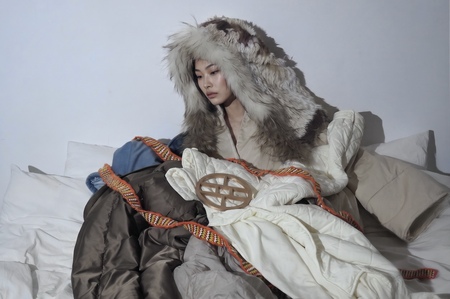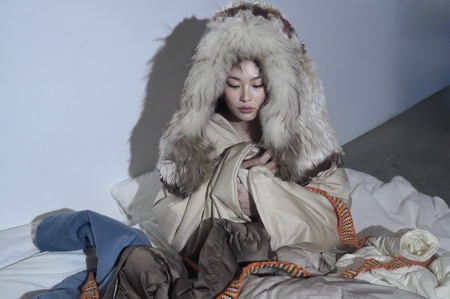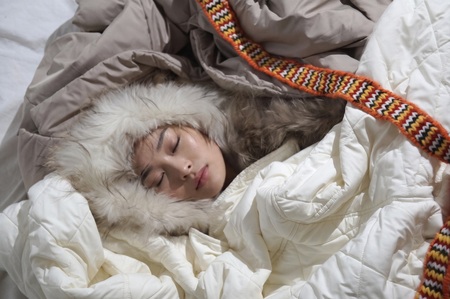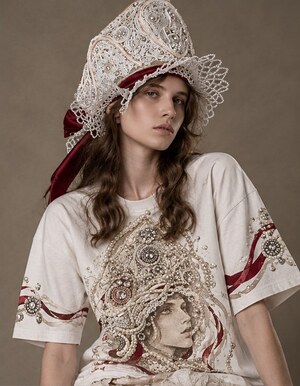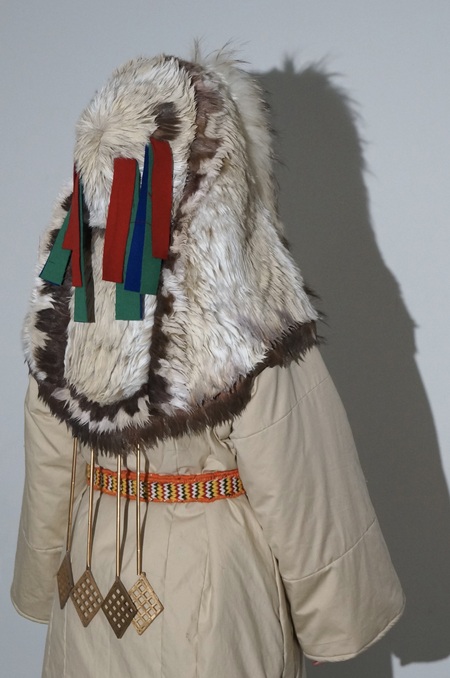
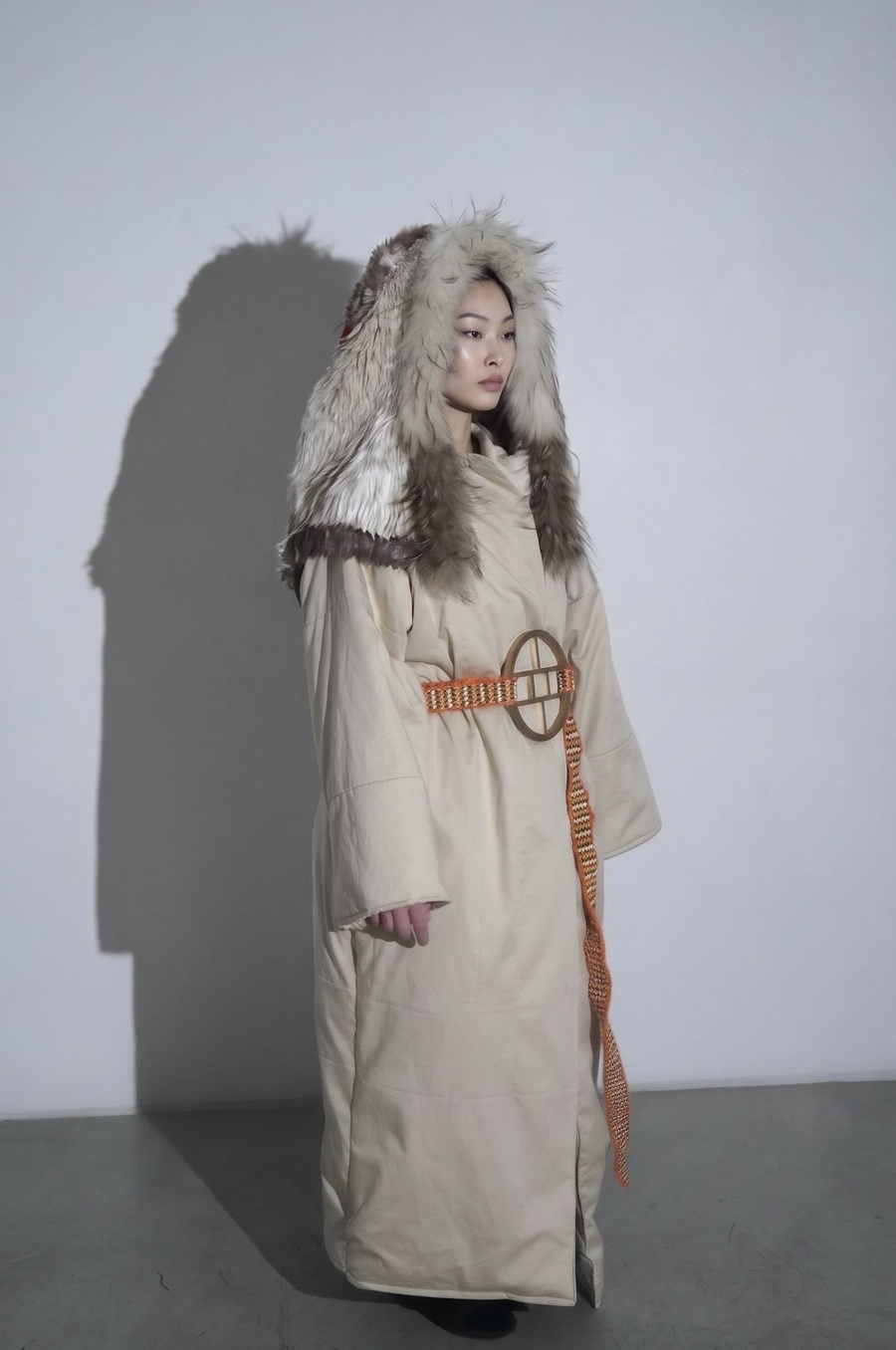
The historical portion of the project focused on researching the traditional headdress of the Yamal-Nenets people—the kapora—and creating a life-size replica. The research involved studying museum publications, ethnographic sources, and methodological materials on making the item, which allowed for the recreation of its characteristic shapes, tailoring features, ornaments, and decorative elements. Special attention was paid to the kapora's construction: its three-part base, fur mosaic, and suspension system. The kapora is examined not only as a utilitarian winter headwear but also as a marker of a woman’s social status and a carrier of sacred function—its embellishments served a protective role and, within the traditional worldview, safeguarded the owner’s head.
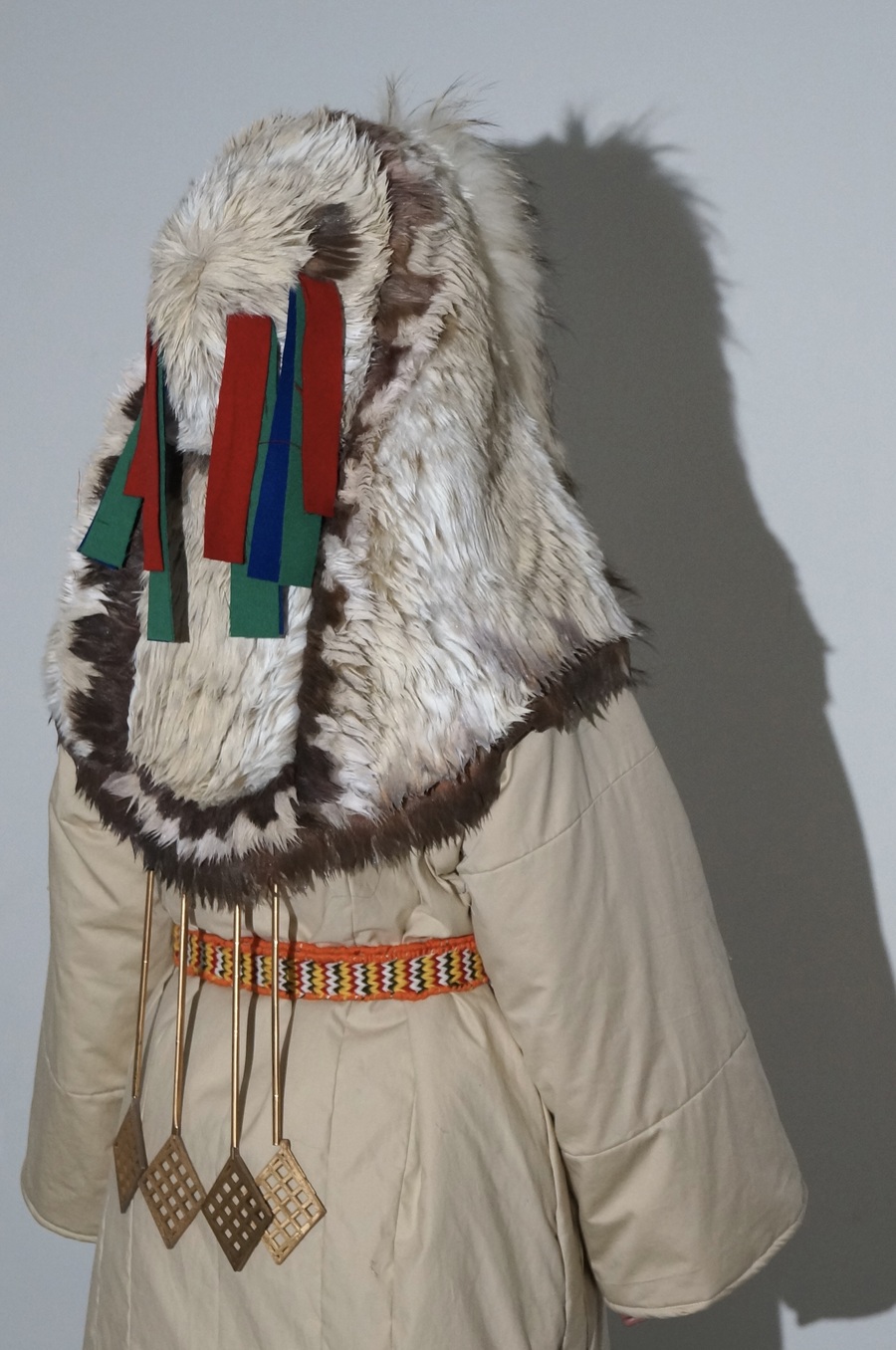
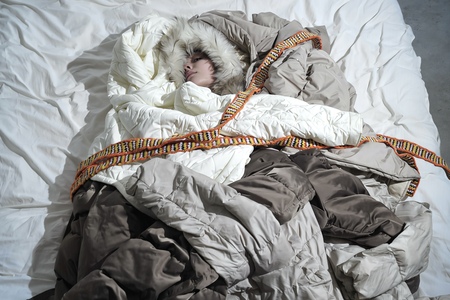
The Yamalo-Nenets people share a spiritual and visual resemblance with children. The Nenets still felt connected to nature. They had widespread tales, songs, games, and rituals. Due to severe frosts, they had to wear bulky and warm clothing, which can make them appear like bundled-up children.