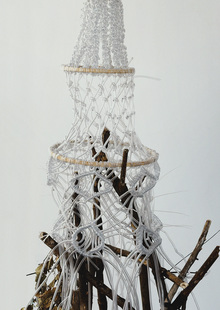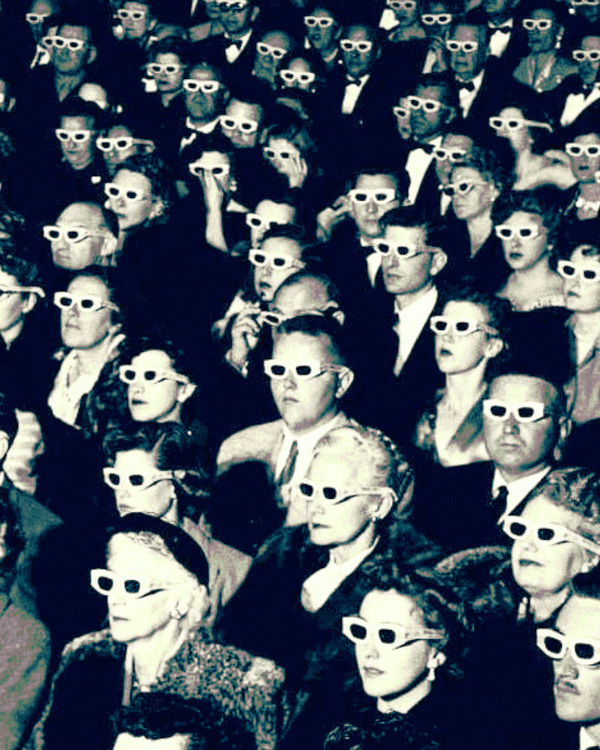
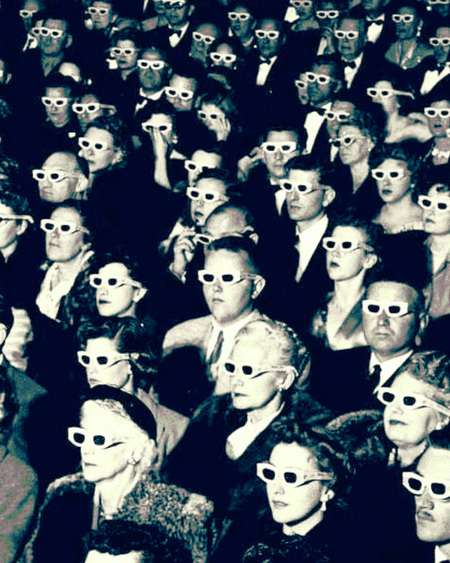
I have long been interested in the topic of modern society—a society where money, appearance, social status, and the impression a person makes on others hold significant weight. It seems to me that we are increasingly encountering situations where life itself transforms into a kind of performance. People strive to appear happy, successful, and beautiful, constantly demonstrating their achievements, travels, relationships, and leisure activities. But how much of this truly reflects their lives?When I began studying Guy Debord’s theory of the spectacle society, I felt that it described many contemporary processes with remarkable accuracy. In his book, The Society of the Spectacle, Debord speaks of a world where direct human relations are increasingly replaced by images and representations. In other words, for a person, it becomes more important not merely to experience something, but to show others that they have experienced it.
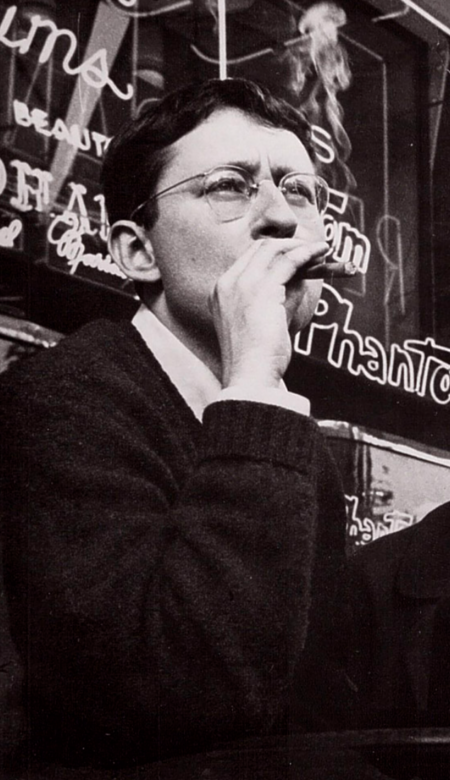

Portraits of Guy Debord and Jean Baudrillard
It is particularly fascinating that Deborah wrote her book back in 1967, long before the advent of social media. Yet, today her ideas seem even more relevant. We constantly monitor the lives of others through our phone screens while simultaneously crafting a curated image for the outside world. This transforms the individual from being merely an observer to becoming an active participant in this spectacle.
I am interested in examining this issue not just through the lens of social media, but through the fabric of daily social life. For instance, parties, upscale events, fine dining restaurants, and other environments where people gather not so much for genuine connection as to project a specific lifestyle. In such situations, even a celebration can cease to be a celebration in its conventional sense; it becomes a means to display one’s status, affiliation with a certain social circle, or financial standing.
Here, I find Jean Baudrillard’s theory on consumer society particularly relevant. He wrote that people acquire things not only for their practical use but also for the values these objects carry. For example, expensive clothing may not simply be clothing—it can be a symbol of success and belonging to a specific social class.

In my view, this principle extends to human relationships as well. A person can also become a kind of symbol that validates the status of another individual. This is particularly evident in attitudes toward women. Women’s beauty is often used as an indicator of success, wealth, and power. In such a society, a woman may be perceived not as an individual, but as a component of a beautiful tableau. Her presence becomes as much an attribute of a lavish life as an expensive car, an interior design, or jewelry.
Portrait of Laura Malvi
For me, what is important is that all three theories can be integrated. Debord speaks of a society where genuine relationships are replaced by spectacle. Baudrillard explains how consumption and objects become signifiers of social status. And Malvi shows how a person—specifically a woman—can become an object of visual pleasure.
The result is a society where almost everything can become a commodity: objects, appearance, relationships, and even the individual self.
Andy Warhol, Marilyn Monroe, 1962
For example, Andy Warhol worked with images of mass culture, celebrities, and consumer goods. His work demonstrates how closely intertwined art, advertising, popularity, and commerce are in modern society. Human images become as recognizable and reproducible as product packaging.
I am also interested in the work of Cindy Sherman, who explores female archetypes and stereotypes present in mass culture. In her photographs, she portrays various characters using costumes, makeup, and staged scenarios. Through this, the viewer sees not so much a specific individual, but recognizable social roles and perceptions of what a woman should be.
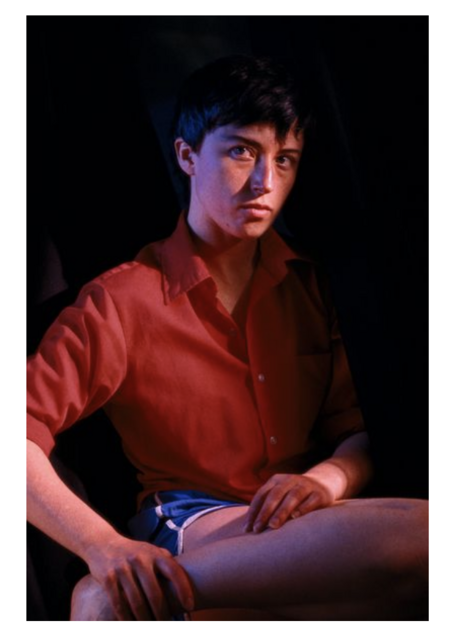
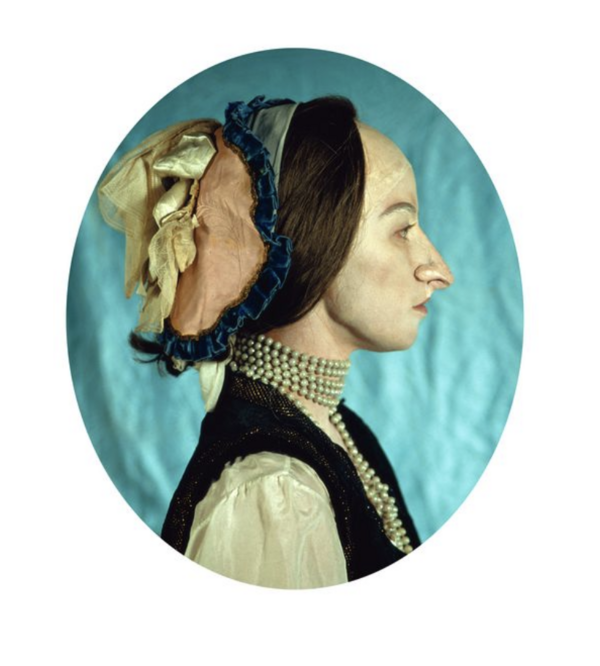
Cindy Sherman: Portfolio Examples
I find it interesting that these artists aren’t simply depicting society, but are utilizing its own visual language to expose the contradictions inherent within it. However, I am also curious how such issues can be revealed through painting. It’s not always necessary to literally depict advertisements, brands, or social media to comment on the society of spectacle. For instance, one could portray a beautiful celebration—full of people, luxury goods, and bright light—yet simultaneously evoke a sense of loneliness and inner emptiness. At first glance, the viewer will see a prosperous scene, but upon closer inspection, it will become clear that there is almost no genuine connection between the people depicted. I believe this kind of contradiction is what can be particularly compelling in art: when everything appears outwardly beautiful and even appealing, but a completely different substance lies underneath. A separate question that seems important to me is to what extent contemporary art itself is part of the society of spectacle. Today, a work of art exists not only in the exhibition space. It becomes integrated into the art market, social networks, auctions, and various institutions. Significance is no longer solely derived from the artwork itself, but also from the artist’s name, their recognition, participation in exhibitions, and commercial success.
This presents a certain contradiction: art can critique consumer society, yet simultaneously become an object of that consumption. Even a critique of luxury, money, and social inequality can transform into an expensive piece of art.
Still from the film «Loro»
Ultimately, the theme of the spectacle society is tied for me primarily to the question of human relationships. What happens to a person when their worth is determined by appearance, status, financial means, or the image they project to others? Can a person remain authentic in such a society? And is it even possible to step outside of this endless presentation?
This is precisely why the image of a non-existent celebration interests me. A celebration that possesses all the necessary attributes of happiness, yet lacks happiness itself. Where people are together but do not grow closer to one another. Where external prosperity takes precedence over inner experience.
It seems to me that art allows us to reveal the difference between how society appears and what is truly happening within it. And perhaps the primary role of such art is not to directly condemn society, but to compel the viewer to look more closely at familiar things and contemplate how real the life we are accustomed to considering authentic truly is.
Bibliography1. Guy Debord. «The Society of the Spectacle, ” 1967. 2. Jean Baudrillard. „The Consumer Society: Its Myths and Structures, ” 1970. 3. Laura Mulvey.