The Role of Stained Glass in Shaping the Light and Color Environment of Gothic Interiors from the 12th to 13th Centuries
The influence of stained glass windows on shaping the luminous atmosphere and perception of architectural space in Gothic cathedrals, as well as their artistic and symbolic significance.
Stained glass is an artistic composition made of colored glass that not only adorns architectural space but also transforms the natural light passing through it.
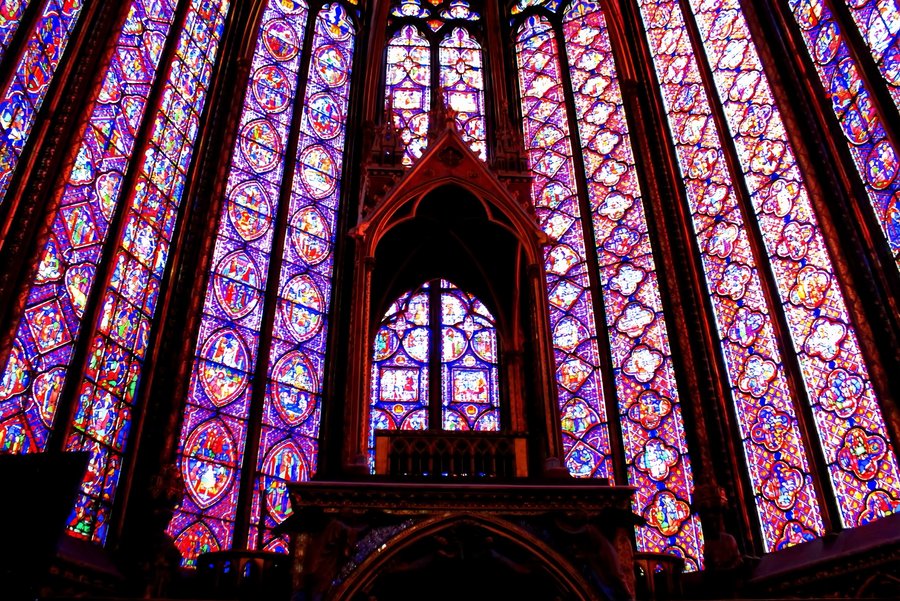
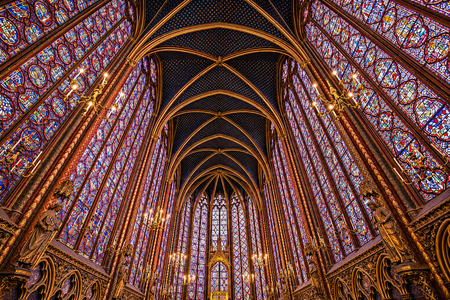
Sainte-Chapelle Chapel, 13th Century
The Origins of Stained Glass Art
The history of stained glass art predates the development of the Gothic style. As early as the Middle Ages, colored glass was used to adorn the windows of Christian churches. By the 11th–12th centuries, stained glass became common in Romanesque architecture, although small window openings and massive walls limited both their size and their effect on interior lighting.
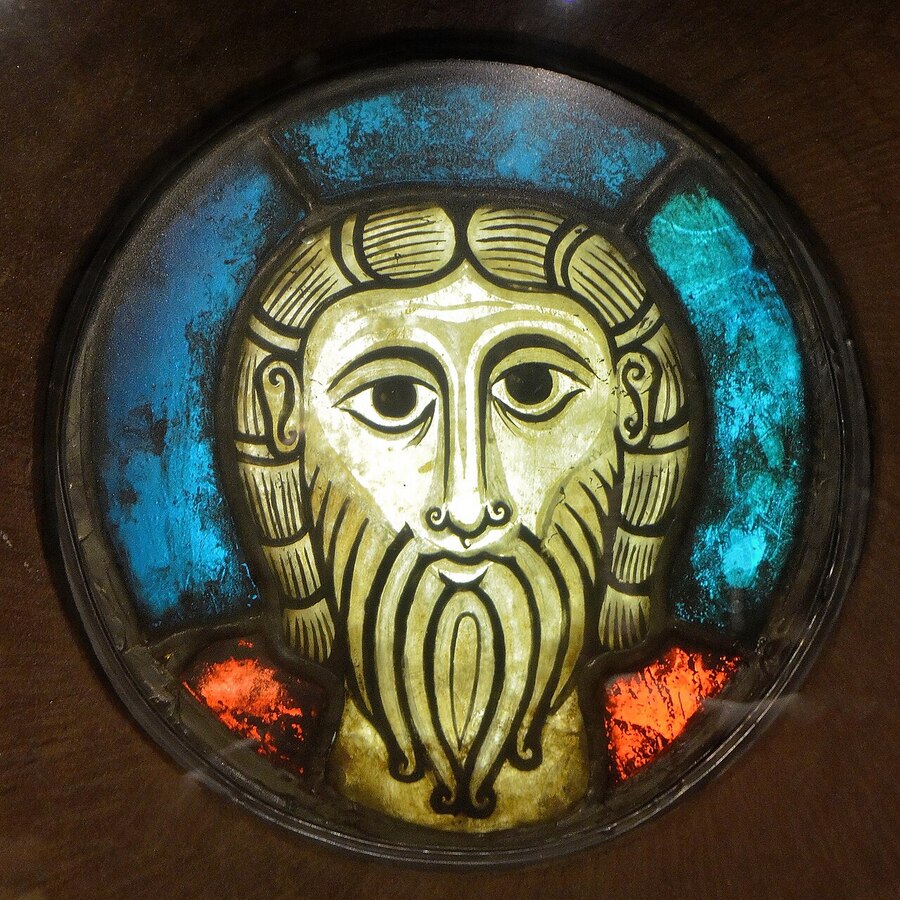
Christ the Savior. Wissembourg Abbey in Alsace, 1060.
A new stage in the development of stained glass art began in the 12th century with the emergence of Gothic architecture in France. The application of new structural solutions allowed for a significant increase in the size of window openings, enabling stained glass to take on an increasingly important role in the artistic decoration of churches. One of the most significant monuments of this period is the Abbey Church of Saint-Denis, reconstructed in the mid-12th century at the initiative of Abbot Suger. In its artistic design, stained glass became a vital medium for realizing religious ideas and imagery. Subsequently, this approach spread widely throughout French Gothic architecture, fostering the development of complex narrative compositions and the symbolic content of stained glass art.
«God is light» — Abbot Suger
Stained-glass rose window of the basilica’s transept, Saint-Denis, 12th–13th century
At the center of the stained-glass rose is the Creator God, surrounded by scenes of world creation, angels, and zodiac signs. The outer medallions are dedicated to agricultural pursuits, reflecting the changing seasons. The composition symbolizes the divine order of the universe, uniting concepts of the heavenly and earthly realms.
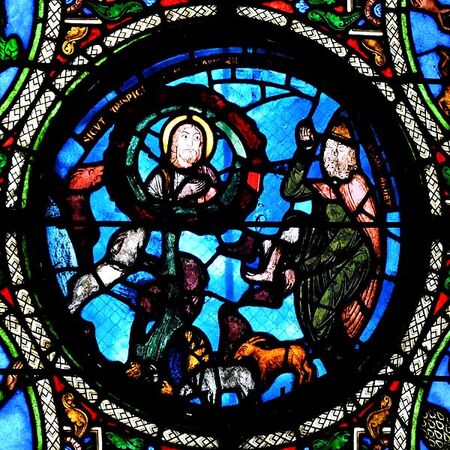
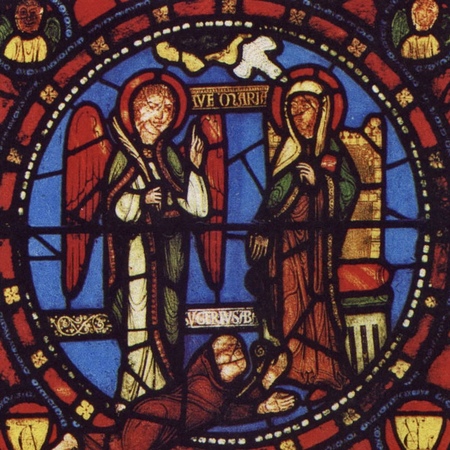
Biblical scenes in the stained-glass medallions of Saint-Denis Basilica, 12th–13th centuries
Perception of Stained Glass Art
In Gothic cathedrals of the 12th–13th centuries, stained glass windows served a crucial religious and educational function. Their imagery included scenes from the Old and New Testaments, lives of saints, and various allegorical subjects. In a population with limited literacy, such compositions helped disseminate Christian ideas and acquainted believers with the major events of sacred history.
Stained Glass: «The Parable of the Good Samaritan.» Chartres Cathedral, France, 13th Century
The stained glass depicts the Gospel story of a traveler who is attacked by bandits. The wounded man is left on the road, and a priest and a Levite pass by without offering assistance. Only the Samaritan shows mercy: he bandages the traveler’s wounds and cares for his recovery. The subject illustrates the Christian idea of compassion and selfless aid to one’s neighbor.
Stained Glass «Tree of Jesse.» Chartres Cathedral, France, mid-12th century.
The stained glass depicts the symbolic genealogy of Jesus Christ as a tree growing from the figure of Jesse. The composition reveals the idea of continuity between the Old and New Testaments.
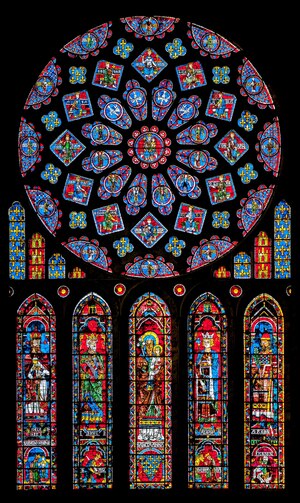
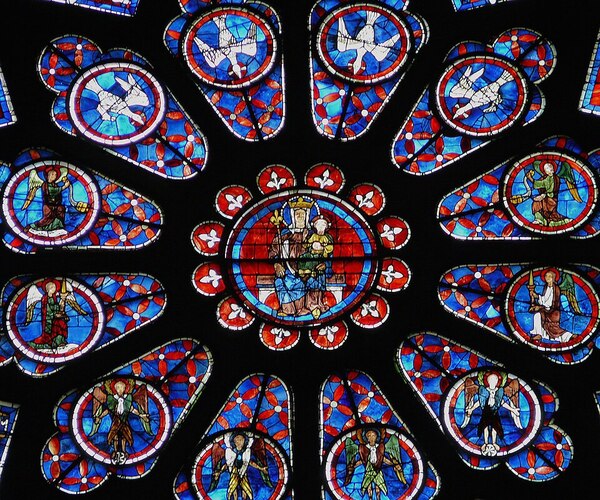
Northern stained-glass rose window of Chartres Cathedral: «The Glorification of the Mother of God.» France, 13th century
Rosa is dedicated to the glorification of the Theotokos and the theme of the Incarnation. The Virgin Mary with the infant Christ occupies the central position, surrounded by Old Testament kings and prophets. Their figures symbolize the anticipation of the Savior’s arrival and underscore the connection between the Old and New Testaments.
The western stained-glass rose window of Chartres Cathedral. France, 13th century.
The composition of the Rose is dedicated to the Last Judgment. At the center is Christ the Judge, surrounded by angels and participants in the events of the end times. The subject reveals Christian conceptions of divine justice, resurrection, and the ultimate fate of the human soul.
South Lancet Rose Window of Chartres Cathedral. France, 13th century
At the center of the composition, Christ in glory is depicted, surrounded by angels and saints. The narrative is drawn from the visions in the Book of Revelation and embodies the concept of heavenly majesty and divine order.
Tracery stained-glass windows of the main facade of the south transept of Chartres Cathedral. France, 13th century
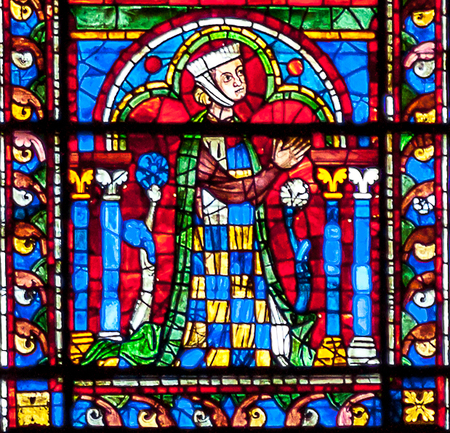
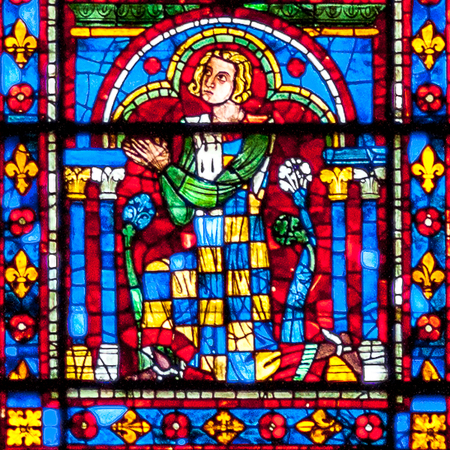
Stained glass images by Alice de Tuar and Pierre Moclerc in the southern transept of Chartres Cathedral. France, 13th century
However, the perception of stained glass windows was not solely dependent on deciphering the depicted narratives. The complexity of the iconographic programs, the numerous symbolic details, and the placement of the compositions at a significant height made them difficult to understand without supplementary explanation. Some images were accompanied by Latin inscriptions, which were accessible primarily to the educated segment of society. Therefore, for most parishioners, the overall artistic impression evoked by contemplating the stained glass windows held particular importance.
West Rose, partially obscured by the organ, in Notre-Dame Cathedral in Paris
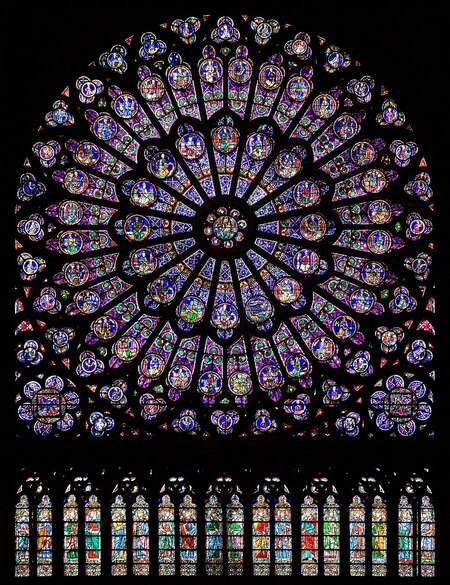
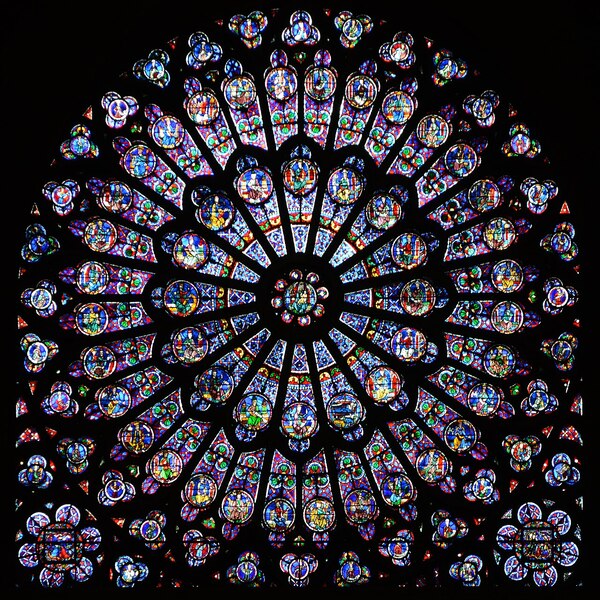
North Star with lower frieze at Notre Dame Cathedral