
Genre: psychological horror
Runtime: 12–15 minutes
Format: Short-form interactive film
Logline
Seventeen-year-old Liza dreams of becoming an artist, but her surgeon father insists she continue the family medical legacy. Unable to cope with the death of his wife, he gradually begins to see her reflection in his daughter, transforming his paternal love into a painful obsession.
Main Theme
The inability to accept loss and the destructive consequences of trying to hold onto the past. The film explores how unmourned grief alters relationships between loved ones and how the desire to preserve a lost person can lead to the loss of connection with those who remain.
Synopsis
Seventeen-year-old Liza dreams of becoming an artist and is preparing to enroll in an art academy. However, her father, Viktor Sergeevich, a surgeon, insists that his daughter continue the family medical tradition. Following her mother’s death, the relationship between them becomes increasingly strained. Liza cherishes warm memories of her mother, while her father avoids any discussion of her, sinking deeper into his work.
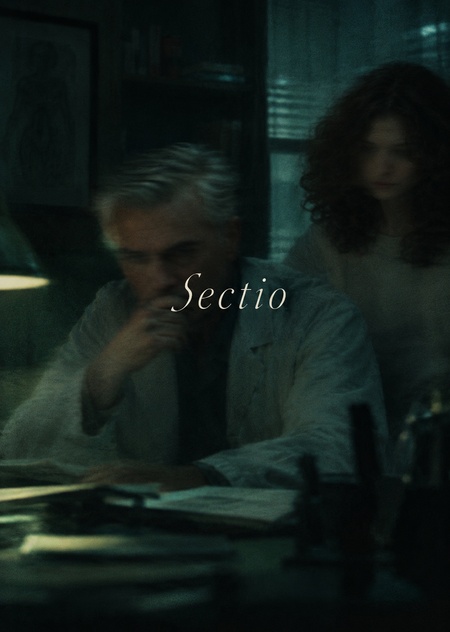
Viktor keeps his late wife’s belongings, including her photograph and medical uniform. One night, he brings the uniform home and asks Liza to try it on. Looking at his daughter, he notices how much she resembles her mother. The situation becomes unsettling for Liza, but she does not dare to openly confront her father.
Gradually, Viktor’s behavior becomes stranger. Liza tries to confide in her friend Inga about what is happening, but the family conflict reaches a breaking point when her father discovers that she still intends to apply to the art academy. Interpreting her decision as a betrayal, Viktor attacks Liza and moves her to his office, which he transforms into an improvised operating room.
Dressing his daughter in his wife’s medical uniform, Viktor attempts to restore what was lost. This drive to reclaim the past leads him to try and replace the present, denying Liza the freedom to remain herself.
Bible
Scenario
Director’s Statement
Part of this story is based on my personal experience. I am familiar with situations where a parent tries to dictate your future, often leaving little room for your own choices. I became curious to imagine what might happen if such pressure continued into seventeen years old, and the circumstances unfolded in a much more dramatic way. In my work, I enjoy drawing upon surrealism, placing unusual, sometimes absurd events within familiar, everyday settings. I find it fascinating to observe how the mundane gradually transforms and how character behavior becomes increasingly unpredictable. In this film, I want to merge a recognizable family narrative with elements of the absurd and psychological tension. It is important to me that the anxiety builds gradually, emerging from the familiar fabric of daily life rather than relying on obvious genre tropes.
Form, style, and visual solutions
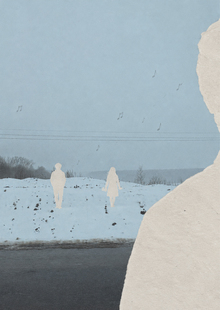
Visual Solution I do not want to employ the conventional horror visual aesthetic dominated by cold blue-green tones. I am drawn to a natural, almost mundane imagery where anxiety arises not from image stylization, but from what is happening within the frame. Camera: predominantly static. Lens: wide-angle lens. Composition: when filming the father, the camera often remains at a distance, emphasizing his detachment and isolation. In scenes with Liza, more attention is paid to details—objects, gestures, and subtle changes in behavior. Editing The rhythm is built upon a gradual escalation of suspense. Pauses, silence, and the duration of individual shots play a crucial role. Sound and Music The backbone of the sound design consists of the natural sounds of the space and everyday life. Music is used to intensify emotional tension in specific scenes. Additional sound effects are employed only when necessary.
References
Dramaturgy References
«The Shining» (1980), dir. Stanley Kubrick
The gradual buildup of psychological tension and the transformation of a familiar environment into a space of anxiety.
«Tropa de Elite» (2011), dir. Pedro Almodóvar
The motif of obsession, control over another person, and the violation of personal boundaries.
Mise-en-scène References
«Morphine» (2008), dir. Alexey Balabanov
The scene where the father sits at the table working.
«Petrovs with Flu» (2021), dir. Kirill Серебренников
The scene where Liza sits and draws in the room.
«The Long Road to Self» (1983), dir. Natalia Troshchenko
The scene where Liza is at the easel.
Academic and Production Schedule
October 29 — November 2 — script finalization and director’s exposition, location scouting for the cinematographer, and securing remaining crew members.
November 3–7 — confirmation of the cast, scouting and securing locations, and sourcing props and costumes.
November 8–10 — rehearsals with actors, storyboarding, technical runs, and final approval of the shooting plan.
November 11–12 — final preparation for filming.
November 13–15 or November 15–17 — principal photography.
November 18 — December 2 — film editing.
December 3–12 — sound design, music composition, and color grading.
December 13–21 — final revisions, titling, assembly, and exporting the finished film.