VETRALEN × PINY
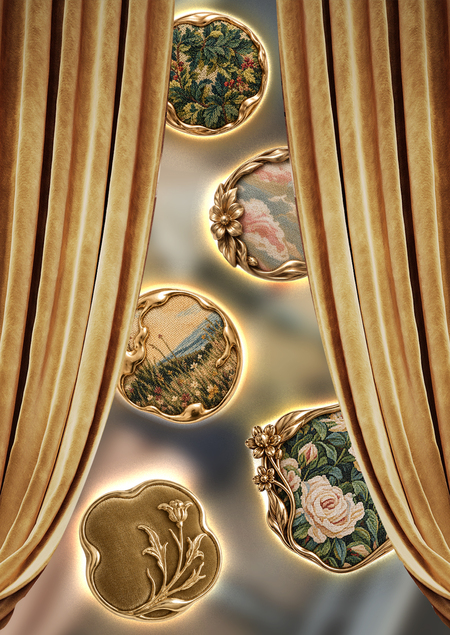
A collection of decorative button overlays that unites fashion, art, and object design.

A series of 5 pins x Vetralen
[01] ABOUT THE PROJECT
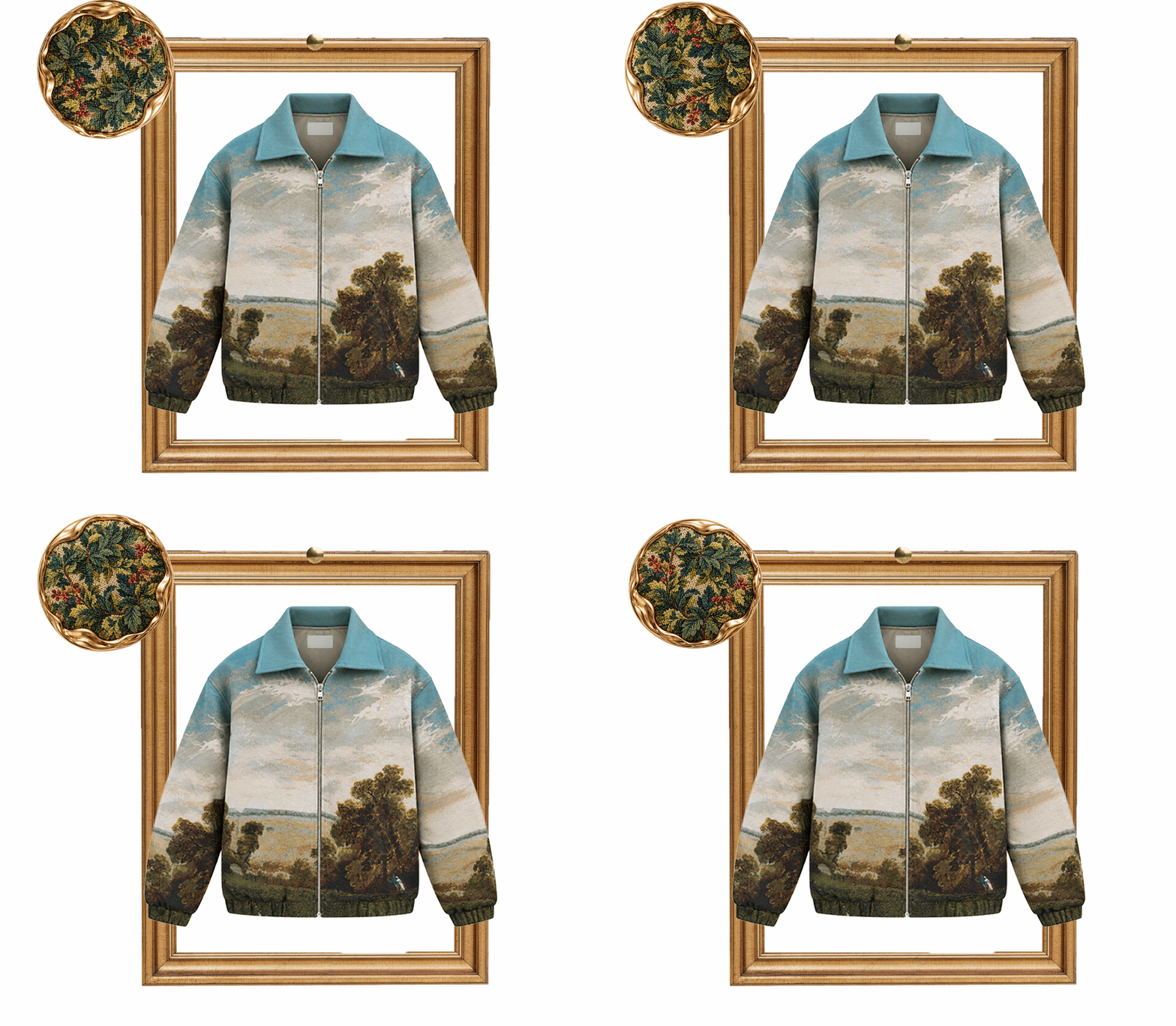
Each pin is considered a miniature work of wearable art.
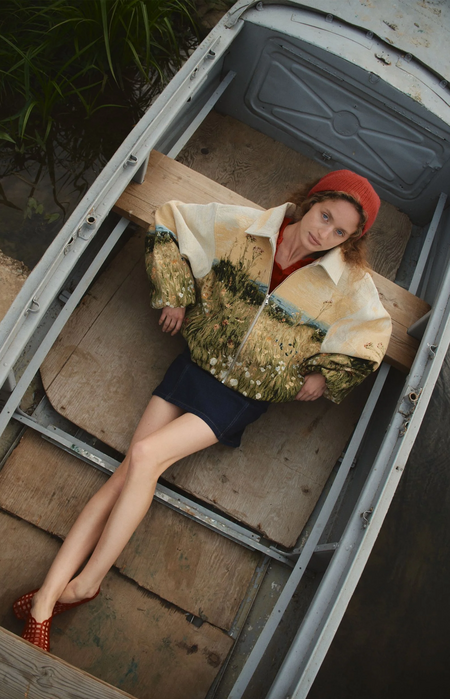
Vetralen × Pins — a collection of five decorative accessories that transform an ordinary button into an independent piece of art.
The pins attach over existing buttons, allowing users to change the look of their clothing without replacing the hardware or adding extra sewing.
The collection is rooted in the aesthetic of the Russian brand Vetralen: pictorial tapestry fabrics, natural motifs, and expressive metal forms. Each accessory is a small decorative composition where the artistic image becomes part of everyday wardrobe.
The main idea of the project is to create a functional accessory that allows clothing to be personalized with a single small detail.
During development, special attention was paid not only to the appearance but also to the replicability of the item: the mounting mechanism, material selection, manufacturing technology, and organization of small-batch production.
[02] DESIGN COLLECTION
Collage visually depicting the motifs used for the pin designs
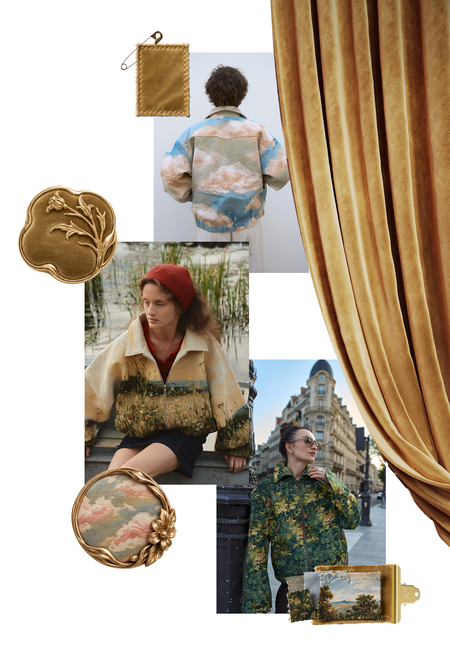
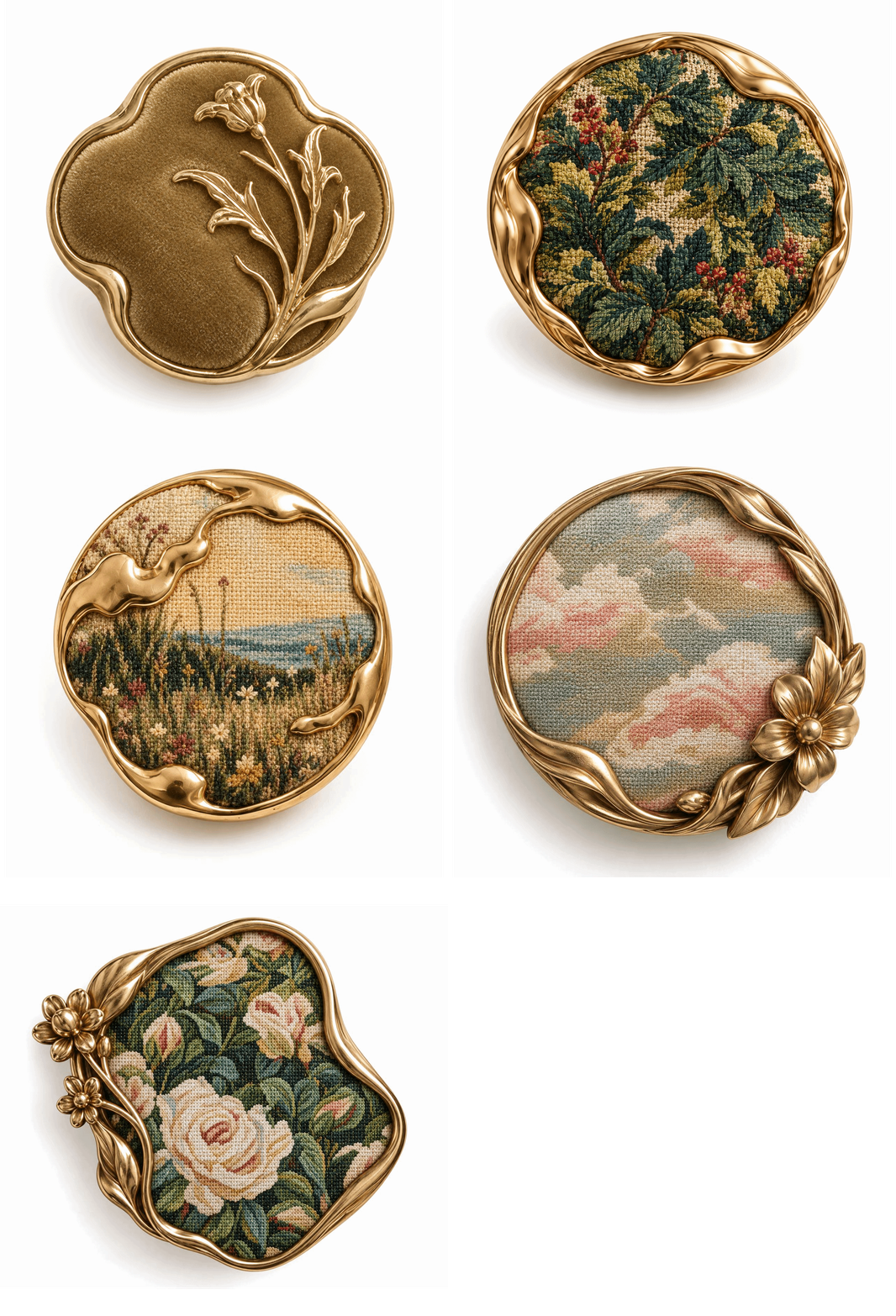
The collection consists of five pins unified by a shared aesthetic and fastening principle.
The five accessories utilize original Vetralen tapestry motifs: a blossoming meadow, roses, a pink-blue pictorial composition, and rich botanical ornamentation.
For the decorative frames, smooth, organic forms were chosen that echo the curves of the walls designed for the Vetralen boutique within this special project. The framing is reminiscent of picture frames and continues the brand’s core idea—clothing as a work of art.
Despite variations in artistic design, all five pins are based on a single structural principle.
This approach allows each design to retain its individuality while unifying the production of the mounting bases.
[03] OBJECT CONSTRUCTION
Manufacturing technology and pin explosion diagram
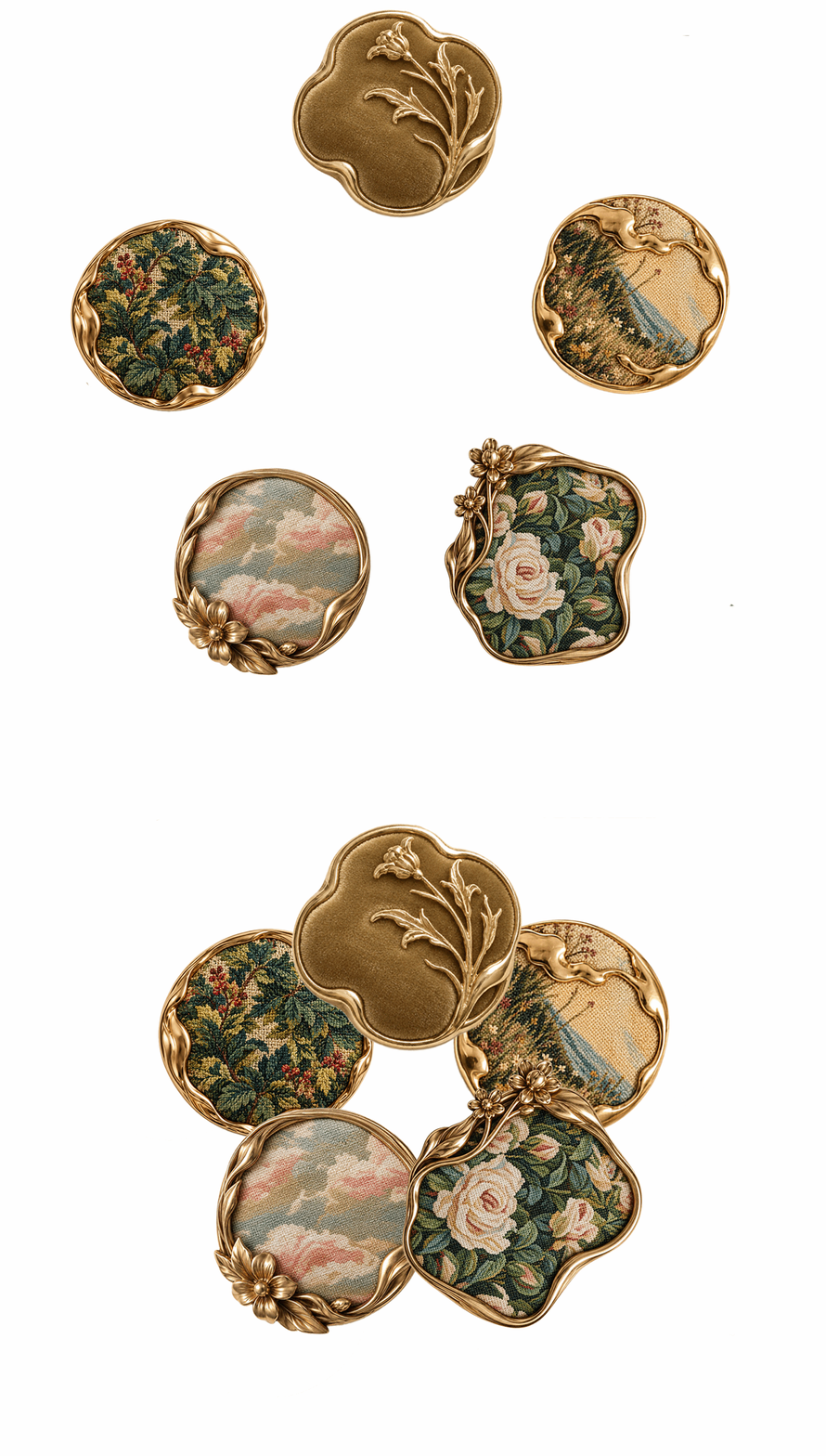
The pin consists of a decorative front piece and a base with an integrated fastening mechanism.
Front Piece
The main elements are a metal frame and a tapestry-velvet insert. Depending on the design, the frame is complemented with dimensional flowers, leaves, and flowing decorative elements.
The decorative part is designed as a separate piece that is attached to the base during assembly.
Fastening Mechanism
The back of the pin features a solid housing with a U-shaped slot and a built-in retaining tab.
The mechanism’s operation consists of three steps:
Inserting the Button. The existing button is guided into the open section of the slot.
Placement. The button is moved inside the base until it reaches the position designed into the structure.
Fixation. The integrated retaining element prevents the button from moving back freely.
All mechanism components are part of a single base. The design does not require a separate needle-like clasp nor does it require additional piercing of the fabric.
The usability of the pin depends on the dimensions of the original button matching the geometry of the seating slot.
Mechanism diagram for attaching a pin to a button
Overall Dimensions
Based on the developed 3D model, the following base parameters have been determined:
Base Diameter — 42.00 mm Total Base Height — 7.28 mm Main Disc Thickness — 2.20 mm Inner Groove Arc Radius ≈ 10.60 mm
(See «Overall Drawing» section for details)
These dimensions are derived from the mechanism’s STL model and pertain directly to the base.
The dimensions of the external decorative elements are defined individually for each of the five designs and will be finalized when preparing complete production models.
[04] MATERIALS
The materials used for the pins are tapestry and metal.
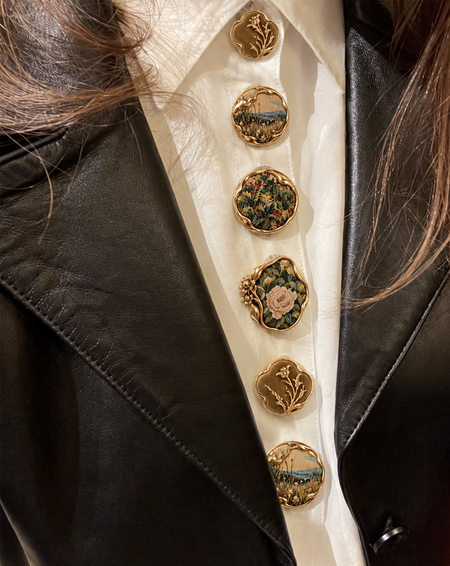
The use of gold-plated metal allows us to retain the aesthetic of precious metal while making small-batch production more accessible than creating the entire housing from natural gold.
Tapestry
Fabrics featuring original artistic motifs from Vetralen are used for decorative inlays. The tapestry is distinguished by its dense weave of colored threads and pronounced texture, which preserves the volume and depth of the image even in a small format. A separate fragment of the composition is selected for each pin.
Material Combination
The contrast in textures is an important element of the collection’s design. The soft, matte surface of the tapestry complements the smoothness of the metal, while the gold frame visually highlights the artistic image. In this way, the metal is responsible for the shape, construction, and decorative relief, and the tapestry provides the color, texture, and recognizable brand aesthetic.
The tapestries and pin fabric are taken from the original fabrics of Vetralen products.
[05] PRODUCTION TECHNOLOGY
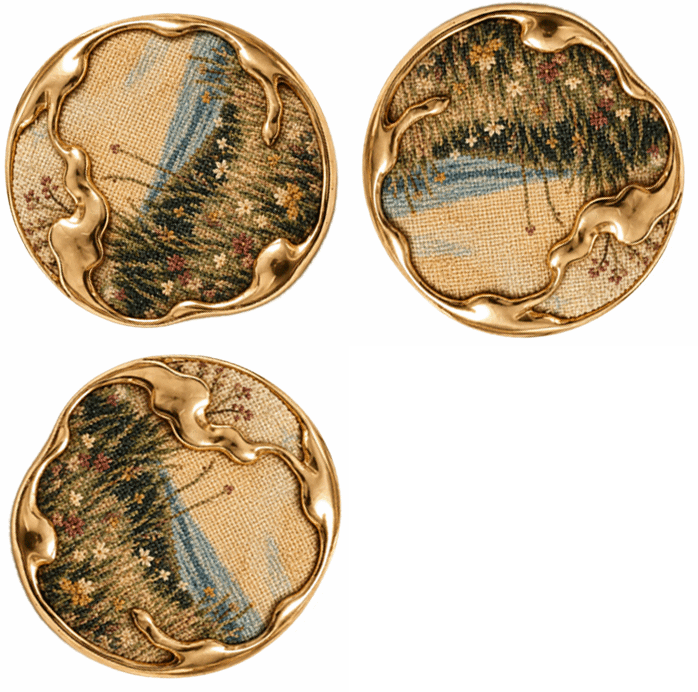
To realize the collection, small-batch production using the investment casting method, followed by machining, gilding, and hand assembly, is proposed.
Production is organized in several sequential stages.
Stage 1. Development of Production 3D Models
The initial foundation is a three-dimensional model of the mechanism, developed in 3D.
Based on this, a complete digital design of the product is created, integrating the mounting base and the decorative front piece.
A separate model of the frame is prepared for each of the five designs, although the mounting principle remains the same.
Before manufacturing the metal prototype, checks are conducted on the thickness of the parts, the product’s mass, the seating dimensions, and the feasibility of reproducing the shape using the casting method.
Particular attention is paid to the working geometry of the U-shaped groove and the integrated retaining tab.
Stage 2. Creation of the Master Model
A master model is manufactured from the prepared 3D model using high-precision photopolymer printing.
For subsequent casting, either a burnt model or a wax replica, produced using a mold, is utilized.
At this stage, the product’s proportions, the quality of the decorative relief transfer, and the geometry of the small elements are verified.
Technology for Manufacturing the Metal Base of a Pin
Stage 3. Casting of Metal ComponentsFor production, the lost-wax casting technology is proposed.The model is placed in a molding compound, after which the model material is removed, creating a cavity for pouring the molten metal.After casting and cooling, the metal blank of the product is obtained.This technology allows for the reproduction of complex volumetric surfaces, smooth curves of handles, organic reliefs, and other decorative elements.The metal bases and decorative front sections are fabricated as separate components for subsequent assembly.Using repeatable master models enables the organization of a small run while maintaining the specified form.
Stage 4. MachiningAfter casting, technological elements are removed and the parts' surfaces are finished.This process includes sanding, polishing, and, if necessary, localized milling for areas where dimensional accuracy is particularly critical.Special attention is paid to the fit of the mechanism’s socket.All surfaces that contact clothing must have smooth, finished edges free of burrs or sharp protrusions.For decorative elements, it is important to preserve the fluidity of the lines and the expressiveness of the relief. Stage 5. Electroplating GildingThe prepared metal parts undergo cleaning and electroplating.A gold coating is applied to the surface, forming the signature hue and luster of the collection.Following gilding, a visual quality check is performed: the uniformity of color, the absence of defects, and the neatness of complex decorative areas are evaluated.Stage 6. Preparation of Textile InsertsFragments with the necessary artistic imagery are selected from tapestry fabric.Each insert is cut according to a custom template, taking into account the shape of the metal frame.The textile is placed into the prepared seating area of the frame and secured in a hidden manner that does not compromise the visible surface of the image.Stage 7. Product AssemblyThe final assembly takes place after all components have been prepared.The decorative front piece is connected to the metal base. The connection quality, the placement of the textile, and the overall appearance of the piece are checked.The finished pin undergoes functional testing on a suitable control button.
Production Workflow:3D Modeling → Master Model → Metal Casting → Machining → Gilding → Tapestry Preparation → Assembly → Quality Control.
[06] PROTOTYPING AND STRUCTURAL TESTING
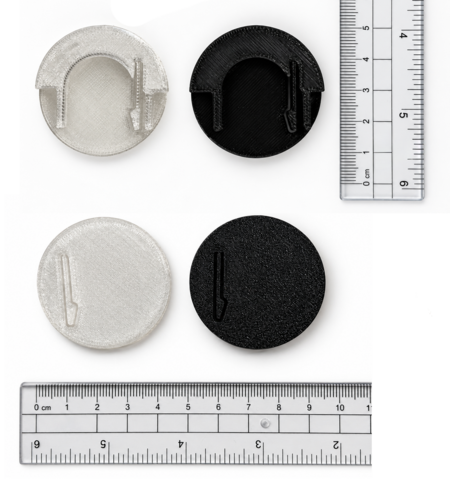
A 3D model of the base was created and an STL file was prepared for subsequent manufacturing to test the fastening mechanism.
Physical prototypes were produced using 3D printing with PETG plastic (see photo on the left).
Two versions were fabricated—transparent and black. These allow examination of the base’s shape, the placement of the retaining tongue, and the internal groove construction.
The primary goal of the prototyping phase was to test the principle of attaching the decorative overlay to an existing button.
Testing the mechanism of the metallic pin part on a real button