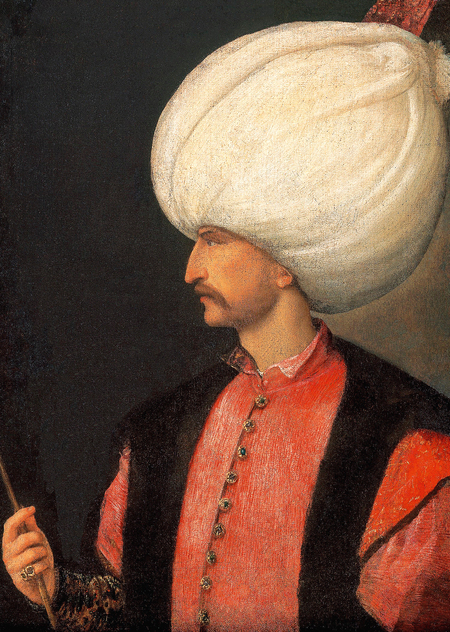
The territory of modern Turkey is a unique space where the largest empires and cultures have succeeded one another. The presented timeline systematizes the key phases of this history, giving equal attention to political events and the development of art. We will trace how the succession of states and elites—from ancient colonies and Rome to Byzantium, the Seljuks, and the Ottomans—found a direct reflection in architecture, decorative arts, and visual culture, shaping the region’s multifaceted heritage.
Древность
Greek Colonies and the Persian Empire
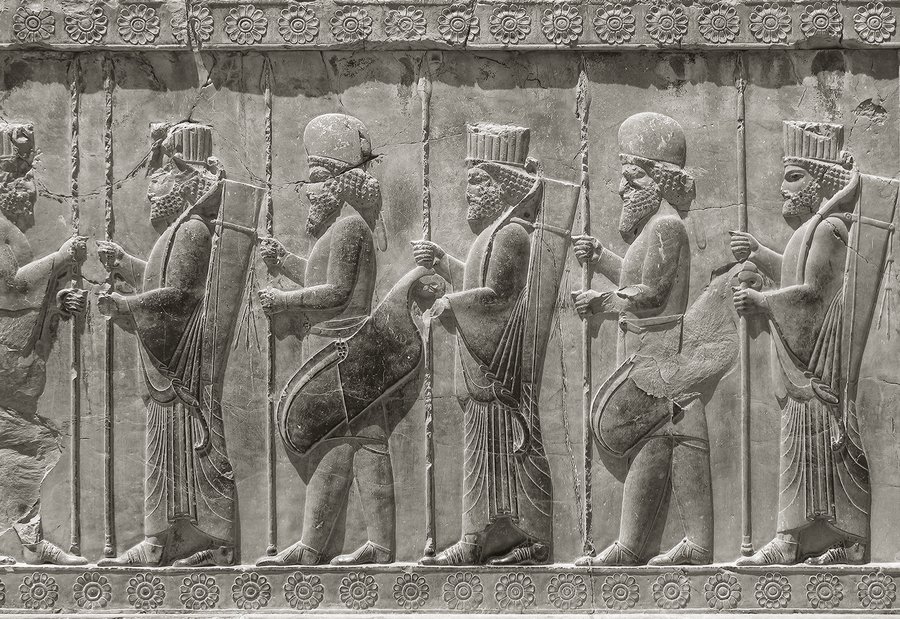
Apadana of Darius I’s palace. North staircase. Persians followed by Media soldiers. Fragment. 5th century BCE.
The territory of modern Turkey—Anatolia or Asia Minor—possesses an exceptionally rich history. Sites such as Çatalhöyük date back to the Neolithic era—it is one of the world’s most ancient urban settlements. Beginning in the 1st millennium BCE, the western and southern coasts of Anatolia were actively settled by Greek colonists, who established numerous poleis—city-states whose citizens included, for instance, the first European philosophers. By the mid-6th century BCE, the region was conquered by the Achaemenid Empire and incorporated as several satrapies—thus beginning a period of Persian rule that continued until the campaigns of Alexander the Great.
The art of ancient Anatolia showcases a synthesis of local and external influences. Preceramic cultures left behind monumental architectural monuments, and by the 6th millennium BCE, complex rock carvings (petroglyphs) existed, such as those found in the Develi 1 area, depicting humans, animals, and geometric patterns. Greek colonists introduced advanced artistic traditions to the region, including architectural orders and vase painting, which influenced local cultures. During the Persian dominion (c. 550–330 BCE), a unique Greco-Persian art form developed here. This manifested in monumental sculpture that adorned the rock tombs of the nobility in Lycia and Caria, as well as in sarcophagus decoration, where Greek stylistic techniques merged with Achaemenid iconographic motifs and symbols of power. This syncretism became a defining characteristic of the material culture of the Anatolian elite under Achaemenid rule.
IV век до н. э. — I век н. э.
Hellenistic Kingdoms
The Pergamon Altar in the Pergamon Museum in Berlin. First half of the 2nd century BCE.
Following the conquests of Alexander the Great, his death, and the Wars of the Diadochi in the 4th–3rd centuries BCE, powerful Hellenistic states formed on the peninsula: the Attalid kingdom in Pergamon, the vast Seleucid Empire, the Pontic and Armenian kingdoms, and later, Bithynia. Their political and military rivalry defined the life of the region until the expansion of the Roman Republic led to a series of bloody conflicts. After the defeat of Antiochus III the Great, the destruction of Pergamon, and finally, the fall of Pontus to Mithridates VI Eupator, Roman influence became dominant. By the end of the 1st century BCE, Anatolia was divided into Roman provinces (Asia, Bithynia and Pontus, Galatia, and others), finally integrating into the Roman sphere and concluding the era of Hellenistic monarchies.
The art of this period, known as Hellenistic, achieved unprecedented dramaticism and naturalism by synthesizing Greek canons with Eastern and local Anatolian traditions. Monumental scale and theatricality became established in architecture: the famous Pergamon Altar (c. 180–160 BCE), with its grandiose frieze depicting the battle between gods and giants, became its quintessence. Sculpture developed an expressive, highly emotional style, as seen in the Laocoön group or the statue of the Dying Gaul, while simultaneously, psychologically precise realistic portraiture flourished. Hellenistic capital cities, such as Pergamon, Ephesus, or Antioch on the Orontes, transformed into centers of science and culture, featuring magnificent public spaces—agoras, libraries, theaters, and temple complexes. This rich artistic environment directly laid the groundwork for the flourishing of Roman art in Anatolia in subsequent centuries.
Roman Provinces in Anatolia
Callimachus Library in Ephesus. 117–135
In the 1st–4th centuries CE, Asia Minor, as part of the Roman Empire, experienced an era of political stability and economic prosperity within the Pax Romana. The region was divided into several provinces (Asia, Bithynia and Pontus, Galatia, Lycia and Pamphylia, Cappadocia), the administration of which fostered its urbanization and integration into the empire’s trade networks. Large cities flourished: for example, Ephesus—the capital of the province of Asia and a vital imperial port; Pergamum—a renowned medical and cultural center; Antioch—a significant center for the development of Christian thought. This period marked the gradual spread of Christianity, which was facilitated by the missionary journeys of the Apostle Paul through the region’s cities and the formation of the first Christian communities there.
The art and architecture of Lesser Asia during that period demonstrate a synthesis of Roman engineering achievements, Hellenistic traditions, and local elements. Characteristic Roman structures were erected in the cities: monumental aqueducts, libraries (such as the Library of Celsus in Ephesus, circa 110–135 CE), vast theaters, and stadiums. A distinctive feature of the region was the rich architectural embellishment of urban centers, including monumental fountains (nymphaea) adorned with reliefs and extensive colonnaded streets. In sculpture and decorative arts, alongside traditional mythological themes, imperial portraiture developed, glorifying Roman emperors. By the 4th century, with the official recognition of Christianity, a new Christian architecture began to take shape in the region, adapting the basilica plan for religious needs, which foreshadowed the Byzantine period in the region’s art.
Christ Pantocrator in the Deësis Mosaic. Hagia Sophia Cathedral. Fragment
The sixth century, marked by massive construction under Emperor Justinian I, represented the last flourishing of ancient urbanism. However, from the mid-seventh century onward, the region entered a prolonged period of crises triggered by devastating epidemics, Persian invasions, and most significantly, the expansion of the Arab Caliphate. Anatolia transformed into a frontier territory—a constant theater of war—which led to urban decay and demographic decline. Furthermore, the Iconoclast Crisis in Byzantium (8th to early 9th centuries) caused internal turmoil. Stability only arrived with the rise of the Macedonian Dynasty (867–1056)—at which point Byzantium launched a counteroffensive against Islamic expansion, strengthening its borders and economy.
The art of this period reflects the spiritual and political shifts within the empire. In architecture, there was a transition from the basilica to the cross-domed church, which became canonical. The greatest monument of the era is the Hagia Sophia in Constantinople (built 532–537), whose gigantic dome astounded its contemporaries (and still impresses profoundly today). Following the victory over iconoclasm in 843, a new flourishing of iconography began, and book miniature and decorative and applied arts (compartmentalized enamels, ivory carving) developed. Despite the loss of many monuments in the Anatolian provinces due to ongoing wars, we can surmise that the art of Byzantium during this period formed a unified style based on theological dogma and the hierarchy of images.
XI–XII века
Seljuk State
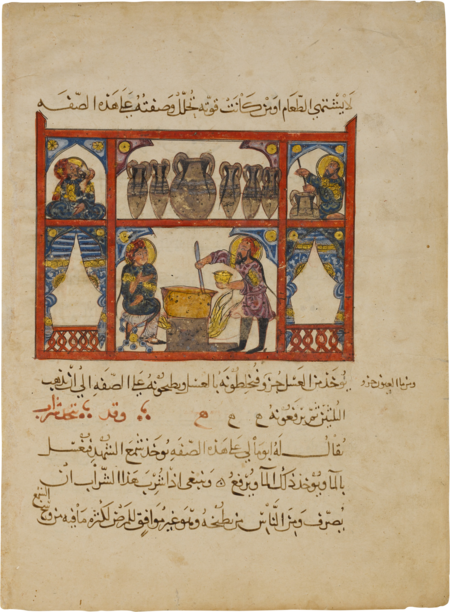
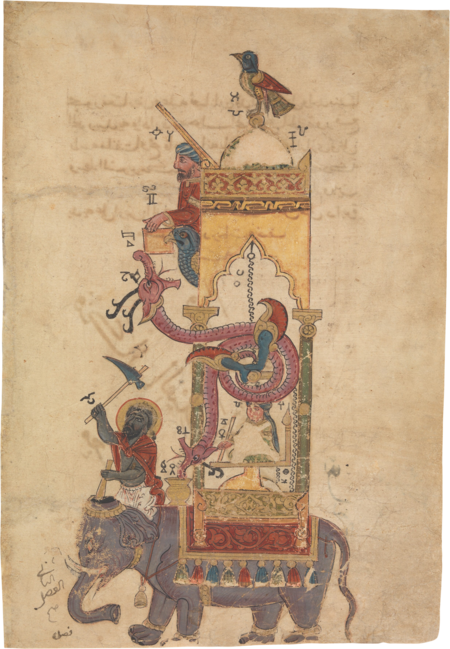
Left: Preparation of medicines from honey. Manuscript from the Arab medical treatise De Materia Medica. Early 13th century. Right: Elephant clocks. Knowledge of inventive mechanical devices. Early 14th century.
The decisive event of that era was the victory of the Seljuk Sultan Alp Arslan over the Byzantine army at the Battle of Manzikert in 1071, which opened the way for the mass migration of Turks to the peninsula. The Rûm Sultanate was founded in the conquered lands, with its capital in Konya. Its rulers created a centralized system of governance, building upon the Persian bureaucratic tradition and the institution of iqta (land grants with hereditary rights). Despite constant conflicts with Byzantium, the Crusader states, and its own beyliks, the sultanate temporarily became a center for the consolidation of the Turkic population and Muslim authority in the region, laying the foundation for future Turkish statehood.
The art of the Great Seljuk and Rum Sultanate periods represents a unique synthesis of Turkic nomadic traditions, Persian cultural heritage, Arabic influences, and local Anatolian elements. In architecture, the construction of stone mosques with hypostyle halls flourished, monumental madrasas (such as the Çifte Minare in Sivas or Erzurum), fortified caravanserais along trade routes, and unique tombs shaped as cylindrical or multifaceted towers capped with conical domes. Distinctive features of the style included tall, richly decorated portals (pishtaqs), as well as extensive geometric and vegetal carved ornamentation on stone and wood. Applied arts reached a high level: the production of glazed ceramics with lusterware painting, bronze objects inlaid with silver, and textiles and rugs, often featuring stylized animal motifs. This artistic synthesis formed the basis for the subsequent development of Ottoman culture.
XIII век
Ottoman Beylik
Arif Pasha. Sultan Osman Bey and Ottoman Officials. 19th Century
Following the defeat of the Konya Sultanate by the Mongols at the Battle of Köse Dağ in 1243 and the subsequent weakening of central Seljuk power, the region fragmented into numerous independent Turkic principalities—beyliks. Among them, a small Ottoman beylic emerged in the northwest, near the borders of the weakened Byzantine Empire, founded by Osman I Gazi (reigned approximately 1299–1324). Its strategic position on the frontier with Byzantine lands determined the foundation of its expansion: the beylic began attracting Ghazi warriors (fighters for the faith) into its army, waging continuous war against Christians. This ensured the growth of its territory, population, and prestige, establishing the basis for the Ottomans' later imperial expansion.
Early Ottoman art and the material culture of this period were transitional, inheriting and reinterpreting the traditions of the Seljuks of Rum and local Byzantine heritage. The first architectural monuments were functional and modest: single-domed mosques, madrasas, and public baths in conquered cities (Söğüt, Bursa). These still bore a strong influence from Seljuk architecture and decoration (stone carving, the use of polychrome masonry). Simultaneously, a unique Ottoman syncretic culture was taking shape: nomadic Turkic traditions merged with Persian administrative practices, Islamic scholarship, and elements of Byzantine craftsmanship. The material expression of dynastic power (modest türbes, early coins) was only beginning to emerge, but the ideology of the ghazis («warriors for the faith»), established under Osman I, became the spiritual foundation for the future empire, defining its expansive character.
XV век
The Conquest of Constantinople
Philippe de Maserol. The Siege of Constantinople. Chronicle of Charles VII. c. 1460
The 15th century proved pivotal for the Ottoman Empire, solidifying its transformation into a world power. The defining event of that century was the conquest of Constantinople in 1453 by Sultan Mehmed II, known as «the Conqueror"—which marked the fall of the thousand-year-old Byzantine Empire. This triumph granted the Ottomans not only the symbolic ancient capital but also strategic control over the straits. Following this victory, Mehmed II continued his large-scale conquests, adding Serbia, Morea, the Empire of Trebizond, Bosnia, and Albania to his dominions, while also establishing suzerainty over the Crimean Khanate. His reign was characterized by the centralization of power, the creation of a new administrative system, and the codification of laws, laying the foundation for the imperial structure for centuries to come.
The 15th century marked an era of formation for the classic Ottoman style in art. Following the conquest of Constantinople, its active transformation began: the Byzantine Church of Hagia Sophia was converted into a mosque, becoming an architectural and symbolic emblem of Islam’s victory over Christianity. By order of Mehmed II, the Topkapı Palace complex was built—the empire’s new political center. Mimar Sinan became the leading architect of the era, constructing the first great imperial mosque—the Fatih Mosque (the Conqueror)—which established the blueprint for the large domed building with a courtyard. Concurrently, the art of tilework (the beginning of polychrome ceramics), calligraphy, and manuscript illumination developed. In the artistic workshops (nakkaşhane), a unified court style began to take shape, blending Islamic, Byzantine, and Italian Renaissance influences, which foreshadowed the flourishing of Ottoman art in the following century.
XVI век
Suleiman the Magnificent