Navigation
- Concept.
- Woman and the Origin of Sin.
- Eve: Temptation, Body, and Exile.
- Mary: The Chosen Woman.
- The Theotokos: A Woman Elevated to a Sacred Ideal.
- From Symbol to Person.
- Conclusion.
- Sources
Concept
The female figure holds a special place in the history of Christian art. Throughout the Middle Ages, it became a means of expressing complex religious and philosophical concepts about human nature, the origin of sin, motherhood, purity, and the possibility of salvation. Through depictions of women, artists conveyed not only biblical narratives but also societal views on morality, physicality, and spirituality.
This study investigates how the female figure was depicted in Christian art through two opposing archetypes: Eve and the Virgin Mary. Eve became a symbol of sin, temptation, and the loss of paradise, while Mary symbolized purity, motherhood, and salvation. Using examples from early Christian and medieval art, I aim to trace how this dichotomy was formed and why it became so pivotal to Christian culture. My interest extends beyond the difference between the figures of Eve and Mary to how their representation evolved over time—from rigid religious symbols to more emotional and humanized portrayals.
Woman and the Origin of Sin
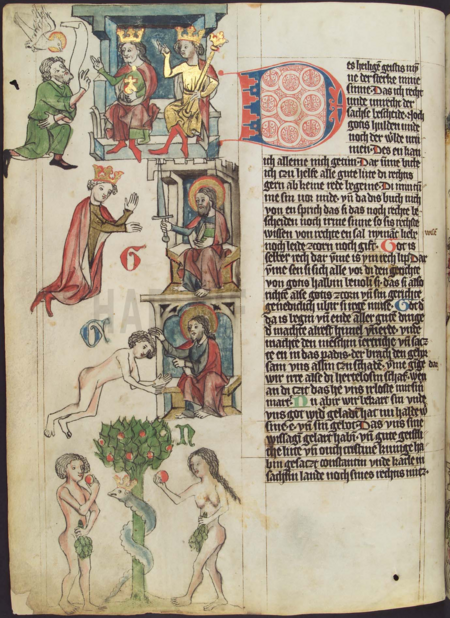
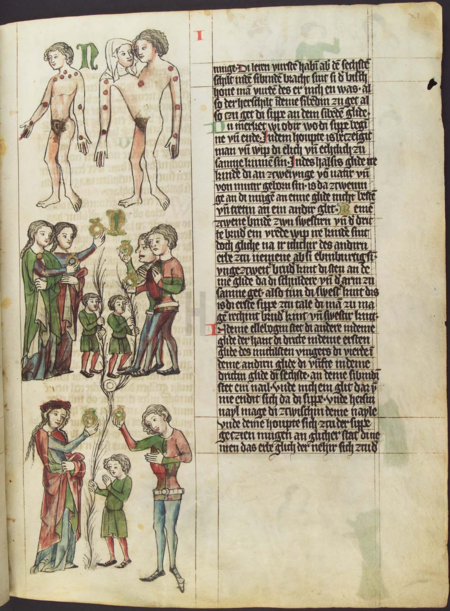
Eike von Repkow — «The Saxon Mirror» Illuminated Manuscript from the 14th Century
The creation of the first woman marks the starting point of the history of human fall. Eve appears in the heavenly space as part of a divine design; however, the concept of original sin gradually becomes associated with her image. In art, this theme takes on particular significance—the woman becomes not merely a participant in biblical history, but a symbol of the beginning of new, imperfect human life.
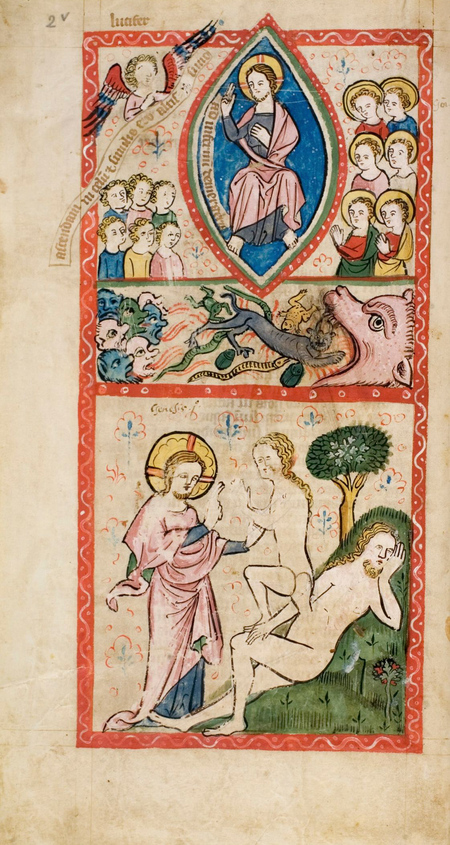
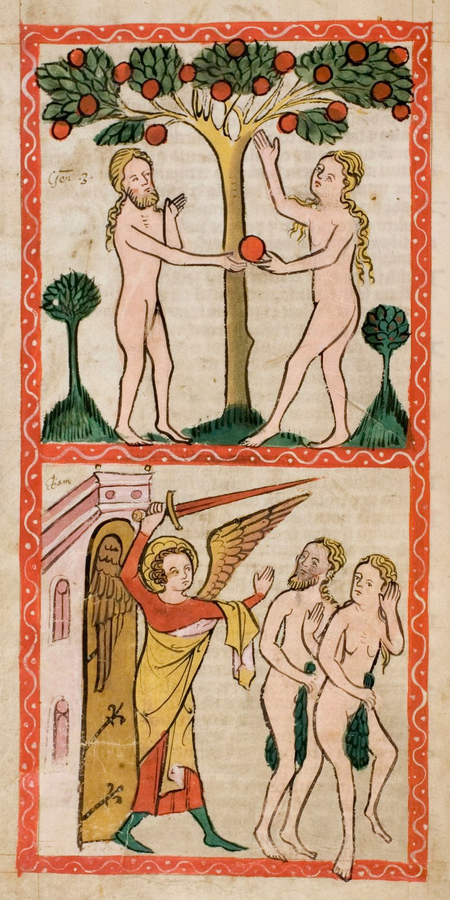
«Mirror of Human Salvation» (c. 1360)
In the images depicting the creation of Eve, the female figure emerges as an extension of the already created world. It is interesting to observe that her birth is often depicted not as an independent event, but as an action taking place alongside Adam and under God’s control.
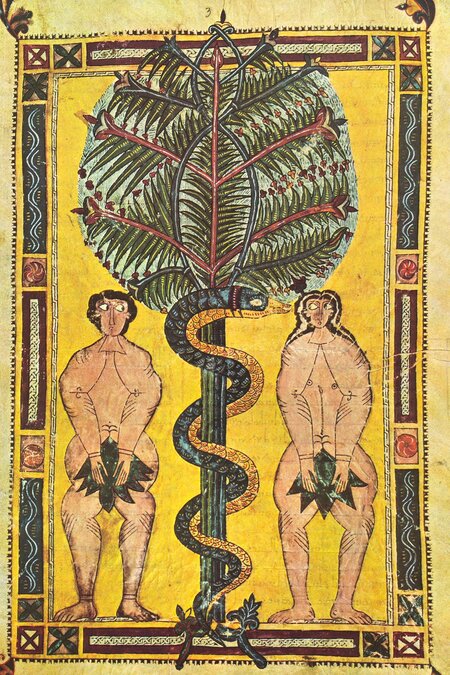
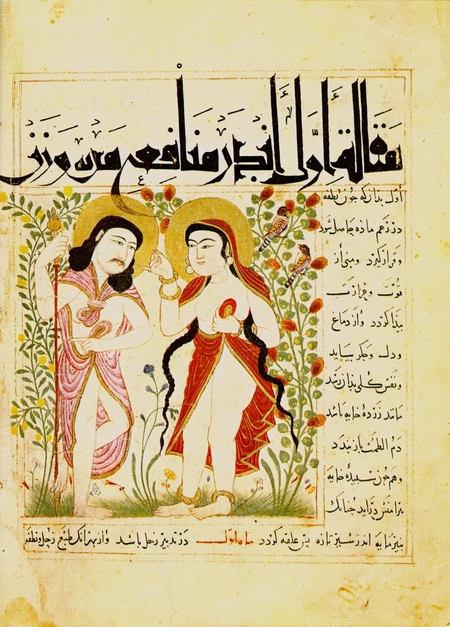
1. Manuscript, 950–955 2. Adam and Eve. Persian Miniature, 1294–1299
The depiction of the nude form is particularly striking. Before the fall from grace, nudity was not linked to temptation or shame—it conveyed the natural state of humanity. This allows us to see how significantly the perception of the female body changes after the introduction of the theme of sin in Christian tradition.
«Adam and Eve, the Tempting Serpent, ” Emilian Code, circa 992
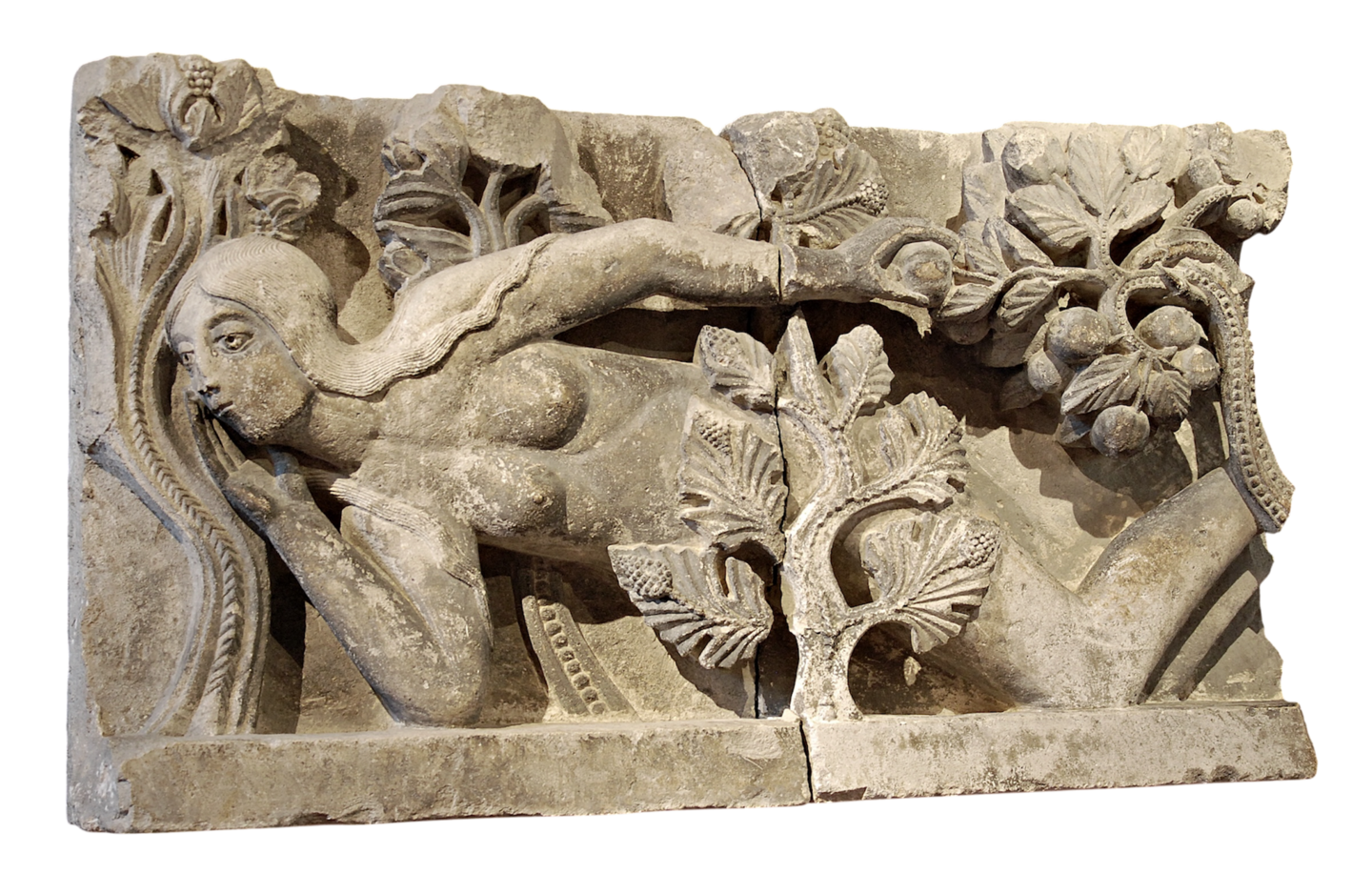
In some works, the serpent is depicted with human or feminine characteristics. This choice makes its image particularly ambiguous: it remains a creature of the natural world while simultaneously acquiring an almost human form.
The Annunciation, surrounded by Eve, the Serpent, and the Rune of Gideon, from the collection «Poor People’s Bible, ” third edition. c. 1465
Gislebertus (attributed) — «Eve» («The Temptation of Eve»), circa 1130
The Tree in the images of Eden becomes not just a part of the landscape, but a vital semantic center. It divides the space of paradise and denotes a boundary that humans are forbidden to cross. Its presence serves as a reminder of the fragility of harmony between humanity and the divine world.
Octave, Vatican Library, 12th century
Eden in Christian art is depicted as a space where humanity is not yet separated from God and nature. The abundance of plants, animals, and fruit trees creates a sense of eternal life and original balance. It is particularly interesting that Paradise often resembles a closed, almost magical world governed by its own laws. This space becomes a symbol of perfection that humanity once lost and can no longer reclaim.
Eva: Temptation, Body, and Exile
«Expulsion from Paradise» circa 1250
The forbidden fruit, the serpent, and the expulsion from Eden transform Eve’s image into one of the most controversial symbols in Christian art. Her body becomes a space where innocence and temptation, natural beauty and sin, collide. Artists depict the moment of temptation in various ways, but behind every image lies the same story—the loss of original harmony between humanity and God.
«The Fall of Adam and Eve» 14th Century
«The Original Sin, ” Paolo Uccello, fresco cycle from the Book of Genesis in Santa Maria Novella Church, 1430.
The Fall becomes a pivotal moment in human history. In depictions of this narrative, it is particularly fascinating to observe the shift in the gestures and facial expressions of Adam and Eve: the initial harmony gives way to anxiety, the awareness of transgression, and the fear of the consequences of their own actions. The idyllic space ceases to be a safe sanctuary, and human existence acquires a new meaning.
«Original Sin, ” scene from a fresco in the apse of the Sant Sadurní d’Osormot church, 12th century.
«The Lord Accuses Adam and Eve. Expulsion from Paradise» (fragment), Byzantine mosaic from the Palatine Chapel in Palermo, 12th century.
Maria: The Chosen Woman
Duccio di Buoninsegna — «Madonna col Bambino sul Trono circondata dagli angeli» (Madonna with Child on Throne surrounded by Angels) c. 1285