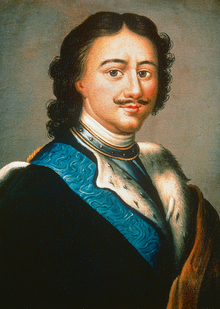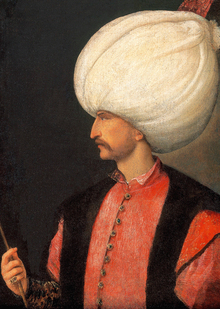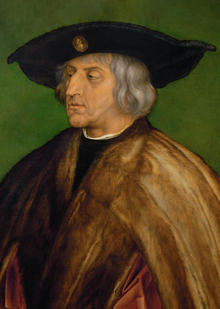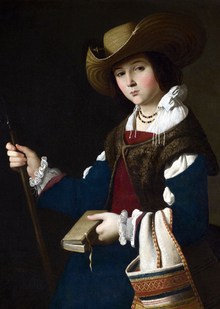
This timeline focuses on figures whose reigns marked a turning point in their nations' histories. Kings, emperors, monarchs, khans, sultans, and other powerful figures who shaped the landscape of their times are often central to historical discourse. And this is not surprising, because beyond political achievements and military campaigns, their authority influenced the cultural context of their era, leaving us with numerous artifacts that reflect its spirit—from the Great Wall of China to the architectural complexes of St. Petersburg.
1792–1750 годы до н. э.
Hammurabi
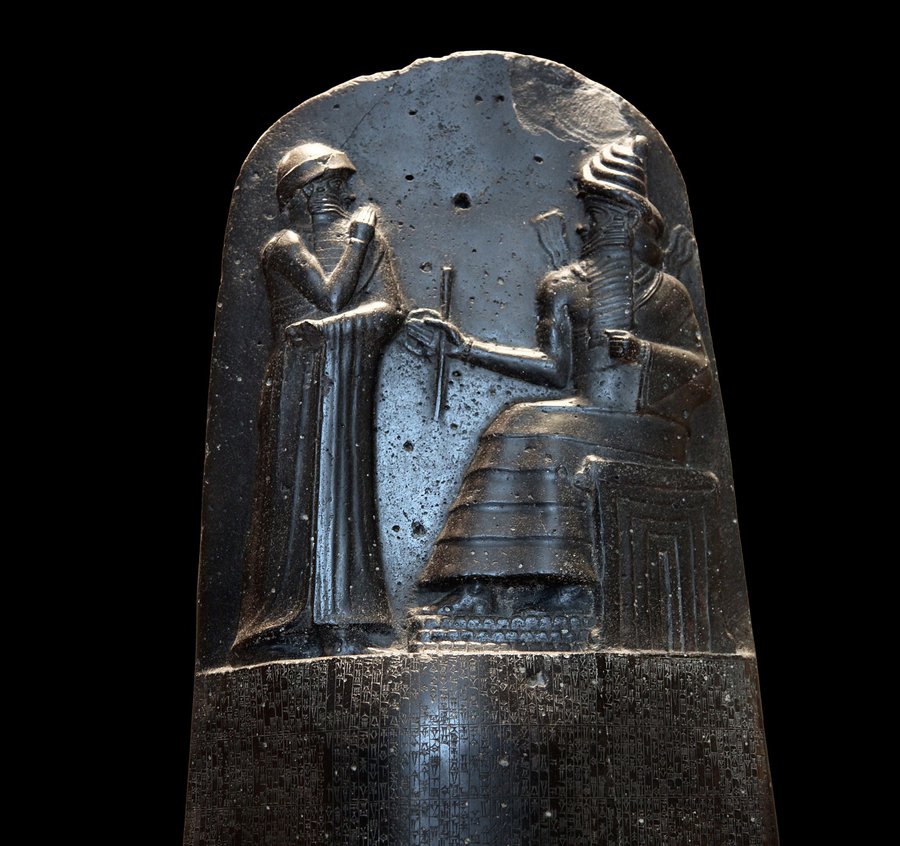
Code of Hammurabi stele made of black basalt. Babylon. c. 1793–1751 BCE.
Hammurabi—the sixth king of the first (Amorite) Dynasty of Babylon, who reigned approximately from 1792–1750 BCE and transformed a small kingdom into a vast empire. Ascending the throne after his father, Sin-muballit, he inherited control over a territory that included Babylon, Kish, Sippar, and Borsippa. In the first years of his reign, Hammurabi engaged in traditional Mesopotamian activities: building temples, constructing city walls, and digging canals. Using flexible diplomacy and military force, he first formed an alliance with Larsa to defeat Elam, and then, around 1763 BCE, captured Larsa, Uruk, and Isin. In the following years, he subdued Eshnunna, Mari, and Assur, unifying all of Mesopotamia under his rule by 1755 BCE and adopting the title «king of the four corners of the world.»
Hammurabi’s reign marked a flourishing period for ancient Babylonian art, which was influenced by Sumerian and Akkadian traditions. The most prominent artifact of this era is the famous Stele of Hammurabi, carved from black basalt. The upper section of the stele features a bas-relief depicting the king in a prayerful posture before Shamash, the god of the sun and justice, symbolizing the divine origin of the laws. The text itself, inscribed in cuneiform on the Akkadian language, comprises 282 articles and stands as one of the oldest and most complete legal codes in human history. Architecture of that period continued to utilize mud brick as the primary material, but with active application of bitumen for waterproofing—a characteristic of monumental construction, including temples and palaces, the remains of which have been discovered in Tell and other cities. The art of the Hammurabi period signifies a synthesis of Semitic and Sumerian cultural elements, laying the groundwork for the subsequent development of the Babylonian artistic tradition.
1479–1425 годы до н. э.
Atmosphere III
Painted relief featuring Thutmose III
Thutmose III—the sixth Pharaoh of the XVIII Dynasty, son of Thutmose II and his concubine Isis. Formally, he ascended the throne at the age of two, but for the first 22 years, he ruled jointly with his stepmother and aunt Hatshepsut, who effectively held the power as Pharaoh. After her death, Thutmose III became the sole ruler, displaying himself as a brilliant military leader by conducting no fewer than 17 successful military campaigns and expanding Egypt’s borders to unprecedented sizes—from the Euphrates in the north to the Fourth Cataract of the Nile in the south. His greatest victory was the Battle of Megiddo (1457 BCE), where he crushed a coalition of Syrian rulers, leading a risky march through a mountain pass himself. For his military expansion and the creation of the first standing army, historians bestowed upon him the nickname «Napoleon of the Ancient World.»
The era of Thutmose III was a time of artistic flourishing, incorporating both traditional Egyptian canons and foreign influences. Unique evidence of international contact is found in the Minoan frescoes discovered in the Thutmoseid palace quarter at Tell el-Daba (Abydos). Executed by Cretan masters using a lime plaster technique with polishing, these frescoes depict scenes of leaping over bulls and griffins—motifs entirely foreign to Egyptian art but characteristic of the Aegean world. In the monumental sculpture of this period, as noted by researchers, the solemnity of the figures remains, but a greater inner spirituality and softness emerge: the pharaoh’s face acquires idealized features, almond-shaped eyes, and a slight half-smile (statues from Karnak). Reliefs and painting actively incorporate multi-plane compositions, complex angles, and colored shadows, which is particularly noticeable in the tomb paintings of Theban nobility. Artifacts of temple furnishings from Thutmose III’s reign have also been preserved, such as the granite altar with incised hieroglyphs, which is now housed in the Hermitage Museum.
522–486 годы до н. э.
Dari I
Archers. Apadana of Darius I’s palace in Susa. Fragment of the frieze on the left end. Achaemenid period. Circa 510 BCE.
Darius I ascended the throne in 522 BCE after killing the mage Gaumata, who had seized power following the death of Kambyses. His reign began with widespread rebellions across Babylonia, Persia, Media, Margiana, and other regions, which Darius suppressed within the first year. The inscription at Behistun recounts these events—a colossal relief carved into the rock featuring text in three languages. Darius implemented administrative reforms, dividing the empire into satrapies, establishing a unified tax system, and introducing the gold coin, the daric. He expanded the empire’s borders to the Indus in the east and Phrygia in the west, but he failed in his campaign against the Scythians and began the Greco-Persian Wars, which concluded with a defeat at Marathon.
The art of the Darius era I represented a synthesis of the traditions of conquered peoples, consciously shaped to glorify royal power. The paramount monument was Persepolis—a new ritual capital built on a colossal stone terrace. Its apadana (throne hall), featuring twenty-meter columns topped with capitals in the form of bulls and lions, was meant to inspire awe among foreign envoys. Polygonal reliefs on the staircases depict endless processions of subjects from all nations of the empire—Media, Elam, Babylonians, Egyptians, Indians, and Greeks—presenting characteristic tributes. According to an inscription found there, the construction of the palace in Susa employed artisans from across the entire realm: Ionic stonemasons, Babylonian ceramicists, Median and Egyptian jewelers, underscoring the universal nature of the Achaemenid style.
Около 494–429 годы до н. э.
Pericle
Bust of Pericles inscribed «Pericles, son of Xanthippus, Athenian.» Marble. Circa 430 BCE.
Pericles led Athens in 443 BCE and was elected as a strategist every year for fifteen years. He initiated reforms that strengthened democracy: he introduced payment for officials and jurors, thereby allowing the poorest citizens to participate in governance, and he also created the Theoric Fund—a fund to provide money for theater attendance. Pericles moved the treasury of the Delian League to Athens, effectively transforming the allies into subjects of the Athenian empire, and he suppressed attempts to leave it (such as the revolt in Samothrace in 440 BCE). His foreign policy led to heightened tensions with Sparta and the Peloponnesian War (431 BCE). In 430 BCE, due to military setbacks and the plague epidemic, Pericles was removed from power and soon died from illness.
The era of Pericles is often referred to as the «Golden Age» of Athens due to the grand construction projects on the Acropolis, overseen by his friend, the sculptor Phidias. Utilizing funds from the allied treasury, masterpieces of world architecture were erected: the Parthenon (architects Iktinos and Kallikrates), the magnificent Propylaea gate (architect Mnesicles), and the Erechtheion with its Caryatid porch. The crowning feature of the Parthenon was the chryselephantine (gold and ivory) statue of Athena Parthenos, sculpted by Phidias, which reached a height of 12 meters. Sculpture from this period, alongside the works of Polykleitos and Cresicles, aimed for ideal proportions and internal harmony, reflecting the dignity of the free citizen. The art of the Periclean age asserted the grandeur of Athens and the ideals of civic democracy. Pericles also built the Odeon—a covered structure for musical competitions—and his home was a gathering place for philosophers (Anaxagoras, Zeno, Socrates), the historian Herodotus, and the playwright Sophocles.
221–210 годы до н. э.
Qin Shi Huangdi
Emperor Qin Shi Huang’s imperial journey across his empire. Image from an 18th-century album.
Qin Shi Huang (born Ying Zheng, 259–210 BCE) was the ruler of the Qin State from 246 BCE and the founder of the first centralized empire in Chinese history. By 221 BCE, he had conquered the six warring states and assumed a new title translated as «First Emperor.» Relying on the ideology of Legalism, he implemented radical reforms: dividing the country into commanderies and counties governed by appointed officials, standardizing writing, weights, and measures, establishing unified laws, and introducing a standard currency. To defend against nomadic groups, he began construction of the Great Wall of China. He ruthlessly suppressed dissent, ordering the burning of Confucian texts and the execution of hundreds of scholars. He died in 210 BCE during an inspection tour.
The art of the Qin Shi Huangdi era served to glorify imperial power and ensure its afterlife. The pinnacle of this period was the grandiose burial complex near modern Xi’an. Its main marvel is the «Terracotta Army»: thousands of life-sized clay statues of soldiers and horses, discovered in 1974 and inscribed on the UNESCO World Heritage list. Each figure is unique, handcrafted with astonishing realism, distinguished by the detail in hairstyles, armor, and facial expressions, reflecting the high level of sculpture of that time. The complex also included bronze chariots, the Emperor’s palace Epang, and other monumental structures, for the construction of which millions of subjects were mobilized. The art of this era synthesized the traditions of conquered kingdoms but was subject to strict unification, symbolizing the power of a unified empire.
27 до н. э. — 14 н. э.
Octavian Augustus
Marble bust of Octavian Augustus, known as «Augustus of Biblicus,» from his reign
Octavian, the grandnephew and adopted son of Julius Caesar, engaged in the struggle for power after Caesar’s assassination, eventually defeating Mark Antony and Cleopatra at the Battle of Actium by 31 BCE, thus becoming the sole ruler of Rome. In 27 BCE, he formally declared the restoration of the republic, receiving the honorary title Augustus («Revered by the Gods») from the Senate, yet he effectively retained all full authority, establishing a new system of governance—the Principate. He conducted a military reform, creating a standing army and the Praetorian Guard, and expanded the empire’s borders, but suffered a heavy defeat in the Teutoburg Forest (9 BCE), after which he abandoned further expansion into Germania. His reign was marked by patronage of literature (Virgil, Horace, Ovid) and extensive construction projects.
The Augustan Age became a period of flourishing Roman art, oriented toward glorifying the new regime and the ideals of the «Pax Romana.» Grand construction projects utilizing marble unfolded in architecture: Augustus prided himself on transforming Rome from a brick city into a marble city. The Forum of Augustus with the Temple of Mars Ultor, the Theatre of Marcellus, the mausoleum on the Campus Martius, and the Altar of Peace (Ara Pacis) were erected—a masterpiece of Augustan art adorned with reliefs depicting the imperial family procession and allegorical scenes of fertility and prosperity. In sculpture, the refined «Neo-Attic» style was established, blending Greek classicism with Roman narrative. The Emperor demanded to be depicted as eternally youthful, leading to the creation of idealized portraits, such as the famous Augustus of Prima Porta statue, where the ruler is presented as a military commander and orator, and his cuirass is decorated with reliefs detailing diplomatic victories. This official portrait was reproduced throughout the empire, forging the emperor’s cult and a unified visual landscape for the state.
768–814 годы
Charlemagne
Bust of Charlemagne. Reliquary from Aachen Cathedral, Germany. 1350
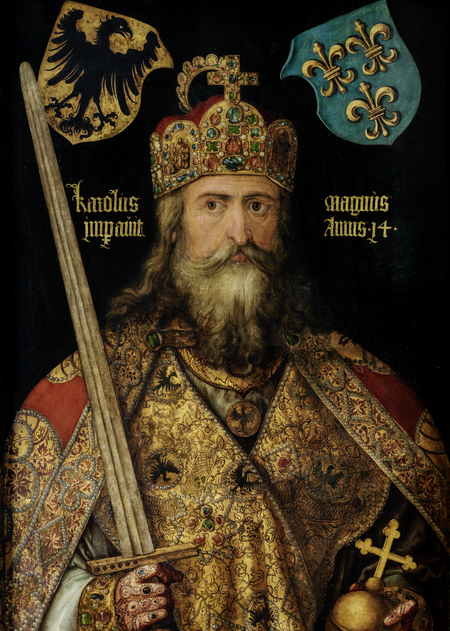
Charles the Great, eldest son of Pepin the Short, became the King of the Franks in 768, and after the death of his brother Charles Martel in 771, he became the sole ruler of a vast kingdom. During his nearly five decades of reign, he conducted over 50 military campaigns, bringing the kingdom under control of the Lombards in Italy, the Saxon lands (after a persistent 30-year war), Bavaria, and the Avars' Khanate. In 800, Pope Leo III crowned him Emperor in St. Peter’s Basilica in Rome, reviving the title of Emperor in the West. He entered history as the «Father of Europe» (Pater Europae), creating an empire that united most of Western and Central Europe.
The Carolingian era was marked by the «Carolingian Renaissance"—a flourishing of culture, architecture, and education. Seeking to strengthen the administration and the church with literate personnel, the emperor invited scholars from England, Italy, and Ireland to his court (Alcuin, Paul the Deacon), founded the Imperial Academy in Aachen, and established schools at monasteries. In architecture, the Palatine Chapel in Aachen (built by Odo of Metz)—an octagonal central structure inspired by the San Vitale church in Ravenna—became the paramount monument and a symbol of the revival of imperial tradition. In the scriptoriums, ancient manuscripts were copied, and a new, legible script was developed—Carolingian minuscule. Book miniature reached its highest level; the «Godescalca Gospel» and the «Utrecht Psalter» astound with the vibrancy of their imagery and the freedom of their drawing, synthesizing late antique style with local barbarian traditions. The art of this era laid the foundation for European medieval culture.
1206–1227 годы
Genghis Khan