INDEX
I. ConceptII. Ancient EgyptIII. MesopotamiaIV. AntiquityV. Medieval EuropeVI. ConclusionVII. Bibliography of Textual Sources UsedVIII. Bibliography of Image Sources
CONCEPT
Visual Study on the Theme: The Image of the Lion in Art. Period before the 14th Century.
Throughout history, artists have drawn upon the visual image of the lion, imbuing it with new meanings depending on the era and cultural context. Its physical strength, majestic appearance, and predatory nature formed the foundation for creating meanings and symbols.
The depiction of the lion can be viewed not only as an artistic motif but also as a reflection of the worldview of the society in which it arose.
Lev transformed into a visual instrument for expressing human concepts and meanings. Through this, the same image became a way to articulate diverse, sometimes opposing, ideas.
The central research question and hypothesis
How did the lion image acquire different meanings in the art of various cultures before the 14th century?
Ancient Egypt
Lev as the embodiment of regal and divine power
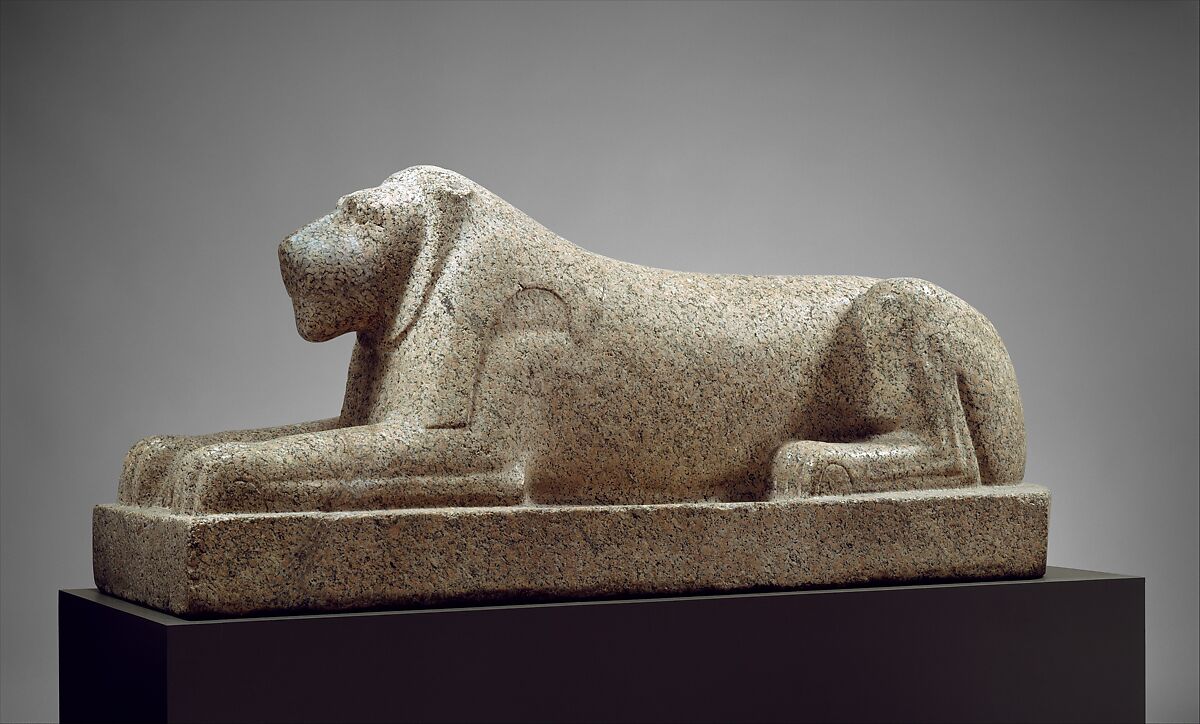
Recumbent Lion. c. 2575–2450 BCE
It was unearthed by the British Fund for Egyptian Research in 1891 in Herakleopolis Magna, southeast of the Fayum oasis. This sculpture is the earliest surviving example of monumental scale, preserved almost completely. Originally, it guarded the entrance to a pyramid-era sanctuary, and later, around 1250 BCE, it was repurposed in a New Kingdom temple.
As the most powerful predator of the steppe bordering the Nile Valley, the lion has been a symbol of royal power from the very beginning. The animal also embodied several deities.
The lion has symbolized royal power and divine protection since ancient times. The figure is characterized by the generalized plasticity typical of the Old Kingdom, a stylized, rounded mane, and a tail dramatically swept over the back. In the culture of Ancient Egypt, images of ferocious animals—including lions and lionesses associated with the goddess Sekhmet—served not merely as decoration, but as active amulets, warding off chaotic forces from sacred spaces.
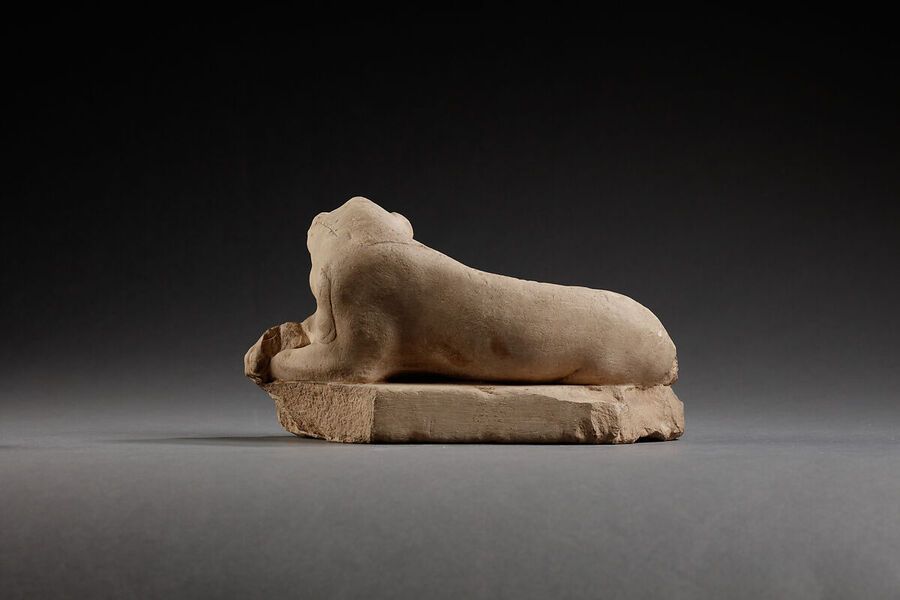
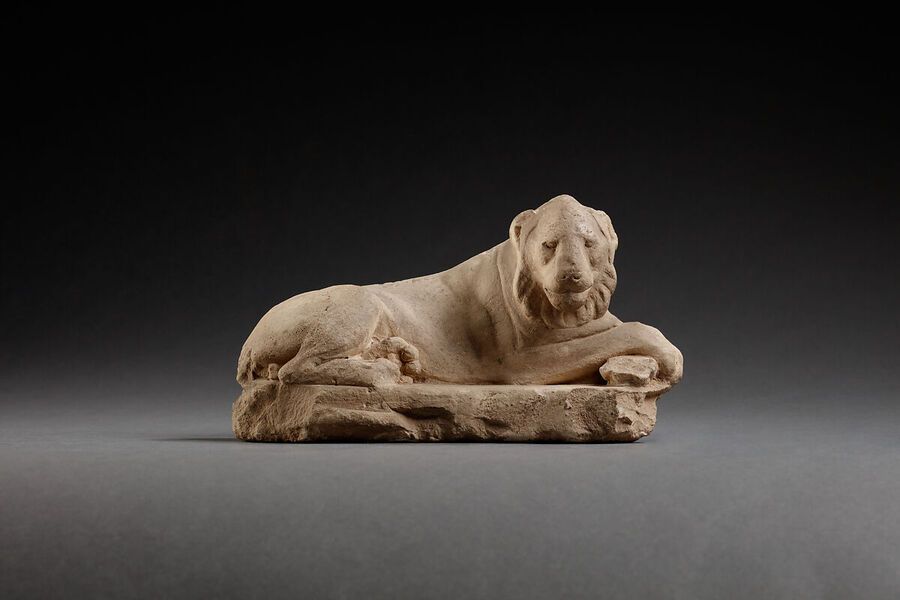
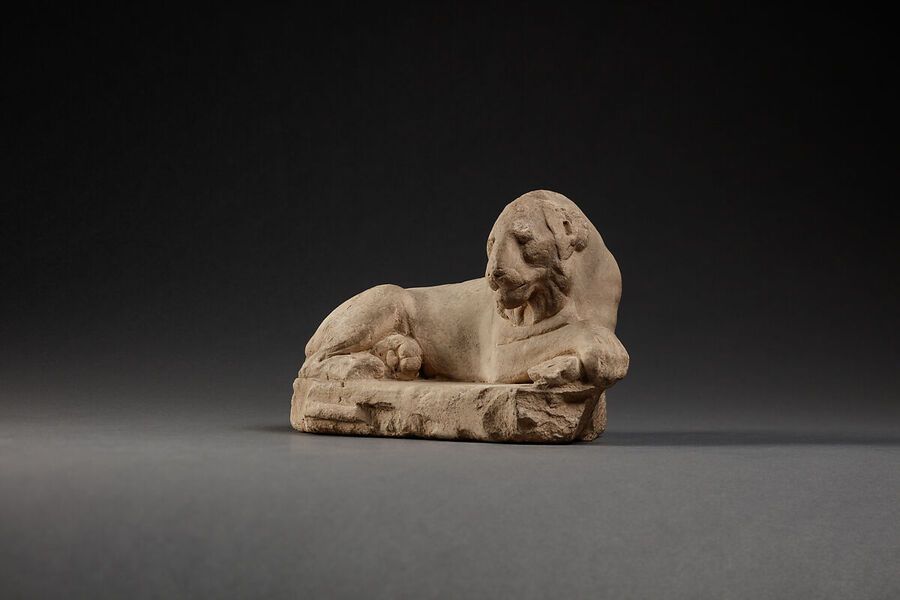
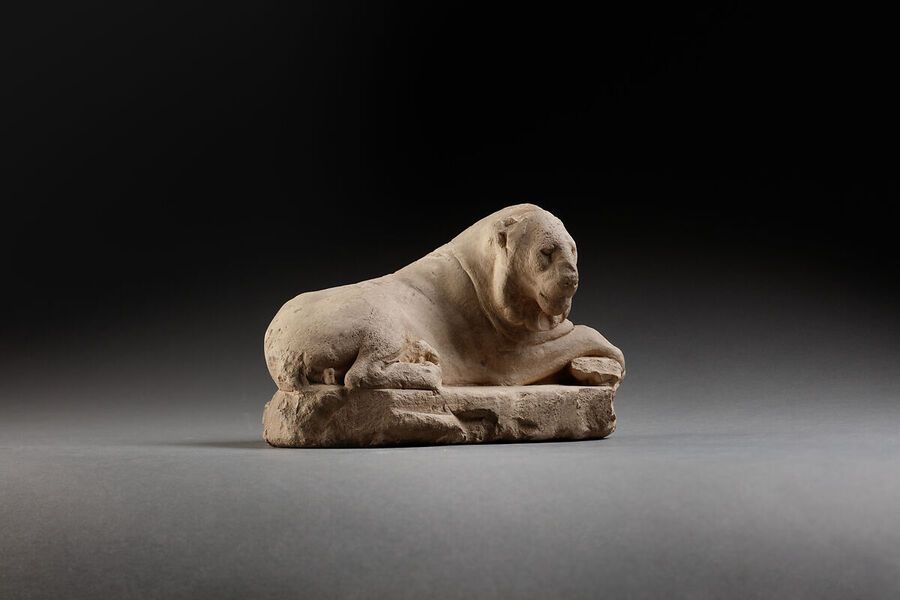
Reclining Lion. c. 2575–2450 BCE
The size of this artwork suggests it belongs to the interesting group of small sculptures and relief works, often referred to as sculptor’s models, though they may have also served as donations.
This small sculpture depicts a reclining male lion lying on its side with its front paws crossed over one another. Many details are shown, though the lion’s mane is rendered only partially.
Due to the absence of the base, it is difficult to determine the vessel’s original appearance or intended use, but compared to other known examples, it is quite large. The master managed to perfectly capture the image of a resting lion in stone, handling the form with great naturalism and sensitivity.
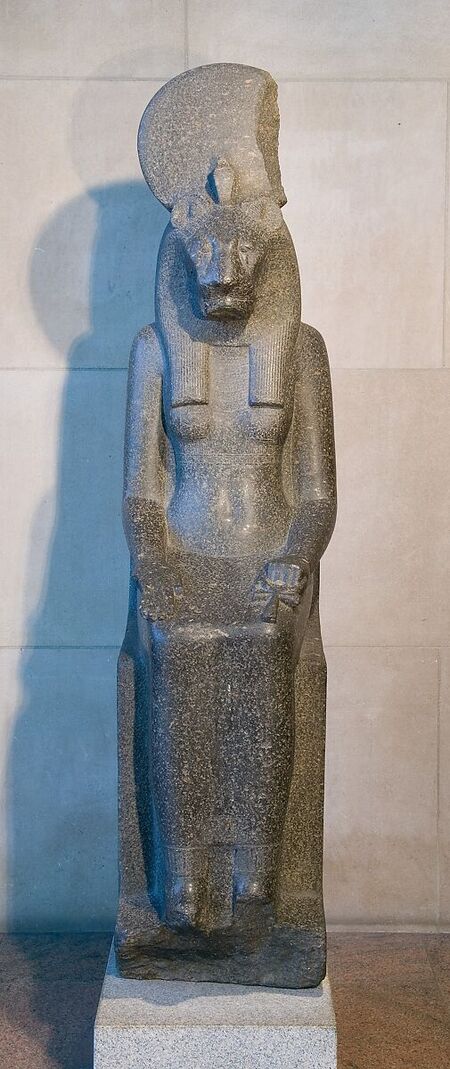
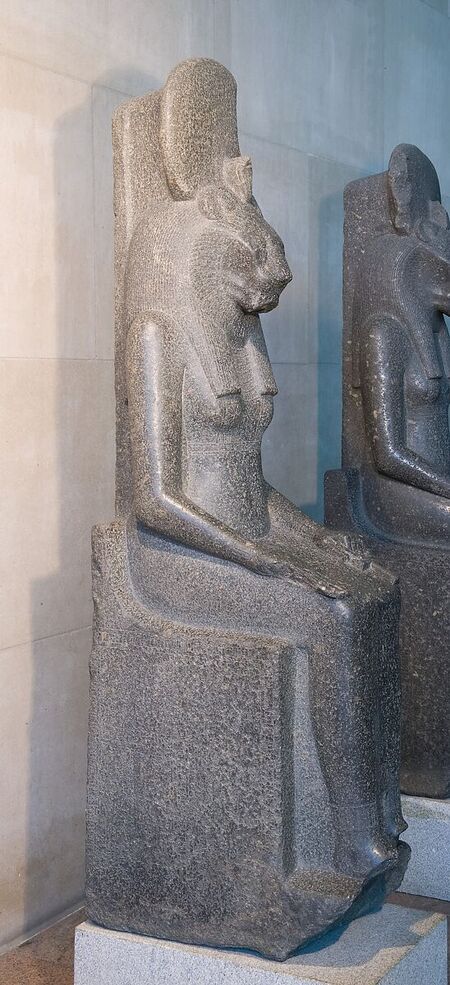
Statues of the goddess Sekhmet. c. 1386–1347 BCE
Amenhotep III commissioned between 600 and over 900 such statues for his temple complexes in Thebes (Karnak and Kom-el-Hetan). In Ancient Egypt, Sekhmet was considered the goddess of epidemics and the patron of physicians. The mass creation of these statues was intended to appease the wrathful goddess, halt the plague, and cure the Pharaoh of his ailments.
This figure, with a lion’s head, embodies the goddess Sekhmet, whose name means «mighty.» Sekhmet was the goddess of war, powerful storms, and epidemics. When appeased, her destructive power could be channeled for protection, and in this aspect, she became a goddess of healing. Each statue featured a unique epithet of the goddess on its base, representing one of the days of the year, thereby creating a continuous ritual to protect royal authority.
Sekhmet is associated with destructive forces, war, and illness, but also with protection and healing. Her lion head expresses a power capable of both destruction and guardianship.Ancient Egyptian physicians viewed the treatment of illness partially as pacifying Sekhmet. For this reason, they were priests of the goddess. By holding her power in check, Sekhmet bestowed life, symbolized by the ankh sign held in her left hand.
Sekhmet is depicted sitting in a long, form-fitting dress. Her head is crowned with a three-part wig and a solar disk featuring a uraeus, a sacred cobra. In her left hand, the goddess clutches the ankh, the symbol of eternal life. The use of hard granodiorite allowed ancient artisans to achieve a mirror-like surface polish and precise detailing of the mane and adornments.
Man and animal are united in one being. The lion becomes a part of the divine nature.
Conclusion
Different meanings are accompanied by a change in the method of representation—from a realistic animal, where the sculptor addresses the physical nature of the animal, to a merging of human and animal forms, where the natural qualities of the lion become part of the divine image.
Mesopotamia
Leo as a city defender and an object of demonstration of human power
«Panel with a Walking Lion.» c. 604–562 BCE
When Nebuchadnezzar ordered the reconstruction of the ancient city of Babylon in the middle of the first millennium BCE, the walls of its temples and palaces were adorned with panels of vividly colored glazed tile. These depicted mythical creatures intended to protect the city, as well as animals revered as sacred to the gods.